Table of Contents
- What Is an Ionic Bond?
- How Ionic Bonds Form: Electron Transfer
- Cations and Anions: The Players Involved
- Real-Life Examples of Ionic Bonds
- Properties of Ionic Compounds
- Ionic Bonds in Biology
- Ionic vs. Covalent Bonds: A Quick Comparison
- How to Identify an Ionic Compound from a Formula
What Is an Ionic Bond?
An ionic bond is the electrostatic attraction between two oppositely charged ions — one positive, one negative. It forms when one atom gives up one or more electrons and another atom accepts them. The result is two charged particles that are drawn together and held in place by that charge difference.
Put it into practice: cross the charges and write the formula. Ionic compound formula writer — free, no sign-up, works on a phone.
The classic teaching example is table salt, sodium chloride (NaCl). Sodium hands off one electron to chlorine. Sodium becomes positive; chlorine becomes negative. They snap together. That’s it — that’s an ionic bond.
Simple in concept, but the consequences are surprisingly far-reaching. Ionic bonds shape the structure of minerals, the crunch of table salt crystals, and the electrical signals that make your heart beat.
How Ionic Bonds Form: Electron Transfer
Every atom wants a full outer electron shell. For most elements, that means eight electrons in the outermost energy level — the octet rule. Atoms that have just one or two electrons in their outer shell find it energetically cheaper to give those electrons away entirely. Atoms that are one or two electrons short of a full shell find it easier to pull in extra electrons.
When these two types of atoms meet, a transfer happens. The atom that gives away electrons loses negative charge and becomes a cation (positively charged). The atom that gains electrons adds negative charge and becomes an anion (negatively charged). Opposite charges attract — Coulomb’s law — and the two ions lock together.
The energy released when this attraction forms is called lattice energy. The stronger the charges and the closer the ions, the higher the lattice energy, and the more stable the compound. Magnesium oxide (MgO), where magnesium donates two electrons to oxygen, has a significantly higher lattice energy than NaCl — which is why MgO melts at 2,852°C, roughly six times higher than table salt.
Cations and Anions: The Players Involved
Cations form from metals. Sodium (Na⁺), potassium (K⁺), calcium (Ca²⁺), magnesium (Mg²⁺) — these are the names you’ll keep seeing. Metals sit on the left side of the periodic table, where atoms have just a few outer electrons they’re ready to shed.
Anions form from nonmetals. Chloride (Cl⁻), oxide (O²⁻), fluoride (F⁻), sulfide (S²⁻). Nonmetals are on the right side of the periodic table, close to completing their outer shells and eager to pick up the electrons metals are giving away. A periodic table with charges lists the common ion charge for each element.
The names follow a pattern: the cation keeps the element name (sodium stays sodium), while the anion drops the element name’s ending and adds -ide (chlorine becomes chloride, oxygen becomes oxide, sulfur becomes sulfide).
Real-Life Examples of Ionic Bonds
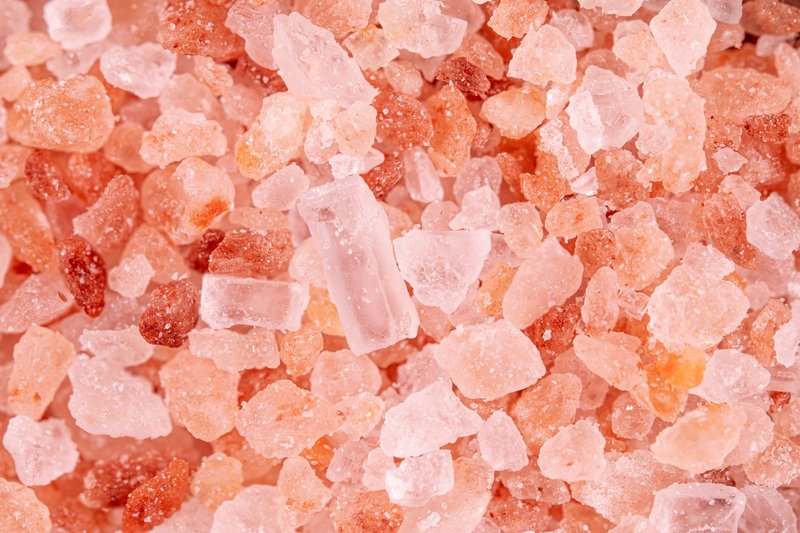
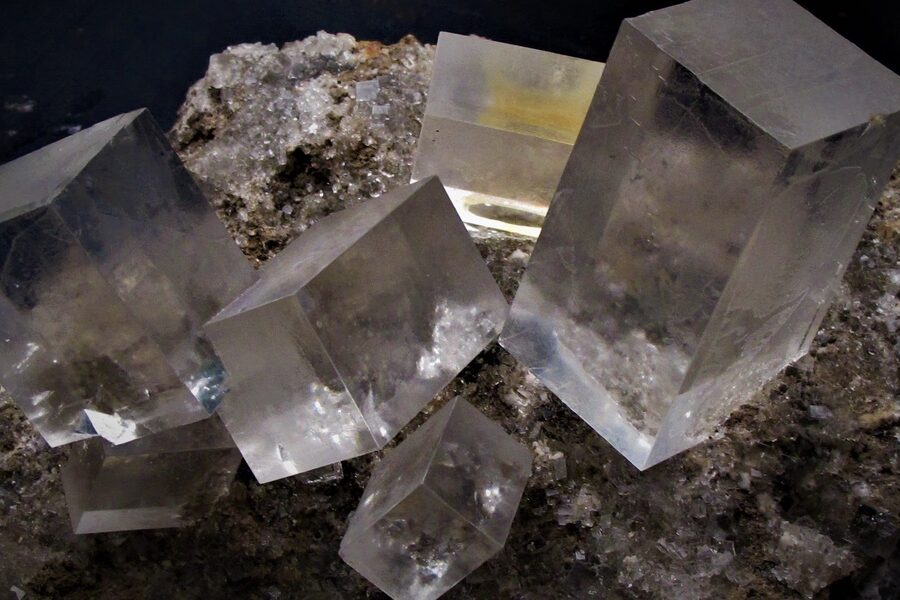
Sodium chloride (NaCl) — Table salt. The benchmark example. Na⁺ and Cl⁻ arrange themselves into a cubic crystal lattice. Every sodium ion is surrounded by six chloride ions, and vice versa. That ordered structure is why salt crystals are cubic when you look at them under a magnifying glass.
Magnesium oxide (MgO) — Found in antacids, refractory bricks, and electrical insulators. The Mg²⁺ and O²⁻ ions carry double charges, making the bond substantially stronger than NaCl’s. Its extreme melting point makes it useful anywhere heat resistance matters. Magnesium’s tendency to form strong bonds extends across many reactions — it’s one of the 10 elements magnesium reacts with that illustrate just how reactive this metal is.
Calcium chloride (CaCl₂) — Road salt, concrete accelerant, and the stuff in those desiccant packets. One Ca²⁺ ion needs two Cl⁻ ions to balance the charge. It absorbs moisture from the air aggressively — that’s why it’s used for ice control and dehumidification.
Potassium iodide (KI) — Added to table salt in many countries to prevent iodine deficiency. The K⁺ and I⁻ ions make it highly soluble in water, which matters for uniform distribution in food.
Calcium carbonate (CaCO₃) — The compound that makes limestone, chalk, marble, and seashells. It involves a polyatomic anion (carbonate, CO₃²⁻) bonded to Ca²⁺. Most real ionic compounds involve polyatomic ions like this, not just single-element anions.
Properties of Ionic Compounds
Ionic compounds share a predictable set of physical properties — all of them traceable back to the strength and structure of the ionic bond itself.
High melting and boiling points. Ions in a crystal lattice are held together by strong electrostatic forces in every direction. Breaking that lattice requires substantial energy. Table salt melts at 801°C; magnesium oxide at 2,852°C. Compare that to water (molecular, not ionic), which boils at 100°C.
Crystal lattice structure. Ionic solids don’t exist as individual pairs of ions. They form extended three-dimensional arrays where each cation is surrounded by multiple anions and vice versa. The geometry of the lattice depends on the relative sizes and charges of the ions involved.
Brittle. Hit a salt crystal with a hammer and it shatters cleanly rather than bending. When force shifts the layers of the lattice, like charges end up adjacent — same-charge repulsion breaks the crystal apart. This is different from metals, where layers of atoms can slide over each other without breaking bonds.
Conduct electricity only when dissolved or melted. In solid form, ions are locked in place — no free charge carriers, no conductivity. Dissolve NaCl in water or melt it, and the ions separate and move freely. That’s why saltwater conducts electricity and dry table salt doesn’t.
Soluble in polar solvents. Water is a polar molecule — it has a slight negative end and a slight positive end. Water molecules surround and stabilize the separated ions through ion-dipole interactions, which is why ionic compounds typically dissolve well in water but not in nonpolar solvents like oil.
Ionic Bonds in Biology
This is the part most chemistry-only textbooks skip, and it’s where ionic bonds stop being abstract.
Your body runs on ionic gradients. The sodium-potassium pump in every cell membrane actively moves Na⁺ ions out and K⁺ ions in, maintaining a charge difference across the membrane. When a nerve fires, ion channels open and Na⁺ floods in — that voltage spike is an action potential. Your ability to think, move, and breathe depends on sodium and potassium ions crossing membranes at exactly the right moments.
Calcium ions (Ca²⁺) trigger muscle contraction. When a nerve signal reaches a muscle fiber, calcium is released from internal stores, binds to proteins, and initiates the mechanical process that shortens the muscle. Every heartbeat is a calcium-mediated event.
Electrolytes — sodium, potassium, calcium, magnesium, chloride — are ionic compounds that dissociate in your bloodstream. When athletes talk about rehydrating with electrolytes after heavy sweating, they’re talking about replenishing the ions their cells need to maintain electrical function. According to National Institutes of Health research on electrolyte physiology, even mild electrolyte imbalances can impair muscle and nerve function.
Ionic vs. Covalent Bonds: A Quick Comparison
| Property | Ionic Bond | Covalent Bond |
|---|---|---|
| How it forms | Electron transfer (one atom gives, one takes) | Electron sharing (both atoms share) |
| Who’s involved | Metal + nonmetal (typically) | Nonmetal + nonmetal |
| Resulting particles | Ions (charged) | Molecules (neutral) |
| Melting point | High | Variable; often low to moderate |
| Electrical conductivity | Yes, when dissolved or melted | Generally no |
| Solubility in water | Usually high | Variable |
| Examples | NaCl, MgO, CaCl₂ | H₂O, CO₂, glucose |
The key distinction is electron behavior. In a covalent bond, neither atom has enough electronegativity difference to completely take the electrons — they share them. In an ionic bond, the difference in electronegativity is large enough (generally greater than 1.7 on the Pauling scale) that the transfer is effectively complete.
There’s a spectrum here, not a sharp line. Research on electronegativity and bond polarity shows that “ionic” and “covalent” are more like endpoints on a continuum. A bond between atoms with very different electronegativities is ionic; between identical atoms (like H₂), it’s purely covalent; most bonds fall somewhere in between — polar covalent. For a broader look at how ionic bonds fit alongside other bond types, the complete list of chemical bonds covers 22 bond types with energy values and examples.
How to Identify an Ionic Compound from a Formula
Three quick rules that cover most general chemistry cases:
1. Metal + nonmetal = ionic. If the formula contains a metal on the left and a nonmetal on the right (or a polyatomic anion), it’s almost certainly ionic. NaCl, MgBr₂, Ca₃(PO₄)₂ — all ionic.
2. Ammonium (NH₄⁺) salts are ionic. Ammonium is the one common cation that doesn’t come from a metal. NH₄Cl, (NH₄)₂SO₄ — both ionic.
3. Nonmetal + nonmetal = covalent. CO₂, SO₃, H₂O, PCl₅ — no metals involved, no full electron transfer, covalent bonds throughout.
The exceptions exist — there are polar covalent bonds that share electron density unequally and some metallic compounds behave differently — but for standard introductory chemistry, metal-nonmetal gets you the right answer the vast majority of the time.
Ionic bonds are one of those foundational chemistry concepts where the basic idea — opposite charges attract — is genuinely simple, but the downstream effects (crystal lattices, biological ion channels, the electrical behavior of solutions) are anything but. Get the electron transfer mechanism down, understand why lattice energy determines melting points, and keep the metal-nonmetal rule handy. That covers most of what comes up in a typical chemistry or biology course.