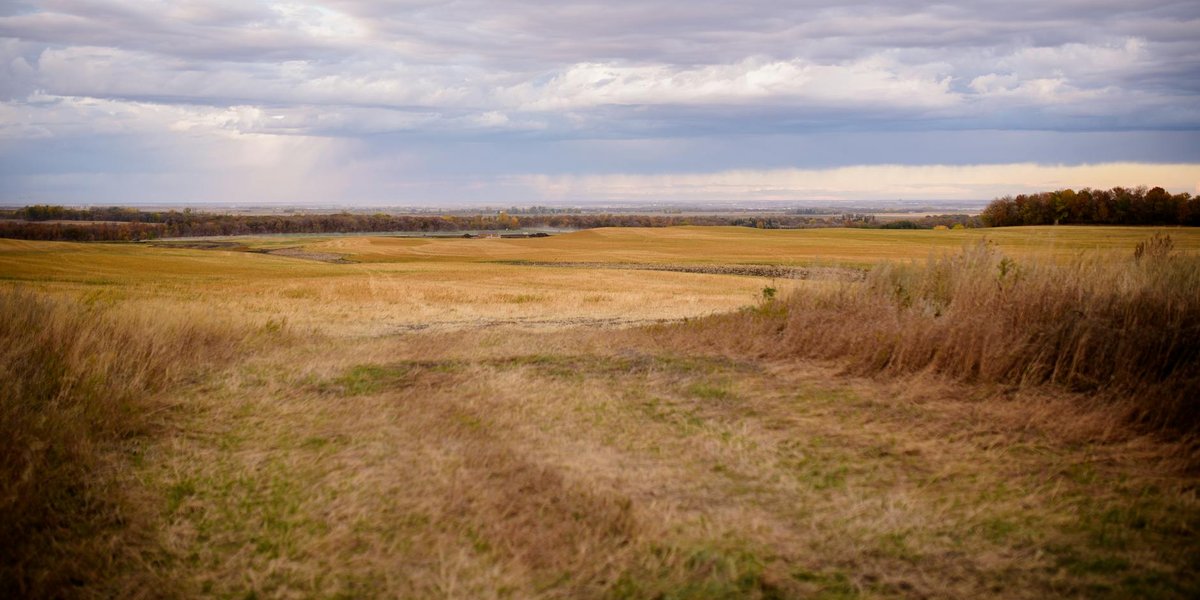
Saskatchewan looks like nothing from the highway. Flat prairie, big sky, grain elevators, the occasional pump jack nodding away in a canola field. But what’s underneath that flatness is some of the most concentrated mineral wealth on Earth. This one province mines roughly a third of the world’s potash and sits on the highest-grade uranium deposits humans have ever found.
Most overviews of Saskatchewan’s resources read like a tax document — dense, dated, and allergic to telling you which numbers actually matter. This one goes resource by resource: where it is, how much there is, what it’s worth, and which sleeper resources (helium, lithium, rare earths) are about to make the list longer.
Table of Contents
- The Short Version
- Potash: The Crown Jewel
- Uranium: The Athabasca Basin
- Oil and Natural Gas
- Agriculture: The Original Resource
- Forestry
- Gold, Diamonds, and Base Metals
- The Emerging Three: Helium, Lithium, Rare Earths
- Coal
- Resource Comparison Table
- Why It All Concentrates Here
The Short Version
Saskatchewan’s resource economy rests on four pillars and a few promising newcomers:
- Potash — about 1/3 of global production; the single largest export.
- Uranium — the Athabasca Basin holds the world’s highest-grade ore, with grades up to 100 times the global average.
- Oil — roughly 10% of Canadian crude production.
- Natural gas — historically a meaningful share of national output.
- Agriculture — Saskatchewan grows more than half of Canada’s wheat and dominates lentils and canola.
- The newcomers — helium, lithium (from oilfield brines), and rare earths are moving from “interesting” to “commercial.”
The pattern: Saskatchewan rarely has a little of anything. When a resource is here, it tends to be here in globally significant amounts.
Potash: The Crown Jewel
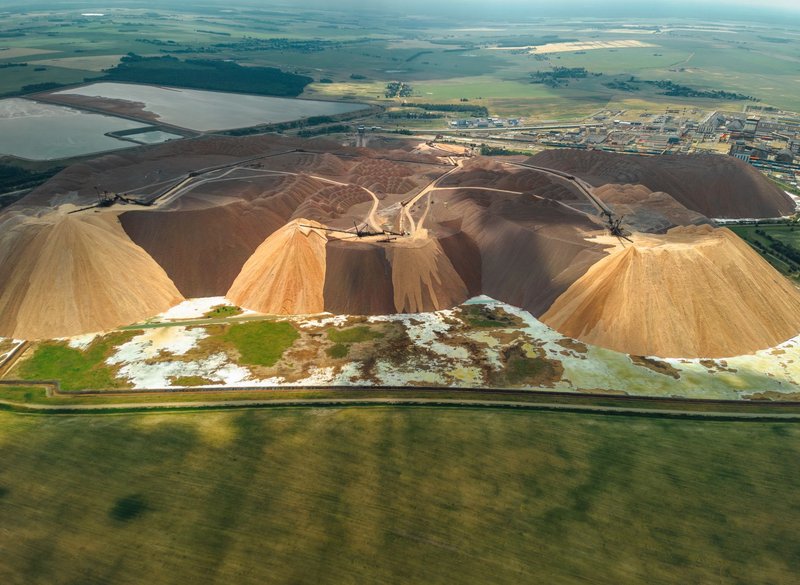
If Saskatchewan is known for one thing in commodity markets, it’s potash — a potassium-rich salt that’s a core ingredient in fertilizer. The province produces close to a third of the world’s supply, and the reserves underneath it are large enough to keep going for centuries at current rates.
The deposits sit in the Prairie Evaporite formation, a band of ancient sea salt buried roughly a kilometer below the southern part of the province. It formed when a shallow inland sea evaporated hundreds of millions of years ago, leaving behind layers of potassium and sodium salts. The richest seams run in an arc from around Saskatoon down toward the U.S. border.
Mining it happens two ways. Conventional underground mines send machines a kilometer down to cut the ore out mechanically. Solution mining — used where the potash is too deep to dig safely — pumps hot water down to dissolve the salt and brings the brine back up to be crystallized. Companies like Nutrien and Mosaic run the bulk of these operations, and the recently expanded BHP Jansen project is poised to become one of the largest potash mines on the planet.
Why this matters beyond Saskatchewan: potash feeds crops, and crops feed people. When global grain prices spike or geopolitics disrupts supply from other major producers, buyers look to the most stable, highest-volume source. That’s frequently this province. Natural Resources Canada tracks Canada as the world’s leading potash producer, and the overwhelming majority of that comes from Saskatchewan soil.
Uranium: The Athabasca Basin
Here’s a number that sounds made up until you check it: some uranium ore pulled from northern Saskatchewan runs at grades up to 100 times the world average. The McArthur River and Cigar Lake deposits in the Athabasca Basin are the highest-grade uranium mines on the planet, and it isn’t close.
The Athabasca Basin is a sprawling geological structure in the province’s sparsely populated north. Uranium concentrated there along the boundary between ancient basement rock and younger sandstone, where fluids carrying dissolved uranium hit a chemical trap and dropped their cargo over millions of years. The result is pockets of ore so rich that miners use remote-controlled equipment and freeze the surrounding ground to manage water and radiation.
That grade advantage is the whole story economically. A mine that has to process a hundred tonnes of rock to get the same uranium another mine gets from one tonne is a mine that struggles when prices fall. Saskatchewan’s deposits stay profitable through downturns that idle competitors elsewhere. Cameco, the major operator, supplies a significant slice of the uranium that fuels nuclear reactors worldwide. With renewed global interest in nuclear power as a low-carbon energy source, demand from this corner of the prairie has a long runway. The International Atomic Energy Agency consistently lists Canada among the top uranium producers, driven almost entirely by these northern mines.
Oil and Natural Gas
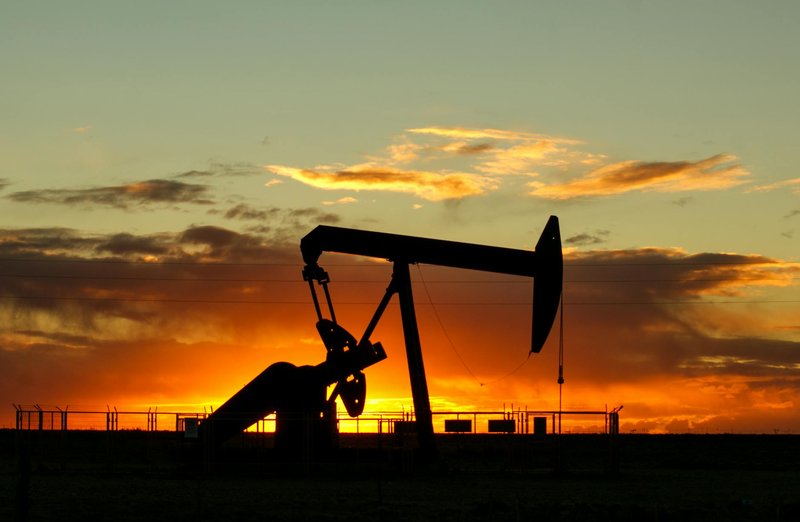
Saskatchewan is Canada’s second-largest oil producer, pumping roughly a tenth of the national total. The crude comes mostly from the southeast and west — the Bakken formation around Estevan and the heavier oil in the Lloydminster area straddling the Alberta border.
The two oils are genuinely different products. Bakken crude is light and sweet, the kind refineries pay a premium for and the kind that benefited enormously from horizontal drilling and fracking. Lloydminster-area oil is heavy and thick, closer in character to what comes out of the oil sands, and it needs blending or upgrading before it moves cleanly through a pipeline.
Natural gas plays a quieter supporting role. The province has historically supplied a meaningful share of Canadian production, much of it from the southwest, though gas here has always lived in oil’s shadow. The infrastructure — pipelines, the export routes south and east, the refining capacity — is built around crude.
What keeps Saskatchewan oil interesting is its adaptability. The province has leaned into enhanced recovery techniques, including injecting carbon dioxide into aging fields to squeeze out more crude while storing CO2 underground. The Weyburn field became one of the world’s most-studied carbon capture and storage sites for exactly this reason.
Agriculture: The Original Resource
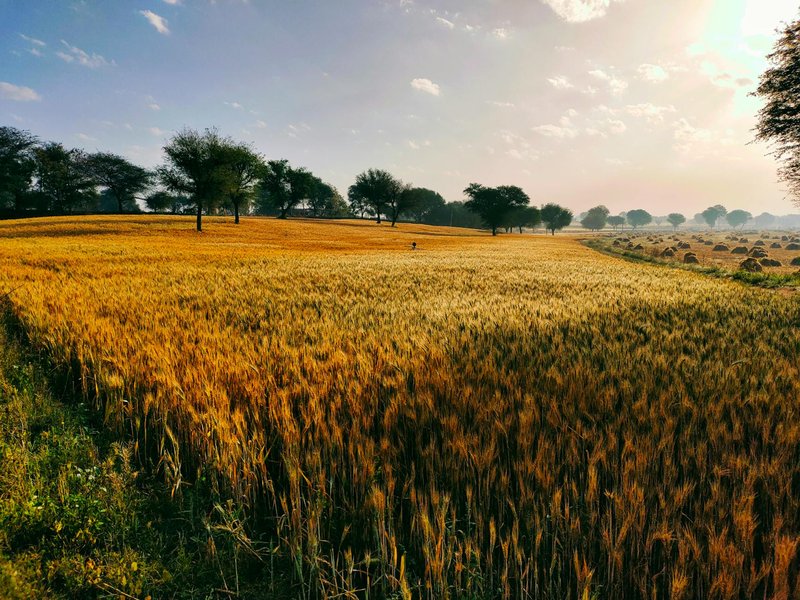
Before anyone drilled or mined here, the resource was the soil itself. Saskatchewan holds something like 40% of Canada’s cultivated farmland, and it grows more than half the country’s wheat. The province is also the dominant force in lentils — it’s one of the largest lentil exporters on the planet — along with canola, durum, peas, and mustard.
The geography did this. The southern half of the province is the Canadian portion of the Great Plains: deep, fertile soil, long summer daylight hours that push crops through a short but intense growing season, and flat terrain that suits large-scale mechanized farming. A single Saskatchewan grain farm can span thousands of acres.
Agriculture also feeds the resource economy in a circular way. Those crops need fertilizer, and the potash mined a kilometer below the same fields is a key fertilizer ingredient. The province quite literally grows food using minerals it pulls from underneath the farmland.
Calling agriculture a “natural resource” sometimes feels like a stretch — it’s farmed, not extracted. But the underlying asset is the land’s natural fertility, and on that measure Saskatchewan is one of the most productive grain regions anywhere. The Food and Agriculture Organization regularly ranks Canada among the top wheat and lentil exporters globally, and Saskatchewan is the engine behind those rankings.
Forestry
The northern half of Saskatchewan, where the prairie gives way to boreal forest, holds the province’s timber resource. Spruce, pine, poplar, and birch cover a large swath of land that most southern residents never see.
Forestry here is modest compared to potash or uranium, but it’s a steady regional employer, especially for northern and Indigenous communities. Mills produce lumber, pulp, and engineered wood products. The boreal forest also does quiet work that doesn’t show up in export figures: storing carbon, regulating water, and supporting wildlife and traditional land use. It’s a resource that’s worth more standing than the harvest numbers alone suggest.
Gold, Diamonds, and Base Metals
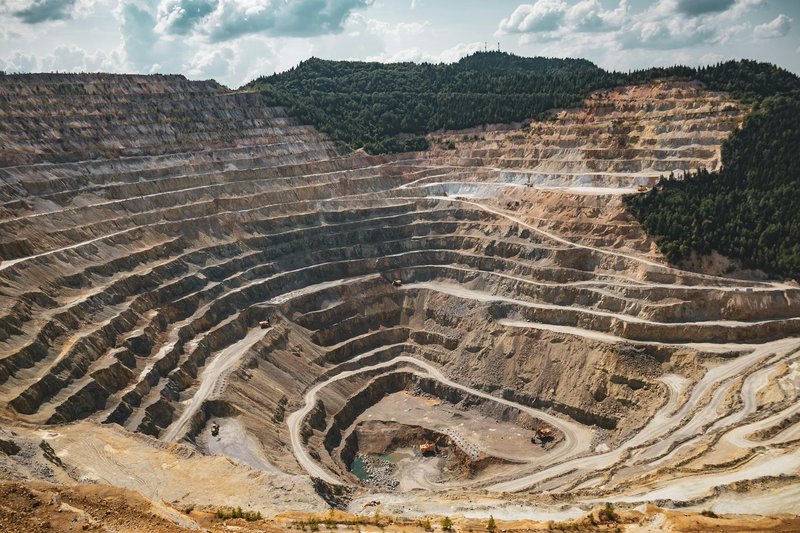
Saskatchewan’s mineral story doesn’t end with potash and uranium. The province produces gold, primarily from operations in the north, and hosts deposits of copper, zinc, and other base metals tied to the ancient volcanic rocks of the Canadian Shield. Run down the full list of minerals found in Saskatchewan and the breadth is striking — commodity after commodity, each with its own pocket of the province.
Diamonds are the intriguing maybe. The Fort à la Corne area, east of Prince Albert, contains one of the largest clusters of diamond-bearing kimberlite in the world. Whether it becomes a producing diamond mine has hinged on grade and economics for years, but the geology is genuinely rare — most of the planet doesn’t have a kimberlite field this size sitting under accessible ground.
These metals don’t anchor the economy the way the headline resources do, but they round out a portfolio that few jurisdictions can match for breadth.
The Emerging Three: Helium, Lithium, Rare Earths
This is where Saskatchewan’s resource map is actively being redrawn, and where the encyclopedic overviews tend to go quiet.
Helium. Most people associate helium with party balloons, but it’s a strategic resource for medical imaging, semiconductors, and aerospace. Saskatchewan’s deep underground gas reservoirs in the southwest contain helium at concentrations high enough to extract commercially, and the province has actively courted helium developers. Several purification plants have come online, making this one of North America’s more promising new helium regions — notable because global helium supply is chronically tight.
Lithium. The lithium here isn’t in hard rock; it’s dissolved in the brines that come up alongside oil. Companies are developing direct lithium extraction technology to pull battery-grade lithium out of that oilfield water, which would turn a waste stream into a critical-minerals supply for electric vehicle batteries. It’s early, but the resource is real and the timing — surging battery demand — couldn’t be better.
Rare earth elements. Saskatchewan built a rare earth processing facility in Saskatoon, one of the first of its commercial scale in North America, designed to separate and refine the rare earth metals that power magnets in EVs and wind turbines. The strategic angle is supply chain: rare earth processing has been heavily concentrated in a handful of countries, and a North American facility changes that calculus.
None of these three rivals potash yet. But all three sit in sectors with strong demand tailwinds, and Saskatchewan’s pattern of having globally significant quantities of whatever it has is worth betting on.
Coal
Saskatchewan still mines lignite coal in the southeast, near Estevan, and burns much of it locally for electricity. It’s a declining resource by design — the province is shifting its power mix away from coal, and carbon policy has put a clock on coal-fired generation. The same region’s experiments with carbon capture were partly an attempt to keep some coal viable. Coal’s role here is shrinking, but it’s still part of the present-day picture.
Resource Comparison Table
| Resource | Where | Significance | Status |
|---|---|---|---|
| Potash | Southern Sask. | ~1/3 of world production | Mature, expanding |
| Uranium | Athabasca Basin (north) | World’s highest grade | Mature, demand rising |
| Oil | Southeast & west | ~10% of Canadian output | Mature, adapting |
| Natural gas | Southwest | Meaningful national share | Mature |
| Agriculture | Southern plains | >50% of Canada’s wheat | Foundational |
| Forestry | Boreal north | Regional employer | Steady |
| Gold/base metals | Canadian Shield north | Established production | Active |
| Helium | Southwest | High-concentration reserves | Emerging |
| Lithium | Oilfield brines (south) | Battery-grade potential | Developing |
| Rare earths | Processing in Saskatoon | First-of-kind N. American plant | Emerging |
| Coal | Southeast | Local power generation | Declining |
Why It All Concentrates Here
There’s a reason one province ended up with this much. Saskatchewan straddles two very different geological worlds, and it got the best of both.
The north is Canadian Shield — some of the oldest exposed rock on the planet, the kind of ancient basement that hosts uranium, gold, and base metals along with diamond-bearing kimberlite. The south is sedimentary basin: layers of ancient sea floor and buried plant matter that became potash, oil, gas, coal, and helium-rich reservoirs. Drape fertile glacial soil over the top of the southern basin and you get the farmland too.
Few places on Earth combine an ancient shield and a productive sedimentary basin in one jurisdiction. Saskatchewan does, which is why a province most people couldn’t find on a map quietly helps fertilize the world’s crops, fuel its reactors, and — increasingly — supply the materials its batteries and magnets run on. Flat on the surface, deep where it counts.