Here’s the short version most people get wrong: South Africa has exactly one active volcano, and it isn’t anywhere near the mainland. It’s a cold, windswept lump of rock called Marion Island, floating roughly 2,000 kilometers southeast of Cape Town in the sub-Antarctic Indian Ocean. The mainland? Every volcano there is stone-dead, and has been for tens of millions to over a billion years.
That gap between what people assume and what’s actually true is the whole reason this topic is interesting. So let’s lay it out properly: where the volcanoes are, how old they are, why the mainland went quiet, and which sites you can actually stand on.
Table of Contents
- The quick answer
- Active, dormant, extinct: what the labels mean
- Marion Island: the only active one
- Pilanesberg: a billion-year-old caldera you can drive into
- Salpeterkop: the Karoo’s last gasp
- Why the mainland has no active volcanoes
- Can you visit them?
The quick answer
South Africa has one historically active volcano (Marion Island, last erupted 2004), no dormant ones, and a scattering of long-extinct volcanic features on the mainland. Here’s the lineup at a glance.
| Volcano / Feature | Location | Elevation | Last eruption | Status |
|---|---|---|---|---|
| Mascarin Peak (Marion Island) | Sub-Antarctic Indian Ocean | 1,230 m | 2004 | Active |
| Pilanesberg | North West Province | ~1,560 m (rim) | ~1.2 billion years ago | Extinct |
| Salpeterkop | Near Sutherland, Karoo | ~1,580 m | ~66 million years ago | Extinct |
A note before you scroll on: the Vredefort Dome, often lumped in with this topic, is not a volcano. It’s the eroded scar of a meteorite impact about 2 billion years ago, the largest verified impact structure on Earth. Worth knowing about, but it belongs in a different article.
Active, dormant, extinct: what the labels mean
These three words get thrown around loosely, so here’s the working definition geologists actually use.
Active means the volcano has erupted in recorded history and could erupt again. Marion Island qualifies because it last went off in 2004.
Dormant means the volcano hasn’t erupted recently but still has a live plumbing system underneath, with magma that could resurface. Think of it as sleeping, not dead. South Africa has none of these.
Extinct means the magma supply is gone. The volcano is no longer connected to any source of molten rock, and barring some unlikely shift in deep Earth processes, it will never erupt again. This is the category every mainland South African volcano falls into.
The distinction matters because “extinct” isn’t a guess about the future based on how long it’s been quiet. It’s a statement about plumbing. A volcano dormant for 10,000 years can still wake up. An extinct one has been cut off from its fuel.
Marion Island: the only active one
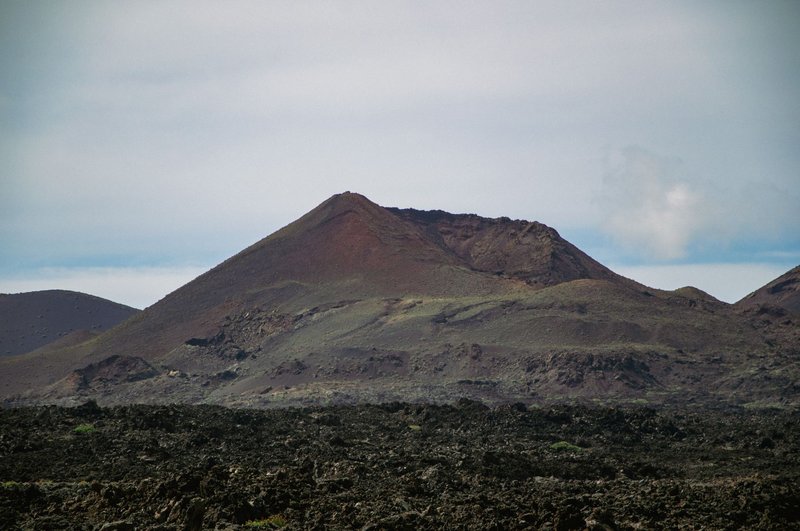
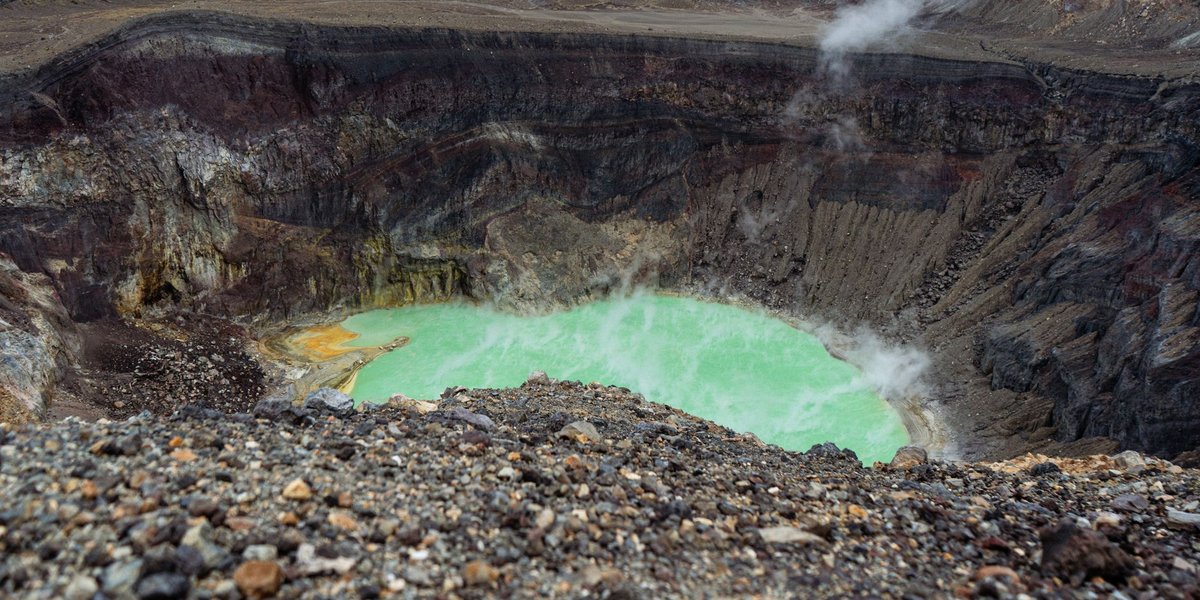
Marion Island is the larger of South Africa’s two Prince Edward Islands, and it’s the country’s only piece of currently active volcanic real estate. The whole island is essentially the exposed tip of a shield volcano rising from the seafloor, built up by basaltic lava over the last half-million years or so. Shield volcanoes are just one of several distinct kinds of volcano, and their broad, gently sloping profile is exactly what you’d expect from runny basaltic lava spreading out over time.
The high point, Mascarin Peak, reaches 1,230 meters. Eruptions here are mostly effusive, meaning lava flows rather than the explosive ash columns you picture from Vesuvius. The most recent activity in 2004 produced fresh lava flows that satellites picked up, and there was earlier confirmed activity in 1980. NASA’s Earth Observatory has documented the island’s geology in detail through its Marion Island brief.
Nobody lives here except rotating teams of South African scientists at a research station. The island is a registered Special Nature Reserve, home to one of the planet’s most important breeding grounds for king penguins, albatrosses, and elephant seals. The volcanism and the wildlife are linked: that basalt foundation, weathered into nutrient-rich soil and ringed by cold, productive ocean, is what makes the place livable for so many seabirds.
You cannot visit Marion Island as a tourist. Access is restricted to authorized research personnel, and the logistics involve a multi-day voyage on the SA Agulhas II icebreaker. So while it’s the answer to “does South Africa have an active volcano,” it’s the one you’ll never stand on.
Pilanesberg: a billion-year-old caldera you can drive into
This is the one that rewards a second look. Pilanesberg, in North West Province, is the eroded core of an alkaline ring complex roughly 1.2 billion years old, making it one of the oldest volcanic structures of its kind anywhere. It’s also one of only three large alkaline ring complexes on Earth, alongside formations in Greenland and the United States.
At its peak, the original volcano may have stood taller than anything around today. Estimates from the Pilanesberg geology literature suggest the structure could once have risen well above 5,000 meters, potentially taller than Mount Everest before more than a billion years of erosion ground it down to the concentric rings of hills you see now.
What survives is the plumbing, not the mountain. The near-circular range of hills, about 27 kilometers across, traces the old magma conduits and ring dykes. Rainwater and time stripped away the softer outer rock, leaving rings of harder volcanic material standing in relief. From the air it reads as an almost perfect bullseye stamped into the bushveld.
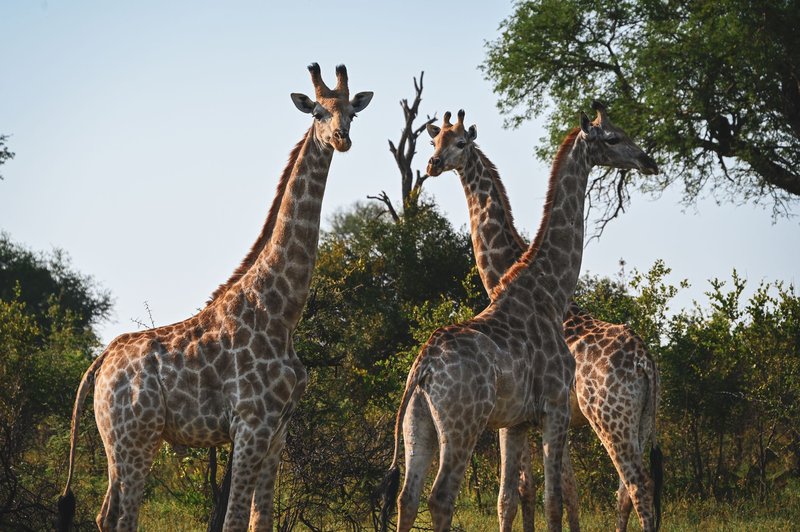
And then there’s the bonus: the whole crater is now Pilanesberg National Park, a Big Five game reserve. The caldera’s bowl shape creates a contained ecosystem, and the volcanic soils support the grasses that feed everything up the food chain. You’re looking at lions and rhinos grazing inside the remains of a supervolcano. The park’s own account of how the volcano shaped the reserve is worth a read before you go.
Salpeterkop: the Karoo’s last gasp
Salpeterkop sits near Sutherland in the Northern Cape, and it represents the most recent mainland volcanic activity in South Africa, which still puts it at roughly 66 million years ago. That timing lines up almost exactly with the end of the Cretaceous, the same era boundary marked by the asteroid that finished off the dinosaurs, though the two events are unrelated.
It’s a small, weathered cone, not a dramatic peak, and it’s easy to drive past without realizing what you’re looking at. The volcanism here was tied to deep-seated activity associated with kimberlite eruptions, the same type of pipe geology that brought diamonds to the surface elsewhere in southern Africa. Salpeterkop itself is more of a tuff and lava remnant than a diamond pipe, but it belongs to that same late-Cretaceous pulse of activity that briefly punctured the otherwise quiet Karoo.
Sutherland is better known today for something the dead volcano made possible: it’s home to the South African Astronomical Observatory and the Southern African Large Telescope, parked here precisely because the high, dry Karoo plateau has some of the clearest, darkest skies in the southern hemisphere.
Why the mainland has no active volcanoes
This comes down to plate tectonics, and it’s the genuinely satisfying part of the story.
Most of the world’s active volcanoes sit on the boundaries between tectonic plates, where one plate dives under another or two plates pull apart. The Pacific “Ring of Fire” is the textbook case. South Africa sits in the dead center of the African Plate, far from any active boundary. No subduction, no rifting, no fresh magma being forced up.
The mainland’s volcanic features are all relics of much earlier chapters in Earth’s history, when the continent’s geology was far more violent: the assembly of ancient supercontinents, deep mantle plumes, and the kimberlite eruptions that later seeded the diamond fields. Those drivers switched off long ago. The East African Rift, where the continent is slowly tearing apart and producing genuinely active volcanoes like Nyiragongo and the fire mountains you find among the volcanoes of Ethiopia, runs thousands of kilometers to the north and hasn’t reached this far south.
Marion Island is the exception that proves the rule. It’s not on the mainland or even on the same crustal block. It sits near the Southwest Indian Ridge, a spreading boundary on the ocean floor, which is exactly the kind of setting where active volcanoes belong.
Can you visit them?
Two of the three are completely accessible, and they make a genuinely good geology-plus-something-else day out.
Pilanesberg National Park is the easy win. It’s about two and a half hours from Johannesburg, open year-round, and you can self-drive the loop roads through the crater looking for game. Go early morning or late afternoon for the best wildlife sightings, and take a moment at one of the higher viewpoints to appreciate that the ring of hills around you is the eroded throat of an ancient volcano.
Salpeterkop and Sutherland are a longer haul, deep in the Karoo, but the trip pairs a quiet extinct volcano with a stargazing destination that’s hard to beat. Book a night tour at the observatory, and you’ll understand why astronomers chose this spot.
Marion Island stays off-limits. Unless you land a research posting, it remains the volcano you can read about but never reach.
So the next time someone insists South Africa has no volcanoes, you’ve got the better answer: one active one in the freezing southern ocean, a billion-year-old crater full of lions, and a Karoo cone that went quiet around the time the dinosaurs did.