Two molecules can have the exact same formula and still be completely different substances. Same atoms, same count, same chemical bookkeeping — and yet one is the sugar in your fruit and the other is the sugar in your blood. That’s isomers in one sentence: identical ingredients, different assembly.
The word comes from the Greek isos (equal) and meros (part). Equal parts, arranged differently. Glucose and fructose both wear the formula C₆H₁₂O₆, but your tongue, your enzymes, and your bloodstream treat them as separate things. The arrangement is the whole story.
This is one of those chemistry topics that looks like a list of vocabulary words until it clicks — and then it becomes a map you can actually navigate. Below is the map.
Table of Contents
- The Lego analogy that makes isomers make sense
- The big split: structural vs. stereoisomers
- Structural (constitutional) isomers
- Stereoisomers
- Enantiomers: the mirror-image twins
- Diastereomers: same family, not mirrors
- Cis-trans (geometric) isomers
- Conformers: the technically-isomers footnote
- The comparison table
- How to identify which type you’re looking at
- Why any of this matters
- FAQ
The Lego analogy that makes isomers make sense {#the-lego-analogy}

Hand two kids the same bucket of Lego bricks — say, eight bricks, identical pieces, no extras. One builds a car. The other builds a house. Same bricks, same count, different result. Nobody’s confused about why a car isn’t a house.
Isomers work the same way. The “bricks” are atoms, the “build” is the structure, and the molecular formula is just an inventory of what’s in the bucket. C₄H₁₀ tells you there are four carbons and ten hydrogens. It does not tell you whether they’re lined up in a straight chain or branched off to the side. Those are two different molecules — butane and isobutane — and they boil at different temperatures, sit in different spots in your lighter fluid, and have different names.
Hold onto the analogy. Every type of isomer below is just a different answer to the question, “okay, but how did you build it?”
The big split: structural vs. stereoisomers {#the-big-split}
There are exactly two top-level branches, and everything else hangs off them.
Structural isomers (also called constitutional isomers) have their atoms connected in a different order. The bonds themselves go to different places. Think car vs. house — the pieces attach to different pieces.
Stereoisomers have their atoms connected in the same order, but arranged differently in three-dimensional space. The connections are identical; the geometry isn’t. Think of your two hands. Same parts, connected the same way — thumb, four fingers, palm — but one is a left and one is a right, and no amount of rotating turns one into the other.
Here’s the taxonomy tree, top to bottom:
“` ISOMERS | ——————————— | | STRUCTURAL ISOMERS STEREOISOMERS (different connectivity) (same connectivity, | different 3D arrangement)
- chain |
- positional ——————-
- functional group | |
ENANTIOMERS DIASTEREOMERS
(mirror images) |
                                      - cis-trans
                                      - others
“`
Get this fork straight and the rest is detail. The first question for any pair of isomers is always: are the atoms connected in the same order or not? That single question routes you down the correct branch.
Structural (constitutional) isomers {#structural-isomers}
Same formula, different connectivity. The atoms are bonded to different neighbors. These come in three common flavors.
Chain isomers differ in how the carbon skeleton branches. Pentane (C₅H₁₂) can be a straight five-carbon chain, or it can branch into isopentane, or branch again into neopentane. Three different molecules, one formula, different boiling points — straight-chain pentane boils at 36°C while neopentane boils at 9.5°C, because branching changes how tightly molecules pack together. This branching game plays out across the whole family of hydrocarbons, where a single carbon-and-hydrogen formula can hide several distinct compounds.
Positional isomers keep the same skeleton but move a functional group to a different spot. Propan-1-ol has its –OH group on the end carbon; propan-2-ol (rubbing alcohol) has it on the middle carbon. Same C₃H₈O formula, different position, different molecule.
Functional group isomers are the most dramatic. Same atoms, but they assemble into entirely different kinds of compounds. C₂H₆O can be ethanol — the alcohol you drink — or dimethyl ether, a gas. One you can sip; the other you cannot. Same formula. That gap is the whole point.
Stereoisomers {#stereoisomers}
Now the atoms are connected in the same order, and we’re only arguing about arrangement in space. This is where chemistry gets genuinely strange, because two molecules can be “the same on paper” and behave completely differently in the real world.
Stereoisomers split into two groups: enantiomers (mirror images) and diastereomers (everything else). The cleanest way to tell them apart is the mirror test, coming up next. If you’d like to see the distinction drawn out on real molecules, a gallery of worked examples of stereoisomers makes the same-formula, different-geometry idea concrete.
Enantiomers: the mirror-image twins {#enantiomers}

Enantiomers are non-superimposable mirror images of each other. The textbook word for this is chirality, and the everyday example is your hands. Your left hand in a mirror looks exactly like your right hand. But try to lay one directly on top of the other, palms down — they don’t line up. The thumbs point opposite ways. That mismatch is chirality.
A molecule is chiral when it has a carbon bonded to four different groups. That carbon becomes a center of asymmetry, and suddenly the molecule has a “left-handed” and a “right-handed” version. Chemists label them with prefixes like R/S or D/L, or describe how they rotate polarized light (one spins it left, one spins it right — which is why enantiomers are also called optical isomers).
Two enantiomers share nearly every physical property — same melting point, same boiling point, same density. They only diverge when they meet something else that’s chiral. And biology is relentlessly chiral. Your enzymes, your receptors, your taste buds are all one-handed, so they grab one enantiomer and ignore its mirror twin.
The most infamous case is thalidomide. Marketed in the late 1950s as a sedative and anti-nausea drug for pregnant women, it exists as two enantiomers. One relieved morning sickness. The other caused severe birth defects. The molecule was sold as a mix of both, and the consequences reshaped how drugs are tested and regulated worldwide — the FDA’s own history of the case credits it with driving the 1962 law that required proof of safety and efficacy before approval. Same atoms, same connectivity, mirror-image arrangement. One letter of difference in the lab; a public-health catastrophe in the world.
Diastereomers: same family, not mirrors {#diastereomers}
Diastereomers are stereoisomers that are not mirror images of each other. That’s the entire definition — it’s defined by exclusion. If two molecules have the same connectivity, differ in 3D arrangement, and fail the mirror test, they’re diastereomers.
Because they’re not mirror images, diastereomers don’t share physical properties the way enantiomers do. They have different melting points, different boiling points, different solubilities. That’s actually useful: chemists can separate diastereomers by ordinary methods like distillation or crystallization, whereas separating enantiomers requires a chiral helper.
Molecules with two or more chiral centers usually produce a mix of enantiomer pairs and diastereomers. Tartaric acid, a compound found in grapes and the crust of aged wine, is the classic teaching example — it has forms that are enantiomers of each other and a form (called meso) that’s a diastereomer of those. If the meso twist is hard to picture, working through more examples of diastereomers shows exactly how changes at a single stereocenter break the mirror relationship. Cis-trans isomers, coming up next, are also a kind of diastereomer.
Cis-trans (geometric) isomers {#cis-trans}
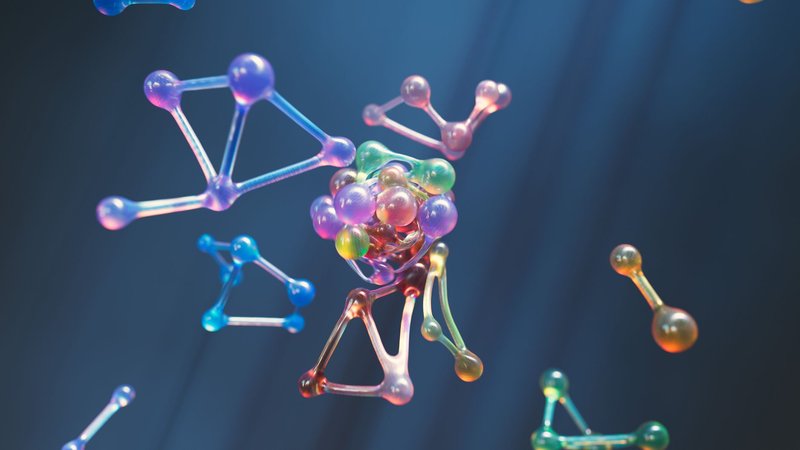
Cis-trans isomers — also called geometric isomers — show up when there’s a structural feature that can’t freely rotate, usually a carbon-carbon double bond or a ring. Because the bond is locked, the groups attached to it are frozen on one side or the other.
Cis means the matching groups sit on the same side of the double bond. Trans means they sit on opposite sides. The double bond acts like a hinge that’s been welded shut: whatever side a group ended up on, that’s where it stays.
The example you’ve eaten is fat. Naturally occurring unsaturated fats are mostly cis — the kink in the cis configuration is why olive oil is liquid at room temperature. Industrial hydrogenation can flip some of those bonds to trans, producing the straighter, more solid trans fats that the World Health Organization has called for eliminating from the global food supply because of their link to heart disease. Same fatty-acid formula. The geometry around one double bond is the difference between a heart-healthy oil and an artery-clogging one.
Another example lives in your eyes. The retinal molecule in your retina absorbs light by snapping from a cis to a trans configuration, and that tiny geometric flip is the first physical step of vision.
Conformers: the technically-isomers footnote {#conformers}
You’ll sometimes see conformers (conformational isomers) listed alongside the others. These are arrangements that differ only by rotation around single bonds — like the difference between butane’s groups being staggered or eclipsed as the chain twists.
The honest framing: conformers interconvert freely at room temperature just by rotating, so most chemists don’t treat them as truly separate compounds the way enantiomers or chain isomers are. They’re a real concept, worth knowing the word for, but they don’t behave like distinct, bottle-able substances. File them under “advanced footnote.”
The comparison table {#comparison-table}
Here’s every type side by side — the thing most explainers skip.
| Type | Connectivity | 3D arrangement | Physical properties | Everyday example |
|---|---|---|---|---|
| Chain | Different | — | Different | Pentane vs. neopentane |
| Positional | Different | — | Different | Propan-1-ol vs. propan-2-ol |
| Functional group | Different | — | Very different | Ethanol vs. dimethyl ether |
| Enantiomers | Same | Mirror images | Nearly identical (differ only with chiral things) | Two thalidomide forms |
| Diastereomers | Same | Not mirror images | Different | Tartaric acid forms |
| Cis-trans | Same | Same vs. opposite side of a fixed bond | Different | Cis vs. trans fats |
| Conformers | Same | Rotation around single bonds | Interconvert freely | Butane staggered vs. eclipsed |
How to identify which type you’re looking at {#how-to-identify}
Run any two molecules through this decision flow and you’ll land on the right answer every time.
- Do they have the same molecular formula?
- No → they’re not isomers at all. Stop.
-
Yes → continue.
-
Are the atoms connected in the same order (same connectivity)?
- No → structural isomer. (Then ask: did the carbon skeleton change → chain; did a group move → positional; did the compound type change → functional group.)
-
Yes → it’s a stereoisomer. Continue.
-
Are the two molecules mirror images of each other?
- Yes, and they don’t superimpose → enantiomers.
-
No → diastereomers (and if the difference is which side of a double bond or ring, specifically cis-trans).
-
Do they differ only by rotation around a single bond?
- Yes → conformers (and usually not counted as distinct compounds).
The two questions that do almost all the work: same connectivity? and mirror images? Master those and you’ve mastered isomer identification.
Why any of this matters {#why-it-matters}
It’s tempting to treat isomers as a vocabulary hurdle to clear before the exam. But the reason chemistry cares so much about arrangement is that the world cares about arrangement.
Your body is built from chiral molecules and runs on chiral machinery. That’s why one enantiomer of a drug can heal while its mirror twin does nothing — or harms. It’s why roughly half of all drugs on the market are sold as single enantiomers, deliberately purified so you get only the form that works. The amino acids that build your proteins are almost all the “left-handed” (L) form; the sugars in your DNA are “right-handed” (D). Life picked a hand and stuck with it.
It’s why the same fatty acid can be good or bad for your heart depending on one double bond’s geometry. It’s why glucose and fructose, mirror-formula sugars, hit your metabolism on different pathways. Arrangement is not a technicality. Arrangement is function.
That’s the real payoff of learning isomers: you stop seeing a molecular formula as the answer and start seeing it as the question.
FAQ {#faq}
What is the simplest definition of an isomer? Two or more compounds with the same molecular formula but a different arrangement of atoms. Same ingredients, different build.
What is the main difference between structural isomers and stereoisomers? Structural isomers have their atoms connected in a different order — the bonds go to different places. Stereoisomers have the same connectivity but a different arrangement in 3D space.
Are enantiomers and diastereomers both stereoisomers? Yes. Both have identical connectivity. Enantiomers are non-superimposable mirror images of each other; diastereomers are stereoisomers that are not mirror images.
Why do enantiomers behave the same except in the body? Enantiomers share nearly all physical properties and only differ when they interact with something else that’s chiral. Biological systems — enzymes, receptors — are intensely chiral, so they distinguish one enantiomer from the other.
What’s an everyday example of cis-trans isomers? Fats. Naturally unsaturated fats are mostly cis; industrial processing creates straighter trans fats, which are linked to heart disease.
Is glucose an isomer of fructose? Yes. Both have the formula C₆H₁₂O₆ but different structures, which is why they taste different and your body metabolizes them differently.
Are conformers true isomers? Technically they’re conformational isomers, but they interconvert freely just by rotating around single bonds, so most chemists don’t count them as separate, distinct compounds.