Contents
- What “endemic” means in Israel
- Plants
- Mammals
- Reptiles
- Amphibians and fish
- Invertebrates
- Threats and conservation
- Seeing these species
- A note on the data
- Conclusion
What “endemic” means in Israel
An endemic species lives in one defined area and nowhere else. The catch with the endemic species of Israel is that the area rarely matches the border. Israel is a small country, and the Mediterranean hills, Jordan Valley and Negev all continue into neighboring territory. Very few organisms stop at a political line.
So most “Israeli endemics” are really southern Levant endemics: species found in Israel and the adjacent Palestinian territories, and sometimes a strip of Jordan or Lebanon or Syria. A smaller group is truly confined to a single valley, spring or hillside inside Israel. Both count here, and each entry says which kind it is.
The country packs desert, Mediterranean woodland, coastal dunes, freshwater wetlands and a rift valley into a space roughly the size of New Jersey. That mix, plus its position between three continents, is why the endemic list is longer than you’d expect.
Plants
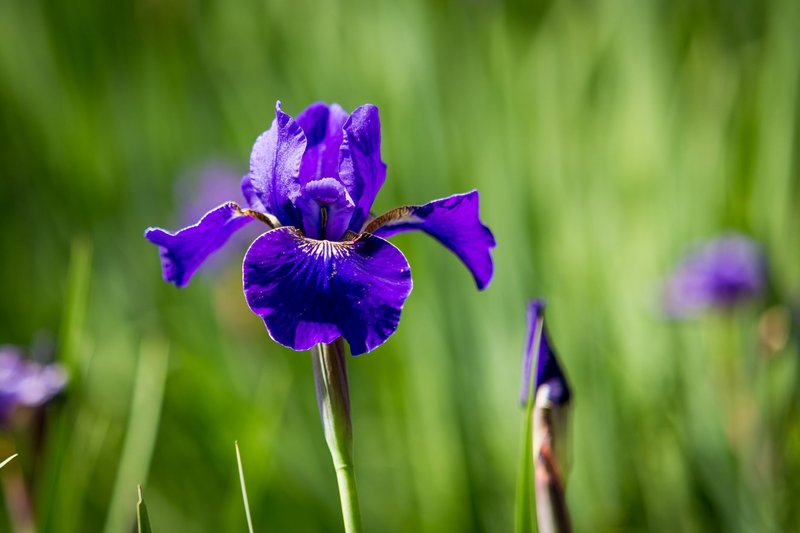
Plants carry most of the endemism. A Hebrew University study on endemism in the flora of Israel counted about 155 endemic species, around 6.5% of the flora, based on 1984 data. Most are neo-endemics: relatively young species that split off recently and haven’t spread far. They cluster in three places: the coastal plain, the transition zones between Mediterranean and desert climates, and the desert highlands. The same pattern runs north into Syria, where the endemic plants are catalogued species by species.
A few that show the pattern:
Coastal iris (Iris atropurpurea). A dark purple-maroon flower of the coastal sands, one of the Oncocyclus irises. It grows on the dune ridges of the central coast, where housing and agriculture have taken most of its habitat. It’s a protected species and a symbol of the sands’ decline.
Gilboa iris (Iris haynei). Named for Mount Gilboa, where it grows. It blooms in late winter and draws visitors every year. Pick one and you break the law; the plants are protected.
Scandix blepharicarpa. An obscure relative of shepherd’s needle that earned its own research attention in the Hebrew University literature. It’s the kind of plant most visitors would walk past, and a good reminder that endemics are often small and unglamorous.
Many of the remaining endemics are annuals and herbs of rocky slopes and loess soils. They germinate after winter rain and are gone by summer, which is why botanical surveys time their visits to spring.
Mammals
Endemic mammals are rare. Large animals roam, and roaming crosses borders. The ones that qualify tend to be small or restricted to a harsh habitat.
Negev white-toothed shrew (Crocidura). A tiny insectivore of the Negev highlands. Shrews eat almost constantly and live in a narrow slice of desert microhabitat, so a small population in a dry region is easily lost. It’s rarely seen and mostly known from trapping surveys.
Acacia gazelle (Gazella acaciae). Tied to acacia woodland in the Arava and the southern desert. Its range is regional, not strictly Israeli, but it’s a signature animal of the Negev’s acacia wadis. Acacia trees are its shade and food, so anything that damages the trees damages the gazelle.
Reptiles
Reptiles do well in the south and in rocky, isolated terrain, and a few are narrow specialists.
Dayan’s kukri snake. A small, secretive snake known from limited localities. Like most snakes of its type, it’s seen rarely, partly because it spends its days underground or under stones.
Be’er Sheva fringe-fingered lizard (Acanthodactylus beershebensis). One of the best-known reptile endemics of the country. It lives on the loess soils around the northern Negev, the same flat, fertile land that Israel’s farms and the city of Be’er Sheva have spread over. Fringe-fingered lizards get their name from the comb of scales on their toes, which helps them run across loose sand. This species has lost most of its range to development and is considered endangered.
Amphibians and fish
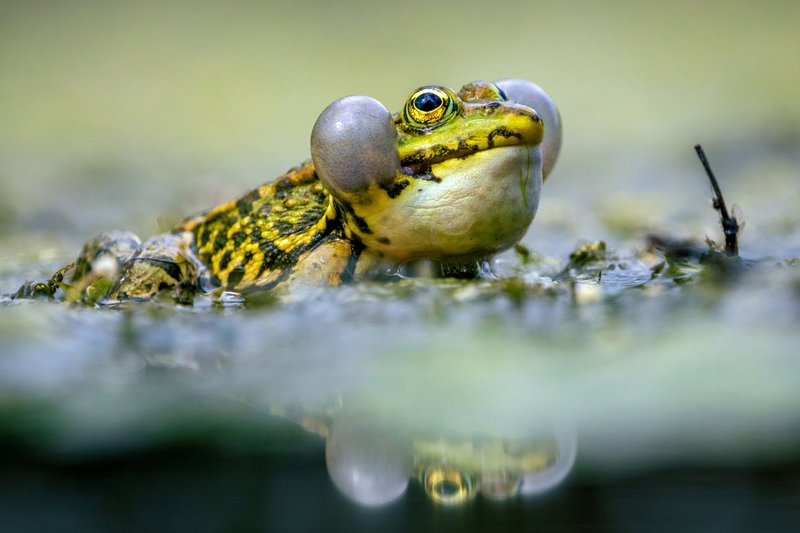
Hula painted frog (Latonia nigriventer)
This is the story that gets people interested in the topic. The Hula painted frog was known from a handful of specimens collected in the Hula Valley in the 1940s and 1950s. In the 1950s the Hula marshes were drained for farmland, and the frog vanished. The IUCN declared it extinct in the 1990s.
In 2011, a ranger at the Hula Nature Reserve found one. Genetic work later showed it wasn’t a normal discoglossid at all but the last living member of a genus (Latonia) otherwise known only from fossils. Biologists call a species like that a living fossil. It’s a rare case of an extinct-listed animal turning up alive, and since the rediscovery the reserve has monitored the population closely.
Yarkon bream (Acanthobrama telavivensis)
A small freshwater fish from the coastal rivers near Tel Aviv. The Yarkon River was heavily polluted and drained for decades, and the bream nearly disappeared. It’s now bred in captivity and released back into restored streams, one of the more hopeful stories in the country’s freshwater conservation.
Kinneret bleak (Mirogrex terraesanctae)
The Sea of Galilee’s most common fish, locally called the lavnun, has been a food source around the lake for centuries and is found in the Kinneret and its drainage. It’s restricted to this one lake system, which makes it endemic even though it’s abundant. Endemic doesn’t mean rare; it means the lake is the entire range.
Invertebrates
Invertebrates are the least studied group and probably undercounted.
Blind cave shrimp (Typhlocaris galilea). A pale, eyeless shrimp found in the cave spring of Ein Nur, near Tabgha on the Sea of Galilee. Like other cave animals it lost its eyes and pigment because neither helps in the dark. It lives in one tiny habitat, so a single pollution event or a drop in the water table could end the species.
Beetles and moths. Entomologists have described endemic beetles and moths from the dunes, the Judean Desert and the Hermon slopes. Many are known from a few localities and have no common names, which is its own conservation problem: nobody campaigns for a species with no popular name.
Threats and conservation
The pressures are the usual ones, concentrated in a small, crowded country:
- Development. The coastal plain holds most of the population and most of the endemic plants. Housing and roads fragment habitat quickly.
- Draining and pollution. The Hula marshes and the Yarkon are the clearest cases, and both cost endemic species.
- Water extraction. Springs and aquifers feed the cave and wetland species. Lower the water table and they go.
- Agriculture. Northern Negev loess soils, home to the Be’er Sheva lizard, are also prime farmland.
Protection runs through the Israel Nature and Parks Authority, which manages reserves, enforces plant-picking bans and runs breeding programs. Internationally, assessments of species such as the Hula painted frog are tracked on the IUCN Red List. Habitat restoration at Hula and the Yarkon shows these animals can come back when water and land are given back to them.
Seeing these species
Wild endemics are hard to find. A few reliable options:
- Hula Nature Reserve (Galilee). Wetland habitat of the Hula painted frog. The frog itself is small, nocturnal and not displayed, so go for the birds and the habitat.
- Mount Gilboa (late winter). The Gilboa iris season is short. Stay on the paths.
- Coastal dune reserves. Remnant patches hold the coastal iris and other sand specialists.
- Sea of Galilee. The Kinneret bleak is on local menus and in the water, though it’s the cave shrimp you can’t see without special access.
Check opening times and rules with the Nature and Parks Authority before you go. Several sites close or restrict access during sensitive seasons.
A note on the data
Counts of endemic species vary by source. The 155-plant, 6.5% figure comes from a 1984 study, and taxonomy has changed since: species get split, merged and renamed, and plants once treated as endemic to Israel have been found across the border. Conservation statuses also change as populations are reassessed. Treat the numbers as a snapshot, and check the IUCN Red List and the Nature and Parks Authority for current assessments.
Conclusion
The endemic species of Israel are a regional collection more than a national one. Plants lead in numbers, hundreds of kilometers of desert and sand hold a few specialist mammals and reptiles, and a handful of amphibians, fish and cave animals survive in single valleys and springs. The Hula painted frog is the one to remember: a species written off as extinct, found alive again in the marsh that was supposed to have destroyed it. It’s proof that protecting a small piece of habitat can matter more than anyone expected.