TLDR
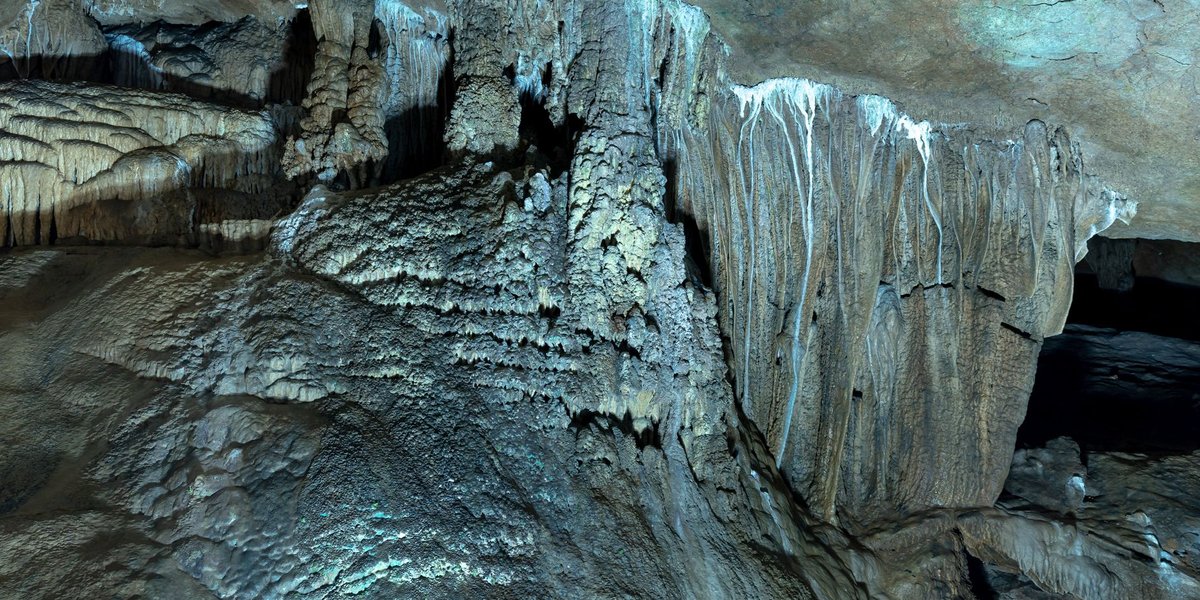
The Philippines sits on top of some of the densest karst limestone in Southeast Asia, which means caves everywhere — over 1,500 documented systems and counting. If you only see one, make it Puerto Princesa Underground River in Palawan, a UNESCO World Heritage site with 8.2 kilometers of navigable river running under a mountain. If you want the best single day of spelunking in the country, that’s Sumaguing Cave in Sagada. Families wanting something dramatic but low-risk should look at Callao Cave in Cagayan, which has a chapel built inside it. Everything else on this list fills in the gaps those three don’t cover — older caves, harder caves, and ones almost nobody outside the local tourism office has heard of.
Table of Contents
- Why the Philippines Has So Many Caves
- Palawan
- Sagada and the Cordillera
- Bohol and the Visayas
- Cagayan and Northern Luzon
- Mindanao
- Comparison Table
- Permits, Guides, and Gear
- FAQ
Why the Philippines Has So Many Caves
The archipelago’s limestone belts — remnants of ancient coral reefs pushed upward over millions of years — make it one of the most cave-dense countries on earth. Palawan alone has more than 300 documented systems, and that’s before you count the ones still unmapped in Mindanao’s interior. Rainwater dissolves the limestone over millennia, carving the passages, chambers, and underground rivers that show up on this list.
That geology also explains why so many entries here double as archaeological sites. Caves keep human remains, pottery, and burial jars intact far longer than open-air sites do, which is why Tabon Man — the oldest human fossil found in the Philippines — turned up in a cave, not a field.
Palawan
Palawan carries the country’s cave reputation almost single-handedly, and for good reason — it has the UNESCO site, the archaeology, and the sheer volume of formations.
1. Puerto Princesa Underground River
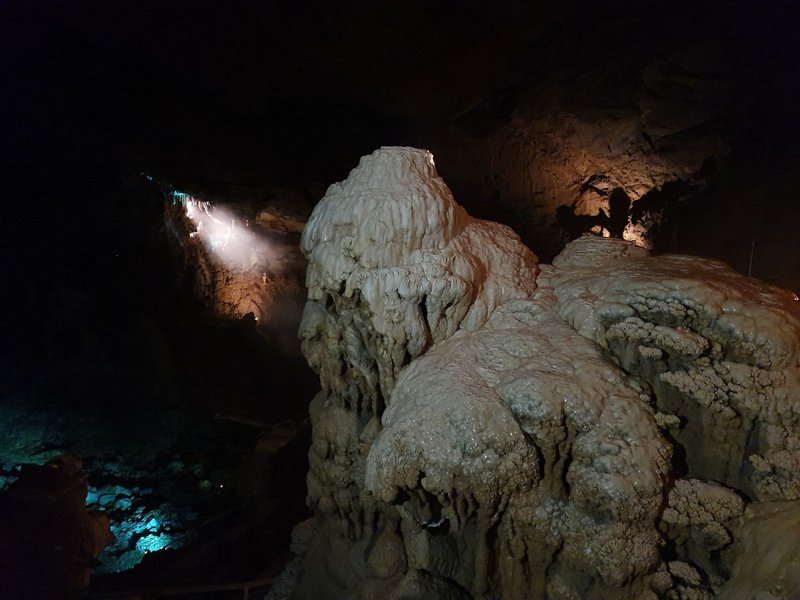
The headline act. This UNESCO World Heritage Site runs 8.2 kilometers through a cave system, though tourists only travel the first 1.5 kilometers by paddleboat before turning back. The cathedral-sized chambers near the entrance echo with bat colonies and swiftlets, and guides point out formations named for what they resemble — a Nativity scene, a giant mushroom, the Vatican dome.
- Location: Sabang, Puerto Princesa City
- How to get there: Van or shared shuttle from Puerto Princesa city proper (about 1.5–2 hours), then a short boat crossing to the cave mouth
- Difficulty: Easy — seated in a paddleboat the entire time
- Standout feature: Navigable underground river with a marine-to-freshwater ecosystem transition inside the cave
- Entrance fee: Around ₱300–450 for the boat tour, booked as part of a permit system that caps daily visitors
- Best season: November to May, dry season; the river can close to tours during heavy rain
Because UNESCO caps daily visitor numbers to protect the ecosystem, book your slot days in advance during peak season — walk-ins regularly get turned away.
2. Tabon Caves
This is where Tabon Man’s skull fragments — dated to roughly 16,500 years old — were excavated in 1962, making it the most important archaeological cave site in the country. The complex has 215 recorded caves and rock shelters, though only a handful are open to visitors.
- Location: Lipuun Point, Quezon, Palawan
- How to get there: Boat from Quezon town proper, roughly 15–20 minutes across the bay
- Difficulty: Moderate — some scrambling over rock and uneven cave floor
- Standout feature: Direct archaeological link to the earliest known human presence in the Philippines
- Entrance fee: Around ₱150–200, museum included
- Best season: Dry season (December–May); the boat crossing gets rough in typhoon months
3. Ugong Rock Cave
A vertical rather than horizontal experience — you climb up through the rock formation using a network of ropes and iron rungs, then rappel down the outside.
- Location: Barangay Tagabinet, Puerto Princesa
- How to get there: 40-minute drive from Puerto Princesa city
- Difficulty: Moderate to challenging — requires upper-body effort and comfort with heights
- Standout feature: Ends in a zipline back to the entrance
- Entrance fee: Around ₱250, guide included
- Best season: Year-round, but avoid immediately after heavy rain when rock gets slick
4. Green Canyon Cave (Estrella Falls area)
Less visited than the big three, this cave sits along the Ipahan River and is reached mostly by paddling in.
- Location: Barangay Ipahan, Puerto Princesa
- How to get there: Boat trip from a nearby jump-off point, then a short trek
- Difficulty: Moderate, involves wading and swimming sections
- Standout feature: Emerald-colored water inside a narrow limestone gorge leading to the cave mouth
- Entrance fee: Roughly ₱300 including boat and guide
- Best season: Dry season for lower, clearer water levels
Sagada and the Cordillera
Sagada built its entire tourism identity around caving, and it shows — the guide network here is the most organized outside Palawan.
5. Sumaguing Cave
Known locally as the “Big Cave,” this is the benchmark spelunking experience in the Philippines. The standard route takes two to three hours, descending past rock formations nicknamed King’s Curtain and the Rice Terraces before reaching an underground pool.
- Location: Sagada, Mountain Province
- How to get there: Walk from Sagada town center to the cave entrance, about 15–20 minutes
- Difficulty: Challenging — narrow squeezes, slick rock, and sections where guides use ropes to lower you down
- Standout feature: The connection route to Lumiang Cave, a 3–4 hour traverse for experienced cavers
- Entrance fee: Guide fees run around ₱800–1,200 per group, mandatory
- Best season: Dry season (November–April); the cave floods and closes during heavy rain
6. Lumiang Burial Cave
The entrance chamber holds dozens of centuries-old hanging coffins stacked against the cave wall — some estimated at 500 years old, belonging to the Igorot practice of aboveground burial.
- Location: Sagada, Mountain Province
- How to get there: Short walk from Sagada town, often combined with the Sumaguing traverse
- Difficulty: Easy for the entrance chamber alone; challenging if continuing into the full traverse
- Standout feature: Visible coffin stacks dating back centuries
- Entrance fee: Included in the standard Sagada guide fee
- Best season: Year-round for the entrance viewing; dry season only for the traverse
7. Crystal Cave
A quieter alternative near Sagada, named for the calcite formations that catch headlamp light.
- Location: Near Sagada town proper
- How to get there: Short guided hike from town
- Difficulty: Moderate, with tight passages
- Standout feature: Dense clusters of crystalline calcite formations
- Entrance fee: Around ₱500–700 with guide
- Best season: Dry season
Bohol and the Visayas
Bohol’s caves get less attention than its Chocolate Hills, but the region has some of the best swimming-cave experiences in the country.
8. Hinagdanan Cave
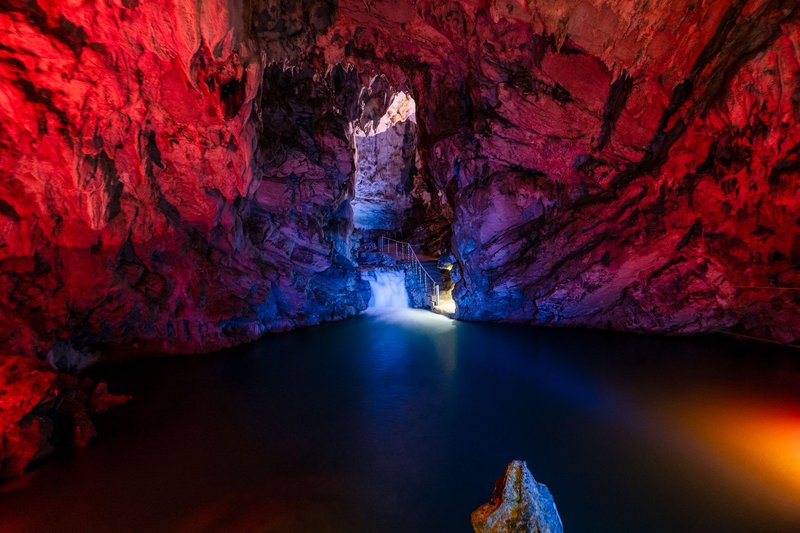
A cave with a natural skylight opening onto a swimmable underground lagoon — one of the more photographed caves in the Visayas because of the shaft of light hitting the water.
- Location: Dauis, Panglao Island, Bohol
- How to get there: Short tricycle or van ride from Panglao’s main tourist strip
- Difficulty: Easy — stairs lead down to a lit walkway and swimming area
- Standout feature: Swimmable underground lagoon lit by a natural skylight
- Entrance fee: Around ₱50–100
- Best season: Year-round; water level stays fairly consistent
9. Cantabon Cave
Siquijor’s island reputation runs toward folk healing and mysticism, but Cantabon Cave is a straightforward, well-run adventure cave.
- Location: Cantabon, Siquijor
- How to get there: Habal-habal (motorbike taxi) or rented scooter from San Juan or the port town
- Difficulty: Moderate — wading through waist-deep water in sections
- Standout feature: A network of chambers connected by an underground stream you walk through
- Entrance fee: Around ₱300 including guide and gear rental
- Best season: Dry season, when water levels are lower and safer to wade
10. Odloman Cave
One of the largest cave systems in the Visayas, on Bantayan Island off Cebu’s northern tip.
- Location: Bantayan Island, Cebu
- How to get there: Ferry to Bantayan, then van or tricycle to the site
- Difficulty: Challenging — deep sections require rappelling
- Standout feature: One of the deepest documented shafts in the Visayas region
- Entrance fee: Arranged with local guides, typically ₱500+
- Best season: Dry season only; flooding risk is real here
Cagayan and Northern Luzon
Luzon’s north has caves that skew historical and geological rather than purely scenic.
11. Callao Cave
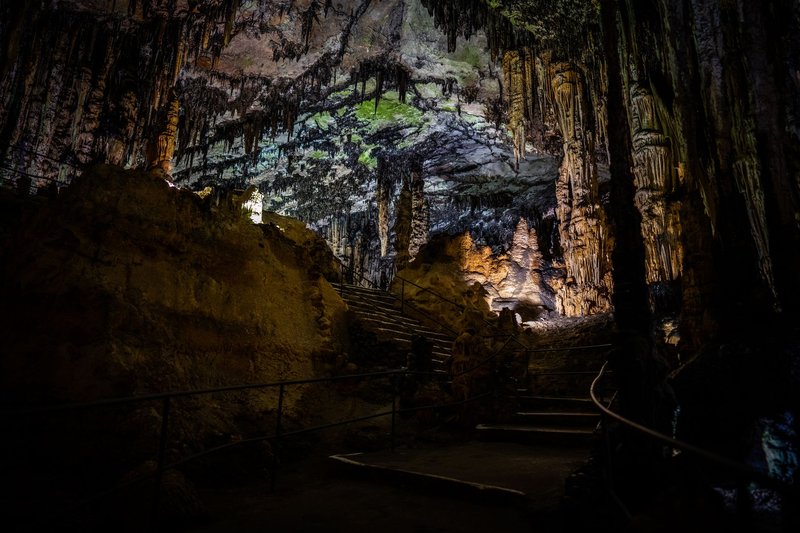
Famous for the chapel built inside its first chamber — natural light pours through an opening in the ceiling directly onto the altar. It’s also where archaeologists found a 67,000-year-old human foot bone in 2010, among the oldest human remains discovered in the Philippines.
- Location: Peñablanca, Cagayan
- How to get there: About 30 minutes by van from Tuguegarao City
- Difficulty: Easy — concrete stairs throughout the main chambers
- Standout feature: A functioning chapel lit by natural skylight, plus major fossil discoveries
- Entrance fee: Around ₱50–100
- Best season: Year-round, though roads can flood during typhoon season
12. Sierra Cave
Part of the same Peñablanca Protected Landscape as Callao, this one is far less developed and draws serious cavers rather than day-trippers.
- Location: Peñablanca, Cagayan
- How to get there: Guided trek from the Peñablanca tourism office, arranged in advance
- Difficulty: Challenging — no stairs, no lighting, technical sections
- Standout feature: Large bat colonies and untouched formations
- Entrance fee: Bundled into a Peñablanca cave-system permit, typically ₱300–500
- Best season: Dry season strongly recommended
Mindanao
Mindanao’s caves are the least documented on this list, which is exactly the gap the search results tend to skip over.
13. Tagbuyacan Cave
Located in Surigao del Sur, this cave system sits within a broader network draining into the Hinatuan River.
- Location: Tagbina, Surigao del Sur
- How to get there: Local guide arrangement through the Tagbina municipal tourism office
- Difficulty: Moderate, with some wading
- Standout feature: Connects to the same karst system feeding the famously blue Enchanted River nearby
- Entrance fee: Arranged locally, typically under ₱300
- Best season: Dry season for safer water crossings
14. Sohoton Caves
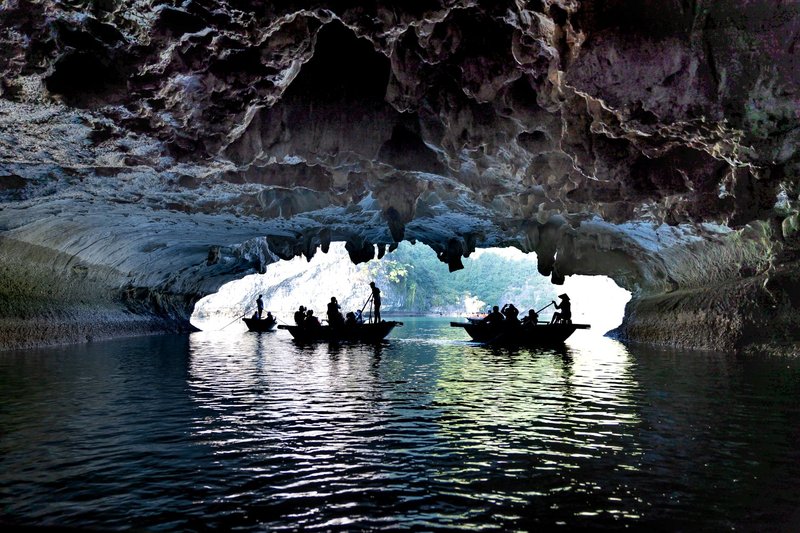
Part of the Sohoton Natural Bridge National Park, reached by paddling through a natural rock bridge before entering the cave chambers.
- Location: Basey, Samar (technically Eastern Visayas, but grouped here for its Mindanao-ferry accessibility)
- How to get there: Boat from Basey town, arranged with the local tourism office
- Difficulty: Moderate — mostly boat-based with short walking sections
- Standout feature: A natural rock bridge you paddle beneath before reaching the cave interior
- Entrance fee: Around ₱500–800 including boat and guide
- Best season: Dry season; river currents get dangerous during heavy rain
15. Tinago Falls Cave Pool
Technically a cave-adjacent grotto behind Tinago Falls, included here because the swim-through cavern behind the waterfall curtain is the actual draw for most visitors.
- Location: Iligan City, Lanao del Norte
- How to get there: Van from Iligan City center, followed by a steep stairway (roughly 500 steps) down to the falls
- Difficulty: Moderate — the descent and climb back up are the hard part, not the cave itself
- Standout feature: Swimming into the cavern behind the falling water
- Entrance fee: Around ₱50 entrance plus optional ₱150–250 boat ride across the pool
- Best season: Dry season for calmer water and clearer visibility
Comparison Table
| Cave | Region | Difficulty | Ideal For |
|---|---|---|---|
| Puerto Princesa Underground River | Palawan | Easy | First-timers, families |
| Tabon Caves | Palawan | Moderate | History and archaeology fans |
| Ugong Rock Cave | Palawan | Moderate–Challenging | Adventure seekers |
| Green Canyon Cave | Palawan | Moderate | Off-the-beaten-path travelers |
| Sumaguing Cave | Sagada | Challenging | Experienced spelunkers |
| Lumiang Burial Cave | Sagada | Easy (entrance) | Culture and history |
| Crystal Cave | Sagada | Moderate | Photography |
| Hinagdanan Cave | Bohol | Easy | Families, casual swimmers |
| Cantabon Cave | Siquijor | Moderate | Adventure travelers |
| Odloman Cave | Cebu | Challenging | Technical cavers |
| Callao Cave | Cagayan | Easy | Families, day-trippers |
| Sierra Cave | Cagayan | Challenging | Serious cavers |
| Tagbuyacan Cave | Surigao del Sur | Moderate | Off-grid explorers |
| Sohoton Caves | Samar | Moderate | River and boat lovers |
| Tinago Falls Cave Pool | Lanao del Norte | Moderate | Waterfall and swim fans |
Permits, Guides, and Gear
Every cave on this list requires a local guide, and in most cases it’s a legal requirement, not a suggestion — Palawan and Sagada both enforce it through their tourism offices, partly for safety and partly to protect fragile formations from tourists breaking off stalactites for souvenirs (yes, it still happens).
Budget ₱300–1,200 per group for guide fees depending on the cave’s difficulty, plus a separate entrance fee in the ₱50–450 range. Sumaguing and the Lumiang traverse run toward the higher end because of the technical rope work involved. Bring your own reef-safe headlamp if you have one — rental units at some sites are shared and unreliable — along with quick-dry clothes, water shoes with grip, and a dry bag for your phone. Skip anything you’re not prepared to get permanently stained with cave mud.
Season matters more than most listicles admit: the Philippines’ wet season (June–October) closes several caves outright due to flash flood risk, particularly Sumaguing and Cantabon, which both involve wading through active water channels.
FAQ
What is the deepest cave in the Philippines? Documentation is incomplete across much of Mindanao, but Langub Cave in the Sierra Madre range and several unmapped systems in the Cordillera are believed to rival or exceed Sumaguing’s depth. Sumaguing remains the deepest cave regularly surveyed by tourists.
What is the longest cave system in the Philippines? Puerto Princesa Underground River holds that title among tourist-accessible caves, at 8.2 kilometers of mapped underground river, though only the first 1.5 kilometers is open to boat tours.
Do I need a permit to visit caves in the Philippines? Most developed cave sites require booking through a local tourism office and hiring a guide, which typically functions as your permit. Puerto Princesa Underground River caps daily visitor numbers and requires advance booking, especially during peak season.
Are the caves in the Philippines safe for kids? Callao Cave, Hinagdanan Cave, and Puerto Princesa Underground River are the most kid-friendly on this list — all involve minimal climbing or wading. Sumaguing, Odloman, and Sierra Cave are not recommended for young children given the technical sections involved.
What’s the best time of year to visit Philippine caves? Dry season, November through May, across almost every entry on this list. Several caves close entirely during heavy rain due to flash flooding risk inside the passages.