Table of Contents
- TLDR
- What Is a Gymnosperm, Exactly?
- Quick Reference: The Four Groups at a Glance
- The Four Living Groups of Gymnosperms
- How Gymnosperms Reproduce
- 250 Million Years Before Flowers Showed Up
- Why Gymnosperms Still Matter
- Gymnosperms vs. Angiosperms
- Frequently Asked Questions
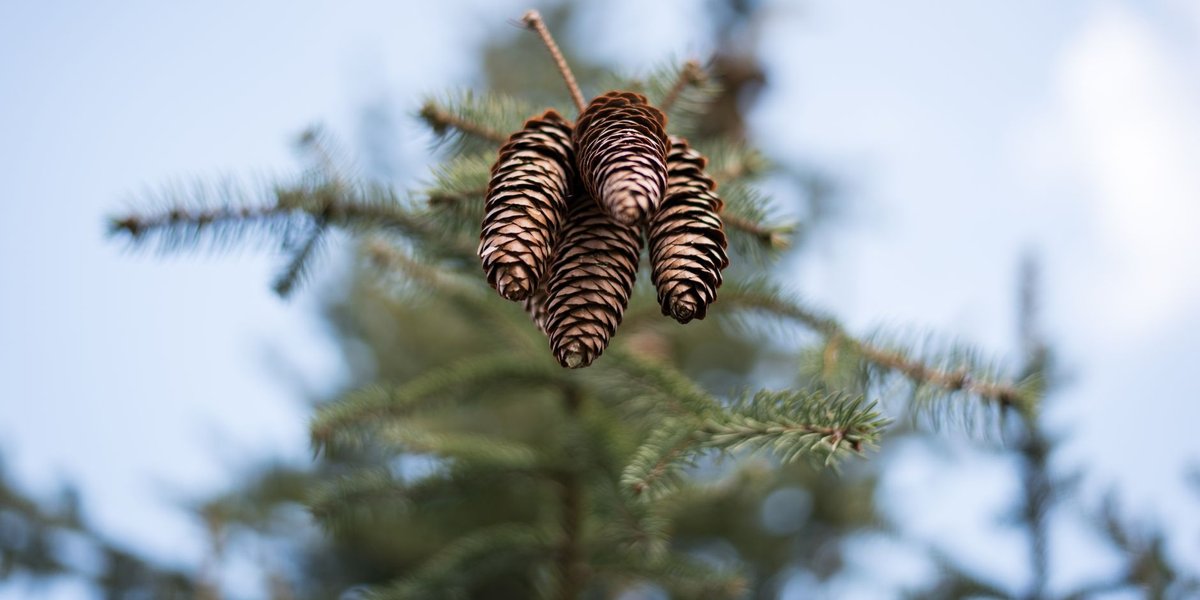
A pine cone falling on your head is, biologically speaking, a naked seed hitting you in the skull. That’s the whole definition of a gymnosperm in one uncomfortable image: seeds with nothing wrapped around them.
TLDR
Gymnosperms are seed-producing plants that don’t flower or fruit — their seeds sit exposed on scales, usually inside cones, instead of being sealed inside an ovary. There are four living groups: conifers (pines, firs, redwoods), cycads (palm-like tropical plants), ginkgo (one surviving species), and gnetophytes (a strange trio including desert shrubs and a plant that lives 1,000 years in the Namib). Conifers dominate by species count and by sheer landmass — they cover most of the world’s boreal forest. Gymnosperms showed up roughly 319 million years ago and ran the plant kingdom for over 100 million years before flowering plants elbowed in.
What Is a Gymnosperm, Exactly?
The word comes from Greek — gymnos (naked) and sperma (seed). That’s not a metaphor. Split open a pine cone and the seeds sit right there on the surface of each woody scale, protected by nothing but the cone itself. Compare that to an apple, where the seeds are sealed inside a fruit that formed from a flower’s ovary. Apple trees are angiosperms. Pines are gymnosperms. The naked-seed part is the whole distinction.
Gymnosperms don’t produce flowers and, with a couple of borderline exceptions in the gnetophytes, they don’t produce fruit either. Instead, most of them build cones: separate male cones that release pollen and female cones that hold the ovules. Wind carries the pollen. There’s no need for a bee, a bat, or a flashy petal to advertise the goods, which is part of why gymnosperm reproduction looks so different from a rose’s.
Roughly 1,000 species of gymnosperms exist today, a small number next to the 300,000-plus flowering plant species, but they punch far above their weight ecologically. Conifer forests alone cover about a third of the planet’s forested land.
Quick Reference: The Four Groups at a Glance
| Group | Living Species | Familiar Examples |
|---|---|---|
| Conifers | ~630-640 | Pine, spruce, fir, redwood, juniper |
| Cycads | ~340 | Sago palm, Encephalartos, Zamia |
| Ginkgo | 1 | Ginkgo biloba (maidenhair tree) |
| Gnetophytes | ~110-115 | Ephedra, Gnetum, Welwitschia |
The Four Living Groups of Gymnosperms
Conifers
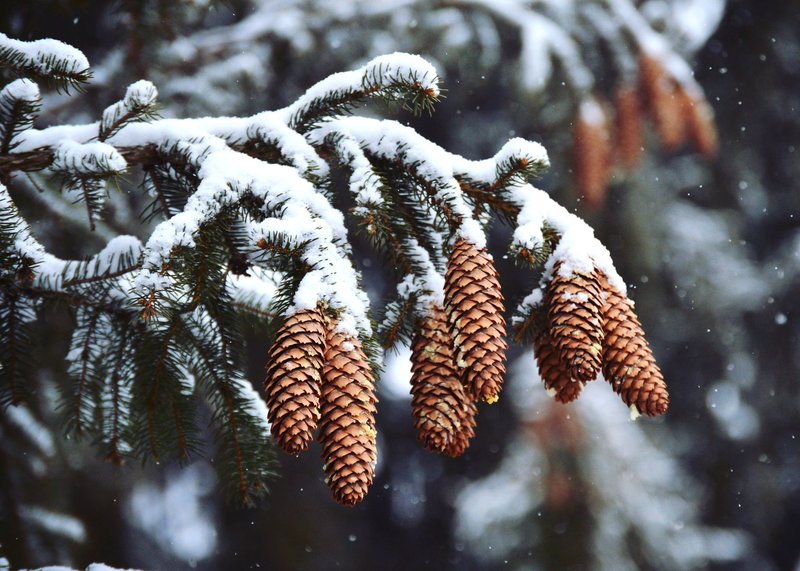
This is the group most people picture: needle-leaved, cone-bearing, evergreen in most cases. Pines, spruces, firs, cedars, cypresses, redwoods — all conifers. They’re the ones building the boreal forest that stretches across Canada, Scandinavia, and Siberia, and they hold some genuinely absurd records. The coast redwood (Sequoia sempervirens) tops out around 380 feet, taller than a football field stood on end. Bristlecone pines in the White Mountains of California have been dated past 4,800 years old, making them some of the oldest living organisms on Earth that aren’t clonal colonies.
Conifer wood is what foresters call softwood, and it’s the backbone of the global lumber and paper industry regardless of how soft it actually feels — Douglas fir framing lumber is plenty hard enough to hold up a house.
Cycads
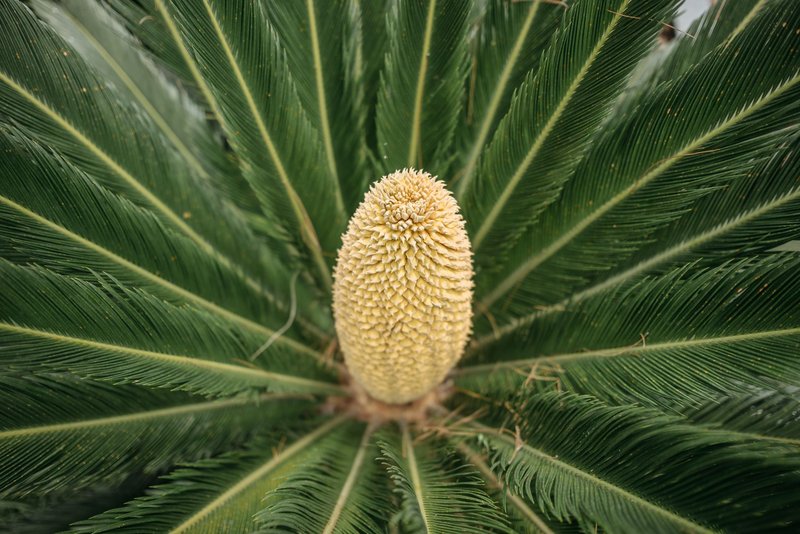
Cycads look like a cross between a palm tree and a fern, which is exactly why people keep planting sago palms in their front yards and calling them palms. They aren’t. Cycads are gymnosperms with a squat trunk, a crown of stiff compound leaves, and cones that can weigh over 40 kilograms in some species — among the largest reproductive structures in the plant kingdom. Cycads are also the last living plants whose sperm cells actually swim, using flagella to travel the short distance to the egg inside the ovule, a trait that dates back to when plants still needed at least a film of water to reproduce.
They’re concentrated in the tropics and subtropics, and a large share of the roughly 340 known species are threatened — cycads as a group are considered the most endangered plant lineage tracked by the IUCN Red List, largely from habitat loss and illegal collection for ornamental trade.
Ginkgo
There’s exactly one species left: Ginkgo biloba. It’s the sole survivor of a lineage that was widespread 200 million years ago, which makes ginkgo less a species and more a living fossil that happens to line city streets. Its fan-shaped leaves turn a uniform gold in autumn and drop almost all at once, and its seeds — despite what people call them, ginkgo “fruit” is really a fleshy outer seed coat — smell notoriously like rancid butter when they hit the pavement. Only female trees produce them, which is why arborists in cities like New York and Tokyo mostly plant male cultivars now.
Gnetophytes
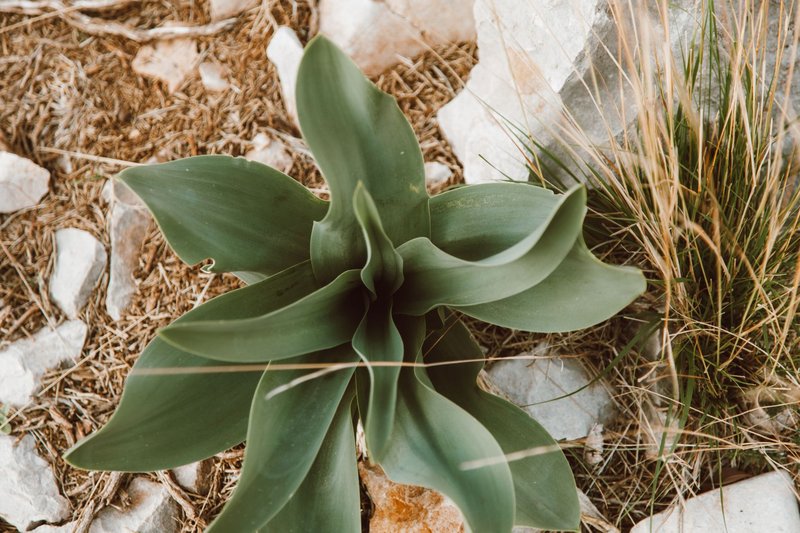
The oddballs. Gnetophytes are three genera that don’t look related to each other at first glance: Ephedra, a scrubby desert shrub used medicinally for centuries and the source of the stimulant ephedrine; Gnetum, tropical vines and trees with broad leaves that look distinctly un-gymnosperm-like; and Welwitschia mirabilis, a Namib Desert plant that grows exactly two leaves for its entire life — a lifespan that can run past 1,000 years — and shreds them into ragged strips as they grow. Gnetophytes are also the only gymnosperms with vessel elements in their wood, a water-transport feature otherwise associated with flowering plants, which has fueled decades of debate about whether they’re the closest living relatives of angiosperms.
How Gymnosperms Reproduce
Gymnosperm reproduction runs on a slower, wind-dependent version of what flowering plants do. Male cones release pollen by the billions, and wind carries it toward female cones, where a sticky pollination droplet at the ovule’s opening catches passing grains. That part alone can be a numbers game rather than a targeting exercise — most pollen goes nowhere useful.
Fertilization isn’t fast. In most conifers, pollination and fertilization are separated by about 12 to 13 months, since the pollen has to germinate a tube and grow it slowly toward the egg. Firs are the exception, closing that gap to four or five weeks. Cycads and ginkgo skip the tube-delivery method entirely for the last leg: their pollen produces large, multi-flagellated sperm that physically swim through a fluid-filled chamber to reach the egg, a holdover from when land plants still reproduced more like algae.
Once fertilized, the seed develops right on the surface of the cone scale, with no ovary wall enclosing it — which loops back to the naked-seed definition that started this whole thing. Some conifer cones, like those of certain pines, need fire to melt their resin seal and release seeds at all, which is why lodgepole pine forests regenerate so aggressively after a burn.
250 Million Years Before Flowers Showed Up
Seed plants go back roughly 383 million years, to late Devonian progymnosperms, but gymnosperms proper radiated hard during the late Carboniferous, likely following a whole-genome duplication event around 319 million years ago. By the Permian and Triassic periods, gymnosperms had essentially taken over. The world was drying out, and a seed that didn’t depend on standing water for fertilization was a serious advantage over the spore-based plants that dominated the wetter Carboniferous swamps.
That gymnosperm-dominated stretch lasted well over 100 million years — through the age of early dinosaurs, when sauropods were browsing conifer and cycad canopies rather than grass, which hadn’t evolved yet. Flowering plants didn’t diversify explosively until the Cretaceous, roughly 100 million years ago, and even then it took tens of millions of years for angiosperms to out-compete gymnosperms for most habitats. Conifers held onto entire biomes — they still run the boreal forest today, essentially unchallenged by flowering trees in that climate.
Why Gymnosperms Still Matter
Conifers alone anchor one of the largest terrestrial industries on the planet: softwood lumber and pulp for paper, worth tens of billions of dollars a year and central to construction economies from the Pacific Northwest to Scandinavia. Resins tapped from pines and firs go into everything from turpentine to violin rosin. Ephedra gave modern medicine its first stimulant decongestants. Ginkgo extract shows up across the supplement aisle, whatever you make of the evidence behind it.
Ecologically, conifer forests are carbon sinks on a continental scale and the primary habitat for species from moose to capercaillie to lynx. Cycads, despite their small numbers, are keystone food sources for specific pollinating beetles and weevils that evolved alongside them and pollinate almost nothing else — lose the cycad and you lose the insect. That fragility is a big part of why cycads sit at the top of so many conservation priority lists.
Gymnosperms vs. Angiosperms
The short version: angiosperms flower, fruit, and enclose their seeds; gymnosperms don’t do any of that. But the practical differences run deeper.
Angiosperms mostly rely on animal pollinators — insects, birds, bats — which lets them invest energy in flowers instead of producing pollen in overwhelming volume. Gymnosperms, wind-pollinated almost across the board, compensate with sheer output; a single pine can release millions of pollen grains in a season, which is also why your car turns yellow every spring if you park under one. Angiosperms enclose their seeds in fruit, which recruits animals to disperse them by eating and excreting them elsewhere. Gymnosperm seeds mostly rely on wind, gravity, or a hungry squirrel burying more than it can find again.
Wood structure differs too: most gymnosperms move water through simpler cells called tracheids, while angiosperms (and, notably, the gnetophytes) use more efficient vessel elements. That’s a big part of why gymnosperm wood is classified as softwood and most angiosperm wood as hardwood — regardless of actual hardness, oak being a famous softer-than-you’d-think counterexample.
Frequently Asked Questions
Are conifers gymnosperms? Yes. Conifers are the largest of the four gymnosperm groups, and in casual conversation people sometimes use “conifer” and “gymnosperm” as if they’re interchangeable. They’re not — conifers are one branch of gymnosperms, alongside cycads, ginkgo, and gnetophytes.
Do gymnosperms flower? No. Flowering is, by definition, an angiosperm trait. Gymnosperms reproduce through cones or cone-like structures instead — a strategy shared with other examples of non-flowering plants — with pollen and ovules exposed rather than enclosed in a flower’s ovary.
Do gymnosperms produce fruit? Not true fruit. What looks like fruit on a yew or a ginkgo is a modified seed coat (an aril, in the yew’s case), not tissue derived from a flower’s ovary the way an apple or a tomato is.
What’s the most common gymnosperm? By sheer land coverage, conifers win by a wide margin — pines and spruces alone dominate huge stretches of the Northern Hemisphere’s forest.
Why don’t gymnosperms need flowers? Wind pollination doesn’t require an advertisement. Flowers evolved to attract animal pollinators; gymnosperms solve the same problem by producing pollen in bulk and letting wind do the routing, a strategy that predates animal pollination by tens of millions of years.