Table of Contents
- The Short Answer
- Ilya Mechnikov — Physiology or Medicine, 1908
- Selman Waksman — Physiology or Medicine, 1952
- Roald Hoffmann — Chemistry, 1981
- Georges Charpak — Physics, 1992
- The 2022 Nobel Peace Prize
- Why Did They All Leave?
- FAQ
The Short Answer {#the-short-answer}
Ukraine has never had a sitting citizen win a Nobel Prize in science — but it has produced at least four scientists who went on to win one after emigrating. Ilya Mechnikov, Selman Waksman, Roald Hoffmann, and Georges Charpak were all born on Ukrainian territory. All four left. All four won.
The 2022 Nobel Peace Prize changed the story slightly: it was awarded in part to the Center for Civil Liberties, a Ukrainian human rights organization still operating inside the country. That’s the closest Ukraine has come to a Nobel Prize awarded to a Ukrainian institution representing Ukraine.
The distinction matters. There’s a difference between “a person born in Ukraine won a Nobel Prize” and “Ukraine won a Nobel Prize.” This post is about both — and the complicated history that explains the gap.
Ilya Mechnikov — Physiology or Medicine, 1908 {#ilya-mechnikov}
Ilya Mechnikov was born in 1845 in Ivanovka, a village in the Kharkiv region of what is now northeastern Ukraine. He studied at Kharkiv University, completing a four-year degree in two years, and went on to become one of the founders of modern immunology.
His key discovery: phagocytosis — the process by which certain immune cells (he called them phagocytes) engulf and destroy pathogens. He observed it by watching what happened when he poked a rose thorn into a starfish larva and saw mobile cells swarm the foreign object. It was 1882. He understood immediately that he’d found something important.
Mechnikov eventually left Ukraine for Paris, where he worked at the Pasteur Institute under Louis Pasteur himself. He shared the 1908 Nobel Prize in Physiology or Medicine with Paul Ehrlich. He won representing France.
He also had a theory about aging that involved consuming large quantities of yogurt. That part didn’t hold up as well, but the phagocyte discovery very much did — it remains foundational to how we understand the immune system today.
Selman Waksman — Physiology or Medicine, 1952 {#selman-waksman}
Selman Waksman was born in 1888 in Novaya Priluka, a small town near Vinnytsia in what is now central Ukraine. He emigrated to the United States in 1910 and built his career at Rutgers University, where he spent most of his professional life studying soil microbes.
That focus on soil microbiology led to his most consequential contribution: the discovery of streptomycin in 1943, the first antibiotic effective against tuberculosis. TB killed millions annually before streptomycin. The drug didn’t end TB, but it fundamentally changed its trajectory — and it opened the door to the entire field of antibiotic discovery from soil bacteria.
Waksman won the 1952 Nobel Prize in Physiology or Medicine. He also coined the term “antibiotic.”
A footnote: his graduate student Albert Schatz was the one who actually isolated streptomycin in the lab. The Nobel committee awarded the prize to Waksman alone, which remains one of the more disputed Nobel decisions in the prize’s history. Schatz spent decades trying to get credit. He eventually received a formal acknowledgment from Rutgers, though not from Stockholm.
Roald Hoffmann — Chemistry, 1981 {#roald-hoffmann}
Roald Hoffmann was born in 1937 in Złoczów, a city in what is now the Lviv region of western Ukraine (it was part of Poland at the time, and is now known as Zolochiv). His story is unlike the others in this list.
He survived the Holocaust as a child — his father hid him and his mother in a schoolhouse attic while most of the rest of their family was killed. They eventually escaped to the American occupation zone and emigrated to the United States in 1949.
Hoffmann went on to become a theoretical chemist at Cornell University, where he developed the Woodward–Hoffmann rules with Robert B. Woodward — a framework for predicting when orbital symmetry allows or forbids a chemical reaction to occur. The rules transformed how organic chemists think about reaction mechanisms. He shared the 1981 Nobel Prize in Chemistry with Kenichi Fukui.
He is also a published poet, and has written plays exploring the ethical dimensions of science. The combination is unusual enough that it’s worth mentioning.
Georges Charpak — Physics, 1992 {#georges-charpak}
Georges Charpak was born in 1924 in Dąbrowica, a town that is now called Dubrovytsia in the Rivne region of northwestern Ukraine (also part of Poland at the time). His family emigrated to France in 1931 when he was seven.
During World War II, Charpak was deported to the Dachau concentration camp. He survived, joined the French Resistance, and after the war became a French citizen and physicist.
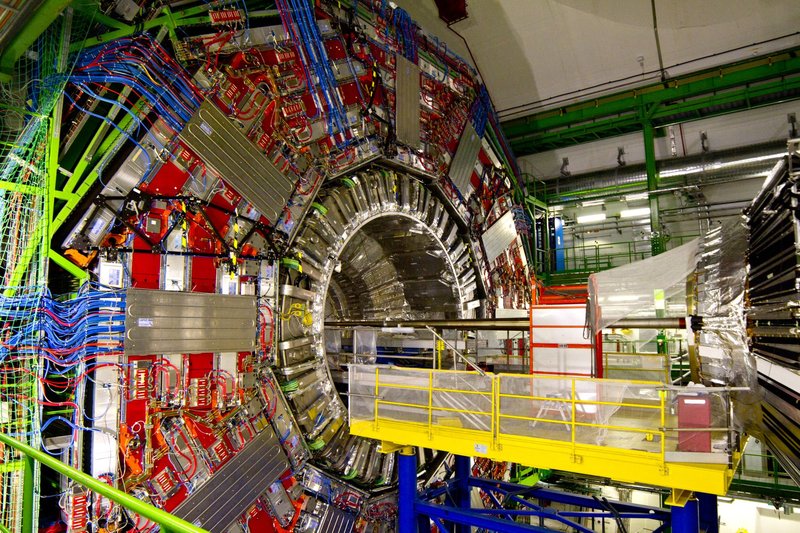
His Nobel Prize in Physics came in 1992 for the invention of the multiwire proportional chamber — a particle detector that could track the paths of charged particles at a rate far beyond what was previously possible. Before Charpak’s chamber, detecting particle interactions was painstaking and slow. After it, experiments that would have taken years could be done in hours. CERN used his detectors extensively. The technology also found medical imaging applications, particularly in X-ray systems.
Charpak won the 1992 Nobel Prize in Physics — the last Frenchman to win in that field. He won representing France.
The 2022 Nobel Peace Prize {#2022-peace-prize}
The 2022 Nobel Peace Prize was awarded jointly to Ales Bialiatski (a Belarusian human rights activist), Memorial (a Russian human rights organization), and the Center for Civil Liberties — a Ukrainian NGO founded in Kyiv in 2007.
The Center for Civil Liberties had spent years documenting human rights violations in Ukraine and the post-Soviet region. After Russia’s full-scale invasion in February 2022, the organization shifted significant resources toward documenting war crimes.
The Nobel committee awarded the prize eight months after the invasion began. The timing was not subtle.
This is the most direct connection between an actively Ukrainian institution and a Nobel Prize — the Center for Civil Liberties operates out of Kyiv, is registered in Ukraine, and was honored as a Ukrainian organization. Its co-founder Oleksandra Matviichuk accepted the prize in Oslo.
Why Did They All Leave? {#why-did-they-all-leave}
Four Nobel laureates, all born on Ukrainian territory. None of them won representing Ukraine. The pattern isn’t random.
Mechnikov and Waksman emigrated in the late 19th and early 20th century, when the territory was split between the Russian Empire and the Austro-Hungarian Empire. Neither Ukrainian statehood nor Ukrainian scientific institutions existed in any form that could retain or develop scientific talent. The path to a scientific career ran through Kyiv, Moscow, Paris, or New York — not through any Ukrainian institution.
Hoffmann and Charpak had no choice: their families fled persecution during World War II.
The Soviet period is its own chapter. After 1922, Ukraine was absorbed into the USSR, and Ukrainian science was subordinated to Soviet institutions. Academically productive — Soviet Ukraine produced significant contributions in mathematics, physics, and materials science — but Nobel Prizes went to Soviet laureates, not Ukrainian ones. Scientists working in Kyiv or Kharkiv won recognition as Soviets. Any potential Ukrainian Nobel laureate in the 20th century was, by definition, a Soviet one.
Post-independence in 1991, a different problem emerged: brain drain. Ukraine’s economic instability in the 1990s pushed a generation of scientists abroad to better-funded labs and universities. The infrastructure for developing Nobel-caliber research simply wasn’t there — not for lack of talent, but for lack of investment and institutional stability.
The war has accelerated this. Hundreds of thousands of educated Ukrainians have left since 2022. The conditions for producing a laureate who would win as a Ukrainian citizen remain difficult.
FAQ {#faq}
Has Ukraine ever won a Nobel Prize? Directly, only once: the 2022 Nobel Peace Prize was awarded in part to the Center for Civil Liberties, a Ukrainian organization based in Kyiv. In science, no prize has been awarded to a scientist representing Ukraine as a nation. Four scientists born on Ukrainian territory have won Nobel Prizes, but all won representing other countries — France, the United States, or the Soviet Union.
Who are the Nobel Prize winners born in Ukraine? Ilya Mechnikov (Physiology or Medicine, 1908), Selman Waksman (Physiology or Medicine, 1952), Roald Hoffmann (Chemistry, 1981), and Georges Charpak (Physics, 1992). All four were born on what is now Ukrainian territory.
Did any Nobel Prize winners come from Kyiv? None of the four laureates above were born in Kyiv specifically. Mechnikov was from the Kharkiv region, Waksman from near Vinnytsia, and both Hoffmann and Charpak were from regions that are now western Ukraine but were part of Poland when they were born.
Why hasn’t Ukraine won more Nobel Prizes? A combination of historical factors: imperial rule in the 19th century, Soviet absorption in the 20th, and post-independence brain drain. Ukraine has produced scientifically capable people — the problem has been the conditions available to retain and develop them into Nobel-caliber researchers working within Ukrainian institutions.
Who is the most famous Ukrainian Nobel laureate? Probably Ilya Mechnikov, whose work on phagocytes and the immune system remains foundational more than a century later. Selman Waksman is arguably more consequential for global health — streptomycin saved millions of lives — but Mechnikov tends to get more historical attention.