Table of Contents
- What Is a Carnivore?
- Types of Carnivores
- Carnivore Adaptations
- Carnivores vs. Omnivores vs. Herbivores
- The Ecological Role of Carnivores
- Carnivorous Plants: The Forgotten Carnivores
- Conservation and Threats
What Is a Carnivore?
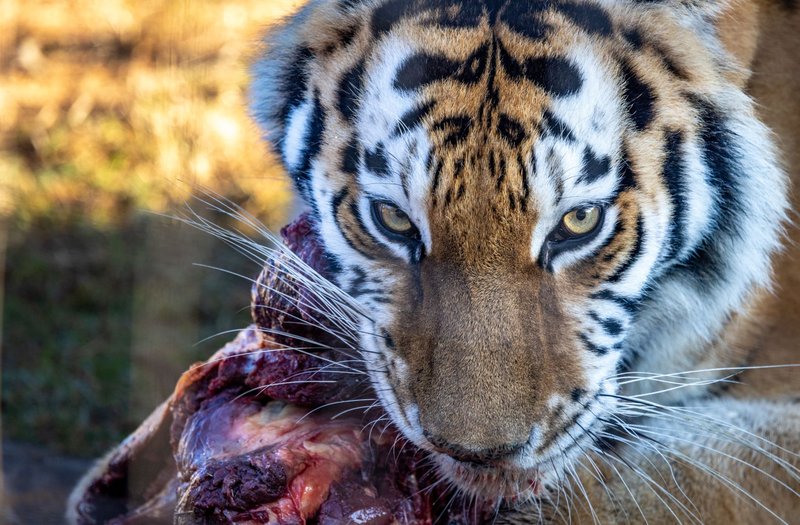
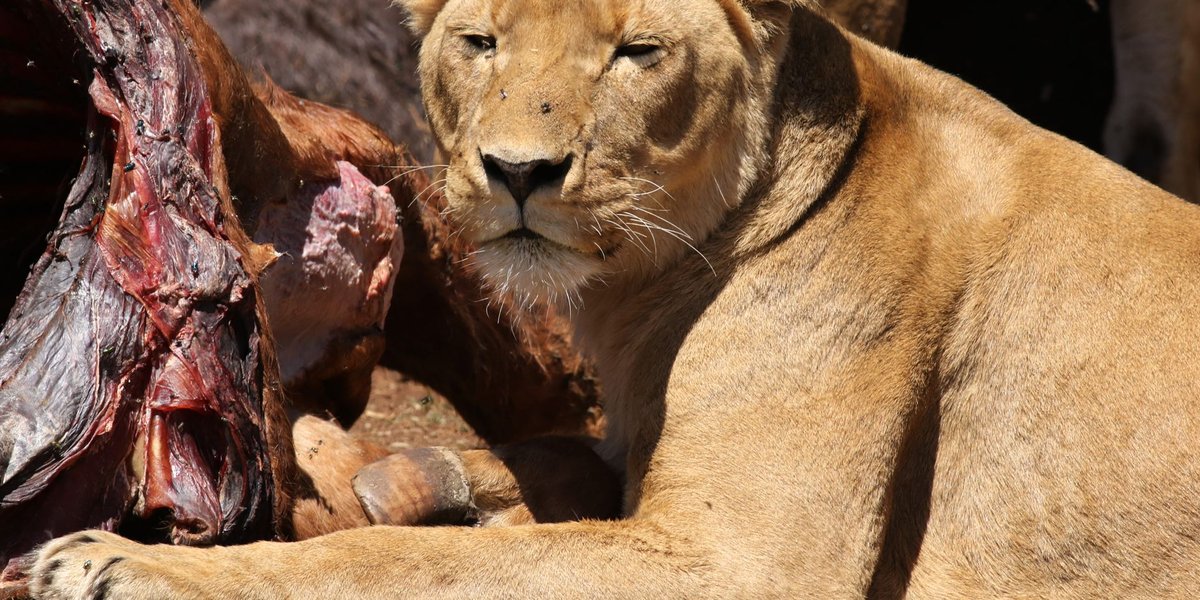
A carnivore is any organism that derives its energy primarily from eating animal flesh. That sounds simple enough, but the category stretches further than most people expect — from lions and wolves down to tiny bladderworts floating in pond water.
In ecological terms, carnivores occupy the third trophic level and above. Plants fix energy from the sun (first level), herbivores eat the plants (second), and carnivores eat the herbivores — making them some of the most recognizable examples of consumers in biology. At the top of that chain sit apex predators — animals with no natural predators of their own.
The word comes from the Latin caro (flesh) and vorare (to devour). Biologically, what defines a carnivore isn’t just what it eats but how its body is built around eating it.
Types of Carnivores
Not all meat-eaters are the same. Biologists break carnivores into categories based on how much of their diet comes from animal prey.
Obligate (Hypercarnivores)
Obligate carnivores must eat meat — their bodies cannot synthesize certain nutrients from plant sources. Cats are the textbook example. Domestic cats and their wild relatives lack the enzymes to convert beta-carotene into vitamin A and cannot produce taurine on their own, both of which are essential for survival. Feed a cat a plant-based diet and it will go blind, develop heart disease, and die. The obligation is physiological, not just behavioral.
Other obligate carnivores include dolphins, minks, most raptors, and all crocodilians. Hypercarnivores — a stricter subset — get more than 70% of their diet from meat. Wolves, polar bears, and ferrets fall here.
| Category | Meat in Diet | Examples |
|---|---|---|
| Hypercarnivore | >70% | Wolf, polar bear, crocodile |
| Mesocarnivore | 30–70% | Fox, raccoon, striped skunk |
| Facultative carnivore | <30% | Bear, coyote, piranha |
Mesocarnivores
Mesocarnivores sit in the middle — meat is important to them, but so is plant matter or insects. Foxes are a classic example: they hunt rabbits and mice, but they’ll also eat berries, earthworms, and beetles depending on what’s available. This dietary flexibility makes mesocarnivores among the most ecologically adaptable animals on Earth, which is why foxes thrive from arctic tundra to suburban backyards.
Facultative Carnivores
Facultative carnivores eat meat when they can get it, but don’t depend on it. Brown bears eat salmon with extraordinary efficiency during the pre-winter salmon runs, gorging to add fat reserves, but they spend most of their year eating roots, berries, and grasses. The piranha’s reputation as a relentless flesh-eater is mostly myth — many species eat seeds and fruit for the majority of the year — a reminder that popular assumptions about animal diets are often wrong, as explored in common myths and misconceptions about zoology.
Carnivore Adaptations
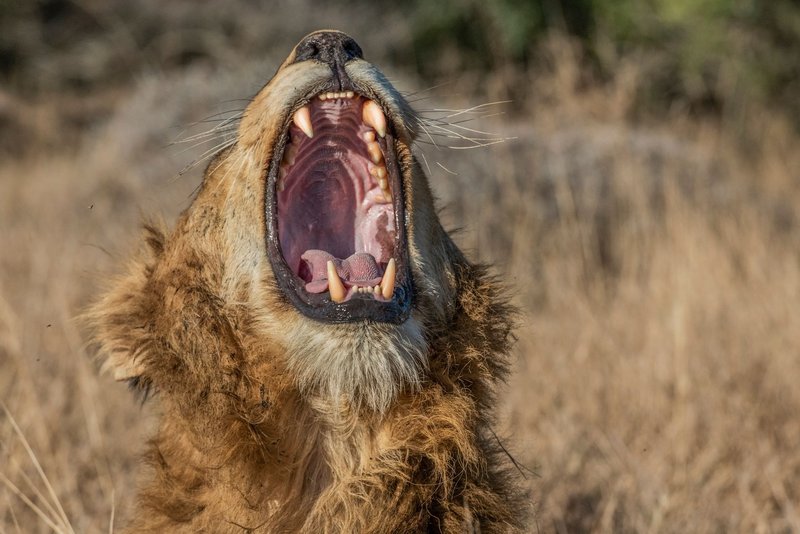
Evolution has equipped carnivores with a remarkably consistent toolkit, regardless of the lineage. Convergent evolution — where unrelated species develop similar traits in response to similar pressures — shows up constantly across carnivore biology.
Teeth and Jaw Structure
Carnivores typically have elongated canine teeth for gripping and killing prey, and carnassial teeth — blade-like molars that shear flesh rather than grind it. Wolves can generate bite forces exceeding 400 pounds per square inch. Cats have relatively weaker jaw muscles (compared to their skull size) but extreme precision: they kill by severing the spinal cord with a single bite to the back of the neck.
Contrast that with herbivore molars, which are flat and ridged for crushing plant cell walls. A carnivore’s dentition is built for tearing, not grinding.
Digestive System
Carnivore digestive tracts are shorter and more acidic than those of herbivores. Meat digests faster than plant matter, and a shorter gut is more efficient for that job. The stomach acid of a vulture — a scavenging carnivore — is strong enough to destroy anthrax spores and botulinum toxin, letting it eat carcasses that would kill most other animals.
Obligate carnivores also lack salivary amylase, the enzyme that begins breaking down starch in the mouth. There’s no evolutionary pressure to keep it if you’re never eating starch.
Hunting Strategies
Speed, ambush, endurance, and venom are the four main strategies, and almost every carnivore specializes in one.
Pursuit predators — cheetahs, African wild dogs — rely on speed or stamina. Cheetahs are built for short sprints (up to 70 mph), while African wild dogs run prey into exhaustion over miles. Ambush predators — tigers, ambush bugs, most snakes — rely on concealment and explosive short-range attacks. A tiger may stalk prey for 20 minutes before covering the final distance in under a second.
Venom represents a separate evolutionary branch entirely. Cone snails, sea anemones, and the Komodo dragon (which uses toxic bacteria and venom glands) all immobilize prey through chemistry rather than speed or strength.
Sensory Adaptations
Forward-facing eyes are a carnivore signature — they allow binocular vision and depth perception, which are essential for judging distance to a moving target. Owls can rotate their heads up to 270 degrees to compensate for eyes that are fixed in their sockets. Sharks have electroreceptors (ampullae of Lorenzini) that detect the electrical fields generated by a fish’s heartbeat, useful at zero visibility.
Carnivores vs. Omnivores vs. Herbivores
This comparison trips up a lot of students because the lines blur more than textbooks suggest.
Herbivores eat only plants. They tend to have long digestive tracts (cellulose is hard to break down), flat teeth, and eyes positioned on the sides of their heads for wide-angle predator detection. The differences between herbivores and carnivores go well beyond diet and show up in nearly every system of the body.
Omnivores eat both plants and animals, and their physiology reflects the compromise: moderate digestive tract length, mixed dentition, and dietary flexibility. Humans, pigs, rats, and most bears are omnivores.
Carnivores eat primarily or exclusively animals. The physiological commitment is deeper: shorter gut, more acidic stomach, specialized teeth, and — in obligate carnivores — metabolic dependencies on nutrients only found in animal tissue.
The important nuance is that these aren’t rigid bins. A species’ actual diet often depends on habitat and season. Grizzly bears are classified as omnivores but can eat like hypercarnivores during salmon season. The biological classification reflects evolutionary design, not necessarily daily behavior.
The Ecological Role of Carnivores
Carnivores don’t just eat prey. They shape ecosystems in ways that ripple down every trophic level.
The reintroduction of wolves to Yellowstone National Park in 1995 is one of the most-studied examples of this dynamic. Wolf predation reduced elk grazing pressure on riverbanks, allowing willows and aspens to regenerate, which stabilized stream banks, changed water flow patterns, and increased beaver populations. The presence of a single apex predator cascaded through the hydrology of an entire river system. Ecologists call this a trophic cascade.
Large carnivores also control mesopredator populations — a phenomenon called mesopredator release. When wolves or mountain lions disappear from a region, coyote populations typically explode, which then suppresses songbirds and small mammals. The IUCN’s large carnivore initiative has documented this pattern across multiple continents.
Scavenging carnivores — vultures, hyenas, ravens — perform essential sanitation services, consuming carcasses before they can become disease vectors. Without vultures, anthrax and rabies outbreaks near ungulate die-offs would increase significantly.
Carnivorous Plants: The Forgotten Carnivores
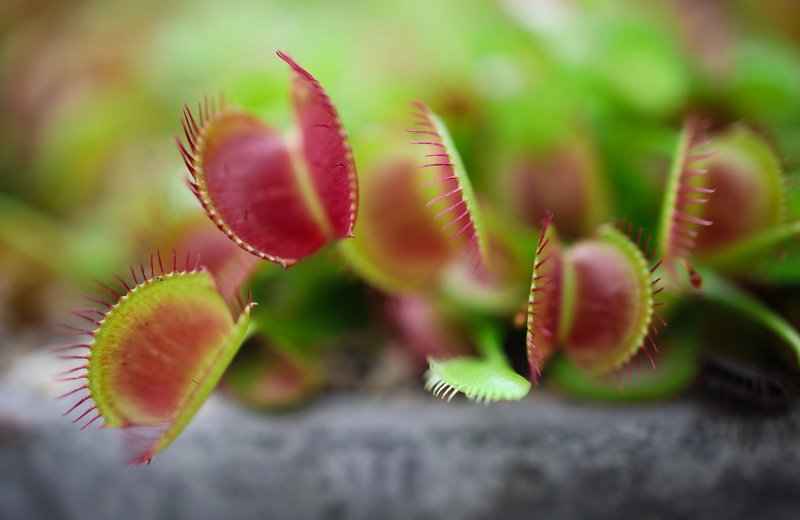
Most people file carnivorous plants under “weird nature trivia,” but they represent a genuinely distinct evolutionary solution to the same problem: getting nutrients from animals.
Around 800 species of plants have evolved carnivory, almost always in nitrogen-poor environments like bogs, fens, and tropical mountain slopes where the soil can’t supply adequate nutrition. Carnivory evolved independently at least 10 times in the plant kingdom — a striking example of convergent evolution.
The trapping mechanisms are varied and remarkable:
- Snap traps: The Venus flytrap (Dionaea muscipula) counts electrical signals from its trigger hairs — it needs two stimuli within 20 seconds to close, preventing accidental closure from raindrops.
- Pitfall traps: Pitcher plants (Nepenthes and Sarracenia species) fill with digestive fluid and sometimes mutualistic organisms like mites and mosquito larvae that help break down prey.
- Suction traps: Bladderworts (Utricularia) are aquatic plants that generate negative pressure in tiny bladders and suck in water fleas in under a millisecond — the fastest motion in the plant kingdom.
- Flypaper traps: Sundews (Drosera) use sticky mucilage on tentacle-tipped leaves, slowly curling around trapped insects over minutes to hours.
Carnivorous plants are predators in every functional sense. They produce digestive enzymes, absorb the resulting nutrients, and have evolved increasingly specialized structures to capture prey. The only major difference from animal carnivores is that they don’t move to find food — food moves to them.
Conservation and Threats
Large carnivores face a disproportionate extinction risk compared to other animals. They require large home ranges, reproduce slowly, and come into direct conflict with human land use and livestock. According to the IUCN Red List, 25% of all carnivore species are considered threatened, with big cats and large marine predators facing the steepest declines.
Habitat fragmentation is the primary threat — a viable population of tigers needs hundreds of square kilometers of connected habitat, not a reserve surrounded by agricultural land. Wolves and mountain lions face legal culling in areas where livestock predation creates political pressure. Sharks are harvested for fins at a rate that has eliminated more than 70% of certain species’ populations over the past 50 years, according to research published in Nature.
The loss of apex predators doesn’t just remove charismatic animals from an ecosystem. It removes the organizing pressure that keeps prey populations and mesopredators in check. What follows is typically a cascade of smaller extinctions and ecological disruptions that prove far harder to reverse than the original predator loss.
Carnivores are, in the most literal sense, what keeps ecosystems working.