Copper has exactly two stable isotopes. Everything else on the chart of copper nuclides is radioactive, decaying away on timescales from milliseconds to a couple of days. The two that stick around are copper-63 and copper-65, and the split between them is lopsided: roughly 69.2% of every copper sample is Cu-63, the remaining 30.8% is Cu-65. That ratio is the reason copper’s standard atomic weight lands at 63.55 instead of a clean whole number.
Most pages that cover this topic do one of two things. They dump a nuclide table on you with no explanation, or they’re paywalled journal reviews written for nuclear chemists. This is the version that explains what the numbers mean and why anyone outside a physics department should care.
Table of Contents
- The two stable isotopes
- Quick reference: the copper isotope table
- How the radioactive ones decay
- Copper-64 and its medical day job
- The other useful radioisotopes
- Isotope fractionation: reading δ65Cu
- FAQ
The two stable isotopes
A copper atom always has 29 protons. That’s what makes it copper. The isotope number tells you the total count of protons plus neutrons, so Cu-63 carries 34 neutrons and Cu-65 carries 36. Two extra neutrons is the only difference between them.
Both are stable, meaning neither decays. Hand someone a copper wire and the copper atoms inside it will still be copper a billion years from now. The natural abundance split holds remarkably constant across most terrestrial sources, which is exactly why the small variations that do occur became a useful tracer (more on that later).
Both stable isotopes have a nuclear spin of 3/2, which matters if you ever run copper through an NMR spectrometer. Cu-63 is the more sensitive of the two for NMR work, partly because there’s simply more of it.
The lopsided 69/31 abundance isn’t arbitrary. Nuclei with odd numbers of protons tend to have fewer stable isotopes than their even-numbered neighbors, and the relative stability of each configuration sets the ratio. Copper, sitting at proton number 29, gets only these two.
Quick reference: the copper isotope table
Here are the isotopes you’re most likely to run into, stable and radioactive. Copper has been observed across a wide mass range, but the ones below are the ones that actually show up in chemistry, medicine, and geology. If you want to see how copper’s nuclides stack up against the rest of the periodic table, a full reference list of isotopes covers the atomic and mass numbers and half-lives element by element.
| Isotope | Protons | Neutrons | Half-life | Decay mode | Note |
|---|---|---|---|---|---|
| Cu-60 | 29 | 31 | 23.7 min | β⁺ / EC | PET imaging |
| Cu-61 | 29 | 32 | 3.34 hr | β⁺ / EC | PET imaging |
| Cu-62 | 29 | 33 | 9.67 min | β⁺ | PET imaging |
| Cu-63 | 29 | 34 | Stable | — | 69.2% abundance |
| Cu-64 | 29 | 35 | 12.7 hr | β⁺, β⁻, EC | Imaging + therapy |
| Cu-65 | 29 | 36 | Stable | — | 30.8% abundance |
| Cu-67 | 29 | 38 | 61.8 hr | β⁻ | Therapy |
Abundances follow the standard IUPAC atomic weight values for copper. The two stable rows are the only ones you’ll find naturally; everything else has to be produced in a cyclotron or reactor.
How the radioactive ones decay
There’s a clean logic to which way a copper radioisotope falls apart, and it tracks with mass.
Lighter than Cu-63 — that’s Cu-58 through Cu-62 — and the nucleus has too many protons relative to neutrons. It corrects by converting a proton into a neutron, releasing a positron (β⁺ decay) or grabbing a nearby electron (electron capture). Both routes turn copper into nickel.
Heavier than Cu-65 — Cu-66, Cu-67, and up — and the imbalance flips. Now there are too many neutrons, so the nucleus converts one into a proton and spits out an electron (β⁻ decay). That turns copper into zinc.
Then there’s Cu-64, the oddball sitting right between the two stable isotopes. It can’t decide. About 61% of the time it decays toward nickel (positron emission or electron capture), and the rest of the time it decays toward zinc (β⁻). A single isotope decaying in both directions is genuinely uncommon, and it’s a big part of why Cu-64 turned out to be so useful.
Copper-64 and its medical day job
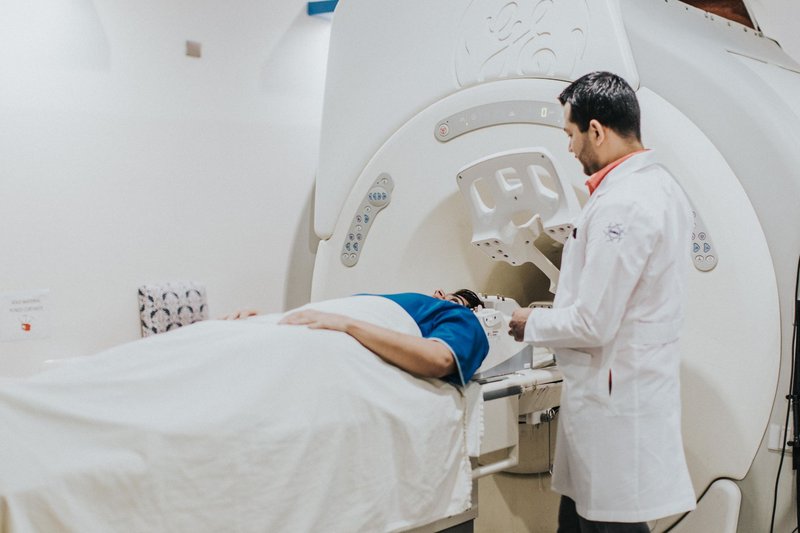
Cu-64 is the copper isotope a hospital is most likely to care about. Its 12.7-hour half-life is the sweet spot: long enough to ship a dose from the cyclotron that made it to a clinic across the country, short enough that a patient isn’t radioactive for weeks afterward.
That dual decay pays off here. The positron emission produces the signal a PET scanner reads, letting doctors image where the copper went in the body. The β⁻ decay, meanwhile, deposits energy locally — the kind of energy that damages cells. So the same atom can both light up a tumor on a scan and help treat it. That two-for-one property is the foundation of what’s called theranostics: diagnosis and therapy from one agent.
Researchers attach Cu-64 to antibodies and small molecules that home in on specific cancers, then watch in real time where the dose accumulates. Prostate, breast, and neuroendocrine tumors have all been imaging targets in this line of work.
The other useful radioisotopes
Cu-64 gets the spotlight, but it has company. The full set of “radiocopper” isotopes used in medicine spans Cu-60, 61, 62, 64, and 67, and they divide neatly by job.
The short-lived positron emitters — Cu-60, Cu-61, Cu-62 — are diagnostic workhorses. Cu-62 in particular has a half-life under ten minutes, which sounds impractical until you realize it can be milked on-site from a generator, no cyclotron required.
Cu-67 sits at the other end. Its pure β⁻ decay and ~62-hour half-life make it a therapy isotope rather than an imaging one. Pair Cu-64 for the scan with Cu-67 for the treatment and you have a matched diagnostic-therapeutic couple that behaves identically in the body because, chemically, they are identical. That’s a trick most element pairs can’t pull off.
Isotope fractionation: reading δ65Cu
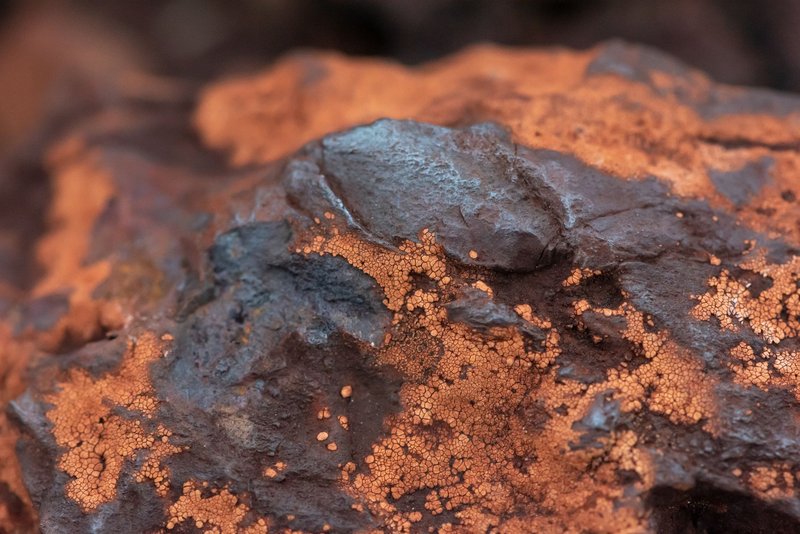
The stable isotopes seemed boring a few sections ago. They’re not.
The 69/31 ratio isn’t perfectly fixed. Chemical and biological processes nudge it by tiny amounts, preferentially moving one isotope over the other. Geochemists measure these shifts and report them as δ65Cu — the per-mil deviation of a sample’s Cu-65/Cu-63 ratio from a reference standard. The variations are minute, often a fraction of a part per thousand, but modern mass spectrometers resolve them.
Those shifts carry information. In ore deposits, δ65Cu values fingerprint how the copper formed and whether it was later weathered, which helps geologists trace ore bodies — useful work in copper-rich regions like the deposits that put copper high on the list of minerals mined in South Africa. Archaeometrists use the same signature to source ancient bronze artifacts back to their original mines. And in biology, the body fractionates copper too — studies have found that the copper isotope balance in human blood shifts in certain cancers and liver diseases, hinting at a possible diagnostic marker. Research on δ65Cu as a biomarker is still developing, but the principle is sound: living systems handle the two isotopes slightly differently, and the difference is measurable.
So the “boring” stable isotopes turn out to encode geological history and metabolic state, all in a ratio that barely moves.
FAQ
How many isotopes does copper have? Two stable isotopes, Cu-63 and Cu-65, plus more than 28 known radioactive isotopes. Only the two stable ones occur naturally in any meaningful quantity.
What are the two stable isotopes of copper? Copper-63 (about 69.2% natural abundance) and copper-65 (about 30.8%). The 69/31 split is why copper’s atomic weight is 63.55.
What’s the difference between Cu-63 and Cu-65? Same 29 protons, different neutron counts: Cu-63 has 34 neutrons, Cu-65 has 36. Both are stable and chemically behave identically. The two extra neutrons make Cu-65 slightly heavier, which is what isotope-ratio measurements pick up on.
Is copper-64 dangerous? In medical doses, it’s used routinely and clears the body within days thanks to its 12.7-hour half-life. Like any radioisotope it’s handled under controlled conditions, but it’s not a substance you’d encounter outside a clinical or research setting.
Why does copper-64 decay two different ways? It sits between the two stable isotopes, so it’s almost balanced. It can lower its mass toward stable Cu-63 (becoming nickel via positron emission or electron capture) or raise it toward stable Cu-65 (becoming zinc via β⁻ decay). About 61% goes the nickel route, the rest goes the zinc route.
What is δ65Cu used for? It’s a measure of tiny variations in the Cu-65/Cu-63 ratio. Geologists use it to trace ore formation, archaeologists use it to source ancient bronze, and medical researchers are investigating it as a potential biomarker for disease.