Are there volcanoes in Serbia? Not the kind that erupt. Serbia sits well away from any active fault line or hotspot, so nobody in Belgrade is watching a lava forecast. But the country is studded with the worn-down stumps of volcanoes that went quiet roughly 20 million years ago — and several of them are now hiking destinations with marked trails, viewpoints, and the occasional monastery on top.
That’s the part most pages miss. Search this topic and you’ll find a Wikipedia stub on one mountain, a tourism feature on another, and a blunt forum answer telling you Serbia has “no volcanoes” — which is technically wrong and misses the good stuff. The volcanoes are extinct, not absent. Here’s the full roundup of where they are, what’s left, and which ones reward the climb.
Table of Contents
- Why Serbia has extinct volcanoes (the short geology)
- The major volcanic sites
- Ostrvica — the textbook cone
- Bukulja — granite that never reached the surface
- Rudnik — the highest of central Serbia
- Radan and the Lece complex — the caldera giant
- Borački krš — the andesite tower
- Kopaonik — volcanic roots under a ski resort
- Golija — the green plateau
- The volcanoes-to-wine connection
- Hiking these volcanoes: what to know
- Quick comparison table
Why Serbia has extinct volcanoes (the short geology)
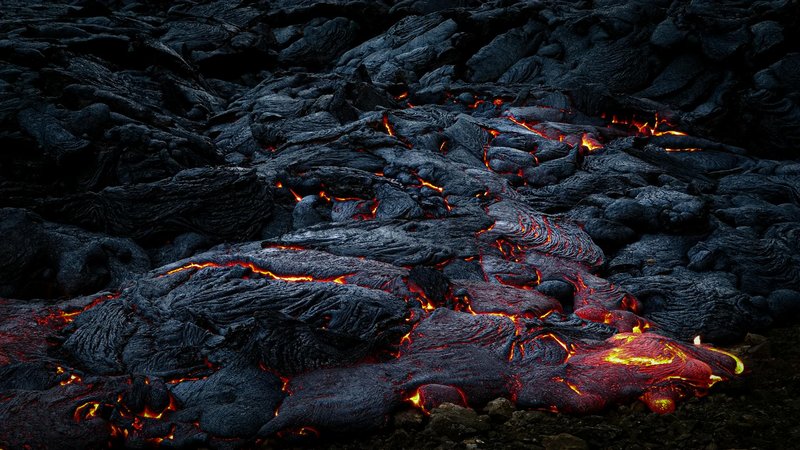
Serbia’s volcanoes belong to a burst of activity geologists call Tertiary volcanism, concentrated in the Oligocene and Miocene epochs — roughly 30 to 15 million years ago. Back then the African and Eurasian plates were grinding together as the Mediterranean reshaped itself, and that collision squeezed magma up through the crust across the Balkans. Serbia caught a good share of it.
Most of what you see today isn’t the original volcano. A cinder cone built of loose ash erodes fast; in 20 million years, it’s gone. What survives is the hard plumbing underneath — the cooled magma chambers, lava domes, and dikes that were tougher than the rock around them. Erosion stripped away the soft slopes and left the dense volcanic cores standing as isolated peaks. That’s why so many of Serbia’s “volcanoes” are sharp, lonely hills rising out of gentler country.
The rock types tell the story. You’ll hear andesite, dacite, and latite thrown around — all volcanic rocks formed from the kind of thick, sticky magma that builds steep domes and produces violent, ash-heavy eruptions rather than the runny lava rivers of Hawaii. A few of these Serbian eruptions would have thrown up the tall, mushroom-shaped ash columns you associate with Mount St. Helens. The U.S. Geological Survey has a solid primer on how andesite-style volcanism works if you want the mechanics.
One thing to clear up: Serbia is not earthquake-free, and the volcanic past isn’t the reason. The seismic activity around Kraljevo and the south comes from ongoing tectonic stress, not from any volcano waking up. These mountains are done. They’re geology you can walk on, not geology that’s going anywhere.
The major volcanic sites
Ostrvica — the textbook cone
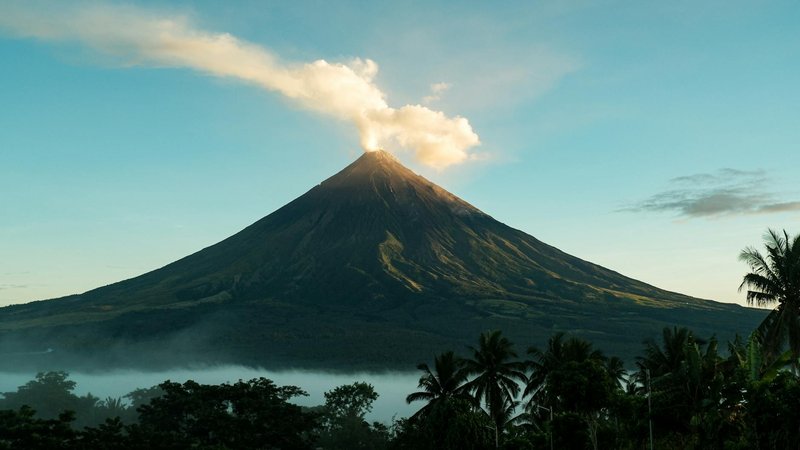
If you want a volcano that looks like a volcano, Ostrvica is the one. It rises near Aranđelovac in central Serbia as an almost perfectly conical peak, about 758 meters, jutting up so cleanly from the surrounding hills that it’s been called Serbia’s most photogenic extinct volcano. The cone shape is the giveaway — a lava dome that hardened in place while the softer material around it washed away.
The hike is short but genuinely steep near the top, and the summit gives you a wide view over the Šumadija region. There’s a ruined medieval fortress up there too, which means you’re standing on volcanic rock that someone in the 14th century decided was the best defensive position for miles. They weren’t wrong. Of all Serbia’s volcanic sites, Ostrvica is the easiest to read as a volcano with your own eyes, which is why it’s the one tourism writers keep returning to.
Bukulja — granite that never reached the surface
Bukulja sits right next to Aranđelovac, paired with Ostrvica in most people’s minds, but geologically it’s a different animal. Where Ostrvica is a surface lava dome, Bukulja is intrusive — its core is granite that cooled slowly underground and only became a mountain after millions of years of erosion exposed it. Strictly, that makes it a plutonic body rather than a true volcano, but it’s part of the same magmatic event, and locals and guidebooks file it with the volcanoes.
At 696 meters, Bukulja is a forested, walkable mountain with marked trails running up from the spa town of Bukovička Banja. It’s the gentler climb of the pair, popular with day-trippers from Belgrade who pair it with the mineral-water spa below. The granite here was even quarried — so some of the stone in older buildings around the region came straight out of an ancient magma chamber.
Rudnik — the highest of central Serbia
Rudnik is the tallest mountain in central Serbia, topping out at Cvijićev vrh at 1,132 meters, and it’s a volcanic complex rather than a single peak. Its name literally means “mine” in Serbian, and that’s not a coincidence: the volcanic activity here pushed up metal-rich fluids, and people have been mining lead, zinc, and silver in these hills since Roman and medieval times. Where there’s old volcanism, there’s often ore — the two travel together.
The mountain is a knot of several volcanic peaks covered in dense forest, with hiking trails and a few mountain lodges. It’s less of a clean cone than Ostrvica and more of a worn massif, but it’s the heavyweight of the group by elevation and the most interesting for the mining-and-magma overlap.
Radan and the Lece complex — the caldera giant
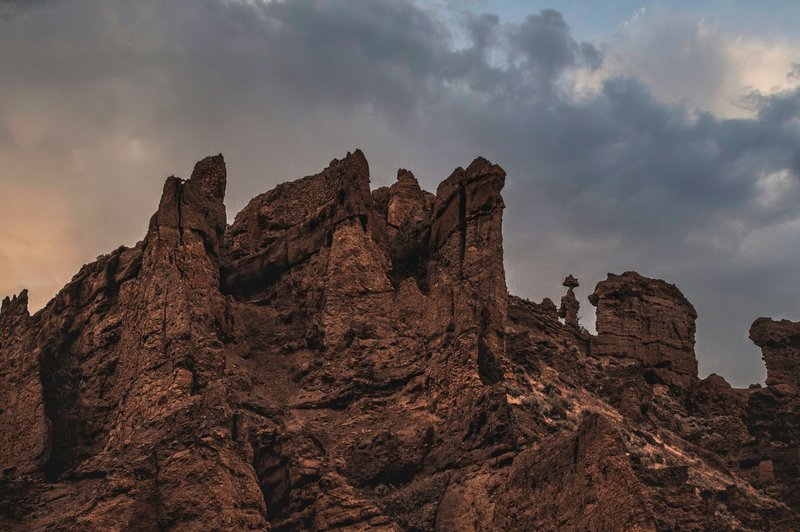
Here’s the big one. The Lece volcanic complex in southern Serbia, anchored by Mount Radan, is the largest expression of Tertiary volcanism in the country — a sprawling andesite-and-dacite field that was active in the Oligocene and Miocene. This wasn’t a single tidy cone; it was a broad volcanic province that pumped out enormous volumes of rock over a long stretch of time.
Radan’s most famous feature isn’t even obviously volcanic at first glance. Đavolja Varoš — “Devil’s Town” — sits on its slopes: a cluster of around 200 stone spires, some up to 15 meters tall, each capped with a balanced rock like a stone hat. These earth pyramids formed because the volcanic and hydrothermal activity left behind soft rock with a hard protective cap; rain eroded everything except the columns shielded by those caps. It’s one of Serbia’s most-visited natural monuments and was a finalist in a global “new natural wonders” campaign. The columns are still actively forming and collapsing — slow-motion erosion you’re watching mid-process.
The Lece complex also left behind significant metal deposits, including gold and copper, which is why mining exploration keeps circling back to this corner of Serbia.
Borački krš — the andesite tower
Borački krš is a jagged rock outcrop near Kragujevac, on the slopes above the Gruža region, made of hard volcanic andesite. It’s not a tall mountain — the appeal is the shape. The rock juts up in a steep, broken crest that’s become a small destination for hikers and rock climbers who want a short scramble with a payoff view over the Gruža lake and valley.
It’s the kind of place that only makes the list because it’s genuinely volcanic: that resistant andesite tower is a chunk of ancient magma left standing after everything softer eroded around it. A picnic-and-a-short-hike outing rather than a serious climb, but the geology is the real thing.
Kopaonik — volcanic roots under a ski resort
Most people know Kopaonik as Serbia’s biggest ski resort, not as a volcano — and fairly, because it isn’t a cone you can point at. But Kopaonik’s geology is shot through with Tertiary volcanic and intrusive rock, and like Rudnik, that volcanic past is exactly why the mountain is so heavily mineralized. The name comes from the Serbian for “digging” — more mining, more ore pushed up by ancient magmatic heat.
You’re not hiking a crater here. You’re hiking a high massif (Pančićev vrh reaches 2,017 meters, the highest point of the range) whose deep structure was shaped by the same magmatic event as the rest. Summer hiking on Kopaonik is excellent, and the volcanic-mineral story is a quieter layer under the ski-and-spa reputation.
Golija — the green plateau
Golija, in southwestern Serbia, is a broad forested mountain and UNESCO Biosphere Reserve that also carries Tertiary volcanic rock in its makeup. It’s the least “volcano-shaped” entry on this list — a rolling, green, water-rich plateau rather than a peak — but it belongs to the same regional magmatic story and rounds out the picture of just how widespread that ancient activity was.
For hikers, Golija is about long forest trails, springs, and the medieval Studenica monastery nearby rather than dramatic summit cones. Think of it as the soft, weathered end of the volcanic spectrum, where 20 million years of erosion have had the fullest effect.
The volcanoes-to-wine connection
Here’s the angle nobody puts together with the geology: some of Serbia’s wine grows on volcanic soil. Volcanic and mineral-rich ground tends to be well-drained and full of trace minerals, and Serbian winemakers in regions touched by that ancient volcanism work soils that differ from the limestone and loess elsewhere in the country. It’s the same reason volcanic wine regions get talked up from Sicily’s Etna to Hungary’s Tokaj — the rock under the vine shapes what ends up in the glass.
It’s a small but real throughline: the magma that built these mountains also seeded the ground, and 20 million years later it’s quietly feeding the grapes. National Geographic has covered why volcanic-soil wines have their own character if you want to follow that thread further.
Hiking these volcanoes: what to know
None of these require technical mountaineering. They range from easy forest walks (Bukulja, Golija) to short steep scrambles (Ostrvica, Borački krš) to full mountain massifs (Rudnik, Kopaonik) with marked trails and lodges.
A few practical notes:
- Base yourself in Aranđelovac for the easy double of Ostrvica and Bukulja — they’re close together and doable in a weekend from Belgrade, about an hour’s drive south.
- Đavolja Varoš on Radan is a developed site with a ticket, parking, and walkways. You’re not bushwhacking; you’re walking a viewing path among the stone spires. It’s the most “tourist-ready” volcanic feature in the country.
- Go spring or autumn for the central Serbian peaks. Summer haze flattens the long views from summits like Ostrvica, and the forest cover is thick.
- Kopaonik and Golija are full-day mountain trips with proper trail networks — bring real footwear and water. These aren’t afternoon strolls.
- Marked trails exist on the bigger mountains, but signage in Serbia can be patchy. A downloaded offline map saves you on the lesser-known approaches like Borački krš.
Quick comparison table
| Volcanic site | Region | Elevation | What’s left to see | Hikeable? |
|---|---|---|---|---|
| Ostrvica | Central (Aranđelovac) | 758 m | Classic cone shape, fortress ruins, Šumadija views | Yes — short, steep |
| Bukulja | Central (Aranđelovac) | 696 m | Exposed granite core, spa town below | Yes — easy |
| Rudnik | Central Serbia | 1,132 m | Highest in central Serbia, old mines | Yes — full mountain |
| Radan / Lece | Southern Serbia | up to ~1,409 m | Đavolja Varoš stone spires, largest volcanic field | Yes — developed site |
| Borački krš | Near Kragujevac | ~300 m outcrop | Andesite tower, climbing, Gruža views | Yes — short scramble |
| Kopaonik | Southern Serbia | 2,017 m | Volcanic-mineral massif, ski resort, summer trails | Yes — full mountain |
| Golija | Southwest Serbia | up to 1,833 m | Forested plateau, biosphere reserve | Yes — long forest trails |
So, back to the question that started this: does Serbia have volcanoes? No active ones — nothing’s going to erupt. But the country is full of extinct volcanic mountains you can climb, from the perfect little cone of Ostrvica to the alien stone spires of Đavolja Varoš to the mineral-rich heights of Rudnik and Kopaonik. They’re some of the most underrated geology in the Balkans, sitting in plain sight, waiting for anyone curious enough to look up and notice the shape of the hill.