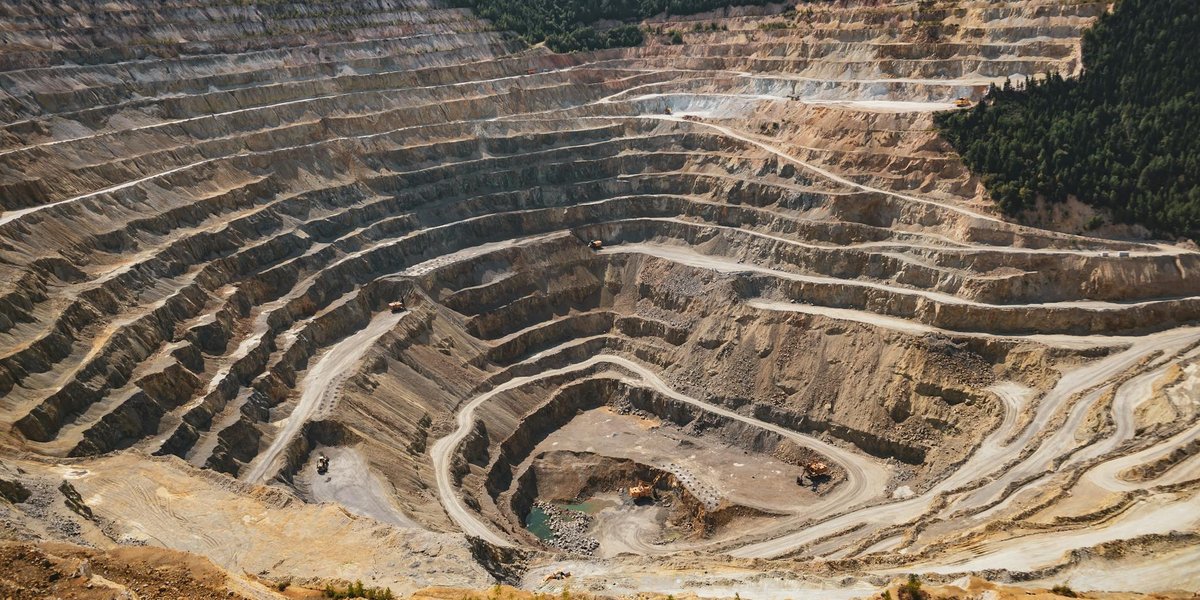
Eswatini is small — roughly the size of New Jersey — but its rocks tell a long story. The Ngwenya hills in the country’s northwest hold what geologists call the oldest known mine on Earth, where people were digging out red and black iron-rich ore tens of thousands of years before the pyramids. Today the mining picture is quieter than that headline suggests, but it’s shifting fast. Recent surveys turned up lithium and tantalum, two minerals the rest of the world is scrambling for, and the government has been handing out fresh prospecting licenses to match.
This is the practical rundown: which minerals in Eswatini actually leave the ground and earn money, which ones are sitting there waiting for prices to make sense, and what the new discoveries might mean.
Contents
- Quick reference: minerals at a glance
- Actively mined minerals
- Present but uneconomical
- The new finds: lithium and tantalum
- Ngwenya: the oldest mine on Earth
- Where the sector is heading
Quick reference: minerals at a glance
If you only need the shortlist, here it is. Eswatini’s mineral economy today runs mostly on coal, quarried stone, and industrial minerals like silica and kaolin. Diamonds and gold exist but barely register as commercial operations. The interesting action is in what was recently discovered.
| Mineral | Status | Key location / mine | Role |
|---|---|---|---|
| Coal | Actively mined | Maloma (Lubombo region) | Main mineral export |
| Crushed stone / aggregate | Actively mined | Multiple quarries | Domestic construction |
| Silica (quartzite) | Actively mined | Northwest highveld | Industrial, glass feedstock |
| Kaolin / clays | Mined intermittently | Various | Ceramics, industrial |
| Gold | Minor / artisanal | Northwest greenstone belt | Negligible commercial output |
| Diamonds | Largely dormant | Dvokolwako (kimberlite) | Past production, little today |
| Iron ore | Historic / depleted | Ngwenya | Mined out commercially |
| Tantalum | Newly identified | Survey-stage | High-value prospect |
| Lithium | Newly identified | Survey-stage | High-value prospect |
| Arsenic, copper, tin, manganese | Present, unmined | Scattered | Uneconomical at current grades |
Actively mined minerals
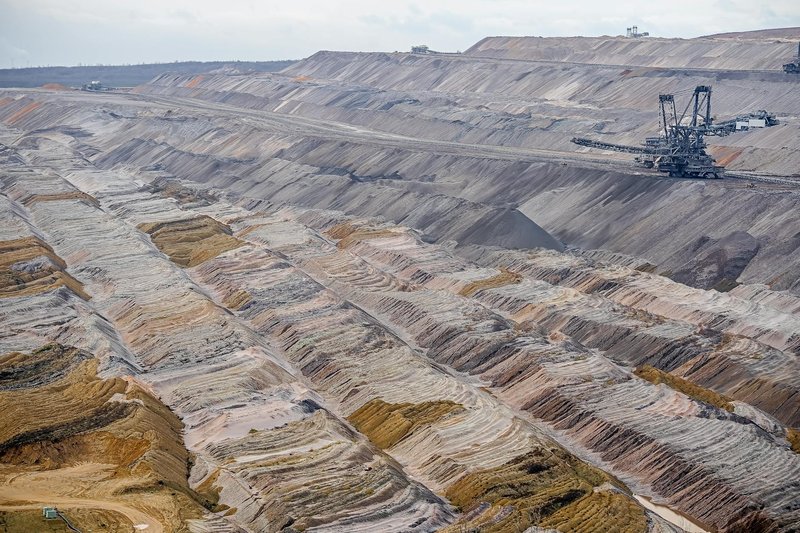
These are the minerals doing real work in Eswatini’s economy right now.
Coal is the backbone. The Maloma Colliery in the southeastern Lubombo region produces high-quality anthracite — a hard, high-carbon coal that burns hot and clean — and ships most of it abroad. Coal has been the country’s leading mineral export by value for years, with South Africa and other regional buyers taking the bulk of it. The deposits sit in the Ecca Group sediments, the same coal-bearing layers that run across southern Africa.
Crushed stone and aggregate rarely make the glamour lists, but in tonnage they’re the country’s biggest mining output. Quarries pull dolerite and other hard rock for roads, concrete, and construction. It’s unglamorous, local, and steady — the kind of mining that doesn’t make news but keeps building sites running.
Silica, in the form of high-purity quartzite, comes out of the northwestern highveld. It feeds industrial uses including glassmaking and foundry work. Eswatini’s quartzites are unusually pure in places, which is part of why the Ngwenya story exists at all — the iron ore there is bound up in ancient quartz-rich banded formations.
Kaolin and other clays round out the industrial minerals, mined on and off depending on demand from ceramics and processing industries.
Notice what’s missing from this list: gold and diamonds. Both are present geologically, but neither runs as a serious commercial operation today. The Dvokolwako kimberlite pipe produced diamonds in past decades, and the northwest greenstone belt has hosted small-scale and artisanal gold workings, but reserves and grades never justified large modern mines. According to the USGS Minerals Yearbook, Eswatini’s reported commercial output has long centered on coal and quarried stone rather than precious metals.
Present but uneconomical
A country’s geology and its mining economy are two different maps. Plenty of minerals show up in Eswatini’s rocks without ever justifying a pit.
Arsenic, copper, manganese, and tin all appear in the geological record — copper in the older basement rocks, tin associated with granite intrusions, manganese and arsenic in scattered occurrences. The problem is the same in every case: the concentrations are too low, the deposits too small, or the logistics too awkward to compete with bigger producers next door. South Africa, the Democratic Republic of Congo, and Zambia dominate regional copper and manganese supply at scales Eswatini can’t touch.
That doesn’t make these minerals worthless on paper. It makes them a reserve — geological potential that could matter if prices spike or extraction technology gets cheaper. For now they stay in the ground, which is exactly the right place for ore that costs more to dig than it sells for.
Green chert deserves a mention here too. The northwest hills produce a distinctive green-banded chert prized as an ornamental and semi-precious stone, used locally for carving and lapidary work. It’s a niche extraction, more craft than industry, but it’s a genuine mineral product unique to the area’s ancient sedimentary rocks.
The new finds: lithium and tantalum
Here’s where Eswatini’s mineral story stops being a history lesson.
Recent geological surveys identified tantalum and lithium occurrences — two of the most sought-after minerals on the planet right now. Tantalum goes into the capacitors inside nearly every phone, laptop, and electric vehicle. Lithium is the metal behind the batteries powering the energy transition. Demand for both has been climbing for years as electronics and EV production scale up, and the International Energy Agency projects lithium demand alone could multiply several times over by 2040.
Both typically occur in pegmatites — coarse-grained igneous rocks that crystallize from the last, most concentrated juices of a cooling magma, often loaded with rare elements. Eswatini sits on old Archean and Proterozoic terrain with granite intrusions, exactly the geological setting where lithium-tantalum pegmatites tend to form. So the finds aren’t a fluke; they fit the rock record.
The caveat matters: identifying a mineral occurrence is a long way from operating a mine. These are survey-stage discoveries, not proven economic reserves. It takes years of drilling, grade assessment, and feasibility work before anyone knows whether a deposit is worth developing. But for a country whose mineral exports have leaned on coal and crushed rock, even the prospect of critical-minerals deposits is a meaningful shift in the conversation.
Ngwenya: the oldest mine on Earth
No piece on minerals in Eswatini is complete without Ngwenya, and it earns the detour.
In the northwestern hills near the South African border, the Ngwenya Mine extracted iron ore — specifically hematite and the red and black specularite pigments — from banded ironstone formations. The commercial operation in the 20th century shipped iron ore, mostly to Japan, until the accessible reserves ran down and the modern mine closed.
But the headline isn’t the 20th-century mining. It’s the age. Archaeologists working at the site, in research associated with the Smithsonian and other institutions, found evidence that people were extracting hematite and specularite here for use as pigment and cosmetics going back tens of thousands of years — making Ngwenya, by many accounts, the oldest known mining site in the world. The red ochre dug from these hills predates almost everything we’d recognize as industry.
You can visit. Ngwenya now sits inside a nature reserve, and the old workings are open to the public — a rare case where you can stand in a place where mining never really started in any single year, because it’s been happening, on and off, since the Stone Age.
Where the sector is heading
Eswatini’s mining sector is small and unlikely to suddenly become a regional heavyweight. Coal and quarried stone will keep paying the bills in the near term. But the 2020s have brought a wave of new prospecting and mining licenses, and the government has signaled it wants to broaden the resource base beyond the familiar coal-and-aggregate base.
The lithium and tantalum question is the one to watch. If even one of those occurrences turns out to be a developable deposit, it would reshape a mineral economy that’s been remarkably stable for decades. According to country guidance from the U.S. International Trade Administration, the sector remains open to investment and exploration, which is the kind of environment where survey-stage finds occasionally become real mines.
For now, the honest summary is this: Eswatini mines coal, stone, and industrial minerals; holds a scatter of metals too marginal to bother with; sits on the oldest mine humans ever dug; and may — emphasis on may — be sitting on a piece of the critical-minerals future. Not bad for a country you can drive across in an afternoon.