Most lists of “scientists born in North America” are really lists of Americans with a Canadian or two bolted on at the end. That’s a problem, because North America runs from the Arctic tundra of Canada down through Mexico and into the Caribbean — and the people born across that span synthesized the first birth-control pill, isolated insulin, explained the hole in the ozone layer, and built the sensor inside the camera you’re probably holding right now.
This is the version that actually honors the whole continent. Fifteen scientists, born in Canada, the United States, Mexico, and the Caribbean, each picked for a discovery you can point to and say “that one — that’s why they’re here.”
Table of Contents
The quick reference table
If you just need the roster, here it is. The full blurbs are below.
| Scientist | Born | Field | Known for |
|---|---|---|---|
| Frederick Banting | Alliston, Canada | Medicine | Co-discovered insulin |
| Willard Boyle | Amherst, Canada | Physics | Co-invented the CCD image sensor |
| David Suzuki | Vancouver, Canada | Genetics / broadcasting | Fruit-fly genetics; science communication |
| Barbara McClintock | Hartford, USA | Genetics | Discovered transposons (“jumping genes”) |
| Richard Feynman | New York City, USA | Physics | Quantum electrodynamics |
| Katherine Johnson | White Sulphur Springs, USA | Mathematics | Orbital mechanics for NASA |
| Percy Julian | Montgomery, USA | Chemistry | Synthesized cortisone and physostigmine |
| George Washington Carver | Diamond, USA | Agricultural science | Crop rotation and peanut chemistry |
| Susan La Flesche Picotte | Omaha Reservation, USA | Medicine | First Native American to earn an MD |
| Mario Molina | Mexico City, Mexico | Chemistry | CFC damage to the ozone layer |
| Luis Miramontes | Tepic, Mexico | Chemistry | Synthesized the first oral contraceptive |
| Guillermo González Camarena | Guadalajara, Mexico | Engineering | Color television system |
| Manuel Sandoval Vallarta | Mexico City, Mexico | Physics | Cosmic-ray theory |
| Carlos Juan Finlay | Camagüey, Cuba | Epidemiology | Mosquitoes transmit yellow fever |
| Alan Shepard | Derry, USA | Astronautics | First American in space |
Canada
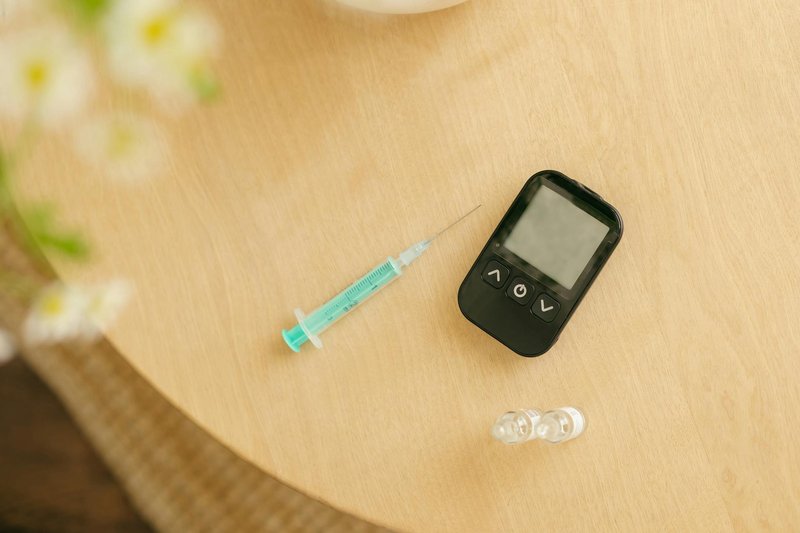
Frederick Banting (1891–1941), born in Alliston, Ontario, co-discovered insulin in 1921 in a hot University of Toronto lab alongside Charles Best, working under physiologist John Macleod. Before insulin, a type 1 diabetes diagnosis was a death sentence — children were put on starvation diets that bought them months. Banting shared the 1923 Nobel Prize in Physiology or Medicine with Macleod and, at 32, remains the youngest medicine laureate ever. He split his prize money with Best, who’d been left off the award.
Willard Boyle (1924–2011), born in Amherst, Nova Scotia, co-invented the charge-coupled device at Bell Labs in 1969 with George Smith. The CCD turns light into a digital signal — it’s the reason your phone has a camera, the reason the Hubble can photograph galaxies, and the reason digital imaging exists at all. He won a share of the 2009 Nobel Prize in Physics for it, nearly 40 years after the work.
David Suzuki (born 1936 in Vancouver) made his name as a geneticist studying temperature-sensitive mutations in fruit flies before becoming the most recognizable science broadcaster in the country. His point of view: science only matters if the public understands it. He’s spent decades proving you can do rigorous lab work and then explain it to someone who’s never opened a biology textbook.
The United States
The US contingent is the largest, so the trick is picking people whose work you can actually describe in a sentence — not just famous names.
Barbara McClintock (1902–1992), born in Hartford, Connecticut, discovered that genes can move around on chromosomes. “Jumping genes,” or transposons, were so far ahead of the field that it took decades for biology to catch up; she won a solo Nobel Prize in 1983, an extraordinary rarity. She did most of the work on maize, counting the colored kernels on cob after cob.
Richard Feynman (1918–1988), born in Queens, New York, reformulated quantum electrodynamics and gave physicists the diagrams — Feynman diagrams — they still draw to track particle interactions. He shared the 1965 Nobel Prize in Physics. He’s also the man who, during the Challenger investigation, dropped an O-ring rubber seal into a glass of ice water on live television to show why the shuttle failed in the cold. If you collect these dates, it’s worth knowing he shares a May birthday with a surprising number of other prominent scientists clustered just weeks earlier in the calendar.
Katherine Johnson (1918–2020), born in White Sulphur Springs, West Virginia, calculated the orbital mechanics for NASA’s earliest crewed missions. When the agency switched to electronic computers for John Glenn’s 1962 orbital flight, Glenn reportedly refused to fly until Johnson personally rechecked the machine’s numbers by hand. She received the Presidential Medal of Freedom in 2015.
Percy Julian (1899–1975), born in Montgomery, Alabama, was a chemist who figured out how to synthesize hormones and medicines from soybeans. His work made cortisone — the anti-inflammatory drug — affordable, and his synthesis of physostigmine offered a treatment for glaucoma. He held more than 100 patents and built much of it while barred from labs and faculty jobs because he was Black.
George Washington Carver (c. 1864–1943), born into slavery near Diamond, Missouri, was an agricultural scientist who taught Southern farmers to rotate cotton with nitrogen-fixing peanuts and sweet potatoes to rescue depleted soil. He then developed hundreds of uses for those crops to give farmers a market. He’s often miscredited with inventing peanut butter — he didn’t — but the soil-chemistry work was the real and lasting contribution.
Mexico
Mexico’s scientists are the ones most lists skip, which is strange given how much of modern daily life traces back to them. The same blind spot tends to bury contributions from other regions outside the usual Western canon — the scientists born in Iran whose work reshaped physics and medicine get overlooked for much the same reason.
Mario Molina (1943–2020), born in Mexico City, co-authored the 1974 paper in Nature showing that chlorofluorocarbons — the gases in old aerosols and refrigerators — were destroying the ozone layer. The finding led to the Montreal Protocol, the international treaty that banned CFCs. Molina shared the 1995 Nobel Prize in Chemistry, becoming the first Mexican-born scientist to win a science Nobel.
Luis Miramontes (1925–2004), born in Tepic, Nayarit, synthesized norethindrone in 1951 at the age of 26 while working at Syntex in Mexico City. Norethindrone was the active progestin in the first oral contraceptive — the Pill. It’s hard to name a single chemical compound that reshaped 20th-century society more directly, and a Mexican chemistry student made it.
Guillermo González Camarena (1917–1965), born in Guadalajara, Jalisco, built his first television camera at 15 and patented a sequential color television system in 1940, at 23, in both Mexico and the United States. Color TV had several independent inventors, but González Camarena’s early patent puts him firmly among them.
Manuel Sandoval Vallarta (1899–1977), born in Mexico City, was a physicist at MIT who worked with Georges Lemaître on the theory of cosmic rays — explaining how Earth’s magnetic field bends the charged particles streaming in from space. He later went home and became a foundational figure in Mexican physics education.
The Caribbean
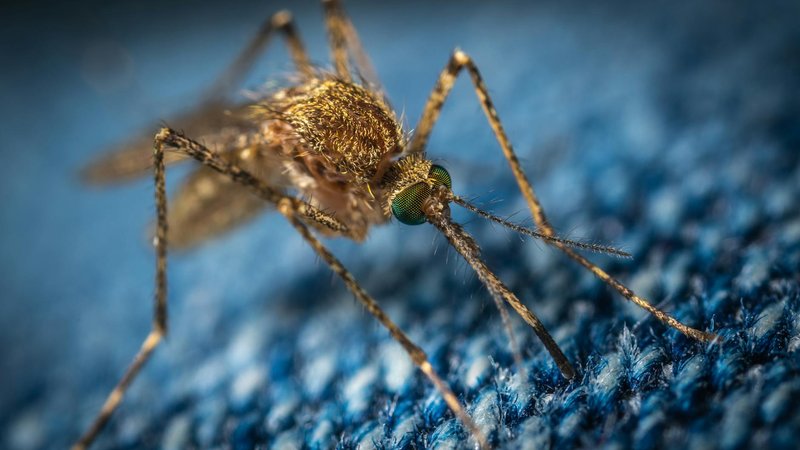
Carlos Juan Finlay (1833–1915), born in Puerto Príncipe (now Camagüey), Cuba, proposed in 1881 that a mosquito — specifically Aedes aegypti — transmits yellow fever. The medical establishment dismissed him for 20 years. He was right. The US Army’s Walter Reed Commission confirmed Finlay’s hypothesis in 1900, and the resulting mosquito-control measures made it possible to finish building the Panama Canal without the workforce dying of fever.
“Firsts” worth knowing
The “born in North America” story isn’t only about Nobel Prizes. Some of the most important entries are about being first through a closed door.
Susan La Flesche Picotte (1865–1915), born on the Omaha Reservation in Nebraska, became the first Native American to earn a medical degree when she graduated from the Woman’s Medical College of Pennsylvania in 1889. She returned to serve more than 1,200 Omaha people and, in 1913, founded the first privately funded hospital on a US reservation.
For the space-age “first,” there’s Alan Shepard (1923–1998), born in Derry, New Hampshire, who on May 5, 1961 became the first American in space aboard Freedom 7 — a 15-minute suborbital hop that ran 300 miles downrange and put the US in the crewed spaceflight game.
And the breadth keeps going if you want to chase it: the continent that produced Banting and Molina also produced the people who first cracked closed fields wide open. The throughline across all fifteen — Arctic Canada to the Caribbean — is that “North American science” was never a single nationality. It was a continent’s worth of people who each found one thing and got it right.