Open any chemistry textbook and you’ll read that the noble gases don’t react. Full outer shell, perfectly content, the loners of the periodic table. Argon especially — it makes up about 0.93% of the air you’re breathing right now and has spent billions of years not bothering anyone.
And yet argon does form compounds. Real ones, with chemical bonds, that you can detect in a lab or floating in interstellar space. The catch is that most of them only survive under conditions that would make your average molecule run for cover: temperatures near absolute zero, or the violent radiation fields between stars.
So the short answer to “does argon form compounds?” is yes — just not the way oxygen or carbon do. Let’s go through what argon actually bonds with, when each compound was found, and why the “inert” label is more of a strong suggestion than a hard rule.
Table of Contents
- Why argon is supposed to be inert
- Argon compounds at a glance
- Argon fluorohydride (HArF): the famous one
- Argon ions: ArH+ and the discovery in space
- Van der Waals molecules
- Clathrates: trapped, not bonded
- The 1975 false start with tungsten
- Is argon a compound or an element?
- The takeaway
Why argon is supposed to be inert

Argon sits in Group 18, the noble gases. Its electron configuration ends in a complete outer shell — eight electrons in the valence layer, the famous “octet.” That full shell is the chemistry equivalent of being completely full after dinner. There’s no energetic reason to grab another electron or give one away, which is exactly what forming a bond requires.
Compare that to sodium, which is desperate to ditch one electron, or chlorine, which is desperate to gain one. Put them together and they snap into table salt almost violently. Argon has no such itch. Its outermost electrons are also held tightly, with a high ionization energy, so prying one loose takes a lot of force.
That’s the whole reason argon got the “noble” treatment. For decades after its 1894 discovery by Lord Rayleigh and William Ramsay — work that later earned both men a place among the 1900s Nobel Prize winners — chemists assumed it formed nothing at all. The lighter noble gases — helium, neon, argon — were considered the truly hopeless cases, even after xenon and the compounds krypton can form started showing up in the 1960s.
The thing is, “no energetic reason to bond under normal conditions” is not the same as “cannot bond, ever.” Crank the conditions far enough from normal, and even argon gives in.
Argon compounds at a glance
Before the deep dive, here’s the lay of the land. These are the main categories of argon chemistry, what holds them together, and how fragile they are.
| Compound / type | Example | First reported | Stability conditions |
|---|---|---|---|
| Argon fluorohydride | HArF | 2000 (Helsinki) | Solid argon matrix below ~27 K |
| Molecular ion | ArH+ | Lab: early 1900s; space: 2013 | Plasmas, interstellar gas |
| Van der Waals molecule | Ar–HCl, Ar2 | Mid-20th century onward | Cold molecular beams, very low temp |
| Clathrate | Ar·~6H2O | 1896 / refined later | High pressure, low temperature |
| Coordination (disputed) | W(CO)5Ar | 1975 | Matrix isolation, cryogenic |
Notice the pattern in that right-hand column: cold, isolated, or both. None of these are sitting in a bottle on a shelf at room temperature. That single fact explains why argon kept its inert reputation so long — its compounds hide in conditions ordinary chemistry never visits.
Argon fluorohydride (HArF): the famous one
If argon chemistry has a headline act, it’s argon fluorohydride. The formula is HArF — one hydrogen, one argon, one fluorine — and it’s the first and still most-discussed neutral, stable molecule containing argon.
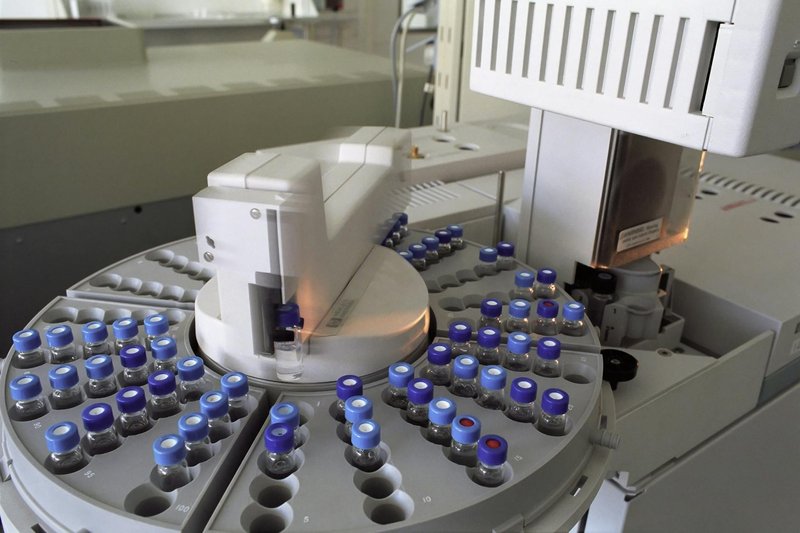
A team led by Markku Räsänen at the University of Helsinki made it in 2000. The recipe: freeze hydrogen fluoride (HF) inside solid argon at temperatures around 7.5 K, then hit it with ultraviolet light. The UV splits the HF into hydrogen and fluorine atoms. As the matrix is gently warmed, the hydrogen atom slots in between the argon and the fluorine, and an argon–hydrogen bond forms. The researchers confirmed it by infrared spectroscopy — a new absorption band appeared exactly where an Ar–H stretch should be, and it shifted in the predictable way when they swapped in heavier isotopes.
The result was striking enough to land in Nature, and Science covered it under the headline that argon was “not so noble after all.”
Here’s the honest part: HArF is not robust. It only exists in that frozen argon cage, and it falls apart once the temperature climbs above roughly 27 K — still desperately cold, around minus 246 degrees Celsius. Warm it past that and it reverts to HF and plain argon. So while it’s a genuine compound with a real bond, you won’t be storing it in a jar.
What makes HArF matter isn’t its usefulness. It’s the proof of concept: argon can sit inside a stable neutral molecule. That cracked open the category and sent chemists hunting for relatives, like predicted (but harder-to-make) species along the same HNgF line for other noble gases.
Argon ions: ArH+ and the discovery in space
Strip an electron off the picture and argon gets a lot more sociable. The argonium ion, ArH+, is argon bonded to a proton — and it’s far older and far more important than HArF.
Chemists have known about ArH+ from laboratory plasma and discharge experiments for over a century. When you ionize argon gas in the presence of hydrogen, the resulting argon ion happily grabs a hydrogen atom. The bond is real and reasonably strong, because the ion isn’t fighting the same full-shell reluctance a neutral argon atom is.
The genuinely surprising chapter came in 2013. Astronomers analyzing emission from the Crab Nebula — the remnant of a supernova that Chinese astronomers recorded in 1054 — found a spectral fingerprint they couldn’t place at first. It turned out to be ArH+. That made it the first noble-gas molecule ever detected in space.
It makes sense once you think about the environment. The Crab Nebula is flooded with high-energy radiation that ionizes atoms wholesale, and there’s plenty of hydrogen around. Those are exactly the conditions ArH+ likes. The isotope involved, argon-36, also told astronomers something about how that argon was forged in the supernova, turning a chemistry curiosity into a tool for reading stellar history.
So the most common form of “argon chemistry” in the universe isn’t in any lab. It’s drifting through nebulae, and it took an Earth-bound century of plasma experiments to recognize it when it finally showed up in a telescope.
Van der Waals molecules
There’s a softer category of argon “compound” that bends the definition a little: van der Waals molecules.
These are pairs or clusters held together not by a shared electron bond but by weak van der Waals forces — the same faint, fleeting attractions that let geckos stick to glass and gases eventually liquefy when cold enough. Two argon atoms can briefly pair into Ar2 (the argon dimer). Argon can also loosely tether to other molecules, forming species like Ar–HCl or Ar–CO2.
Are these “real” compounds? Chemists argue about it. The atoms aren’t sharing electrons in a covalent bond, so a purist might call them complexes rather than compounds. But they have measurable bond lengths and binding energies, you can study their structure with microwave spectroscopy, and they behave as defined molecular units — so the line is blurry.
What’s not blurry is how flimsy they are. The binding energy of the argon dimer is minuscule, which is why argon stays one of the gases that resist liquefying at any temperature you’d find comfortable. These molecules only hold together in ultracold molecular beams, where there’s no thermal jostling to shake them apart. Useful for studying how weak forces work, but a far cry from the sturdy bonds of HArF.
Clathrates: trapped, not bonded
Argon clathrates are worth mentioning precisely because they look like compounds and aren’t, in the chemical sense.
A clathrate hydrate is a cage of water molecules — basically a specialized ice structure — with a guest atom locked inside. Under the right pressure and cold, water molecules form a lattice with little cavities, and an argon atom can get physically trapped in one. The result, often written roughly as Ar·6H2O, has a fixed-looking ratio that mimics a chemical formula.
But there’s no chemical bond between the argon and the water. The argon is a prisoner, not a partner. Remove the pressure or warm it up and the cage melts, releasing argon that was never chemically changed at all. People first noted argon-trapping hydrates back in the 1890s.
It’s a useful contrast. HArF and ArH+ involve actual bonds where electrons get shared or redistributed. A clathrate is just argon stuck in a box. Both get lumped into “argon compounds” in casual lists, but only one kind involves chemistry happening to the argon.
The 1975 false start with tungsten
Before HArF stole the spotlight, there was an earlier claim that’s worth knowing about — partly because it shows how cautious this field has to be.
In 1975, researchers reported a species written as W(CO)5Ar: a tungsten atom carrying five carbon monoxide groups, with an argon atom apparently filling a sixth coordination spot. It was made by matrix isolation, the same cryogenic-trapping technique used for so much noble-gas work, by stripping a CO off tungsten hexacarbonyl and letting argon move into the gap.
Whether this counts as a true “argon compound” depends on how you weigh the interaction. The argon–metal contact is weak, more of a loose coordination than a committed bond, and skeptics file it closer to the van der Waals end of the spectrum. That’s exactly why HArF, with its clear neutral covalent bond, is usually credited as the breakthrough rather than the 1975 tungsten work.
The episode is a good reminder that “argon formed a compound” can mean very different things depending on how strong the interaction is — which is the whole reason chemists fuss over definitions here.
Is argon a compound or an element?
This question comes up constantly, so let’s settle it cleanly: argon is an element, not a compound.
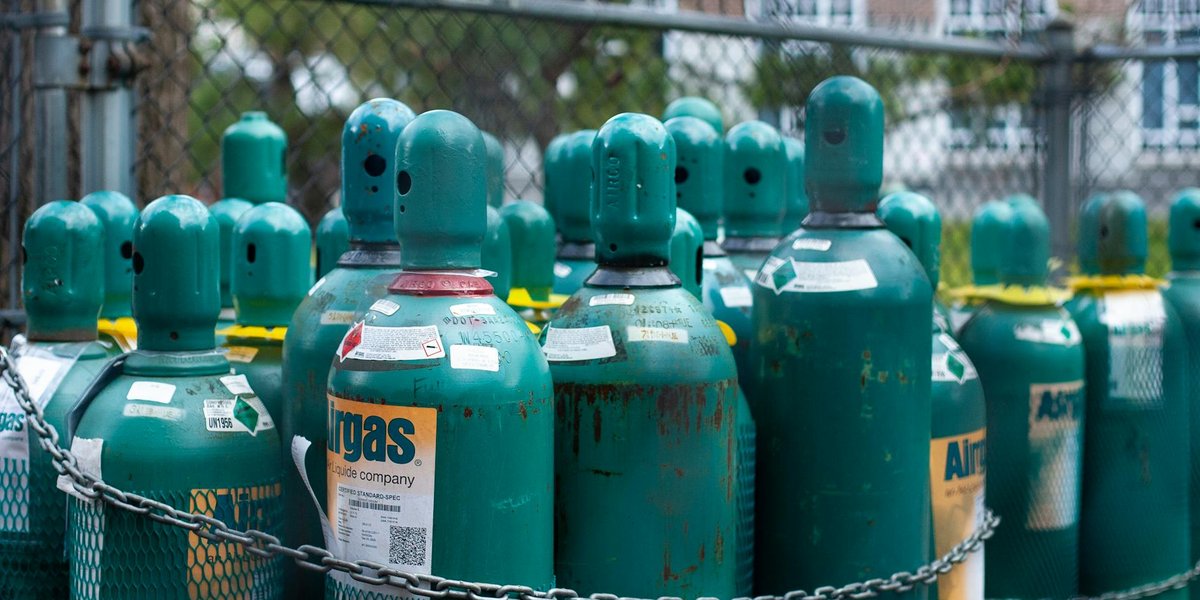
An element is a pure substance made of a single kind of atom — and argon is atom number 18, sitting in its own box on the periodic table. The argon in a welding tank or a light bulb is just argon atoms, not bonded to anything. That’s why it’s used in those applications in the first place: it won’t react with the hot metal or the glowing filament.
The confusion usually comes from mixing up two things. “Argon” the element and “argon compounds” like HArF are different. Argon itself is elemental; the compounds are what you get when you force argon to bond with something else under extreme conditions. So when someone asks “what is a compound of argon,” the honest answer is that they’re rare, fragile, and exotic — but HArF is the textbook example.
One more wrinkle people raise: even pure argon gas exists as single atoms (it’s monatomic), unlike oxygen, which travels as O2 molecules. So argon is about as elemental as an element gets.
The takeaway
Argon’s reputation as inert isn’t wrong, exactly — it’s just incomplete. Under everyday conditions, argon really does refuse to react, and that stubbornness is genuinely useful. But push the conditions to extremes and the picture changes.
The greatest hits are worth remembering:
- HArF — the first stable neutral argon molecule, made in 2000 in Helsinki, alive only inside frozen argon below about 27 K.
- ArH+ — the argon ion that’s been a lab regular for a century and turned up in the Crab Nebula in 2013, the first noble-gas molecule found in space.
- Van der Waals molecules and clathrates — the borderline cases, where argon is loosely tethered or physically trapped rather than truly bonded.
The deeper lesson is one chemistry keeps teaching: rules about what “can’t” happen are usually rules about what doesn’t happen under the conditions we’re used to. Argon bonds. You just have to meet it where it lives — somewhere very cold, very ionized, or very far away.