Ask “who produces the most diamonds?” and you get two correct answers that contradict each other. Russia digs up more stones than anyone. Botswana, Namibia, and Angola pull far more money out of the ground per stone. Both facts are true at once, and the gap between them is the whole story.
The numbers below come from the Kimberley Process Certification Scheme, the international body that tracks rough diamond trade to keep conflict diamonds out of the market. Every serious ranking traces back to its data. These figures cover 2024, the most recent full year reported.
Last updated: June 2026.
Table of Contents
- The rankings at a glance
- Volume vs. value: why they disagree
- 1. Russia
- 2. Botswana
- 3. Angola
- 4. Canada
- 5. Democratic Republic of Congo
- 6. South Africa
- 7. Namibia
- The lab-grown disruption
- What’s coming next
The rankings at a glance
Global rough production hit about 118 million carats in 2024, up 6% from the year before. Total value, though, fell 10% to $11.48 billion. More stones, less money. Here’s where the major producers landed.
| Rank | Country | Production (carats) | Total value | Value per carat |
|---|---|---|---|---|
| 1 | Russia | 37.3 million | $3.34 billion | $89 |
| 2 | Botswana | 28.2 million | $3.31 billion | $117 |
| 3 | Angola | 14.0 million | $1.41 billion | $101 |
| 4 | Canada | 13.3 million | $1.08 billion | $81 |
| 5 | DR Congo | ~9 million | low | ~$8 |
| 6 | South Africa | ~5 million | moderate | ~$110 |
| 7 | Namibia | 2.3 million | $0.96 billion | $417 |
Sort that table by value per carat and the order scrambles completely. Namibia, dead last by volume here, charges nearly five times what Russia gets per stone. That single column explains more about the diamond business than the production totals do.
Volume vs. value: why they disagree
A carat is a carat by weight, but not by worth. The split comes down to one thing: gem quality versus industrial grade.
Diamonds get graded for cut, clarity, color, and crystal structure. The transparent, large, clean stones go into jewelry. The cloudy, flawed, tiny ones go into drill bits, saw blades, and grinding wheels, where nobody cares if they sparkle. A country’s per-carat value is basically a report card on how many of its stones are jewelry-grade.
Russia and the Democratic Republic of Congo lean heavily on smaller and industrial-grade output, which drags their per-carat number down. Namibia’s deposits, by contrast, are almost freakishly clean, for reasons tied to how they got there. The rest of the list sits in between. Keep this distinction in your head through the country profiles, because it’s why the same dataset produces two different “winners.”
1. Russia
Russia produced 37.3 million carats in 2024, roughly 32% of everything mined on Earth, and held the top spot by both volume and total value. Most of it comes from the remote Sakha Republic (Yakutia) in eastern Siberia, where the state-linked giant Alrosa runs operations like the Mir and Udachnaya pipes in conditions cold enough to freeze diesel.
The interesting wrinkle is what happened to the money. Russia’s carat output held flat from 2023, but its average price per carat slid from $97 to $89, so total value dropped even as volume stayed put. Part of that is the soft global market. Part is geopolitics: G7 nations restricted imports of Russian-origin diamonds starting in 2024, including stones cut in third countries. The sanctions reroute trade more than they halt it, but they put steady downward pressure on what Russian rough fetches.
2. Botswana
Botswana mined 28.2 million carats in 2024, second by volume and a near-tie with Russia by total value at $3.31 billion. No country on this list is more tied to diamonds than Botswana, where the stones make up roughly 80% of exports, about a quarter of GDP, and a third of government revenue.
The country runs its mines through Debswana, a 50-50 partnership between the government and De Beers, an arrangement often cited as a rare example of a resource-rich African nation getting a fair cut of its own minerals. The crown jewel is the Jwaneng mine, frequently called the richest diamond mine in the world by value, producing over 13 million carats a year on its own.
That dependence cuts both ways. When the global market softened in 2024, Botswana’s diamond exports fell about 35% year over year, a swing big enough to slow the entire national economy. A country this leveraged to one commodity feels every price tremor.
3. Angola
Angola produced about 14 million carats in 2024 and ranked third by value at $1.41 billion, ahead of Canada despite mining roughly the same volume. The reason is grade: Angolan rough skews toward larger, higher-quality stones, including the occasional spectacular find from the Lulo mine, which has yielded several 100-plus-carat pink and white diamonds.
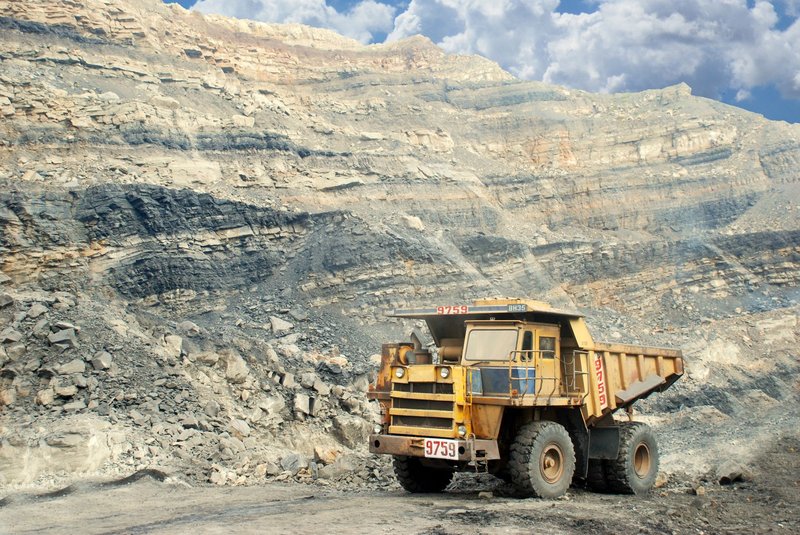
Most production comes from the Catoca mine in the northeast, one of the largest open-pit diamond mines on the planet. Angola has spent the last few years loosening old state controls and courting foreign investment to push output higher, betting that diamonds (alongside oil) can diversify an economy long dependent on crude.
4. Canada
Canada rounds out the top four by both volume (13.3 million carats) and value ($1.08 billion) in 2024. It’s the youngest major producer on the list. Commercial diamond mining there only began in the late 1990s, after geologists traced telltale mineral grains across the subarctic to the kimberlite pipes beneath the Northwest Territories.
Mines like Diavik and Gahcho Kué operate in genuinely brutal terrain, sometimes resupplied by ice roads that exist only a few weeks a year. Canada’s selling point is provenance: its stones carry a clean, well-documented chain of custody, which matters to buyers who want assurance their diamond didn’t fund a conflict. The catch is that several flagship Canadian mines are aging toward depletion, and the country’s output is expected to decline over the next decade.
5. Democratic Republic of Congo
The DR Congo is the clearest case of high volume, low value. It mines a large quantity of diamonds, often cited around 9 million carats, but at an average value of roughly $8 per carat, the lowest on this list by a wide margin. The output is overwhelmingly industrial-grade material from the alluvial deposits around the Kasai region.
Much of that mining is artisanal, done by hand by independent diggers rather than by industrial operations, which makes production hard to measure and oversight difficult. The country sits on enormous mineral wealth across diamonds, cobalt, and copper, yet captures comparatively little value from its diamonds specifically, precisely because of what kind of stones they are.
6. South Africa
South Africa is where the modern diamond industry was born. The 1870s rush around Kimberley created the Big Hole, a hand-dug pit so vast it’s still a tourist site, and gave rise to De Beers, the company that would dominate the trade for the next century.
Today South Africa is a mature producer, mining roughly 5 million carats annually at a solid per-carat value. The famous Cullinan mine still operates and remains a source of large, high-quality stones. It produced the original Cullinan diamond in 1905, the largest gem-quality rough ever found at over 3,100 carats, cut into pieces now set in the British Crown Jewels. The country’s output has declined from its historical peak, but its stones still command respectable prices.
7. Namibia
Namibia mined just 2.3 million carats in 2024, the smallest volume here, yet topped the entire world in quality at about $417 per carat. Nothing else comes close.
The reason is geology with a twist. Many of Namibia’s diamonds came from the South African interior, then tumbled down rivers to the Atlantic coast over millions of years. That long journey acted as a natural quality filter: only the toughest, most flawless stones survived the trip intact, while weaker, fractured ones broke apart and washed away. What’s left is concentrated gem-grade rough. Namibia even mines parts of the seabed with specialized ships that vacuum diamond-bearing gravel off the ocean floor, a marine operation run largely through Debmarine Namibia.
The lab-grown disruption
Here’s the thing most country rankings skip: the ground under the entire natural diamond business is shifting. Lab-grown diamonds, chemically identical to mined ones but made in a reactor over weeks, have gone from novelty to mainstream fast.
In 2024, lab-grown stones accounted for nearly half of US diamond engagement ring purchases, and they keep getting cheaper. A natural one-carat diamond runs around $4,200; a comparable lab-grown stone now costs $1,000 or less. Natural diamond prices have fallen roughly 30% from their 2022 peak, and that pressure shows up directly in the 2024 numbers above, where total value dropped even as volume rose.
For producer nations, this is the existential question. Industrial-grade diamonds were already partly displaced by synthetics decades ago. Now synthetics are eating into the gem market too, the high-margin segment that makes Namibia and Botswana rich. A country earning $417 per carat has a lot more to lose from a price collapse than one earning $8.
What’s coming next
The volume crown is Russia’s and likely to stay there given Alrosa’s scale, sanctions notwithstanding. The value race is tighter and more interesting, with Botswana, Angola, and Namibia each leaning on quality rather than quantity.
The real story over the next decade won’t be which country climbs a spot or two. It’ll be whether mined diamonds hold their premium against lab-grown competition, and whether nations like Botswana, with a quarter of their economy riding on these stones, can diversify before the market decides a diamond’s origin doesn’t justify the price. The rankings are stable. The business underneath them is anything but.