Physical chemistry is the part of chemistry that asks why. Why does ice melt at exactly 0°C? Why do some reactions finish in nanoseconds and others take centuries? Why is a molecule the color it is? Where organic chemistry catalogs reactions and inorganic chemistry maps the periodic table, physical chemistry brings in the math and physics to explain what’s actually happening underneath.
Most pages on this topic just dump a bulleted list of branches and move on. That’s not useful when you’re trying to figure out what each subfield actually studies, or which one is eating your study time before an exam. So here’s the real map: every major branch, what it covers, the core law or equation that anchors it, and a concrete example you can hold onto.
Table of Contents
- The Quick Map
- Thermodynamics
- Chemical Kinetics
- Quantum Chemistry
- Spectroscopy
- Statistical Mechanics
- Electrochemistry
- Photochemistry
- Surface Chemistry and Catalysis
- How to Actually Study This
The Quick Map
If you want the whole field on one screen, here it is. The eight branches below cover essentially every physical chemistry syllabus you’ll meet from senior high school through an undergraduate degree.
| Branch | What it studies | Core concept | Example |
|---|---|---|---|
| Thermodynamics | Energy, heat, and whether a process can happen | Gibbs free energy (ΔG) | Predicting if a reaction is spontaneous |
| Chemical kinetics | How fast reactions happen | Rate law, activation energy | Why milk spoils slower in the fridge |
| Quantum chemistry | Behavior of electrons and atoms | Schrödinger equation | Why atoms bond into specific shapes |
| Spectroscopy | How matter interacts with light | Energy = hν | Identifying a compound from its IR spectrum |
| Statistical mechanics | Bridging molecular motion to bulk properties | Boltzmann distribution | Deriving temperature from molecular speeds |
| Electrochemistry | Chemistry that moves electrons | Nernst equation | How a battery produces voltage |
| Photochemistry | Reactions driven by light | Photon absorption | Photosynthesis, sunscreen breakdown |
| Surface chemistry | What happens at interfaces | Adsorption isotherms | How a catalytic converter works |
Now the detail on each. Physical chemistry is itself one of several major branches of chemistry, so if a neighboring subfield comes up below, it’s worth knowing where it sits in the wider map.
Thermodynamics
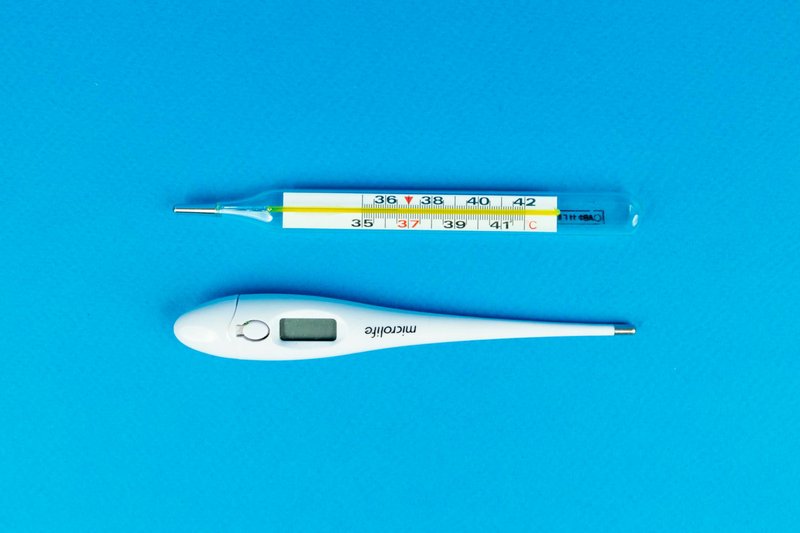
Thermodynamics is usually the first thing you meet, and for good reason: it tells you whether a reaction is even allowed to happen before you waste time worrying about how. It deals with energy in all its forms — heat, work, internal energy — and how it shuffles around during a chemical or physical change.
The whole field hangs on a few laws. The first law is conservation of energy: energy isn’t created or destroyed, just converted. The second law introduces entropy (S), the tendency of systems to spread energy out and get more disordered. The payoff is the Gibbs free energy equation:
ΔG = ΔH − TΔS
When ΔG is negative, a process is spontaneous — it’ll go on its own. That single inequality explains why ice melts above 0°C but refreezes below it: the temperature term flips which side wins. It’s also why a chemist can predict the outcome of a reaction with a calculator instead of a lab bench. The IUPAC Gold Book is the standard reference if you want the rigorous definitions behind any of these terms.
Chemical Kinetics
Thermodynamics says whether. Kinetics says how fast. A reaction can be wildly spontaneous on paper and still take a thousand years — diamond turning into graphite is the classic case. ΔG is negative, but the rate is so slow your diamond ring is safe.
Kinetics is built on the rate law, which links reaction speed to the concentration of reactants, and on activation energy — the energy hill reactants must climb before they can react. The Arrhenius equation ties these together and shows why temperature matters so much: bump the temperature up by 10°C and many reaction rates roughly double. That’s the entire reason your fridge works. Cold slows the enzymatic and microbial reactions that spoil food.
Catalysts live here too. They don’t change whether a reaction happens (that’s thermodynamics’ job) — they lower the activation energy so it happens faster.
Quantum Chemistry
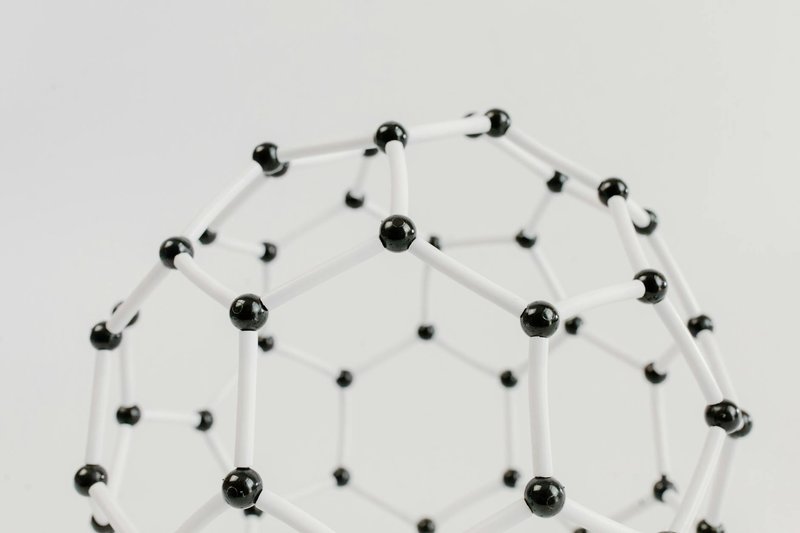
This is where physical chemistry gets weird and beautiful. Quantum chemistry applies quantum mechanics to atoms and molecules, treating electrons not as little planets orbiting a nucleus but as probability clouds described by a wavefunction.
The governing equation is the Schrödinger equation, and solving it (even approximately) tells you the allowed energy levels of an electron. Those energy levels are why atoms have the structure they do — why electrons fill orbitals in a specific order, why carbon forms four bonds, why a water molecule is bent at 104.5° instead of straight. None of that is arbitrary. It falls out of the quantum math. The nucleus those electrons surround has its own quiet influence too, and a few interesting facts about neutrons show how the particles at the atom’s center shape what the electron cloud has to work with.
Exact solutions only exist for the simplest systems, like the hydrogen atom. Everything bigger relies on approximation methods, and modern computational chemistry — predicting drug binding, designing materials — is essentially quantum chemistry run on serious hardware.
Spectroscopy
Spectroscopy is quantum chemistry’s experimental partner. If quantum theory says molecules have discrete energy levels, spectroscopy is how you measure them. You shine light (or other radiation) at a sample and watch which wavelengths it absorbs or emits.
The connecting idea is that a photon’s energy is E = hν, where h is Planck’s constant and ν is frequency. A molecule will only absorb a photon whose energy exactly matches the gap between two of its energy levels. Different types of energy gaps need different radiation: infrared light makes bonds vibrate, ultraviolet and visible light excite electrons, radio waves flip nuclear spins (that’s NMR, the basis of the MRI scanner in a hospital).
The practical upshot: every molecule has a spectral fingerprint. An infrared spectrum can tell a chemist whether a sample contains an alcohol or a carbonyl group without ever isolating it. The NIST WebBook hosts reference spectra for thousands of compounds, which is how identifications get confirmed.
Statistical Mechanics
Here’s a question that sounds simple and isn’t: a single molecule doesn’t have a temperature, so where does temperature come from? Statistical mechanics is the bridge. It connects the microscopic behavior of countless individual molecules to the macroscopic properties — temperature, pressure, entropy — that thermodynamics treats as given.
The key tool is the Boltzmann distribution, which describes how molecules spread themselves across available energy states. From it, you can derive that temperature is really just a measure of average molecular kinetic energy, and that entropy is a count of how many microscopic arrangements correspond to a given macroscopic state.
This is the branch that explains why the thermodynamic laws hold rather than just asserting them. It’s more abstract than the others, which is exactly why students tend to find it the hardest — there’s no beaker to look at, just a lot of statistics applied to particles you can’t see.
Electrochemistry
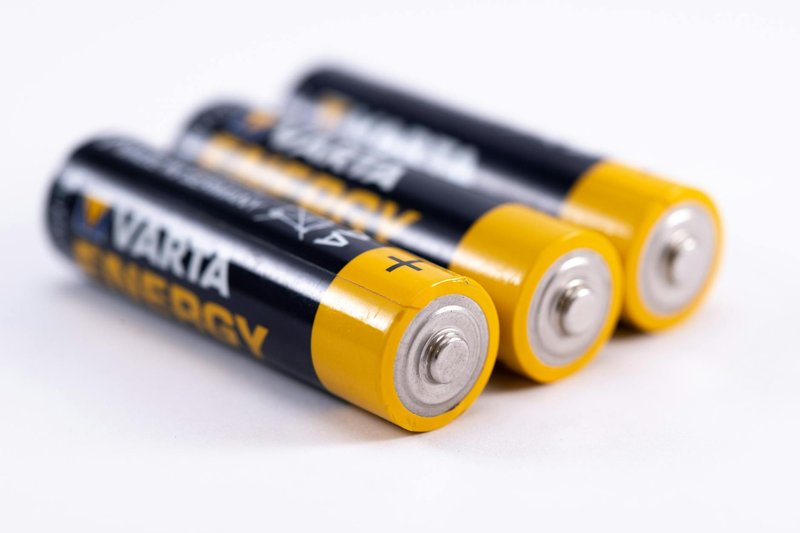
Electrochemistry is the chemistry of electron transfer, specifically reactions where electrons move through an external circuit. Split a redox reaction so that oxidation happens at one electrode and reduction at another, force the electrons to travel between them through a wire, and you’ve got a battery.
The central equation is the Nernst equation, which tells you the voltage of an electrochemical cell based on the concentrations of the species involved. It explains why a battery’s voltage sags as it drains — the reactant concentrations shift, and the Nernst equation tracks exactly how the voltage follows.
This branch quietly runs modern life. Every lithium-ion battery, every fuel cell, every instance of metal corrosion (rust is electrochemistry you didn’t want), and electroplating all live here. It’s also one of the most directly applied parts of physical chemistry, which makes it a favorite for exam questions with real numbers.
Photochemistry
Photochemistry covers reactions that are driven by light rather than heat. A molecule absorbs a photon, jumps to an excited electronic state, and from there does chemistry it could never do in the dark.
The most consequential example on Earth is photosynthesis: plants absorb sunlight and use that energy to turn carbon dioxide and water into glucose, a reaction that would never run spontaneously without the light input. The same principle, less helpfully, is why your sofa fades by the window and why sunscreen degrades and needs reapplying — UV photons break the chemical bonds doing the protecting.
Photochemistry overlaps heavily with spectroscopy (both involve light and electronic states) but the goal is different. Spectroscopy uses light to measure; photochemistry uses light to make things react.
Surface Chemistry and Catalysis
Reactions don’t only happen in beakers full of liquid. A huge amount of chemistry happens at interfaces — where a solid meets a gas, or a liquid meets a solid. Surface chemistry studies what goes on at those boundaries, and adsorption (molecules sticking to a surface) is its central phenomenon, described by models called adsorption isotherms.
This is where most industrial catalysis lives. The catalytic converter in a car is a slab of platinum and palladium that grabs toxic exhaust gases onto its surface, lets them react into harmless ones, and releases them — all without being consumed. The U.S. EPA documents how much these surface-chemistry devices have cut vehicle emissions. The Haber process, which feeds much of the planet by fixing nitrogen into fertilizer, is another surface-catalyzed reaction. Small surfaces, enormous consequences.
How to Actually Study This
A few things that separate students who find physical chemistry hard from those who find it manageable:
Learn the laws as a hierarchy, not a list. Thermodynamics tells you whether, kinetics tells you how fast, quantum chemistry tells you why the structure is what it is. If you know which question each branch answers, you’ll know which equation to reach for.
Don’t fight the math — but don’t hide behind it either. Every equation here encodes a physical idea. ΔG = ΔH − TΔS isn’t symbols; it’s a tug-of-war between energy and disorder. Translate each equation into a sentence and the subject gets a lot less intimidating.
Work problems, not flashcards. Physical chemistry is a problem-solving subject. You learn the Nernst equation by using it on five real cells, not by rereading the definition.
The branches connect more than any syllabus admits. Spectroscopy is just experimental quantum chemistry. Statistical mechanics is the foundation under thermodynamics. Once you stop treating these as eight separate subjects and start seeing one field asking why from eight angles, the whole thing clicks into place.