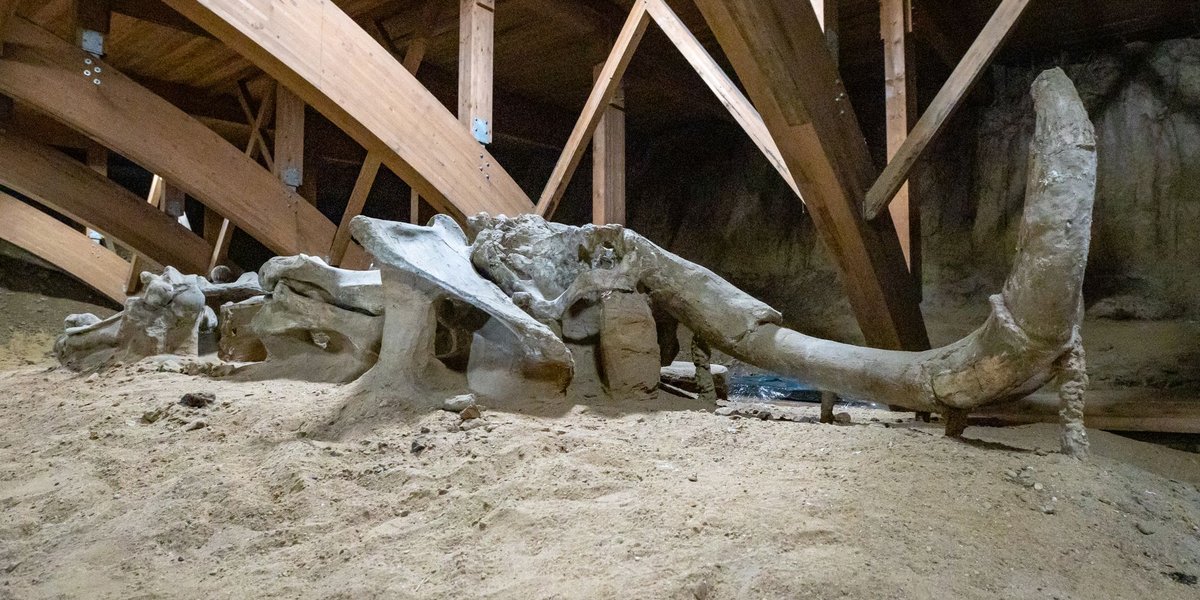
“Paleontologist” sounds like one job. It isn’t. The person cataloging pollen grains under a microscope in a windowless lab and the person jacketing a hip bone in plaster on a Montana hillside are both paleontologists, and they’d struggle to swap tasks for a week. Paleontology split into specialties for the same reason medicine did: the fossil record is too big and too different at different scales for one person to competently handle all of it.
Eight branches cover most of the field, and they cluster into three natural groups: branches organized around what kind of organism left the fossil, branches organized around scale — from footprints to microbes — and branches that are less about the organism and more about the process that turned it into rock in the first place. Below is each one, what a person in that specialty actually does day to day, and where the work shows up outside a museum basement.
Table of Contents
- The Quick Reference
- Vertebrate Paleontology
- Invertebrate Paleontology
- Paleobotany
- Micropaleontology
- Ichnology
- Taphonomy
- Paleoecology
- Biostratigraphy
- How the Branches Work Together on a Real Dig
- Education, Careers, and Job Outlook
The Quick Reference
If you just need the taxonomy, here it is. Everything after this table unpacks each row.
| Branch | Studies | Signature Tool | Real-World Use |
|---|---|---|---|
| Vertebrate paleontology | Backboned animals — dinosaurs, fish, mammals | Plaster field jackets, CT scanning | Museum exhibits, evolutionary biology |
| Invertebrate paleontology | Shelled and soft-bodied animals without backbones | Acid preparation, sieving | Reef and ocean-history reconstruction |
| Paleobotany | Fossil plants, spores, pollen | Palynology slides, cuticle analysis | Coal and climate-history research |
| Micropaleontology | Microfossils under 1mm — forams, diatoms | Petrographic microscope | Oil and gas well correlation |
| Ichnology | Trace fossils — tracks, burrows, nests | Latex peels, 3D photogrammetry | Behavior reconstruction, dinosaur locomotion |
| Taphonomy | How organisms become fossils | Sediment and bone-surface analysis | Interpreting mass death sites, Lagerstätten |
| Paleoecology | Ancient ecosystems and food webs | Isotope and pollen analysis | Climate-change baselines |
| Biostratigraphy | Dating rock layers using fossil succession | Index fossil zonation | Oil exploration, geologic mapping |
Vertebrate Paleontology
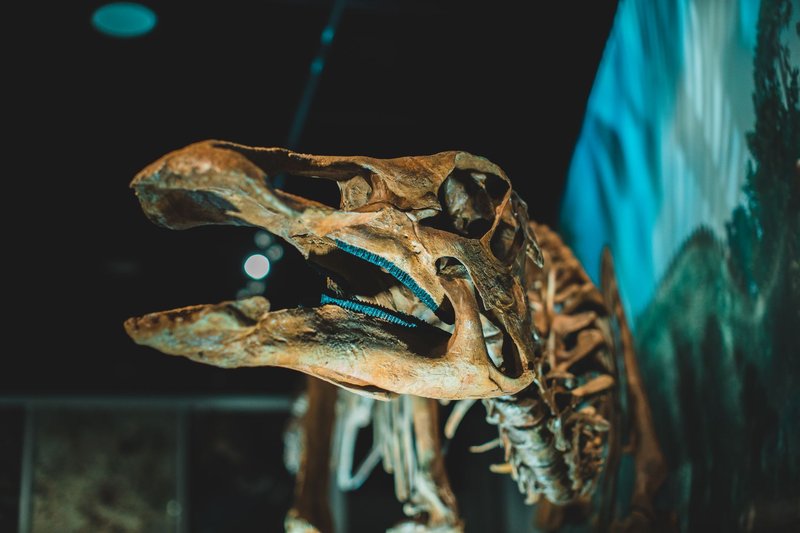
This is the branch that produces the museum showstoppers — the mounted skeletons people line up to photograph. Vertebrate paleontologists study anything that once had a backbone: dinosaurs, but also ancient fish, early amphibians, Ice Age mammals, and the small mammal ancestors that scurried around dinosaur feet for 150 million years without anyone noticing.
The signature find is Sue, the Field Museum’s Tyrannosaurus rex, discovered in South Dakota in 1990 and over 90% complete — a preservation rate almost unheard of for an animal that size. Sue sold at Sotheby’s in 1997 for $8.3 million, at the time the highest price ever paid for a fossil, and the specimen still anchors research on T. rex growth rates and bone pathology today.
Fieldwork here means literal excavation: plaster-jacketing bones on-site, then months or years of lab prep removing rock matrix millimeter by millimeter. A lot of the actual science happens after the dig, in CT scanners and digital modeling software, not in the field.
Invertebrate Paleontology
The oldest and, by fossil count, largest branch — because invertebrates left behind trillions more specimens than vertebrates ever did. Trilobites, ammonites, brachiopods, and corals dominate the invertebrate record, and because many of them had hard, mineralized shells, they preserve far more readily than soft tissue.
Invertebrate paleontologists spend more time with acid baths and sieves than with plaster jackets — a lot of specimens are millimeters across and come out of bulk rock samples rather than dramatic quarry digs. The payoff is resolution: because invertebrate species turned over quickly and left fossils in huge numbers, this branch supplies most of the index fossils that make biostratigraphy possible in the first place.
Paleobotany
Paleobotany covers fossil plants — leaves, wood, seeds, and the pollen and spores studied under the sub-branch of palynology. Plant fossils are chronically underrepresented in popular science coverage next to dinosaur bones, which is a little unfair given how much they reveal: pollen grains are so chemically tough they survive in sediment where bone dissolves entirely, making them one of the best tools for reconstructing ancient climate and vegetation shifts.
Coal itself is compressed fossil plant matter, and paleobotanists work directly with energy companies and geologists mapping coal seams, in addition to their more familiar role reconstructing what forests looked like before flowering plants existed.
Micropaleontology
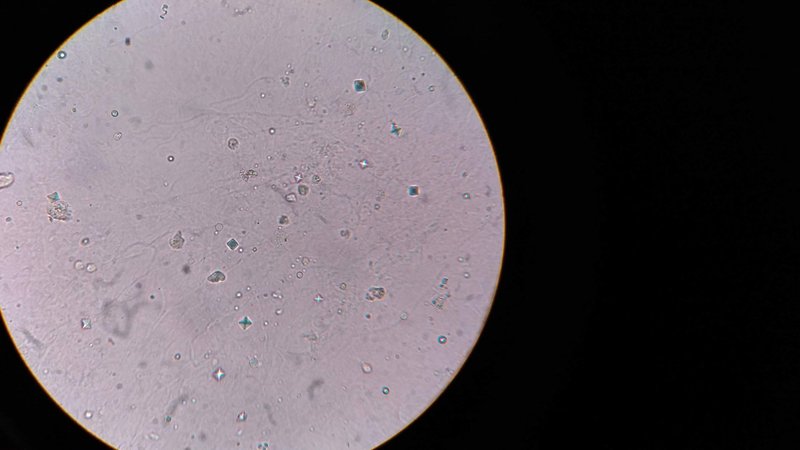
Micropaleontologists study fossils smaller than about a millimeter — foraminifera, diatoms, ostracods, and other single-celled or tiny shelled organisms that most people will never see without a microscope. It sounds like the least glamorous branch. It’s arguably the most economically important one.
The two main uses of microfossils in petroleum exploration are biostratigraphy — telling rock layers apart by which microfossil species they contain — and paleoenvironmental analysis, figuring out what kind of ancient seafloor or shoreline a rock layer represents. Oil companies drilling in the Gulf of Mexico still send rock cuttings to micropaleontologists to determine, in near real time, how deep a well has gotten and whether it’s approaching a target formation. A micropaleontologist’s actual workday often looks like: pick through a vial of drill cuttings under a scope, identify species assemblages, and radio the depth interpretation back to a drilling rig.
Ichnology
Ichnology studies trace fossils — footprints, burrows, nests, feeding marks, and other evidence of behavior rather than body parts. It’s a strange, indirect kind of paleontology: an ichnologist can tell you how an animal walked, whether it walked in groups, and how fast it moved, sometimes without a single bone to work from.
Dinosaur trackways are the obvious headline example, but trace fossils go much deeper into the record. Researchers studying trace fossils preserved alongside soft-bodied arthropod carapaces in the Burgess Shale — the 508-million-year-old Cambrian deposit in British Columbia — have used them to reconstruct feeding behavior and ecological interactions that body fossils alone couldn’t show. Ichnologists work with latex peels and increasingly with 3D photogrammetry to capture and measure trace fossils without damaging them, since a track, unlike a bone, can’t be moved to a lab.
Taphonomy
Taphonomy is the study of what happens to an organism between death and discovery — decay, burial, mineral replacement, compression, the works. It sounds morbid described that way, but it’s the branch that tells you how much to trust a fossil site.
Most organisms rot or get scavenged before fossilization has a chance to start, which is why the fossil record is so wildly biased toward hard parts and toward the rare sites where conditions stopped that decay in its tracks. The Solnhofen limestone in Germany — fine-grained, low-oxygen, undisturbed for 150 million years — is why Archaeopteryx fossils preserve individual feather impressions instead of just bone. Taphonomists study exactly those preservation conditions, which lets them flag when a site is a genuine mass-death event versus an accumulation from many separate deaths over centuries, a distinction that changes the entire interpretation of a dig.
Paleoecology
Paleoecology takes the finds from every other branch and asks what the ecosystem as a whole looked like — who ate whom, what the climate was, how species competed for space and resources. It’s synthesis work more than fieldwork: a paleoecologist might pull isotope data from shells, pollen ratios from sediment cores, and predator-damage patterns on bone to reconstruct a single ancient lake environment.
This branch has the most direct modern application of the eight. Paleoecological data — ancient CO2 levels reconstructed from soil chemistry, past sea-level highstands inferred from coastline fossils — is baseline data for current climate models, since it’s the only direct record of how ecosystems actually responded the last time Earth went through rapid warming.
Biostratigraphy
Biostratigraphy uses the fossil record to date and correlate rock layers, on the principle that a given fossil species only existed for a specific, identifiable window of geologic time. Find that species’ fossil in a rock layer on one continent and a matching layer on another, and you’ve just tied their ages together without needing radiometric dating.
It’s the branch most directly responsible for paleontology having an industry job market outside academia. Energy companies rely on biostratigraphers — usually working alongside micropaleontologists — to correlate rock units between wells and pinpoint drilling targets, and the same fossil-succession principle underlies most geologic maps used in mineral and groundwater exploration.
How the Branches Work Together on a Real Dig
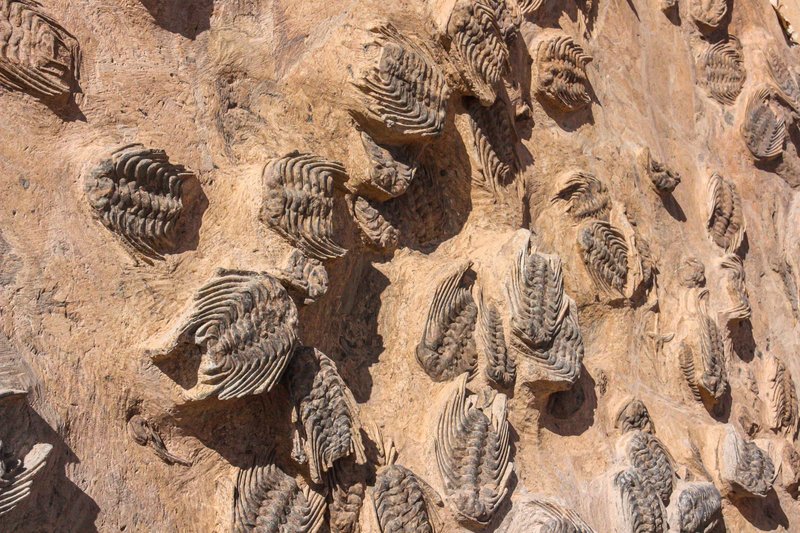
None of this happens in isolation once you’re actually standing at a dig site. A well-run excavation of, say, a bonebed will run several of these branches in parallel rather than one after another.
The vertebrate paleontologists excavate and identify the main skeleton. A taphonomist working the same site reads the surrounding rock and bone surfaces to figure out whether the animals died together in one event — a flood, a drought at a waterhole — or accumulated over a much longer stretch of time, which changes what the site can actually tell you. A sedimentologist or biostratigrapher dates the surrounding layers using microfossils and index species, giving the whole site a place on the geologic timeline. If trace fossils show up nearby — trackways, burrows — an ichnologist gets pulled in to interpret behavior the bones alone can’t show. And a paleoecologist takes everything the others produce and builds the actual picture: what this place looked like, what lived alongside the animal being excavated, and what killed it.
It’s less a hierarchy and more a set of specialists reading the same site through different instruments, then arguing about what the combined evidence actually means — which, in practice, is most of what a field season is.
Education, Careers, and Job Outlook
Nearly every paid research role in paleontology requires a graduate degree — a master’s for museum and technician-level positions, a Ph.D. for university faculty or lead researcher roles at major institutions. Undergraduate preparation usually runs through geology or biology departments rather than a standalone paleontology major, since most schools don’t offer one.
The employment picture is narrower than most people assume. The U.S. Bureau of Labor Statistics groups paleontologists under its broader geoscientist category, which held about 25,100 jobs nationally as of 2024 with roughly 2,000 openings projected per year — and academic and museum paleontology positions specifically are a small, competitive slice of that. The branches with the clearest path to steady, well-paid non-academic work are micropaleontology and biostratigraphy, both of which are hired directly by petroleum and mining companies for well correlation and exploration work. Vertebrate and invertebrate paleontology skew more heavily toward museum, university, and government survey positions, which are fewer in number and slower to turn over.
None of that makes the other branches a dead end — paleobotanists work in environmental consulting and climate research, ichnologists and paleoecologists show up in conservation paleobiology work that informs modern ecosystem management. It does mean the branch you specialize in shapes your job market almost as much as your degree does.