TLDR
There are seven noble gases: helium, neon, argon, krypton, xenon, radon, and the synthetic oganesson. They sit in the periodic table’s far-right column because their outermost electron shell is already full, which is why they mostly refuse to bond with anything else. “Mostly” is doing real work in that sentence — xenon and krypton form real compounds with fluorine and oxygen under lab conditions, so “totally inert” is a myth. Helium cools MRI magnets and is running short globally. Neon lights up signs. Argon shields welds and fills window panes. Radon seeps out of soil and causes real lung cancer risk. None of this is exotic chemistry — it’s happening in hospitals, garages, and basements right now.
Table of Contents
- What Makes a Gas “Noble”?
- The Full List of All Seven Noble Gases
- Why They Barely React
- The Compounds That Break the “Inert” Myth
- Myths vs. Facts
- What Each Noble Gas Is Actually Used For
What Makes a Gas “Noble”?
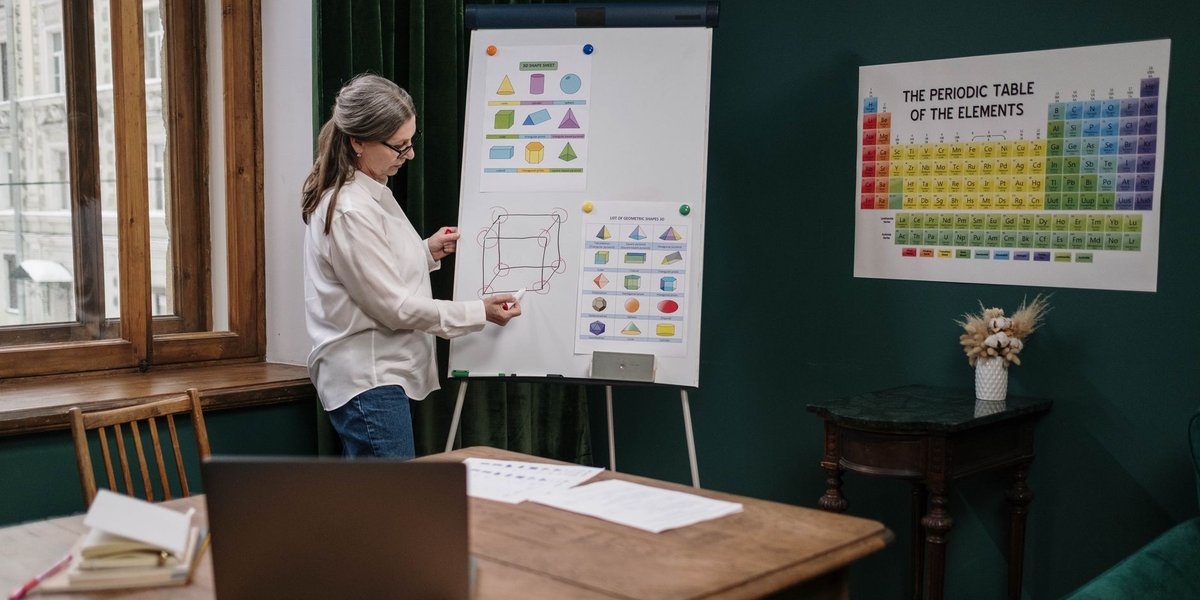
Chemists borrowed the word “noble” from noble metals like gold and platinum — elements that resist corrosion because they don’t react with much of anything. Noble gases earned the same label for the same reason: they sit at the far right of the periodic table, in Group 18, and under normal conditions they don’t bond with other elements or even with themselves. On a printable periodic table, Group 18 is the last column.
The reason comes down to electron configuration. Every noble gas has a completely filled outer electron shell — helium with two electrons, the rest with eight. A full outer shell is the most energetically stable arrangement an atom can have. Other elements react precisely because they’re chasing that full-shell stability, grabbing, sharing, or shedding electrons to get there. Noble gases already have it, so there’s no chemical incentive to change.
That’s also why you’ll find them as single, unbonded atoms floating around — monatomic gases — rather than paired up like oxygen (O₂) or nitrogen (N₂). They don’t need a partner.
The Full List of All Seven Noble Gases
Helium through oganesson, in order of atomic number:
| Element | Atomic Number | Boiling Point | Discovered | Primary Use |
|---|---|---|---|---|
| Helium (He) | 2 | -268.9°C (4.2 K) | 1868 (sun), 1895 (Earth) | MRI cooling, blimps |
| Neon (Ne) | 10 | -246.1°C | 1898 | Signage, plasma displays |
| Argon (Ar) | 18 | -185.8°C | 1894 | Welding shield gas, window insulation |
| Krypton (Kr) | 36 | -153.4°C | 1898 | High-performance lighting |
| Xenon (Xe) | 54 | -108.1°C | 1898 | Camera flashes, ion propulsion |
| Radon (Rn) | 86 | -61.7°C | 1900 | None — radioactive byproduct, health hazard |
| Oganesson (Og) | 118 | Unknown (synthetic) | 2002 | None — exists only in lab quantities of a few atoms |
Helium is the odd one out twice over. It was spotted in the sun’s spectrum by Jules Janssen in 1868 — 27 years before anyone found it on Earth — and it’s the only noble gas with just two valence electrons instead of eight, since its entire first shell only holds two. Argon, meanwhile, is the noble gas you’ve actually breathed the most: it makes up about 1% of the atmosphere, dwarfing the other five combined.
Why They Barely React
A filled valence shell means an atom has no “unfinished business.” Sodium wants to lose an electron. Chlorine wants to gain one. Put them together and you get table salt. Neon has eight electrons in its outer shell already — there’s nothing to trade, so nothing happens.
This unreactivity gets stronger as you go up the group and weaker as you go down it, which sounds backwards until you look at why. Helium and neon hold their electrons in a tight, low-energy grip close to the nucleus — extraction takes serious energy, so they stay put. Radon and oganesson are large atoms with outer electrons sitting much farther from the nucleus, loosely held and easier to disturb. Size, not just a full shell, decides how “noble” a noble gas actually behaves.
The Compounds That Break the “Inert” Myth
For decades, “noble gases never react” was treated as chemistry gospel — right up until 1962, when chemist Neil Bartlett combined xenon with platinum hexafluoride and produced the first noble gas compound ever synthesized, xenon hexafluoroplatinate. It was a genuine landmark: it meant the rule had an exception, and the American Chemical Society still cites it as one of the moments that reshaped how chemists think about reactivity.
Since then, chemists have made a real family of xenon compounds — XeF₂, XeF₄, XeF₆ — by forcing xenon to react with fluorine, one of the most electronegative elements that exists. Xenon is big enough that its outermost electrons sit far from the nucleus and are held less tightly than helium’s or neon’s, so fluorine’s pull can actually strip a little control away. Krypton forms a handful of fluorides too, though they’re far less stable. Helium, neon, and argon have never been coaxed into a stable compound at room temperature — their electrons are gripped too close and too tight.
The takeaway isn’t that noble gases are secretly reactive. It’s that “inert” was always a matter of degree, and xenon sits at the edge of that spectrum rather than outside it.
Myths vs. Facts
Myth: Noble gases never react with anything. Fact: Xenon and krypton form real, stable compounds with fluorine and oxygen under lab conditions. Helium, neon, and argon are the ones that genuinely never bond.
Myth: Helium is basically unlimited — it’s just party balloon gas. Fact: Commercial helium is a byproduct of natural gas extraction, concentrated in a small number of fields worldwide. A geopolitical disruption to a single major supplier can ripple through hospital MRI schedules and chip fabrication plants within months — Scientific American covered exactly this scenario when a supply cut hit both medicine and semiconductor manufacturing at once.
Myth: Radon is a fringe concern, not a real health issue. Fact: The EPA estimates radon causes roughly 21,000 lung cancer deaths a year in the United States, making it the second-leading cause of lung cancer after smoking. It’s a colorless, odorless gas that seeps up from soil and rock into basements, and the only way to know it’s there is to test for it — the CDC recommends radon testing as a standard home health check, the same way you’d check a smoke detector.
What Each Noble Gas Is Actually Used For
Helium does one job better than anything else: keeping MRI magnets superconducting at temperatures near absolute zero. It also lifts blimps and party balloons safely, since it’s non-flammable, unlike the hydrogen that used to do the job before the Hindenburg made that a bad idea.
Neon is the reason “neon sign” became a generic term rather than a brand name. Run electricity through neon gas in a glass tube and it glows a distinctive orange-red — no phosphor coating required, unlike most of the other colors you see in old sign work.
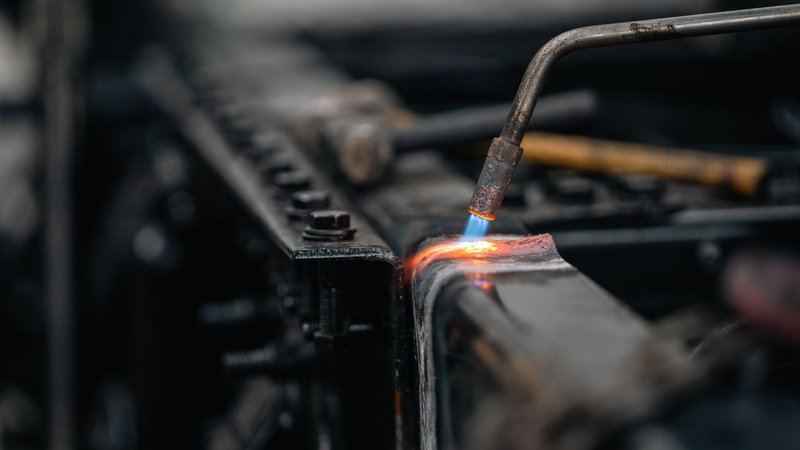
Argon shields welds from atmospheric oxygen and nitrogen, which would otherwise weaken the joint as it cools. It also fills the gap between double-pane windows, since it conducts heat more slowly than plain air, quietly cutting heating bills in millions of homes.
Krypton shows up in high-performance lighting — some photography flashes, some airport runway lights, and specialty bulbs where its heavier atoms slow down filament evaporation, extending the bulb’s life.
Xenon powers camera flashes and some car headlights because it produces an intensely bright, white-ish light. It also fuels ion propulsion thrusters on spacecraft like NASA’s Dawn probe, where a slow, ultra-efficient thrust beats brute force over a multi-year mission.
Radon doesn’t get used for anything — it’s a radioactive decay product of uranium in soil and rock, and its main relevance to your life is knowing whether it’s building up in your basement. Test kits are cheap and the fix, if needed, is a mitigation system that vents it outside.
Oganesson exists only as a handful of atoms ever created in particle accelerators, each one decaying in under a millisecond. It’s noble gas number 118, sitting in the same column as helium, but nobody has actually confirmed it behaves like one — there simply isn’t enough of it, ever, to test.