Table of Contents
- TLDR
- Why Iron, Not Gold
- The Minette Boom and Bust
- Beyond Iron: The Ores Nobody Talks About
- Luxembourgite: A Mineral Named After the Country
- From Underground Mines to Asteroids
TLDR
Luxembourg’s mineral story isn’t about gold or diamonds. It’s iron. Specifically Minette, a low-grade oolitic iron ore that built the country’s steel industry from the 1840s until the last mine closed in 1981. Alongside it, smaller operations pulled antimony, lead, copper, gypsum, and slate out of the ground for centuries. In 2020, mineralogists named an entirely new mineral species, luxembourgite, after the country itself — the first and so far only mineral to carry that name. And in a twist nobody saw coming from a country the size of a mid-sized US county, Luxembourg is now one of the only nations on Earth with a legal framework for mining minerals off of it, in space.
Why Iron, Not Gold
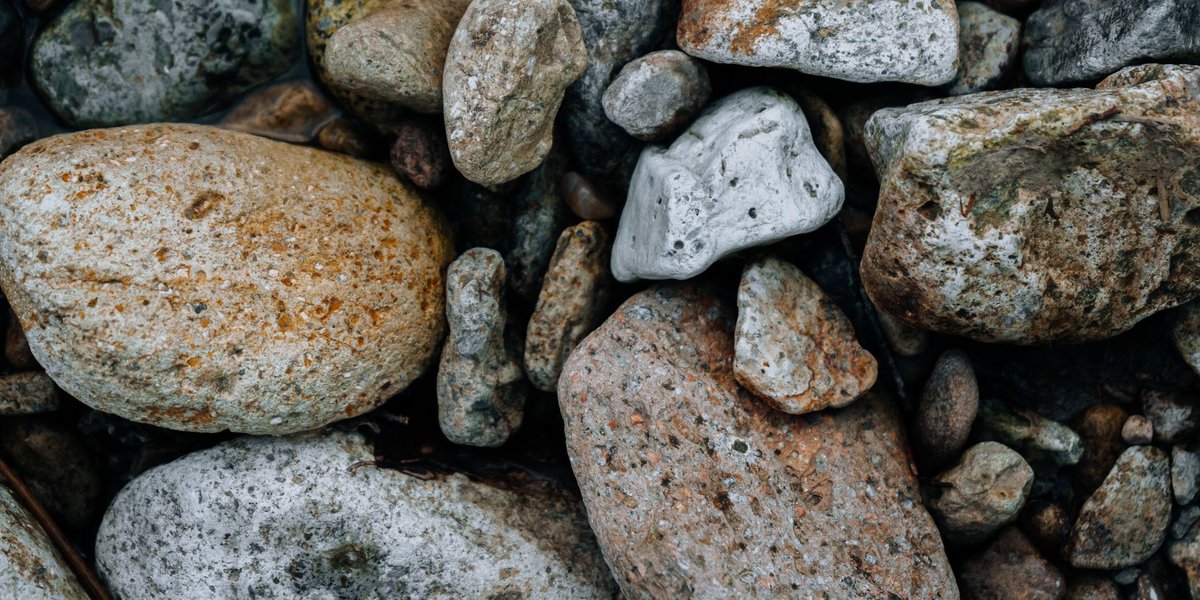
Luxembourg sits on the southern edge of the Paris Basin, a geological trough where sedimentary rock built up over roughly 200 million years. That kind of basin doesn’t produce veins of gold or diamond pipes. It produces what forms in shallow, iron-rich seas: oolitic ironstone, made of tiny rounded grains called ooids that cemented together into layered rock. Southern Luxembourg’s Minett region — the area around Esch-sur-Alzette, Differdange, and Dudelange — sits on some of the thickest and most accessible deposits of this ore anywhere in Europe.
That single geological fact decided the country’s industrial fate. Small nations without oil, without precious metals, and without much arable land don’t usually become steel powers. Luxembourg did, because it happened to be sitting on the right rock.
The Minette Boom and Bust
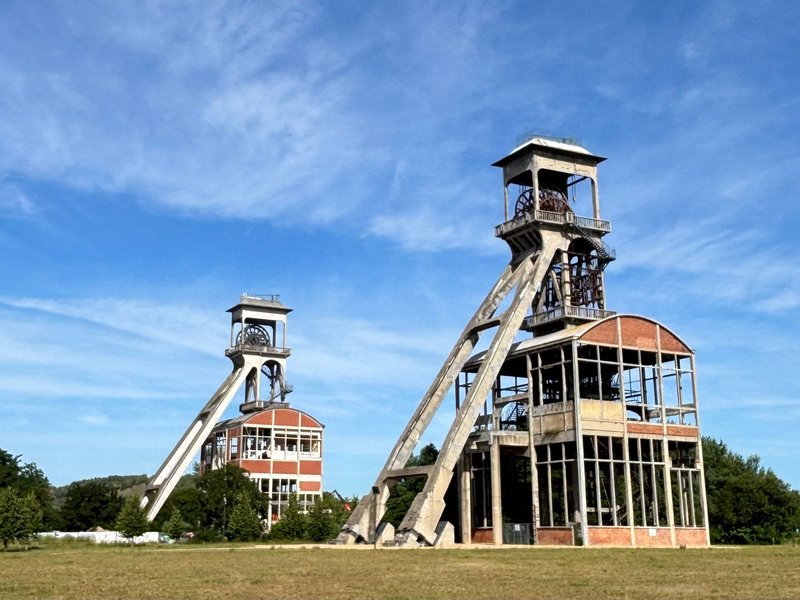
Minette deposits had been known locally for centuries, worked in small quantities since Roman times, but large-scale extraction only started once industrial furnaces figured out how to smelt the ore’s relatively low iron content economically. That breakthrough arrived in the 1840s, and it turned rural farmland in the south into one of the densest industrial belts in Europe within two generations.
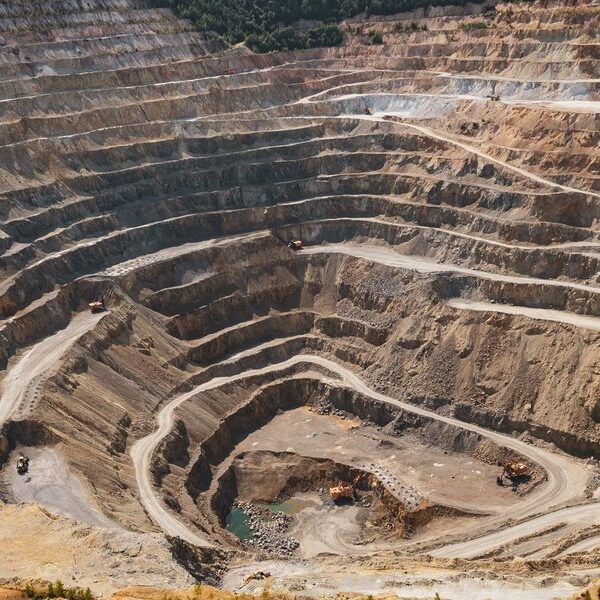
By the late 19th century, mining and steelmaking had become the backbone of the national economy — the reason ARBED, later folded into what’s now ArcelorMittal, grew from a local ironworks into a multinational steel company. Employment peaked hard: in 1965, Luxembourg’s iron mines still employed 1,885 workers. Fifteen years later, that number had collapsed to 226. The 1970s oil shocks and a glut of cheap global steel gutted the economics of digging low-grade domestic ore when better ore could be shipped in from elsewhere.
The end came on November 27, 1981, when the last shift went underground at the Thillenberg mine (also spelled Thillebierg) in Differdange. It closed the book on 150 years of extraction. The Minett region didn’t disappear, though — it rebranded. Former mining galleries and slag terraces are now protected under the Minett UNESCO Biosphere, and ArcelorMittal still runs steel operations in the same towns, just with imported ore.
Beyond Iron: The Ores Nobody Talks About
Every “natural resources of Luxembourg” list mentions iron and stops there. That skips the smaller mining operations that ran for centuries in parallel, each tied to a specific village and a specific mineral.
| Ore / Mineral | Main site | Active period | Notable detail |
|---|---|---|---|
| Iron ore (Minette) | Minett region (Esch-sur-Alzette, Differdange, Dudelange) | 1840s – Nov 27, 1981 | Fed ARBED/ArcelorMittal’s steel industry for 150 years |
| Slate | Haut-Martelange (Éislek, north) | 1790 – 1986 | Peaked at roughly 12 million roofing slates a year |
| Antimony | Goesdorf | Roman era; formal concession from 1354 – 1938 | A 52 kg antimony nugget pulled from the mine in 1935 ranked among the largest ever found |
| Copper | Stolzembourg | Documented from the 1700s – 1944 | Shut down during WWII and never reopened |
| Gypsum | Walferdange | Industrial quarrying from around 1869 – mid-20th century | The abandoned galleries now house a seismology lab, in use since 1967 |
| Lead | Allerborn (Wincrange) | Worked historically, small scale | Least documented of the country’s historic mines |
None of these matched iron for scale, but they explain why Luxembourg’s geology reads more like a cabinet of curiosities than a single-resource story. The antimony mine at Goesdorf, in particular, sat largely forgotten until modern environmental researchers went back to study how the metal behaves once a mine goes quiet — a Chemosphere study on natural attenuation at Goesdorf tracked how antimony disperses through groundwater decades after extraction stopped.
Luxembourgite: A Mineral Named After the Country
Most countries never get a mineral named after them. Luxembourg got one in 2020.
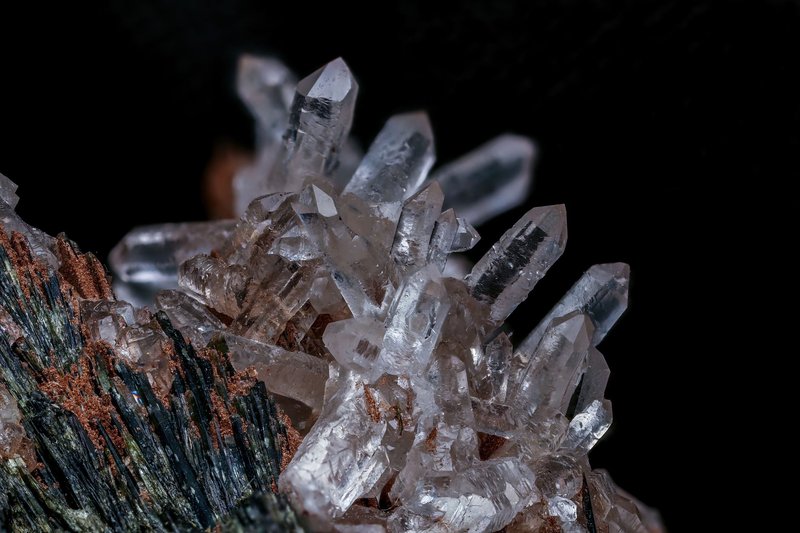
Luxembourgite (chemical formula AgCuPbBi₄Se₈) turned up on mining spoil near the old Stolzembourg copper works, at a locality called Bivels, in the north of the country. It’s a selenide — a mineral built around selenium rather than the more familiar sulfur — and it forms as fibers barely 200 micrometers long, thinner than a human hair, coating dolomite crystals. Grey, metallic, soft enough to scratch with a fingernail (Mohs hardness 3), it’s not the kind of mineral you’d notice without a microscope.
What makes it matter is the naming. The team that identified it, published in the European Journal of Mineralogy, named it for the city of Luxembourg near the discovery site — and it’s the first mineral species ever approved by the International Mineralogical Association bearing the country’s name. For a nation whose entire land area is smaller than some American counties, having a mineral species to itself is a genuinely rare distinction. Most countries with far larger mining histories, including immediate neighbors Belgium and Germany, have no mineral named directly after them at all.
From Underground Mines to Asteroids
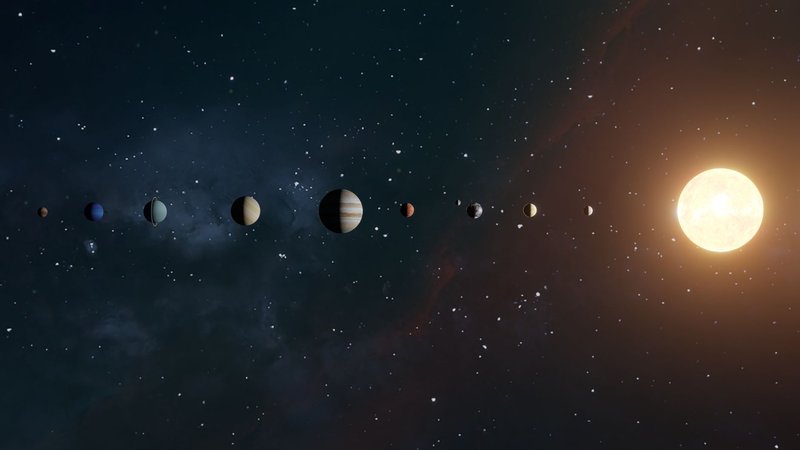
Here’s the part competitors covering Luxembourg’s mining history tend to leave out entirely: the country didn’t stop caring about minerals when the last Minette mine closed. It just moved the search off-planet.
In 2016, Luxembourg launched SpaceResources.lu, a government initiative aimed at making the country a hub for the exploration and eventual extraction of resources from asteroids and other celestial bodies. The following year, it passed Europe’s first law establishing legal ownership rights over minerals a company might extract in space — a deliberate bet that the same small-country pragmatism that once built a steel industry on modest iron deposits could now attract space-mining startups looking for legal certainty nobody else offered. The Luxembourg Space Agency’s space resources program now sits alongside the country’s push to be counted in EU discussions on critical raw materials — the metals and rare-earth elements that battery and chip manufacturers depend on and that Europe currently imports almost entirely from outside the bloc, a dependency the European Commission’s critical raw materials strategy is explicitly trying to reduce.
It’s a strange arc for a country whose mineral history starts with Roman-era antimony diggers and 19th-century iron pits: from the last Minette shift going underground in 1981, to a law on the books about who owns the minerals inside an asteroid. The rock changed. The instinct to figure out what’s underneath your feet — or, these days, what’s floating a few million miles away — didn’t.