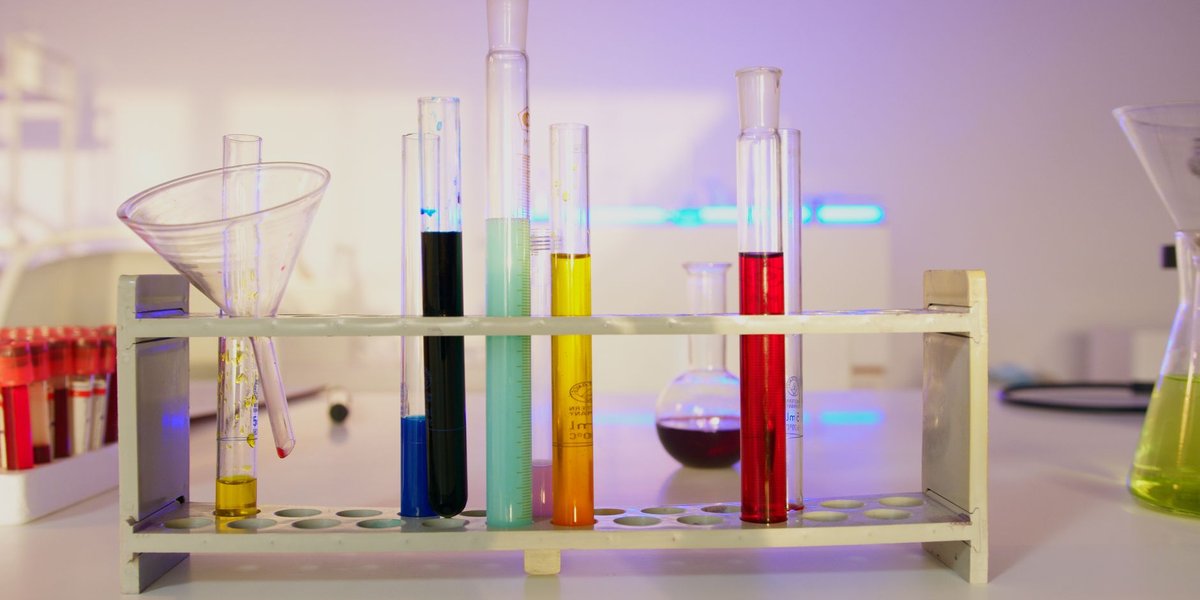
Chemical analysis is the toolkit scientists use to figure out what’s in something and how much of it is there. That sounds simple. The reality is there are dozens of methods, each suited to a specific question, sample type, or industry — and picking the wrong one wastes time, money, and sometimes sample material you can’t get back.
This guide organizes the main types of chemical analysis from the ground up: the foundational split between qualitative and quantitative methods, then the instrumental and bioanalytical extensions that dominate modern labs. Each section covers what it does, which techniques fall under it, and where it shows up in the real world. There’s also a comparison table and a practical “which method” section at the end — the part most chemistry references skip.
Table of Contents
- The Foundational Split: Qualitative vs. Quantitative
- Qualitative Chemical Analysis
- Quantitative Chemical Analysis
- Instrumental Analysis
- Bioanalytical Chemistry
- Comparison Table
- How to Choose the Right Method
The Foundational Split: Qualitative vs. Quantitative
Before any lab work starts, there’s a fundamental question: what do you need to know?
- If you need to identify what’s present in a sample — you’re doing qualitative analysis.
- If you need to know how much of something is present — you’re doing quantitative analysis.
This distinction shapes every decision that follows. Most modern analytical work ends up combining both, but understanding them separately is where it starts.
Qualitative Chemical Analysis
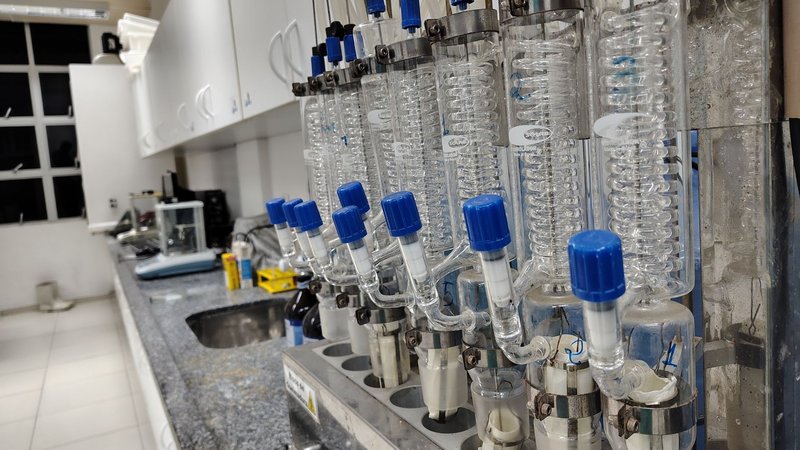
Qualitative analysis identifies the chemical components in a sample without measuring exact amounts. The goal is detection and identification, not measurement.
Key techniques:
- Flame tests — The classic high school demonstration where copper turns the flame green and sodium turns it yellow. Still used for rapid metal-ion identification.
- Thin-layer chromatography (TLC) — Separates a mixture’s components across a silica plate. Widely used in organic chemistry to check reaction progress and spot-check purity.
- Precipitation reactions — Adding a reagent that forms a visible solid when a specific ion is present. Used to identify halides (chloride, bromide, iodide) in classical wet chemistry.
- Mass spectrometry (qualitative mode) — At the instrumental end, MS can match an unknown compound’s fragmentation pattern against a spectral library for identification.
Real-world use case: Forensic drug analysis often starts qualitatively. A field test or initial screen identifies whether a seized substance is likely cocaine, methamphetamine, or something else — before sending it to a confirmatory lab for exact quantification.
Quantitative Chemical Analysis
Quantitative analysis measures how much of a substance is in a sample. The number that comes out — concentration, mass, percentage — is the point.
Key techniques:
- Gravimetry — The analyte is converted into a solid, filtered, dried, and weighed. One of the oldest methods; still used in environmental testing for suspended solids in water.
- Titrimetry (volumetric analysis) — A reagent of known concentration is added to the sample until the reaction is complete. Acid-base titrations are the textbook example; redox titrations are widely used in winemaking to measure sulfite levels.
- Spectrophotometry (Beer-Lambert quantitation) — Measures how much light a solution absorbs at a specific wavelength. The absorbance is proportional to concentration. Standard in clinical labs for glucose, bilirubin, and protein assays.
- Ion chromatography — Separates and quantifies ions in solution. Used heavily in water quality testing to measure fluoride, nitrate, and sulfate concentrations.
Real-world use case: Pharmaceutical quality control runs quantitative analysis on every batch to confirm that each tablet contains exactly the stated active ingredient dose — no more, no less. Regulatory agencies like the FDA require documented analytical results before a drug product can be released.
Instrumental Analysis
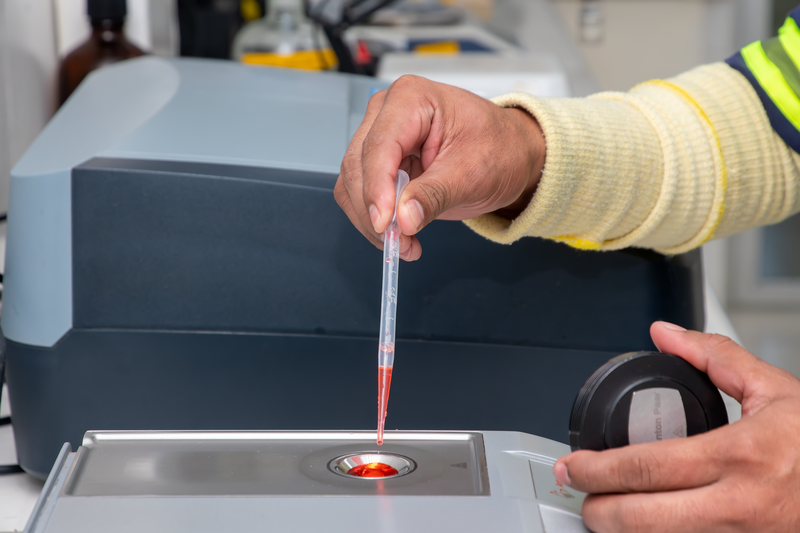
Instrumental analysis uses physical instruments to probe the properties of matter — rather than relying purely on chemical reactions. It’s where most of the action is in contemporary labs. The methods here can be qualitative, quantitative, or both, which is why they’re often treated as a separate category. Understanding the instruments used in chemistry — from spectrophotometers to chromatographs — helps clarify why each technique is suited to specific analytical problems.
Key techniques:
- Gas chromatography–mass spectrometry (GC-MS) — Separates volatile compounds by their interaction with a column, then identifies and quantifies each by mass. The gold standard for organic contaminant testing in food, soil, and blood samples. If a news story mentions “trace amounts of [chemical] detected,” GC-MS did it.
- High-performance liquid chromatography (HPLC) — The liquid-phase counterpart to GC. Essential for compounds that can’t survive the high temperatures of gas chromatography: proteins, sugars, pharmaceutical compounds, vitamins.
- Fourier-transform infrared spectroscopy (FTIR) — Measures how a material absorbs infrared light across a range of frequencies, producing a molecular “fingerprint.” Used to identify polymers, check pharmaceutical raw materials, and authenticate food products (detecting adulterated olive oil, for instance).
- Atomic absorption spectroscopy (AAS) and ICP-MS — Both measure elemental composition (metals and trace elements). ICP-MS is especially powerful: it can detect elements at parts-per-trillion concentrations. Used for heavy metal testing in water, blood, and food.
- Nuclear magnetic resonance (NMR) — Uses magnetic fields to reveal molecular structure. Indispensable in organic chemistry for confirming the structure of newly synthesized compounds. Also used in food science and metabolomics research.
Real-world use case: Food safety testing leans heavily on instrumental methods. After high-profile contamination events, labs use GC-MS and HPLC to screen for pesticide residues, mycotoxins, and adulterants across thousands of samples. The European Food Safety Authority publishes annual reports on pesticide residues in food that are entirely built on instrumental analytical data.
Bioanalytical Chemistry
Bioanalytical chemistry applies analytical methods to biological matrices — blood, urine, plasma, tissue, saliva. The samples are more complex than standard chemical matrices, which introduces unique challenges: proteins can interfere with measurements, concentrations of drugs in blood can span several orders of magnitude, and samples are often irreplaceable.
Key techniques:
- ELISA (enzyme-linked immunosorbent assay) — Uses antibody-antigen binding to detect and quantify specific proteins, hormones, or drugs. Clinical labs run thousands of ELISAs daily for infectious disease diagnosis, hormone panels, and drug screening.
- LC-MS/MS (liquid chromatography–tandem mass spectrometry) — The workhorse of modern bioanalytical labs. Combines the separation power of HPLC with the selectivity and sensitivity of tandem mass spectrometry. Standard for therapeutic drug monitoring and pharmacokinetic studies in drug development.
- Capillary electrophoresis — Separates charged molecules by their migration speed in an electric field. Used for DNA analysis, protein separations, and pharmaceutical purity testing.
- Biosensors — Devices that combine a biological recognition element (an enzyme or antibody) with a signal transducer. Glucose meters are the consumer-facing version; more sophisticated biosensors are used in point-of-care diagnostics. The same underlying sensor technology appears across a wide range of applications, including the tools used by biomedical engineers who design next-generation diagnostic devices.
Real-world use case: Sports anti-doping labs are bioanalytical chemistry in high-stakes form. The World Anti-Doping Agency (WADA) accredits labs that must detect banned substances in urine at nanogram-per-milliliter concentrations — a challenge that requires LC-MS/MS and constant method validation.
Comparison Table
| Type | Primary Question | Key Techniques | Common Industries |
|---|---|---|---|
| Qualitative | What’s present? | Flame tests, TLC, precipitation reactions | Forensics, environmental screening, education |
| Quantitative | How much is present? | Titration, gravimetry, spectrophotometry | Pharma QC, water treatment, food production |
| Instrumental | Identity and/or amount, with high precision | GC-MS, HPLC, FTIR, ICP-MS, NMR | Food safety, environmental testing, research, manufacturing |
| Bioanalytical | What’s in this biological sample, and at what concentration? | ELISA, LC-MS/MS, biosensors | Clinical diagnostics, drug development, doping control |
How to Choose the Right Method
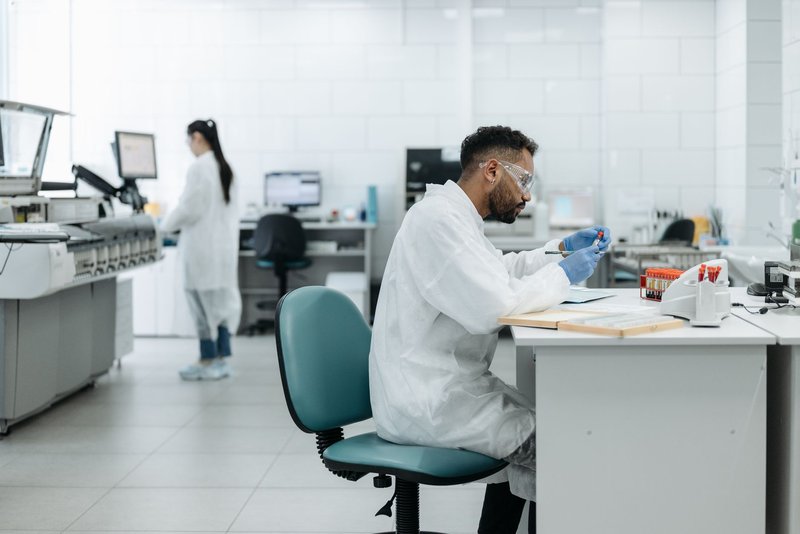
Most sources explain what each method does. Fewer explain how to pick. Here’s a practical framework:
Start with your question, not the instrument. Qualitative or quantitative? Identification or measurement? Nailing this first saves you from reaching for a complex instrument when a titration would do — or doing a simple colorimetric test when you need a concentration accurate to four decimal places.
Consider your sample matrix. A clean solvent solution is easy. Blood plasma, soil extract, or food homogenate are not. Complex matrices demand methods with better selectivity and interference rejection — which generally means instrumental or bioanalytical approaches. If your matrix is biological, you’re almost certainly in bioanalytical territory.
Think about detection limits. If you need to detect nanogram or picogram quantities, you need an instrumental method. Gravimetry and titration work at milligram to gram scales. HPLC, GC-MS, and ICP-MS work at parts-per-billion or better.
Match throughput to budget. Instrumental methods have higher upfront costs (equipment, calibration, maintenance) but often lower per-sample costs at scale. Classical wet chemistry methods (titration, gravimetry) are cheap to run but slow to scale. For routine QC of a high-volume product, a validated automated HPLC method will beat manual titration by a wide margin.
Check regulatory requirements. Pharmaceutical labs don’t pick methods freely — methods must be validated to ICH guidelines and accepted by regulatory bodies. Environmental labs testing for EPA-listed contaminants must use EPA-approved methods. If you’re in a regulated industry, the method choice often has a short answer: use the compendial method.
A general rule: when the stakes are low and the matrix is clean, go simple. When precision matters, the matrix is complex, or regulations are involved, go instrumental — and if the sample is biological, bring a bioanalytical specialist into the conversation early.
Chemical analysis is a deep field, but the structure of it isn’t complicated. Qualitative and quantitative are the foundation. Instrumental methods extend the reach and precision of both. Bioanalytical chemistry adapts all of the above to the specific challenges of biological samples. Know which question you’re asking and what’s in your sample, and the right category usually picks itself.