Table of Contents
- The Resource Foundation
- Minerals and Mining
- Oil and Natural Gas
- Forests
- Freshwater
- Wildlife and Biodiversity
- Indigenous Stewardship
- Manitoba’s Role in the Clean Energy Transition
The Resource Foundation
Manitoba doesn’t have the profile of Alberta or British Columbia in the Canadian resource conversation, but it probably should. The province sits on one of the most geologically varied terrains in the country — Precambrian Shield in the north and east, sedimentary basin in the southwest, and one of the largest inland freshwater systems on the planet running through the middle. Natural resources aren’t a footnote to Manitoba’s economy. They are the economy, at least at the foundation.
Mining, forestry, oil and gas, hydroelectric power, and agriculture collectively account for a substantial portion of provincial GDP and employment. But there’s also a newer story emerging: Manitoba holds several of the minerals the world needs most right now, and that’s changing how investors and policymakers look at the province.
Minerals and Mining
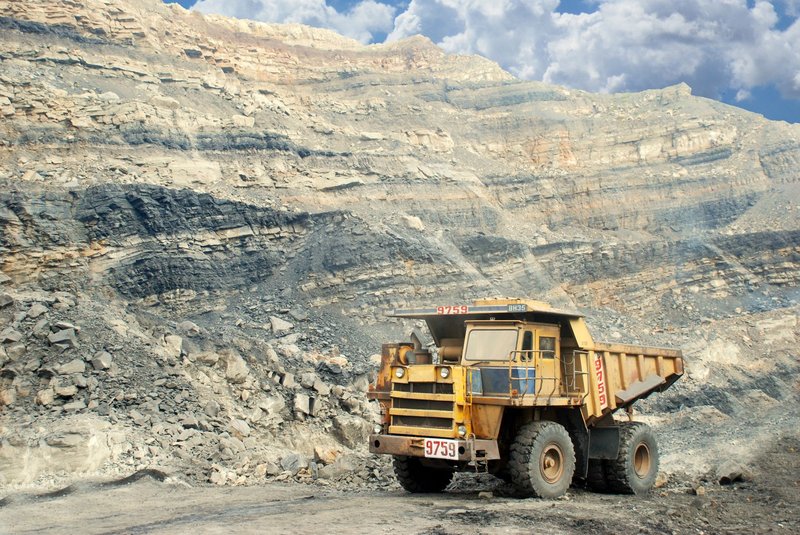
Manitoba has been a mining province since the late 1800s, and the industry never really stopped reinventing itself. The Manitoba Geological Survey tracks an active mineral sector that now centers on a handful of critical commodities.
Nickel and copper-zinc are the backbone. The Thompson Nickel Belt in northern Manitoba is one of the most significant nickel deposits in the western hemisphere. Vale’s Thompson operation has been running since 1961 — not a particularly young mine — but the deposit still has decades of production ahead. Flin Flon, straddling the Manitoba-Saskatchewan border, built its entire existence around a copper-zinc deposit that HudBay Minerals has operated in various forms since 1930.
Gold production comes from several active operations in the Canadian Shield, including the Snow Lake district, which has attracted renewed attention in recent years from junior and mid-tier explorers.
Lithium and potash are the newer story. Manitoba hosts lithium-bearing pegmatites — the same geological formations that yield lithium for batteries — and the province has seen exploration staking surge as battery manufacturers hunt for stable North American supply chains. Potash deposits in the southwest connect Manitoba to one of Canada’s most strategically important agricultural inputs — a mineral corridor that extends into Saskatchewan, which holds some of the most significant mineral deposits on the prairies.
Less talked about but worth knowing: Manitoba has had documented diamond occurrences in its northern kimberlite pipes, though none has yet reached commercial production. It remains a prospective target.
Oil and Natural Gas
The southwestern corner of Manitoba sits above the Williston Basin, a sedimentary formation that extends into Saskatchewan, North Dakota, and Montana. Manitoba’s portion produces light crude oil from the Bakken and Lodgepole formations — modest by Alberta standards, but not trivial. The Virden oil fields have been producing since the 1950s, and the Waskada area remains active.
Manitoba isn’t a major natural gas producer, but it does have some conventional gas production in the southwest. The province’s overall energy profile leans heavily on hydroelectricity rather than fossil fuels, which shapes how oil and gas fit into the provincial picture: they’re present, they contribute revenue, but they don’t define Manitoba’s energy identity the way they do further west.
Forests
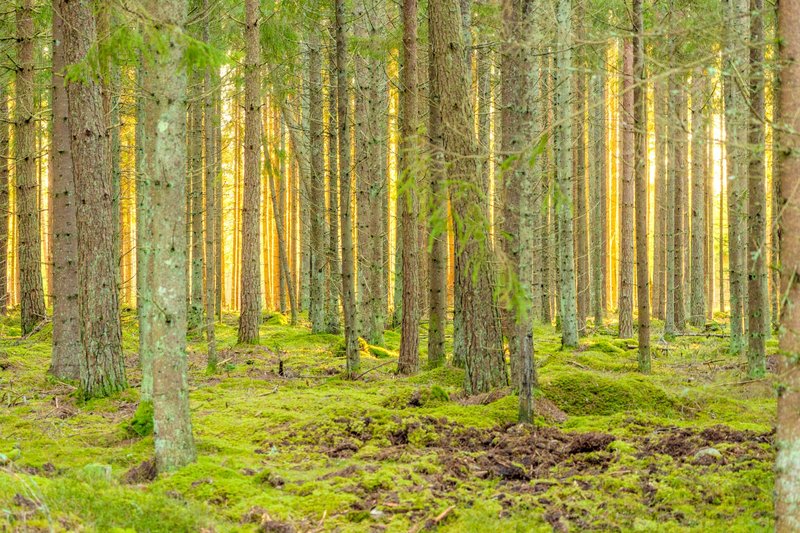
Roughly 26 million hectares of Manitoba — about 40% of the province’s total land area — is covered by forest. The vast majority is boreal: spruce, jack pine, fir, and aspen stretching across the Canadian Shield and into the lowlands around Hudson Bay.
This forest serves multiple functions simultaneously. Commercially, it supports a forestry and wood products sector centered on mills in The Pas and other northern communities. Ecologically, the boreal forest is one of the most significant carbon sinks on the planet, storing more carbon per hectare than tropical rainforests in many estimates. The Canadian Forest Service has documented boreal forests’ role in Canada’s overall carbon budget extensively.
Manitoba’s boreal zone also sits within the larger Hudson Bay Lowlands, one of North America’s most intact wetland-forest complexes. Logging here is subject to provincial forest management plans, but the tension between commercial forestry and conservation interests is ongoing and not fully resolved.
Freshwater
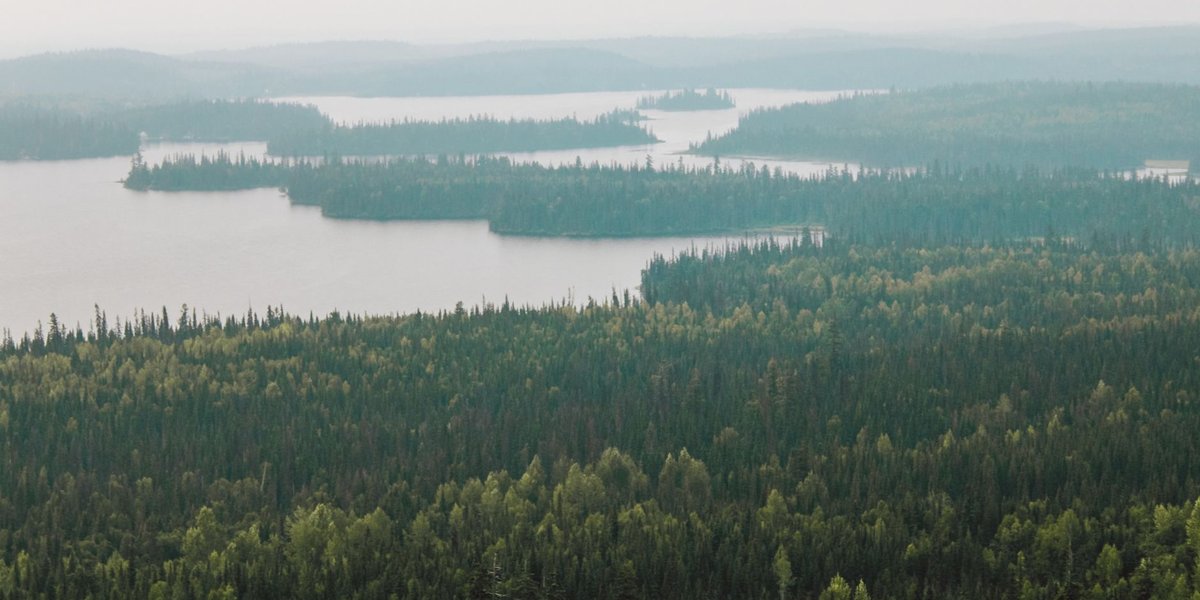
Manitoba is sometimes called the Land of 100,000 Lakes — the actual count is closer to 110,000 lakes plus thousands of rivers and streams. Lake Winnipeg, the world’s 10th largest freshwater lake by surface area, sits near the province’s geographic center. Lake Manitoba and Lake Winnipegosis are also significant. The Nelson, Saskatchewan, Red, and Winnipeg rivers drain into Manitoba from the surrounding provinces before heading north to Hudson Bay.
This freshwater wealth drives Manitoba’s most important energy asset: hydroelectric power. Manitoba Hydro operates a cascade of generating stations on the Nelson River that together produce more than 5,000 megawatts of capacity, enough to supply the entire province and export surplus power to neighboring jurisdictions. Hydroelectricity accounts for roughly 97% of Manitoba’s electricity generation — a figure that puts the province in rare company globally.
The freshwater also supports significant commercial and sport fisheries, primarily walleye, lake whitefish, northern pike, and sauger. Lake Winnipeg’s commercial fishery has been under stress from nutrient loading and algal blooms, a problem that involves complex upstream agricultural drainage across several provinces.
Wildlife and Biodiversity
Manitoba sits at a crossroads of major North American ecosystems: boreal forest, tallgrass prairie, mixedwood plains, and Hudson Bay marine environment. The result is a biodiversity profile that’s denser than the province’s population suggests.
Churchill, on the western shore of Hudson Bay, is one of the few places in the world where polar bears, beluga whales, and Arctic birds can all be observed within a few kilometers of each other. The International Union for Conservation of Nature (IUCN) lists polar bears as vulnerable, and the Western Hudson Bay population that congregates near Churchill is among the most-studied and most at-risk subpopulations due to sea ice loss.
Further south, the Tallgrass Prairie Preserve near Tolstoi protects one of the last remnants of Manitoba’s original prairie ecosystem — a biome that once covered millions of acres of the province and now exists in fragments. Bison, once effectively extirpated from Manitoba, have been reintroduced to Riding Mountain National Park and a few other areas. Caribou range across the northern Shield and subarctic zones.
The province also hosts significant migratory bird populations along the Central Flyway, including sandhill cranes, ducks, geese, and shorebirds that pass through in extraordinary numbers during spring and fall migrations.
Indigenous Stewardship
Manitoba’s natural resources exist within a landscape that Indigenous peoples — Anishinaabe, Cree, Dene, Dakota, Lakota, Oji-Cree, and others — have managed for thousands of years. That history isn’t peripheral to the resource conversation; it shapes the legal and social framework around almost every major resource project in the province.
The Manitoba Metis Federation, through its Natural Resources division, exercises harvesting rights and participates in environmental assessments across the province. First Nations hold treaty rights that include hunting, fishing, and trapping, and consultation requirements under Section 35 of the Constitution Act mean that resource development without Indigenous engagement faces significant legal exposure.
Several recent mining and hydroelectric projects in Manitoba have been structured as partnerships or benefit-sharing arrangements with First Nations communities — a model that is becoming standard rather than exceptional.
Manitoba’s Role in the Clean Energy Transition
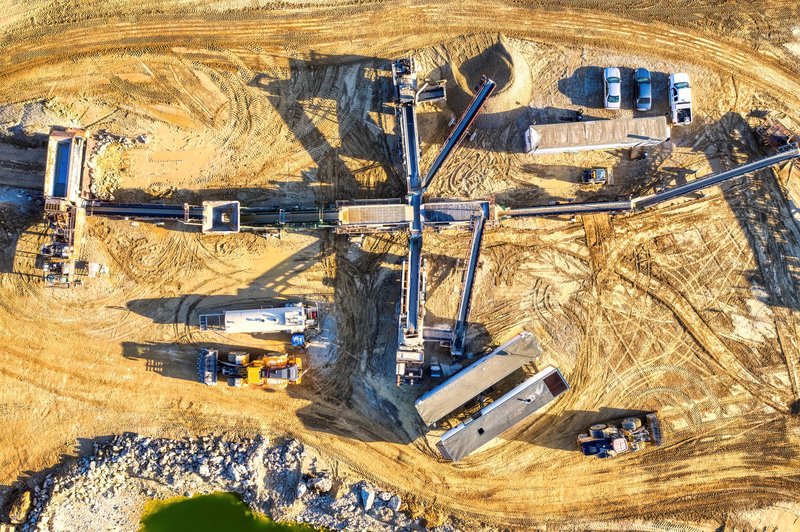
The global shift away from fossil fuels has put a new lens on what Manitoba holds in the ground. Critical minerals — lithium, nickel, cobalt, copper — are the feedstocks for electric vehicle batteries, wind turbines, and grid storage systems. Manitoba has several of them.
Canada’s federal government has flagged Manitoba as a priority area under its Critical Minerals Strategy, and provincial exploration incentives have followed. The Thompson Nickel Belt is already a world-class nickel source; the question is whether lithium pegmatite projects reach production scale in time to meet the demand curve.
The province’s hydroelectric base is also an asset in this context. Decarbonizing industrial processes — including mining and mineral processing — requires cheap, clean electricity. Manitoba Hydro’s surplus capacity makes the province an attractive location for battery manufacturing or processing facilities that need to minimize their carbon footprint. That’s a structural advantage most mining jurisdictions can’t claim.
Manitoba’s resource wealth is old, deep, and in some cases newly relevant. The nickel mines near Thompson have been shipping metal for 60 years. The rivers have been powering cities for almost as long. But lithium, critical minerals, and the demand for clean-power manufacturing are adding a new dimension — and Manitoba’s geology, its hydroelectric infrastructure, and its treaty land base all have a role in what comes next.