Kiribati sits in the central Pacific like a scattered handful of atolls — 33 islands spread across three million square kilometers of ocean. It’s one of the most remote inhabited places on Earth, which makes it, by the same logic, one of the least-birded. The islands that have been surveyed turn up over 90 species, a mix of nesting seabirds, resident landbirds, and migratory shorebirds that stop over during transoceanic crossings. Two of those species exist nowhere else on Earth.
For visiting birders, Kiribati isn’t easy — flights are limited, infrastructure is minimal, and most birding happens along coastlines and lagoon edges rather than through dense forest. But the payoff for the effort is real: seabird colonies with frigate birds and boobies numbering in the thousands, and the chance to see both Kiribati endemics on a single trip.
Table of Contents
- The Two Endemics
- Seabirds: The Core of Kiribati’s Avifauna
- Resident Landbirds
- Migratory Visitors
- Where to Go Birding
- When to Visit
- Species Reference List
The Two Endemics
Bokikokiko (Kiribati Reed Warbler)
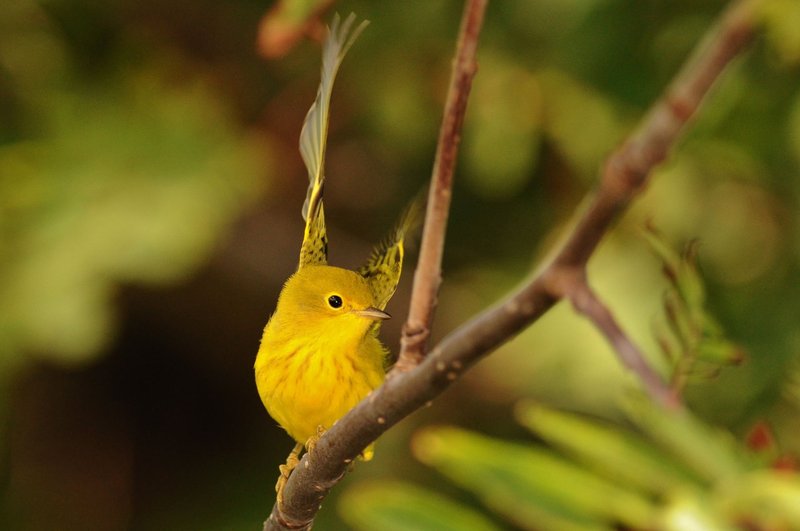
The bokikokiko — Acrocephalus aequinoctialis — is found only on Christmas Island (Kiritimati), the largest atoll in the world by land area. It’s a reed warbler in the classic mold: small, brownish, skulking in dense vegetation near wetlands and lagoon edges. The name comes from its call, a fast chattering phrase local people have been transcribing into language for generations.
It doesn’t look like much on paper — brown bird, wetland habitat, secretive — but bokikokiko is genuinely range-restricted to one atoll, which automatically makes it a target species for any serious lister visiting the Pacific. The population is considered stable for now, supported by the relative lack of human pressure on Christmas Island’s interior lagoons. Find it in the thick pandanus and sedge vegetation around the smaller inland lagoons, particularly in the early morning when it moves higher in the vegetation to sing. The pandanus itself is part of a broader endemic plant community unique to Kiribati’s coral atolls, shaped by the same isolation that makes the bokikokiko possible.
Henderson Petrel
The Henderson Petrel (Pterodroma atrata) is the darker story. This all-dark gadfly petrel breeds primarily on Henderson Island in the Pitcairn Group but is regularly sighted at sea around Kiribati’s Phoenix Islands. The IUCN classifies it as Endangered, with the main threats being introduced rats at the Henderson breeding colony and longline bycatch across its oceanic range.
Sightings around Kiribati are pelagic — this bird comes to land only to breed — but the Phoenix Islands Protected Area (one of the largest marine protected areas on Earth) provides some protection for its foraging waters. Seabird-focused boat trips out of Kanton Atoll have recorded it.
Seabirds: The Core of Kiribati’s Avifauna
Most of Kiribati’s birds are seabirds, and that’s not a consolation prize — it’s the main event. The island chains support some of the largest seabird colonies in the central Pacific.
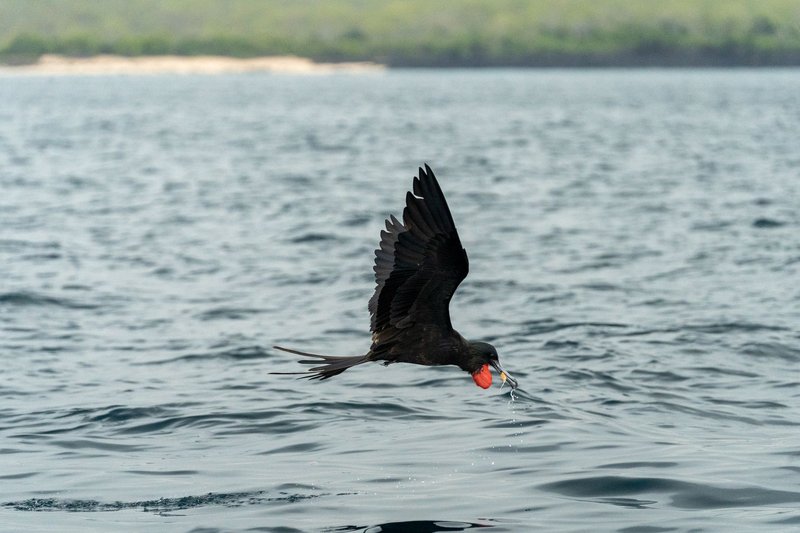
Great Frigatebird (Fregata minor) and Lesser Frigatebird (Fregata ariel) both nest in the low coastal scrub across multiple atolls. During breeding season, male frigatebirds inflate their scarlet throat pouches in displays visible from a considerable distance. Christmas Island’s colonies are the more accessible ones; colonies on the Phoenix Islands are larger but harder to reach.
Red-footed Booby (Sula sula) breeds across the archipelago and is probably the most commonly encountered seabird on any visit. The white and brown color morphs are both present — Christmas Island has a notably high proportion of the brown morph, which is worth noting for identification.
Brown Booby (Sula leucogaster) and Masked Booby (Sula dactylatra) also breed here, giving Kiribati three booby species on one atoll system. The masked booby is the largest of the three and tends to nest in more exposed coastal positions.
White Tern (Gygis alba), also called the fairy tern, is one of the more photogenic birds in the Pacific. It lays a single egg directly on a bare tree branch or rock ledge without building a nest. The chick grips the surface with surprisingly strong feet. Common around most inhabited atolls.
Sooty Tern (Onychoprion fuscatus) nests in massive colonies — Christmas Island hosts tens of thousands of pairs. At peak breeding season the noise and movement is disorienting in a memorable way.
Other regularly recorded seabirds include Brown Noddy, Black Noddy, Black-naped Tern, Little Tern, Wedge-tailed Shearwater, Christmas Shearwater, and Audubon’s Shearwater.
Resident Landbirds
Landbirds are thin on the ground in Kiribati — low coral atolls with limited vegetation don’t support diverse forest bird communities. The species present are mostly widespread Pacific residents.
Pacific Golden Plover (Pluvialis fulva) is the single most abundant non-seabird you’ll encounter. It overwinters in Kiribati from September through April and is genuinely common on mowed grass, coconut plantations, and airstrip edges. In May, birds fatten up on the atolls before flying nonstop to Alaska — a journey of over 7,000 kilometers.
Wandering Tattler (Tringa incana) and Bristle-thighed Curlew (Numenius tahitiensis) also winter in the islands. The bristle-thighed curlew is a notable find — it’s the only shorebird species that winters almost exclusively on Pacific islands, and Kiribati is one of its core wintering sites. The species is Near Threatened according to the IUCN, largely because of its concentrated wintering distribution and susceptibility to hunting.
Polynesian Starling (Aplonis tabuensis) is present on some of the Line Islands. Long-tailed Cuckoo (Urodynamis taitensis), a migratory species from New Zealand, appears in the northern islands during the austral winter.
Migratory Visitors
Kiribati sits directly under the Pacific Flyway, and the Line Islands in particular function as a stepping stone for trans-Pacific migrants.
Ruddy Turnstone, Whimbrel, and Sharp-tailed Sandpiper all pass through. Less expected species turn up with some regularity — the remote atolls have a history of vagrant records precisely because so little systematic birding is done, and any competent observer with binoculars in the right place at the right time can record something genuinely unusual.
The Phoenix Islands, because of their extreme isolation and relative lack of disturbance, are particularly likely to produce surprises during migration. Kanton Atoll has a small guesthouse and has hosted visiting biologists — the documented bird list from Phoenix is less complete than Christmas Island’s, which means any serious birder visiting there is doing real exploration.
Where to Go Birding
Christmas Island (Kiritimati)
The easiest and most-visited destination in Kiribati for wildlife. Regular flights connect it to Honolulu and Fiji. The lagoon system covers most of the atoll interior and supports large colonies of frigatebirds, boobies, and shearwaters. The road around the main lagoon gives reasonable access without a boat.
For the bokikokiko, focus on the wetland vegetation around the smaller lagoons in the island’s interior, particularly in the London and Poland settlement areas. Early morning is essential — the bird sings most actively in the first hour after sunrise.
Fanning Island (Tabuaeran) and Teraina (Washington Island)
These northern Line Islands have been less systematically surveyed than Christmas Island and likely hold more birds than the records suggest. Access is by charter or occasional supply vessel. Teraina has the only natural freshwater lake in Kiribati, which attracts a different set of species.
Phoenix Islands Protected Area
The Phoenix Islands Protected Area covers 408,000 square kilometers and is one of the world’s largest marine protected areas. Access is genuinely difficult and expensive — most visitors arrive via expedition vessels. The upside is that the seabird colonies on Rawaki, Enderbury, and McKean are largely undisturbed.
When to Visit
October through April is the primary window. The Pacific Golden Plover and most migratory shorebirds are present during this period. Seabird colonies are active year-round on Christmas Island, but breeding activity peaks between January and July depending on the species.
May through September is the dry season on the northern Line Islands, which makes access easier but the bird diversity slightly lower. Seabirds remain the main attraction regardless of timing.
Species Reference List
Below is a condensed reference list of regularly recorded species in Kiribati, organized by group.
Seabirds
- Great Frigatebird (Fregata minor)
- Lesser Frigatebird (Fregata ariel)
- Red-footed Booby (Sula sula)
- Brown Booby (Sula leucogaster)
- Masked Booby (Sula dactylatra)
- White Tern (Gygis alba)
- Brown Noddy (Anous stolidus)
- Black Noddy (Anous minutus)
- Sooty Tern (Onychoprion fuscatus)
- Black-naped Tern (Sterna sumatrana)
- Little Tern (Sternula albifrons)
- Wedge-tailed Shearwater (Ardenna pacifica)
- Christmas Shearwater (Puffinus nativitatis)
- Audubon’s Shearwater (Puffinus lherminieri)
- Henderson Petrel (Pterodroma atrata) — Endangered
- Phoenix Petrel (Pterodroma alba)
- Tahiti Petrel (Pseudobulweria rostrata)
Shorebirds and Waders
- Pacific Golden Plover (Pluvialis fulva)
- Bristle-thighed Curlew (Numenius tahitiensis)
- Wandering Tattler (Tringa incana)
- Whimbrel (Numenius phaeopus)
- Ruddy Turnstone (Arenaria interpres)
- Sharp-tailed Sandpiper (Calidris acuminata)
- Sanderling (Calidris alba)
Landbirds and Residents
- Bokikokiko / Kiribati Reed Warbler (Acrocephalus aequinoctialis) — Endemic
- Polynesian Starling (Aplonis tabuensis)
- Long-tailed Cuckoo (Urodynamis taitensis)
- Pacific Black Duck (Anas superciliosa)
- White-rumped Swiftlet (Aerodramus spodiopygius)
- Common Myna (Acridotheres tristis) — introduced
- Rock Pigeon (Columba livia) — introduced
Kiribati won’t make most birders’ shortlist based on species diversity alone — the atoll system is too open, too low, too far from the continental biogeographic zones that generate high species counts. What it offers instead is access to some of the Pacific’s most intact seabird colonies, two of the region’s more sought-after endemic and near-endemic species, and the kind of biological remoteness that means your observations might actually add something to the scientific record. BirdLife International’s species database is the best reference for current population estimates and conservation status for any of the species listed here.
The birding is neither easy nor comfortable. That’s exactly why the birds are still there.