Malta is about 316 square kilometers of limestone rock in the middle of the Mediterranean. By landmass, it ranks among Europe’s smallest countries. By birdwatching significance, it punches absurdly above its weight.
The reason comes down to geography. Malta sits almost exactly halfway between the European mainland and North Africa, directly in the path of millions of birds making the Mediterranean crossing twice a year. Species from 47 countries have been recorded here — everything from common warblers to genuine rarities that have never been documented anywhere else in Europe. A total checklist exceeding 400 species for an island you can drive across in 20 minutes is extraordinary.
This guide covers the species worth knowing, the best times and places to find them, and how Malta’s resident birds compare to its seasonal visitors.
Table of Contents
- Why Malta Is Special for Birds
- The National Bird: Blue Rock Thrush
- Resident Birds
- Spring Migrants
- Autumn Migrants and Winter Visitors
- Rare Vagrants
- Residents, Migrants, and Vagrants at a Glance
- Top Birdwatching Sites
- Best Times to Visit
Why Malta Is Special for Birds {#why-malta-is-special}
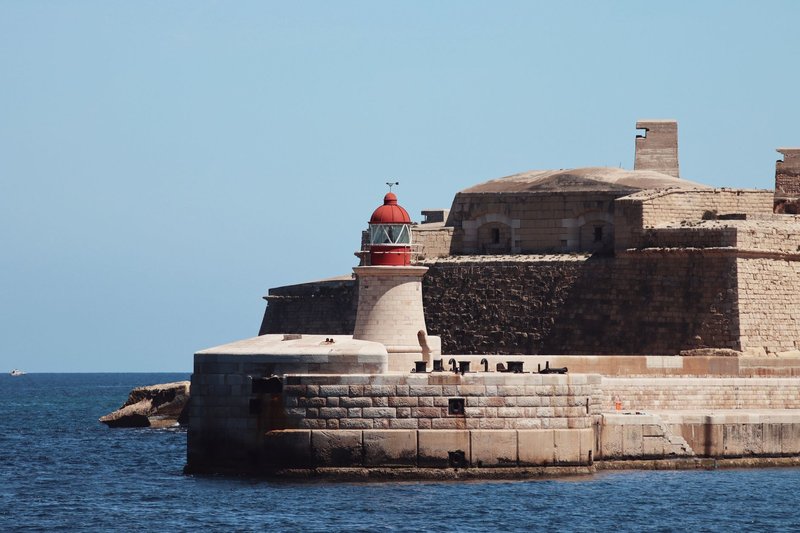
Most migration happens at night. Songbirds, raptors, waders — they cross open water under darkness, then drop hard at the first land they see at dawn. Malta is often that first land. After hundreds of kilometers of open sea, it’s a rest stop that birds have no choice but to use.
This concentrating effect means that during peak migration (late April through May in spring; September through October in autumn), small patches of scrub at Buskett Gardens or the reedbed at Ghadira Nature Reserve hold densities of birds that would be impossible to find anywhere else in the region. A single morning in April can turn up Eurasian Hoopoes, Common Redstarts, various warblers, and any number of surprises.
The flipside is that Malta’s resident breeding species are quite modest — the islands’ small size and limited habitat variety mean just a handful of species nest regularly. The real draw is always the passage.
The National Bird: Blue Rock Thrush {#blue-rock-thrush}
The Blue Rock Thrush (Monticola solitarius) is Malta’s national bird, and it’s one of the most visible permanent residents on the archipelago. Males are unmistakable — a deep slate-blue across the body with rust-orange underparts, often seen perching on clifftops and sea walls with the Mediterranean as a backdrop.
It’s a bird that feels native to Malta in a way few others do. You’ll find it at Dingli Cliffs, the bastions around Valletta, Gozo’s rocky coastline — anywhere vertical limestone faces meet open sky. The song is a melodic, fluting series of phrases delivered from an exposed perch, often at dawn.
Females are drabber, brown-scaled, and more likely to be overlooked. But once you know what to look for, both sexes are easy to find year-round.
Resident Birds {#resident-birds}
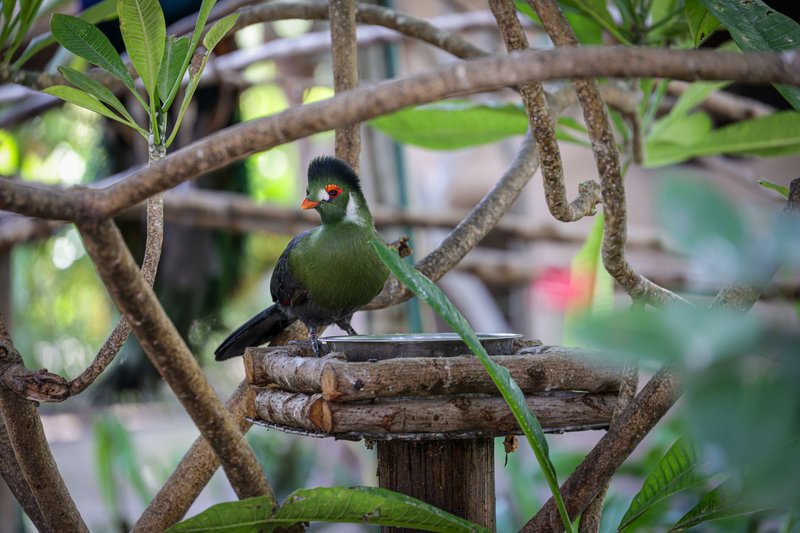
Malta’s breeding residents are a small group, but several are genuinely worth seeking out.
Yelkouan Shearwater (Puffinus yelkouan) — A seabird that nests in cliff cavities around Malta and Gozo, classified as Vulnerable by the IUCN. This is one of the most significant breeding birds on the islands. At dusk in spring, hundreds can be seen rafting offshore near nesting colonies before coming in to land under cover of darkness.
European Storm Petrel (Hydrobates pelagicus) — Another colonial nester on offshore islets, tiny and bat-like in flight. Best seen at sea rather than from land.
Common Kestrel (Falco tinnunculus) — The default raptor hanging over Malta’s roadsides and agricultural areas year-round. Hovers over scrub hunting for lizards and large insects.
Barn Owl (Tyto alba) — Present year-round in farmland areas, most often heard rather than seen. Malta holds a stable breeding population.
Cetti’s Warbler (Cettia cetti) — Breeds in the reedbeds at Ghadira and Il-Ballut, announcing itself with explosive, machine-gun bursts of song from deep cover. You’ll hear it before you see it, and you may not see it at all.
Spanish Sparrow (Passer hispaniolensis) — The common “house sparrow” of Malta is actually this species, not the House Sparrow of northern Europe. Dense black streaking on the male’s flanks gives it away.
Sardinian Warbler (Curruca melanocephala) — Abundant in scrub and garrigue throughout the islands. Males have jet-black heads and bright red eye rings; they’re perpetually agitated, churring from low cover.
Spring Migrants {#spring-migrants}
Spring migration at Malta peaks in April and May. The diversity during this window is the reason serious birders from across Europe make the trip.
Eurasian Hoopoe (Upupa epops) — One of the most reliably encountered spring migrants. The cinnamon-and-black crest, wide black-and-white wings, and absurdly long bill make it impossible to misidentify. Arrives in numbers from late March onwards, often probing lawns and playing fields.
Common Redstart (Phoenicurus phoenicurus) — Males in spring plumage — rusty tail, orange breast, black face — are among the most colorful birds that pass through. Frequently drops into gardens.
Pied Flycatcher (Ficedula hypoleuca) — Another garden-friendly migrant. A typical spring morning at Buskett can hold dozens of these, flicking between low branches and sallying out for insects.
European Bee-eater (Merops apiaster) — Passes through in flocks, particularly in May. Parties of 20–100 birds are not unusual. The combination of chestnut, yellow, turquoise, and blue is like something that escaped from a tropical aviary.
Eurasian Golden Oriole (Oriolus oriolus) — Bright yellow male concealed surprisingly well in leafy trees. The liquid, fluty call gives it away.
Montagu’s Harrier (Circus pygargus) — Long-winged, buoyant in flight, hunting low over fields and scrub. Passes through in April–May, usually singly.
Red-footed Falcon (Falco vespertinus) — More of a May specialty. Small, gregarious falcons that often hunt in loose groups. Males are dark gray-blue with orange-red legs; females and immatures have rufous-buff underparts.
Greater Flamingo (Phoenicopterus roseus) — Small flocks pass through in spring and are occasional at saltpans, particularly the Marsaxlokk Bay area.
Autumn Migrants and Winter Visitors {#autumn-migrants}
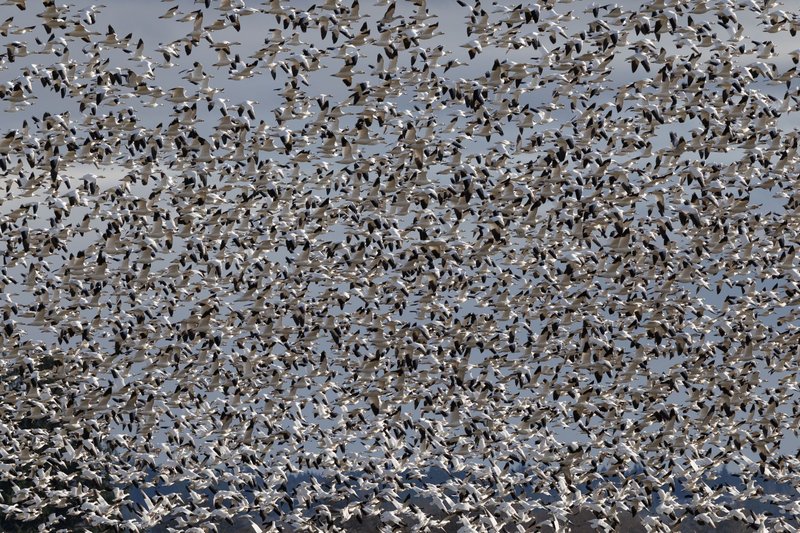
Autumn migration is longer and more diffuse than spring. It runs from August through November, with different species peaking at different times.
Marsh Harrier (Circus aeruginosus) — Regular in autumn over reedbeds and wetlands, particularly Ghadira. Often multiple birds visible simultaneously in October.
Eurasian Sparrowhawk (Accipiter nisus) — Passes through in significant numbers, sometimes as daily totals of several hundred birds. Noted as one of the most numerous raptors during autumn hawkwatch sessions.
Common Buzzard (Buteo buteo) — Increasingly regular on autumn passage. Broad-winged and soaring, often confused with nothing else once you know it.
Short-toed Snake Eagle (Circaetus gallicus) — A large eagle that feeds almost entirely on reptiles. Passes through Malta in autumn, and with Malta’s abundant lizard population it sometimes lingers longer than expected.
Wryneck (Jynx torquilla) — An underrated autumn migrant. This cryptic relative of the woodpeckers turns up in gardens and coastal scrub from August onwards, and its mottled brown-gray camouflage is genuinely impressive.
Common Kingfisher (Alcedo atthis) — Winters at coastal areas and fresh water. The Ghadira lagoon regularly holds one or two from October through March.
Black Redstart (Phoenicurus ochruros) — A common autumn and winter visitor, occupying rocky coastal areas, building sites, and urban environments. Darker and grayer than the Common Redstart; males have sooty-black faces and breasts.
Ferruginous Duck (Aythya nyroca) — An occasionally wintering species at Ghadira. This near-threatened diving duck is a priority species for the reserve’s management.
Rare Vagrants {#rare-vagrants}
Malta’s position as a Mediterranean waypoint means it regularly produces birds well outside their expected range. The rarity record is extensive.
Notable vagrants recorded in recent decades include: Eleonora’s Falcon (which also breeds on Maltese islets), Pallid Harrier, Sociable Lapwing, Bimaculated Lark, Eastern Black-eared Wheatear, Rüppell’s Warbler, and multiple North American waders carried across the Atlantic by storm systems before arriving in the Mediterranean.
BirdLife Malta maintains the official national rarities committee and publishes annual reports on rare sightings. If you’re making a targeted rare-bird trip, their current reports are the best source for what’s showing.
Residents, Migrants, and Vagrants at a Glance {#species-table}
| Species | Status | Best Season |
|---|---|---|
| Blue Rock Thrush | Resident breeder | Year-round |
| Spanish Sparrow | Resident breeder | Year-round |
| Sardinian Warbler | Resident breeder | Year-round |
| Yelkouan Shearwater | Resident breeder | Mar–Aug |
| Cetti’s Warbler | Resident breeder | Year-round |
| Common Kestrel | Resident breeder | Year-round |
| Eurasian Hoopoe | Spring migrant | Apr–May |
| European Bee-eater | Spring migrant | Apr–May |
| Red-footed Falcon | Spring migrant | May |
| Pied Flycatcher | Spring migrant | Apr–May |
| Eurasian Golden Oriole | Spring migrant | Apr–May |
| Marsh Harrier | Autumn migrant/winter | Aug–Nov |
| Wryneck | Autumn migrant | Aug–Oct |
| Short-toed Snake Eagle | Autumn migrant | Sep–Oct |
| Common Kingfisher | Winter visitor | Oct–Mar |
| Black Redstart | Autumn/winter visitor | Oct–Mar |
| Ferruginous Duck | Winter visitor | Oct–Mar |
| Eleonora’s Falcon | Breeder + migrant | May–Oct |
Top Birdwatching Sites {#top-sites}
Buskett Gardens — Malta’s only substantial woodland, planted in the 17th century as a hunting reserve. Now the most reliable migrant trap on the island. In spring and autumn, the trees hold concentrations of warblers, flycatchers, chats, and raptors that would be scattered across a much larger area anywhere else. A dawn visit during peak migration weeks is mandatory.
Ghadira Nature Reserve — A managed coastal lagoon and reedbed in the northwest, operated by BirdLife Malta. The reserve hosts breeding Cetti’s Warblers, regular wintering ducks including Ferruginous Duck, and regular visits from herons, egrets, and harriers. There’s a hide overlooking the main lagoon — one of the few dedicated birdwatching infrastructure points in Malta.
Il-Ballut (Marsaxlokk) — A small but productive coastal scrub and wetland area in the southeast. Irregular water levels attract waders, and the surrounding scrub holds migrants similar to Buskett.
Dingli Cliffs — The highest point in Malta, a stretch of coastal cliffs on the southwest shore. Excellent for watching seabird and raptor movement, and the resident Blue Rock Thrushes are reliably present here. During autumn, raptors stream past on visible migration.
Comino — The small island between Malta and Gozo sees relatively few visiting birders given access logistics, but the lack of disturbance means migrant passerines often linger longer. The area is also used by nesting Eleonora’s Falcons on nearby rock stacks.
Gozo — Quieter and greener than Malta, Gozo has proportionally more agricultural land and scrub. The Ramla Bay area and the Valley — a series of enclosed valleys with trees and scrub — regularly produce good migrants.
Best Times to Visit {#best-times}
Spring migration: April–May is peak season. Mid-April to mid-May is the sweet spot. Expect the widest variety of species: Hoopoes in gardens, bee-eaters overhead, raptors on the move, warblers and flycatchers in the trees at Buskett. Mornings after clear overnight skies are best, when birds have flown without disturbance.
Autumn migration: September–October is the second window. Less dramatic than spring for variety, but often better for total numbers, particularly raptors. September is best for passerines; October extends into waterfowl and wintering species arriving.
Winter: November–February is quieter but not without interest. Resident species are more visible, wintering ducks are at Ghadira, and Black Redstarts are widespread. Scientific American’s coverage of Mediterranean migration patterns notes that even winter doesn’t bring a complete pause in Mediterranean bird movement — short-range movements continue throughout the season.
Summer: June–July is the leanest period for variety. Breeding residents are active, Yelkouan Shearwaters can be seen at sea, and Eleonora’s Falcons are present at their colonies from May, but the mass migration spectacle is absent.
Malta’s appeal for birders is directly tied to its limitations. There’s not much habitat, the woodland is limited to a single patch, and the breeding avifauna is modest. But sit at Buskett Gardens in the first week of May when migration is running and the trees are dripping with overnight arrivals, and the geography that makes Malta small also makes it one of the most concentrated birdwatching experiences on the European continent. The Mediterranean crossing is one of ecology’s great recurring events, and Malta sits at a chokepoint.