Tajikistan is mostly mountains. Over 90% of the country sits above 1,000 meters, and the land claws up to 7,495 meters at Ismoil Somoni Peak. That vertical range — desert valley floor to permanent ice in the span of a few horizontal kilometers — is the whole story of why this small Central Asian republic packs a botanical punch far out of proportion to its size.
The country hosts roughly 4,300 species of vascular plants. Somewhere between 1,400 and 1,500 of them grow nowhere else on Earth. That’s an endemism rate near 30%, which puts Tajikistan in genuine biodiversity-hotspot territory. The catch: almost nobody has written about these plants for a normal reader. The good sources are 10,000-word IUCN-flavored papers full of threat categories and distribution models. This guide is the version that names the species, shows you where they live, and explains why so many are in trouble.
Table of Contents
- Why Tajikistan Is a Plant Hotspot
- The Endemic Species Roster
- Astragalus: The Genus That Runs the Show
- The Major Endemic Families
- Region by Region: Pamir and Badakhshan
- Why So Many Are Threatened
- The Short Version
Why Tajikistan Is a Plant Hotspot
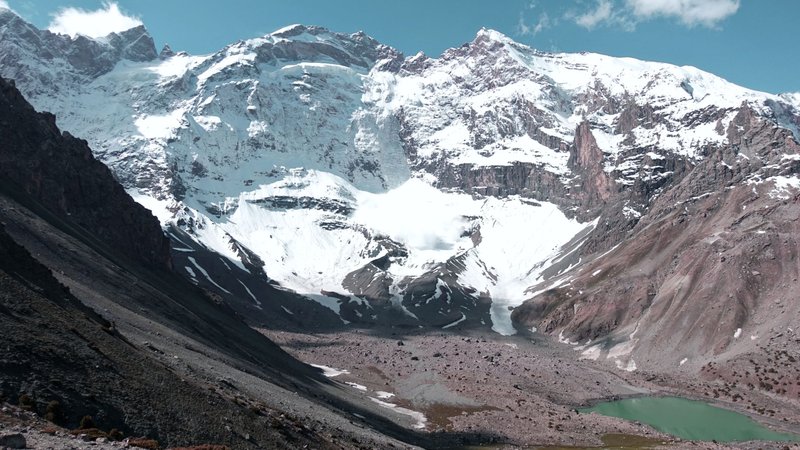
Three things conspire to make endemic plants of Tajikistan so numerous: altitude, isolation, and ice.
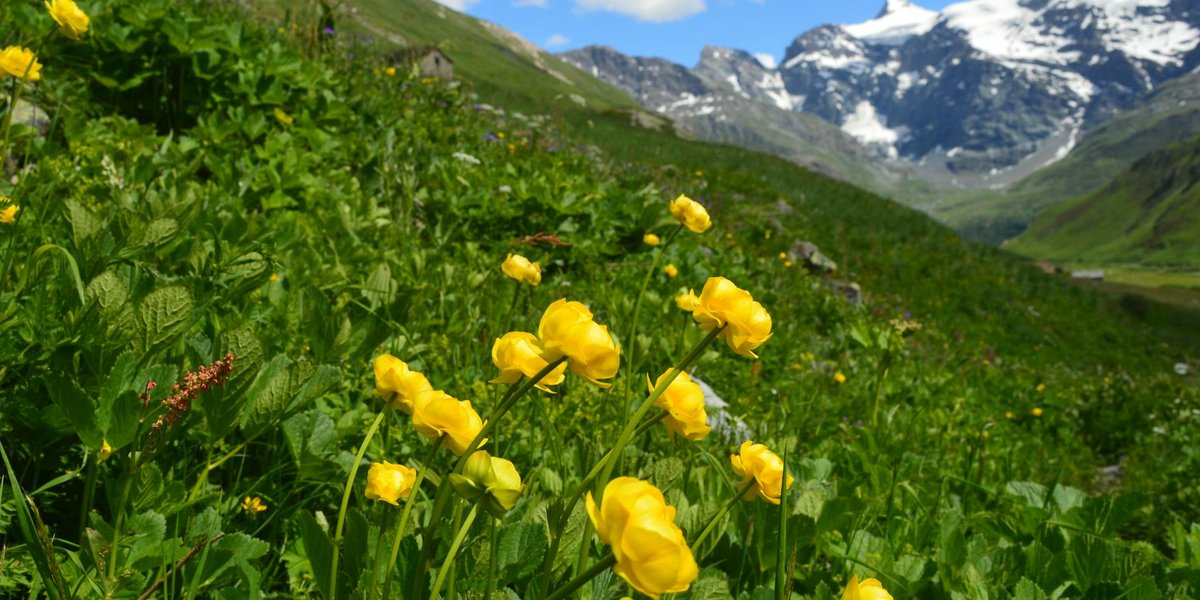
The altitude does the obvious work. A plant adapted to the hot, salty floor of a southern valley can’t survive at 4,000 meters, and vice versa. Stack a dozen distinct climate bands on top of each other and you get a dozen distinct floras in one country. Botanists count vegetation zones from desert and semi-desert at the bottom, through juniper woodland and montane meadow, up to alpine cushion plants and finally the high-cold deserts of the eastern Pamir.
Isolation does the second part. The Pamir-Alai mountain knot is a tangle of ridges and deep valleys, and a valley that’s hard for a person to reach is just as hard for a seed or a pollinator. Populations get cut off, drift apart genetically, and over enough time become their own species. This is how you manufacture narrow endemics — plants restricted to a single valley or massif.
Ice handles the rest. The Pleistocene glaciations carved the terrain, then retreated, leaving fresh ground and fragmented habitats that new species rushed to fill. The Pamir-Alai falls within the Mountains of Central Asia biodiversity hotspot recognized by conservation scientists, one of only a handful of mountain systems worldwide to earn that designation. The same ridges run north into neighboring ranges, which is why the endemic species of Kyrgyzstan tell a parallel story of valleys minting their own plants and animals just across the border.
The Endemic Species Roster
Here’s what the dense flora papers bury: the actual named plants. These are species you won’t find growing wild anywhere outside the region.
Badakhshan dandelion (Taraxacum badachschanicum) — Yes, a dandelion, but one restricted to the Badakhshan highlands in the east. Tajikistan’s Taraxacum genus has radiated wildly in the Pamir, producing a string of micro-endemic dandelions that look unremarkable until you realize each one occupies a tiny range.
Pamir desideria (Desideria pamirica) — A low, tough mustard-family plant of the high Pamir, built for cold deserts where the growing season is measured in weeks. It hugs the ground because everything that grows tall up there gets killed by wind and frost.
Cajon pear (Pyrus cajon) — A wild pear endemic to Tajikistan, part of the country’s surprisingly rich roster of wild fruit relatives. Central Asia is a global center of origin for fruit and nut species, and Tajikistan’s wild pears, apples, and almonds are living gene banks for the crops on your kitchen counter.
Korolkowia sewerzowii and the wild tulips and Eremurus (foxtail lilies) — The Pamir-Alai is one of the wild homelands of the tulip. Several Tulipa species and their relatives are endemic or near-endemic here, blooming in a brief, furious flush after snowmelt before the slopes dry to brown.
Cushion milkvetches and saxifrages of the alpine zone — Above the tree line, the dominant form isn’t the showy flower but the cushion plant: tight green hemispheres pressed against rock to trap warmth and moisture. Many are endemic, and they grow at a pace that makes a bonsai look impatient. A cushion the size of a dinner plate can be decades old.
That’s a representative slice, not the full 1,400. The point is texture: a wild pear here, a high-desert mustard there, an explosion of dandelions in one mountain block. The endemism isn’t concentrated in one charismatic family — it’s smeared across the whole flora.
Astragalus: The Genus That Runs the Show
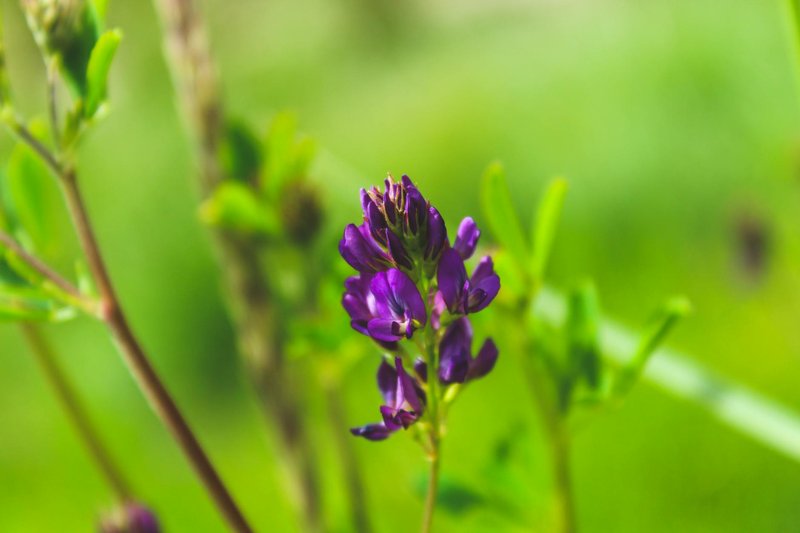
If you want one genus to understand Tajik botany, it’s Astragalus — the milkvetches and locoweeds. Tajikistan holds around 173 endemic Astragalus species, making it by a wide margin the richest endemic genus in the country.
Astragalus is the largest genus of flowering plants on the planet, with well over 3,000 species worldwide, and Central Asia is its evolutionary engine room. The genus does something most plants don’t: it speciates fast in dry mountains. Give Astragalus a fresh batch of isolated valleys and a few hundred thousand years, and it’ll fill them with new species the way a printing press fills shelves.
For a field observer this is both a gift and a headache. The plants are everywhere on the dry and rocky slopes — pea-family flowers in pinks, purples, yellows, and dirty whites, often with silvery hairy leaves and inflated, papery seed pods. Telling two endemic species apart frequently comes down to pod shape and hair direction, the kind of detail that separates a specialist from the rest of us. If you’re scanning a Tajik hillside and you don’t know what something is, the smart bet is Astragalus.
The Major Endemic Families
Endemism clusters in a few plant families that are simply good at colonizing dry, cold, broken mountains. Here’s how the big ones stack up.
| Family | Common name | Why it dominates here | Notable endemics |
|---|---|---|---|
| Fabaceae | Pea / legume | Fixes its own nitrogen, thrives on poor rocky soil, speciates fast | Astragalus (~173 endemics), Oxytropis |
| Asteraceae | Daisy / sunflower | Wind-dispersed seeds, huge genus diversity, fills open ground | Taraxacum, Cousinia, alpine Saussurea |
| Brassicaceae | Mustard / cabbage | Cold-hardy, fast life cycle suited to short high-altitude seasons | Desideria pamirica, high-Pamir crucifers |
| Lamiaceae | Mint | Aromatic oils deter grazing, drought-tolerant | Endemic Nepeta and thymes |
| Liliaceae | Lily | Bulbs survive deep cold, flower fast after snowmelt | Wild tulips, Eremurus, Korolkowia |
Two families do most of the heavy lifting. Fabaceae and Asteraceae together account for a large share of the country’s endemics, which tracks with the broader pattern across arid mountain floras worldwide — these are the families that win when conditions are harsh and habitats are fragmented.
Region by Region: Pamir and Badakhshan
The endemics aren’t spread evenly. The east is the jackpot.
The Pamir is the high cold heart of the country, a plateau where the eastern reaches sit above 4,000 meters and resemble Tibetan high desert more than anything you’d call a meadow. The flora here is sparse, low, and intensely specialized: cushion plants, dwarf crucifers, the alpine Astragalus and Oxytropis swarms. Plants survive by staying small and slow. This is also where the dandelion and Desideria endemics concentrate.
Gorno-Badakhshan, the autonomous region covering the Tajik Pamir, is the single richest pocket. It holds something on the order of 95 narrow endemics — species found only within Badakhshan and nowhere else, not even in the rest of Tajikistan. That’s the isolation engine running at full throttle: deep valleys, hard access, and pollinators that don’t travel far have all combined to mint species locally.
The western and southern lowlands tell a different story — warmer, with desert and semi-desert floras, wild pistachio and almond stands, and the wild fruit relatives. Less spectacular for endemism counts than the high east, but botanically important as a reservoir of crop wild relatives. These lowland desert and steppe communities grade westward into those of the neighboring republics, and the endemic plants of Uzbekistan round out the picture of how Central Asia’s arid flora splits across borders.
Why So Many Are Threatened
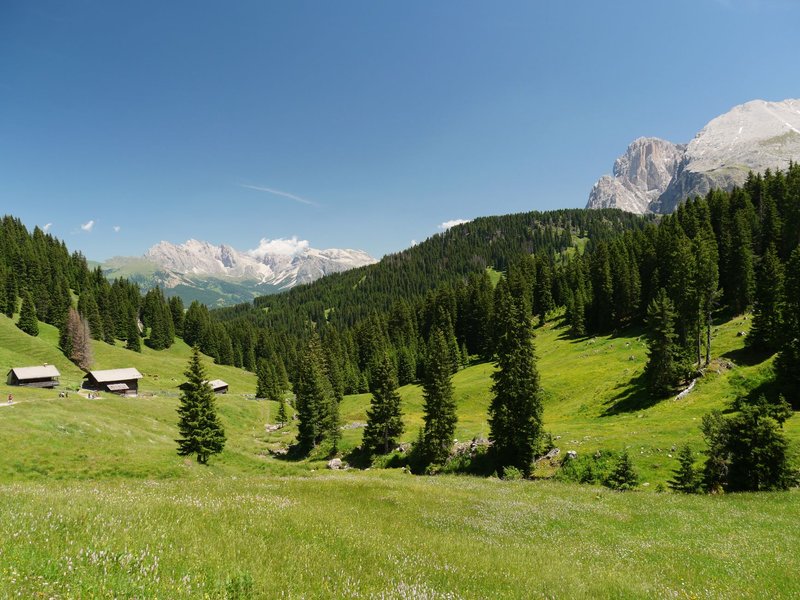
Here’s the uncomfortable part. A large fraction of these plants are in decline, and roughly 38% of Tajikistan’s flora is considered threatened. The Red List of vascular plants of Tajikistan, the most-cited modern assessment of the country’s plants, catalogs hundreds of species under IUCN threat categories.
Four pressures stack up.
Ornamental over-harvesting. The same traits that make wild tulips, Eremurus, and bulbs beautiful make them targets. Bulbs get dug for sale and for the garden trade, and a dug bulb doesn’t come back next spring.
Grazing. Livestock — sheep, goats, yaks in the high country — crop the meadows hard. Palatable endemics get eaten before they set seed, and heavy grazing reshapes whole plant communities toward the few species animals won’t touch.
Habitat loss and fuel collection. In a country where wood is scarce, slow-growing juniper woodland and shrubs get cut for fuel. Junipers that took centuries to establish don’t regrow on any human timescale.
Climate change. This is the quiet killer for high-altitude endemics. A cushion plant adapted to a narrow band of cold has nowhere to go when that band moves uphill — eventually it runs out of mountain. Species already restricted to a single Pamir massif have no escape route, which is exactly the scenario conservation researchers flag as the biggest extinction risk for mountain endemics.
The narrow endemics are the most exposed, by definition. A plant living in one valley can be wiped out by one bad decade.
The Short Version
The endemic plants of Tajikistan are the product of one geological accident: a small country folded into a wall of mountains, sliced into isolated valleys, and scoured by ice. That recipe produced ~1,400 plants found nowhere else, led by an army of 173 endemic Astragalus species and concentrated in the high Pamir and Badakhshan, where 95 species cling to single mountain blocks. The flora is dominated by the pea and daisy families, punctuated by wild tulips, wild pears, and ground-hugging cushion plants that count their age in decades.
And it’s fragile. With nearly four in ten species threatened by harvesting, grazing, fuel-cutting, and a warming climate that’s shrinking the cold habitats these plants depend on, the country’s botanical wealth is being spent faster than it can be replaced. The papers will give you the threat categories and the distribution maps. What they won’t tell you is that this is one of the most quietly remarkable floras on the continent — and one of the least documented for anyone who isn’t already holding a PhD.