Tajikistan is more than 90 percent mountains, and that geography decides almost everything about its birdlife. This is a country where you climb past 4,000 meters to find a snowcock crowing on a scree slope, then drop into a river valley and watch an ibisbill probe the gravel with a bill shaped like nothing else on Earth. Roughly 400 species have been recorded here, drawn from Central Asian deserts, Himalayan highlands, and the great migratory flyways that funnel birds over the Pamirs twice a year.
Most lists for this country give you a bare taxonomic checklist or a listicle with no photos and a few errors baked in. This one is built differently: 30 species you have a real chance of seeing, each with an ID tip that actually helps in the field, plus where and when to look. After the list, there’s a practical section on the best birding sites and the timing that makes or breaks a trip.
Table of Contents
- The 30 birds to know
- Best places to go birding in Tajikistan
- Best time to visit
- Threatened species worth watching for
The 30 birds to know
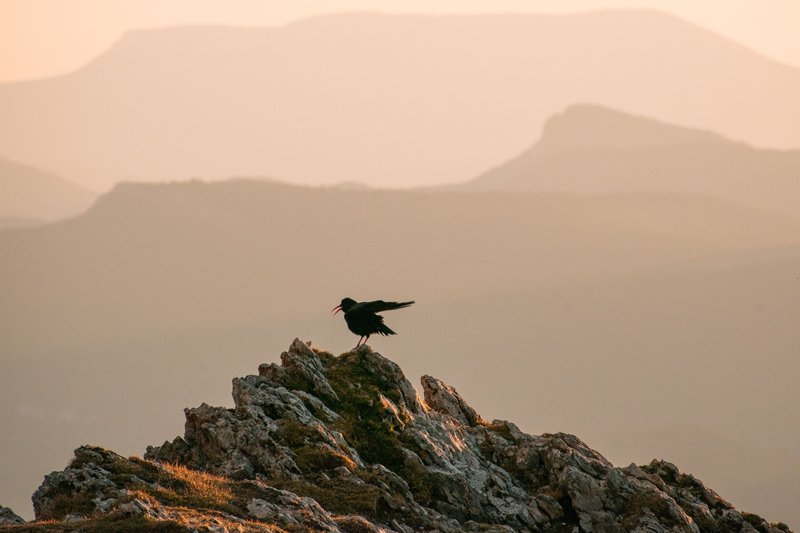
These run roughly from the high peaks down to the lowland valleys and wetlands, so you can read them as a kind of altitude tour of the country.
1. Himalayan Snowcock (Tetraogallus himalayensis) A big, gray, grouse-like bird of the highest slopes, often above 4,000 meters. You’ll hear it before you see it: a loud, whistling, curlew-like call that carries down the mountain at dawn. Look for the rusty stripes on the neck and the white throat patch. It flies downhill in a long glide when flushed, which is your best chance at a clear view.
2. Tibetan Snowcock (Tetraogallus tibetanus) The eastern Pamir counterpart, smaller and paler than the Himalayan, with bold black-and-white streaking on the flanks rather than chestnut. Where their ranges overlap in the east, altitude helps: the Tibetan tends to sit even higher. Check the breast pattern, which is finely barred gray rather than plain.
3. Ibisbill (Ibidorhyncha struthersii) The bird people travel to Tajikistan specifically to see. Gray body, black face and breast band, red legs, and a long, downcurved crimson bill it sweeps through cold, stony riverbeds. It blends shockingly well into the gray shingle of mountain rivers, so scan slowly. The Varzob and Iskanderkul drainages are reliable.
4. White-browed Tit-warbler (Leptopoecile sophiae) Tiny, and almost absurdly colorful for a high-mountain bird: a male shows violet-blue underparts, a rufous crown, and a bold white eyebrow. It works through juniper and dwarf scrub in winter flocks, often near the treeline. Patience pays, because they’re constantly moving and rarely sit still.
5. Chukar (Alectoris chukar) The most widespread game bird here, found on rocky, brushy hillsides from foothills to high valleys. Sandy-gray with a black gorget framing a white throat and bold black bars on the flanks. Its rolling “chuck-chuck-chukar” call is one of the defining sounds of a Tajik hillside morning.
6. Bar-headed Goose (Anser indicus) Famous for migrating directly over the Himalaya, this pale goose with two dark bars across the back of its white head passes through and breeds at a few high lakes. Yashilkul and other Pamir lakes are the places to look in summer. Even at a distance, the clean head pattern gives it away among other waterfowl.
7. Golden Eagle (Aquila chrysaetos) A massive dark eagle with a golden wash on the nape, soaring over ridges and open valleys. In Tajikistan it carries cultural weight too, since eagle and falconry traditions run deep in the region. Look for the long, slightly pinched wings held in a shallow V and the unhurried, powerful soar.
8. Lammergeier (Gypaetus barbatus) The bearded vulture, and one of the most striking raptors anywhere. Diamond-shaped tail, narrow wings, and a rusty-orange wash on the underparts from bathing in iron-rich mud. It drops bones onto rocks to crack them for marrow. Few birds look more at home cruising a Pamir cliff face.
9. Himalayan Vulture (Gyps himalayensis) A huge, pale soaring vulture of the high country, bigger and paler than the Griffon. Adults look almost sandy-cream with contrasting dark flight feathers. They ride thermals along ridgelines, sometimes a dozen at once over a carcass. Size and the pale body separate them from eagles at a glance.
10. Wallcreeper (Tichodroma muraria) A gray bird with crimson wing patches that flash like a butterfly as it creeps across vertical rock. It probes crevices for insects, flicking its wings open and shut. In winter it descends to lower cliffs, gorges, and even old stone buildings, which makes the colder months a good time to find one.
11. White-winged Redstart (Phoenicurus erythrogastrus) Also called Güldenstädt’s redstart, a large redstart of high screes and crags. The male is unmistakable: black with a white crown and bold white wing panels and a rusty-orange tail and belly. It’s one of the hardiest songbirds in the country, lingering at altitude well into the cold.
12. Brown Accentor (Prunella fulvescens) A subtle but common high-mountain bird, brown above with a clean cream eyebrow and warm buff underparts. It hops over rocks and short turf near snow patches and settlements. Once you learn the eyebrow, it’s easy to pick out from the streakier sparrows it often feeds alongside.
13. Güldenstädt’s Snowfinch (Montifringilla nivalis) Better known as the White-winged Snowfinch, a chunky high-altitude finch with large white wing patches that show in flight. It frequents rocky pastures and the edges of mountain settlements, often tame around herder camps. On the ground it looks gray and sparrow-like until the wings open.
14. Hume’s Lark (Calandrella acutirostris) A small, pale lark of high, barren plateaus where almost nothing else sings. Sandy-brown and streaked, it favors the stony steppe of the eastern Pamirs. It’s easy to overlook until it flushes, so listen for the thin song delivered in a high, fluttering flight.
15. Horned Lark (Eremophila alpestris) Recognizable by the black face mask, yellow throat, and the small black “horns” of feathers on the head. It breeds on open high-altitude flats and is one of the more confiding larks once you spot it. The face pattern is diagnostic even at distance.
16. Rufous-naped Tit (Periparus rufonuchalis) A crested, dark tit of montane juniper and conifer woodland, with a rufous patch on the nape and a black bib. It works through the canopy in small parties, often with other tits. The crest and dark hood give it a tougher look than the familiar garden tits.
17. Common Rosefinch (Carpodacus erythrinus) The breeding males are a soft raspberry-red on the head and breast, fading to brown wings. They sing a clear, rising “pleased-to-meet-you” phrase from scrub and riverside willows in summer. Females and young are plain brown, so the song is your best clue early in the season.
18. Great Rosefinch (Carpodacus rubicilla) A large, high-altitude rosefinch, the male washed deep pink and spangled with white spots. It haunts the highest screes and crags, often near snow. This is a true Pamir specialty, and seeing a fully colored male against gray rock is a trip highlight for most birders.
19. Plain Mountain Finch (Leucosticte nemoricola) A streaky brown finch that gathers in large, restless flocks on high alpine meadows and stony slopes. Drab on its own, but the flocking behavior and high-altitude habitat narrow it down fast. Watch for the wheeling groups that lift off and resettle together.
20. Twite (Linaria flavirostris) A small brown finch with a buff throat, streaked body, and a yellow bill in winter. It feeds in flocks on weedy ground and mountain pastures. The combination of the warm throat and the call, a nasal “chweet,” sorts it from the similar Linnet.
21. Hoopoe (Upupa epops) Impossible to confuse: pinkish-brown with bold black-and-white barred wings and a fan-shaped crest it raises when it lands. It probes lawns, orchards, and field edges with a long curved bill. Common in the lowlands and foothills from spring through summer.
22. European Roller (Coracias garrulus) A jay-sized bird of stunning turquoise and chestnut, perched upright on wires and dead branches in open country. In flight the wings flash electric blue. It hunts large insects from a perch, dropping to the ground and back. A summer visitor to the warmer lowlands.
23. Bee-eater (Merops apiaster) Slim, long-tailed, and painted in green, blue, chestnut, and yellow, often seen in chattering flocks hawking insects over open ground. They nest in colonies in sandy banks. Listen for the soft, rolling “prruip” calls overhead before you even spot the flock.
24. Blue Whistling Thrush (Myophonus caeruleus) A large, dark thrush that looks black until light reveals deep cobalt blue with silvery spangles, and a yellow bill. It haunts shaded mountain streams and rocky gorges, where its loud, rich, almost human-sounding whistle echoes off the walls. Often seen bounding along wet boulders.
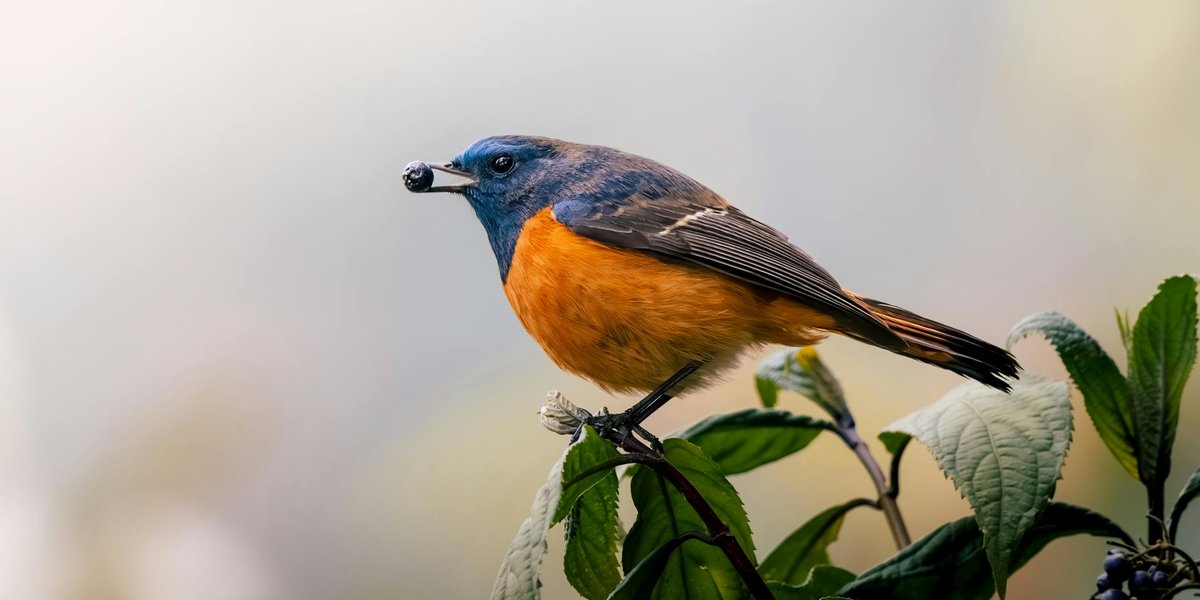
25. White-capped Redstart (Phoenicurus leucocephalus) A handsome riverbank bird: black body, deep chestnut belly and tail, and a clean white cap. It perches on midstream rocks, flicking and fanning its rusty tail constantly. Follow any fast, clear mountain stream and you stand a good chance of finding one.
26. Güldenstädt’s Wheatear group — Isabelline Wheatear (Oenanthe isabellina) Pale sandy-brown and upright, with a habit of standing tall on rocks and mounds in open steppe. Plainer than the other wheatears, with a longer-legged stance and a buffy wash. It bobs and flicks its tail, and the black-and-white tail pattern shows clearly in flight.
27. Pied Wheatear (Oenanthe pleschanka) A crisp black-and-white wheatear of rocky hillsides and ravines. The breeding male shows a black throat and back contrasting with a white crown and underparts. It perches conspicuously and sallies after insects, making it one of the easier small birds to watch well.
28. Mongolian Finch (Bucanetes mongolicus) A pale desert-edge finch with subtle pink tones in the wings and a stubby bill. It favors the dry, stony slopes of the eastern ranges, often near water in arid country. Drab at rest, it shows surprising pink in the wing when it flies.
29. Saxaul Sparrow (Passer ammodendri) A sparrow of the lowland desert and riverine thickets, the male marked with a black crown stripe and eye line on a gray head. It’s tied to saxaul scrub and tugai woodland along the southern rivers. Look in the warmer Vakhsh and Panj lowlands rather than the mountains.
30. Common Kingfisher (Alcedo atthis) A jewel of electric blue and orange that streaks low over slower rivers and irrigation channels in the lowlands. You’ll often catch the blue flash and the sharp, high call before the bird itself. It perches on overhanging branches, watching the water for small fish.
Best places to go birding in Tajikistan
A few sites concentrate most of what’s worth seeing, and they line up neatly with the country’s mountain spine.
Iskanderkul and the Fann Mountains. A turquoise glacial lake ringed by peaks, reachable as a day trip or overnight from the road between Dushanbe and Khujand. The river valleys feeding the lake are prime ibisbill and white-capped redstart habitat, while the surrounding slopes hold snowcock, wallcreeper, and rosefinches. The Fanns more broadly are the most accessible high-mountain birding in the country.
The Varzob Valley. The closest serious birding to Dushanbe, running north from the capital along a clear river. It’s a good place to start a trip and tune your eye, with ibisbill on the riverbed, blue whistling thrush in the gorges, and wallcreeper on the cliffs in the colder months.
Yashilkul and the eastern Pamirs. Remote, high, and harsh, this is where you go for Bar-headed Goose, Tibetan Snowcock, Great Rosefinch, and the specialist high-plateau larks and snowfinches. The Pamir Highway makes the region reachable, but the altitude is real, so acclimatize before you push above 4,000 meters. The lakes here sit in a landscape that feels closer to Tibet than to Central Asia.
The southern lowlands (Vakhsh and Panj valleys). A completely different set of birds: saxaul sparrows, rollers, bee-eaters, and kingfishers in the warm tugai woodland and farmland along the rivers near the Afghan border. The region’s protected wetlands draw migrants and breeding waterbirds, and conservation groups like the IUCN have flagged Central Asian river systems as priorities for exactly this kind of habitat.
Best time to visit
Timing is everything in a country this vertical.
May to July is the core season. Breeding birds are in full song and full color, the high passes are open, and the alpine specialists, rosefinches, snowcocks, and snowfinches, are on territory. This is when a trip can reasonably target the Pamir high-altitude species, since the snow has cleared enough to reach them.
April and September catch migration, when the flyways over the mountains push large numbers of waterfowl, raptors, and passerines through the valleys and lowland wetlands. Spring migration overlaps with the start of breeding, which makes late April a sweet spot.
December and January sound like a strange time to go birding in a country this cold, and the high country is genuinely off-limits. But the cold pushes high-altitude residents downhill, so wallcreepers, white-browed tit-warblers, and accentors turn up in lower gorges and valleys where you can actually reach them. Tajikistan’s wider biodiversity has drawn growing scientific attention, with outlets like National Geographic documenting the Pamir region as one of Central Asia’s great mountain wildlife strongholds.
Threatened species worth watching for
Several of Tajikistan’s birds carry conservation weight beyond their good looks. Vulture populations across the region have declined sharply, and the Egyptian Vulture is now listed as globally Endangered, with Tajikistan’s high cliffs offering some of its remaining strongholds. The Saker Falcon, a powerful steppe and mountain hunter trapped heavily for falconry, is also globally threatened and still found in the country’s open high country. Even the Lammergeier and Himalayan Vulture, common as they can seem over a Pamir ridge, depend on undisturbed cliffs and a steady supply of carrion that’s shrinking across their range.
That mix of the spectacular and the vulnerable is the real reason to put Tajikistan on a birding map. Few places let you stand on a 4,000-meter slope, watch a snowcock glide off into the dawn, and know you’re looking at birds most of the world will never see.