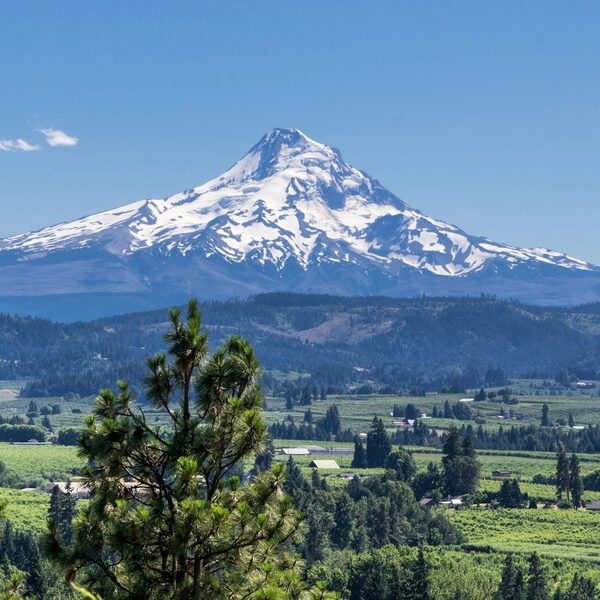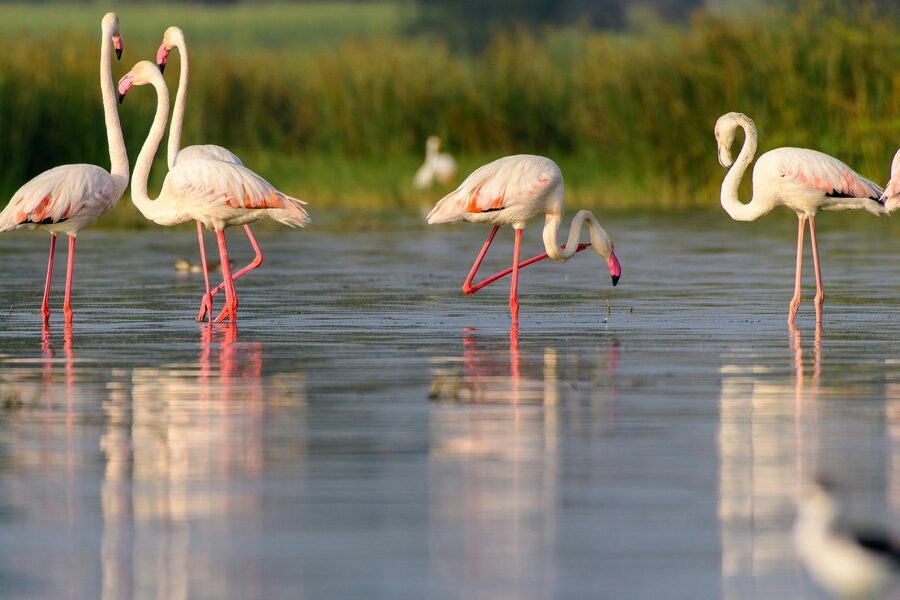
Utah’s mix of Great Salt Lake wetlands, desert basins, alpine forests and riparian corridors supports a wide variety of bird life across elevations and seasons. Local hotspots concentrate migrants and breeders alike, so whether you enjoy shorebirds, raptors or songbirds there are reliable places to look.
There are 100 Birds of Utah, ranging from American Avocet to Yellow-headed Blackbird. For each entry the list provides Scientific name,Status (Utah),Primary habitat & hotspots so you can match identification with local occurrence and where to find them — you’ll find below.
When is the best time to visit Utah for birding different species?
Spring (March–May) and fall (August–October) migrations are peak times for diversity, with Great Salt Lake and wetland complexes especially active; summer is best for breeding species in higher elevations, and winter highlights waterfowl and hardy residents at lower elevations.
How should I use the “Status (Utah)” column when planning a trip?
Use the status to gauge how likely a species is to be seen (breeder, migrant, occasional, rare) and to prioritize sites; for real-time planning combine the list with recent eBird reports and local refuge updates for access and seasonal closures.
Birds of Utah
| Common name | Scientific name | Status (Utah) | Primary habitat & hotspots |
|---|---|---|---|
| Mallard | Anas platyrhynchos | Common resident and migrant | Wetlands, reservoirs; Great Salt Lake, Farmington Bay |
| Canada Goose | Branta canadensis | Common resident and migrant | Lakes, parks, fields; Utah Lake, Great Salt Lake |
| Wood Duck | Aix sponsa | Uncommon resident and migrant | Wooded ponds, riparian; Jordan River, Ogden area |
| American Wigeon | Mareca americana | Common migrant and winter visitor | Shallow wetlands, marshes; Great Salt Lake, Farmington Bay |
| Northern Pintail | Anas acuta | Common migrant and winter visitor | Shallow wetlands, agricultural fields; Great Salt Lake, Bear River |
| Green-winged Teal | Anas crecca | Common migrant and winter visitor | Marshes, shallow ponds; Great Salt Lake, Farmington Bay |
| Canvasback | Aythya valisineria | Common migrant and winter visitor | Deep lakes, saline flats; Great Salt Lake, Bear River |
| Redhead | Aythya americana | Common migrant and winter visitor | Lakes and marshes; Farmington Bay, Great Salt Lake |
| Ring-necked Duck | Aythya collaris | Common migrant and winter visitor | Freshwater lakes, ponds; lakes statewide |
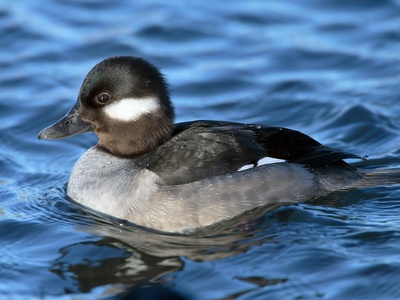
| Bufflehead | Bucephala albeola | Common migrant and winter visitor | Lakes, ponds; reservoirs near cities |
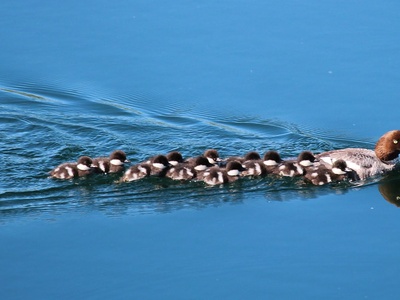
| Common Goldeneye | Bucephala clangula | Common migrant and winter visitor | Lakes, rivers; reservoirs statewide |
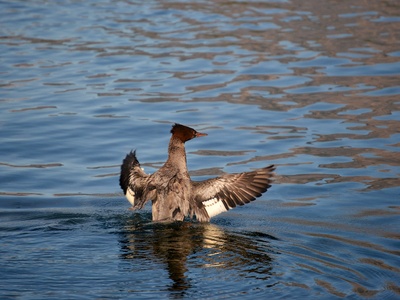
| Common Merganser | Mergus merganser | Uncommon resident and migrant | Rivers, large lakes; Green River, Flaming Gorge |
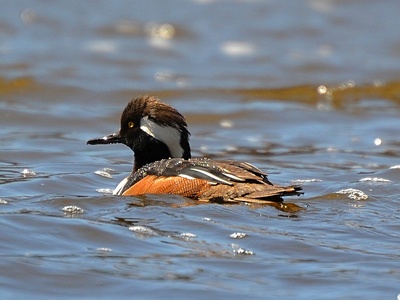
| Hooded Merganser | Lophodytes cucullatus | Uncommon resident and migrant | Wooded ponds, slow rivers; northern Utah wetlands |
| Ruddy Duck | Oxyura jamaicensis | Common migrant and summer visitor | Freshwater marshes; Great Salt Lake marshes |
| American Coot | Fulica americana | Common resident and migrant | Freshwater marshes, lakes; Great Salt Lake, Farmington Bay |
| American White Pelican | Pelecanus erythrorhynchos | Common summer visitor and migrant | Large lakes, wetlands; Great Salt Lake, Utah Lake |
| Double-crested Cormorant | Phalacrocorax auritus | Common resident and migrant | Lakes, reservoirs; Great Salt Lake, Flaming Gorge |
| Great Blue Heron | Ardea herodias | Common resident and migrant | Wetlands, shorelines; marshes statewide |
| Great Egret | Ardea alba | Uncommon migrant and summer visitor | Marshes, riparian; Farmington Bay, Bear River |
| Snowy Egret | Egretta thula | Uncommon migrant and summer visitor | Marshes, ponds; Great Salt Lake marshes |
| Sandhill Crane | Antigone canadensis | Common migrant and summer visitor | Wet meadows, agricultural fields; Bear River Migratory Bird Refuge |
| Bald Eagle | Haliaeetus leucocephalus | Regular winter visitor and breeding | Rivers, reservoirs; Flaming Gorge, Bear River |
| Golden Eagle | Aquila chrysaetos | Uncommon resident and migrant | Open country, mountains; West desert and canyons |
| Osprey | Pandion haliaetus | Regular summer visitor and migrant | Reservoirs, lakes; Flaming Gorge, Utah Lake |
| Red-tailed Hawk | Buteo jamaicensis | Common resident year-round | Open country, foothills; statewide |
| Swainson’s Hawk | Buteo swainsoni | Common migrant and summer visitor | Grasslands, agricultural fields; western valleys |
| Ferruginous Hawk | Buteo regalis | Uncommon resident and migrant | High desert, grasslands; west desert, Sanpete County |
| Cooper’s Hawk | Accipiter cooperii | Uncommon resident and migrant | Woodlands, suburbs; riparian corridors |
| Sharp-shinned Hawk | Accipiter striatus | Uncommon migrant and winter visitor | Forests, riparian; canyon corridors |
| American Kestrel | Falco sparverius | Common resident and migrant | Open country, fields; agricultural valleys |
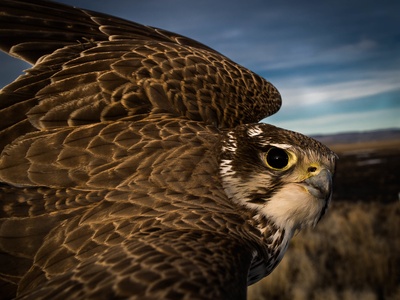
| Prairie Falcon | Falco mexicanus | Uncommon resident | Open country, cliffs; west desert, canyons |
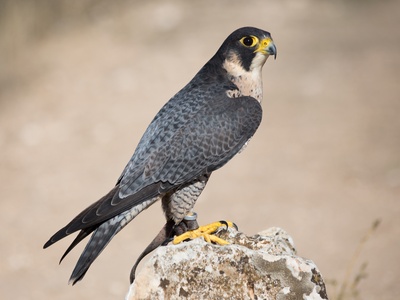
| Peregrine Falcon | Falco peregrinus | Uncommon migrant and breeder | Cliffs, urban towers; Box Elder, canyon cliffs |
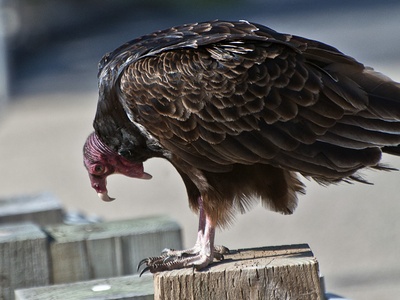
| Turkey Vulture | Cathartes aura | Common migrant and summer visitor | Open country, roadsides; thermals statewide |
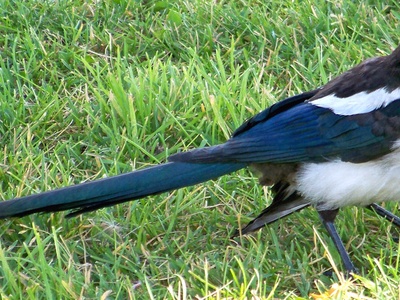
| Black-billed Magpie | Pica hudsonia | Common resident | Shrublands, towns; Great Salt Lake, Pinyon-Juniper |
| American Crow | Corvus brachyrhynchos | Common resident | Urban, farmland, riparian; statewide |
| Common Raven | Corvus corax | Common resident | Mountains, deserts; canyons, high country |
| Steller’s Jay | Cyanocitta stelleri | Common resident in mountains | Conifer forests; Wasatch, Uinta Mountains |
| Woodhouse’s Scrub-Jay | Aphelocoma woodhouseii | Common resident | Pinyon-juniper, foothills; southern and central Utah |
| Clark’s Nutcracker | Nucifraga columbiana | Common resident in high elevations | Subalpine forests; Uinta, Wasatch, high plateaus |
| Pinyon Jay | Gymnorhinus cyanocephalus | Uncommon to locally common | Pinyon-juniper woodlands; southern Utah |
| Mountain Chickadee | Poecile gambeli | Common resident in mountains | Conifer forests; Wasatch, Uinta Mountains |
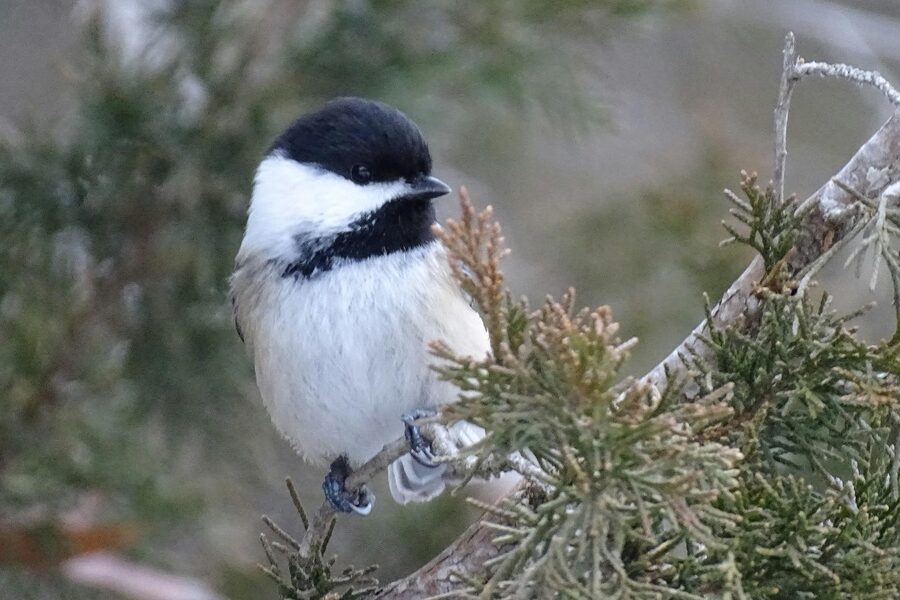
| Black-capped Chickadee | Poecile atricapillus | Common resident in northern Utah | Riparian woodlands, parks; northern valleys |
| Juniper Titmouse | Baeolophus ridgwayi | Common resident in scrub | Pinyon-juniper, sage; southern and central Utah |
| White-breasted Nuthatch | Sitta carolinensis | Common resident | Woodlands, riparian; parks, cottonwoods |
| Red-breasted Nuthatch | Sitta canadensis | Common winter visitor and breeder | Conifer forests; high elevations |
| Brown Creeper | Certhia americana | Uncommon resident | Mature forests, riparian; coniferous stands |
| House Wren | Troglodytes aedon | Common migrant and summer visitor | Shrubland, gardens; riparian corridors |
| Marsh Wren | Cistothorus palustris | Uncommon to locally common | Reeds, marshes; Great Salt Lake marshes |
| Canyon Wren | Catherpes mexicanus | Uncommon resident | Rocky canyons, cliffs; national parks |
| Rock Wren | Salpinctes obsoletus | Common resident in rocky areas | Badlands, canyons, rocky slopes; southern Utah |
| Ruby-crowned Kinglet | Regulus calendula | Common migrant and winter visitor | Forests, riparian; mountains and valleys |
| Golden-crowned Kinglet | Regulus satrapa | Common migrant and winter visitor | Conifer forests; high elevations |
| Mountain Bluebird | Sialia currucoides | Common resident and migrant | Open country, meadows; western valleys, high basins |
| Western Bluebird | Sialia mexicana | Uncommon resident and migrant | Open woodlands, orchards; pinyon-juniper zones |
| Townsend’s Solitaire | Myadestes townsendi | Common resident in higher elevations | Subalpine forests, canyons; Wasatch, Uinta Mountains |
| American Robin | Turdus migratorius | Common resident and migrant | Gardens, parks, riparian; statewide |
| Hermit Thrush | Catharus guttatus | Common migrant and breeder in mountains | Conifer and mixed forests; high elevations |
| Varied Thrush | Ixoreus naevius | Uncommon migrant and winter visitor | Conifer forests, riparian; northern Utah |
| Cedar Waxwing | Bombycilla cedrorum | Common migrant and summer visitor | Riparian, orchards; valley trees |
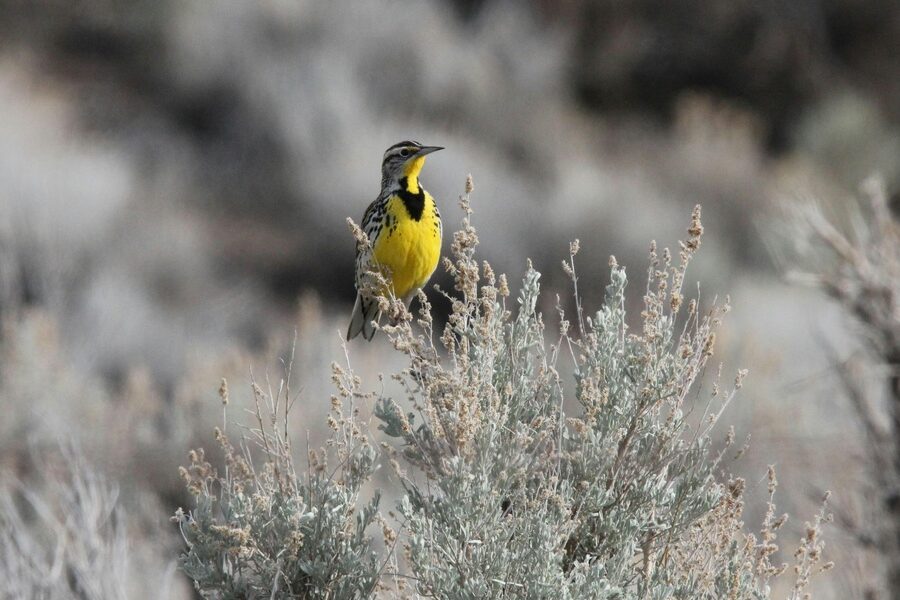
| Western Meadowlark | Sturnella neglecta | Common resident | Grasslands, agricultural fields; basins and valleys |
| Horned Lark | Eremophila alpestris | Common resident and migrant | Open fields, playas; Great Salt Lake flats |
| Yellow-headed Blackbird | Xanthocephalus xanthocephalus | Common migrant and summer visitor | Freshwater marshes; Great Salt Lake marshes |
| Red-winged Blackbird | Agelaius phoeniceus | Common summer visitor | Marshes, meadows; wetlands statewide |
| Brewer’s Blackbird | Euphagus cyanocephalus | Common resident and migrant | Farmlands, urban; fields and edges |
| Brown-headed Cowbird | Molothrus ater | Common resident and migrant | Open habitats, fields; agricultural valleys |
| Common Grackle | Quiscalus quiscula | Uncommon to common migrant | Riparian, agricultural areas; valleys |
| Song Sparrow | Melospiza melodia | Common resident and migrant | Shrublands, riparian; marsh edges, thickets |
| Savannah Sparrow | Passerculus sandwichensis | Common migrant and breeder | Grasslands, meadows; wet meadows and basins |
| Vesper Sparrow | Pooecetes gramineus | Uncommon to common breeder | Open fields, grasslands; basins and valleys |
| Brewer’s Sparrow | Spizella breweri | Common breeding resident | Sagebrush steppe; Great Basin scrub |
| Chipping Sparrow | Spizella passerina | Common migrant and breeder | Open woodlands, parks; yards and pines |
| White-crowned Sparrow | Zonotrichia leucophrys | Common migrant and winter visitor | Shrublands, fields; lowlands and mountains |
| Dark-eyed Junco | Junco hyemalis | Common winter visitor and breeder | Forests, yards; statewide |
| Lincoln’s Sparrow | Melospiza lincolnii | Uncommon migrant | Thickets, wet meadows; riparian corridors |
| Fox Sparrow | Passerella iliaca | Uncommon migrant and winter visitor | Dense shrubs, riparian; thickets and willows |
| Sage Thrasher | Oreoscoptes montanus | Common resident and breeder | Sagebrush steppe; Great Basin, west desert |
| Northern Mockingbird | Mimus polyglottos | Common resident and migrant | Suburban, riparian; towns and deserts |
| Western Kingbird | Tyrannus verticalis | Common summer visitor | Open woodlands, fields; agricultural valleys |
| Say’s Phoebe | Sayornis saya | Common resident and migrant | Open arid areas, cliffs; basins and foothills |
| Olive-sided Flycatcher | Contopus cooperi | Uncommon migrant | Conifer edges, riparian; mountain valleys |
| Ash-throated Flycatcher | Myiarchus cinerascens | Uncommon to common in south | Desert scrub, pinyon-juniper; southern Utah |
| Willow Flycatcher | Empidonax traillii | Uncommon breeder | Riparian willows, wet thickets; lowland streams |
| Warbling Vireo | Vireo gilvus | Common migrant and summer visitor | Riparian trees, parks; stream corridors |
| Northern Shrike | Lanius borealis | Uncommon winter visitor | Open fields, shrubby edges; basins and flats |
| Loggerhead Shrike | Lanius ludovicianus | Uncommon resident and migrant | Open shrublands, roadsides; sagebrush country |
| European Starling | Sturnus vulgaris | Common resident | Urban, farmland; towns statewide |
| Rock Pigeon | Columba livia | Common resident | Urban areas, towns; cities statewide |
| Mourning Dove | Zenaida macroura | Common resident and migrant | Open habitats, suburbs; statewide |
| Eurasian Collared-Dove | Streptopelia decaocto | Common resident and migrant | Urban, farmland; towns and riparian areas |
| Belted Kingfisher | Megaceryle alcyon | Common migrant and breeder | Rivers, lakes; riparian corridors statewide |
| American Bittern | Botaurus lentiginosus | Uncommon summer visitor | Marshes, cattail wetlands; Great Salt Lake marshes |
| Sora | Porzana carolina | Uncommon migrant and summer visitor | Freshwater marshes; Great Salt Lake wetlands |
| Virginia Rail | Rallus limicola | Uncommon migrant and summer visitor | Marsh vegetation; riparian marshes |
| Killdeer | Charadrius vociferus | Common resident and migrant | Playa shores, fields; open mudflats, agricultural land |
| American Avocet | Recurvirostra americana | Common summer visitor | Shallow saline lakes, mudflats; Great Salt Lake |
| Black-necked Stilt | Himantopus mexicanus | Common summer visitor | Shallow wetlands, mudflats; Great Salt Lake, ponds |
| Wilson’s Phalarope | Phalaropus tricolor | Common migrant and summer visitor | Shallow saline ponds; Great Salt Lake marshes |
| Snowy Plover | Charadrius nivosus | Uncommon to locally common | Sandy shores, saline flats; Great Salt Lake public beaches |
| Least Sandpiper | Calidris minutilla | Common migrant | Mudflats, shorelines; wetlands statewide |
| Long-billed Curlew | Numenius americanus | Uncommon breeder and migrant | Grasslands, playas; west desert, salt flats |
Images and Descriptions
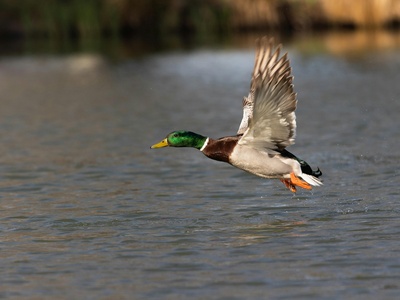
Mallard
Familiar dabbling duck with a glossy green-headed male and mottled female. Frequently seen on ponds and marshes year-round in cities and countryside; easy to identify and commonly encountered by new birders.
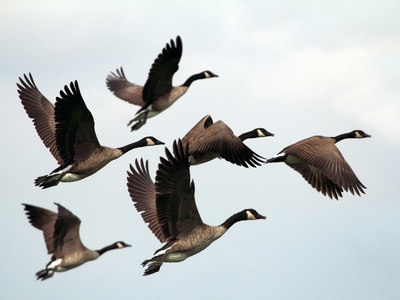
Canada Goose
Large, noisy waterfowl with black head and white cheek patch. Ubiquitous in urban parks and wetlands, often in flocks; adaptable grazers that are especially visible during migrations and winter gatherings.
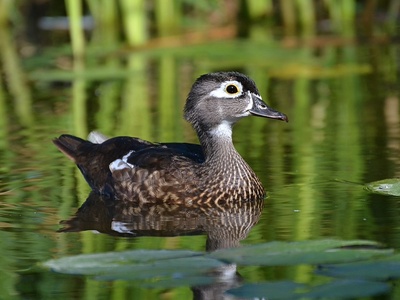
Wood Duck
Striking iridescent male with ornate head pattern and female with eyering. Prefers wooded wetlands and nest boxes; notable for nesting in tree cavities and beautiful plumage during spring and fall.
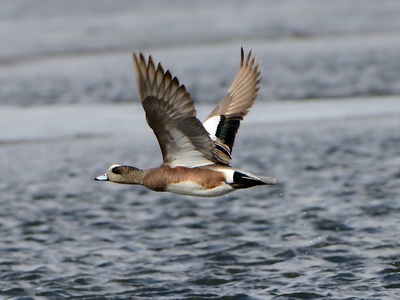
American Wigeon
Medium dabbling duck with a round head and white forehead on males. Often feeds by grazing on vegetation; common during migration and winter, sometimes in mixed flocks with other ducks.
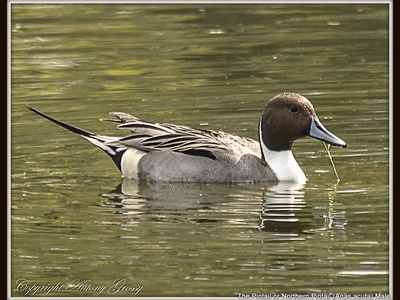
Northern Pintail
Elegant duck with long, pointed tail and slim profile. Males show chocolate head and long tail; seen in open wetlands and flooded fields during migration and winter.
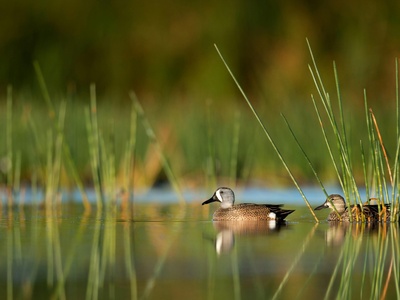
Green-winged Teal
Small dabbling duck with green facial stripe on males. Agile and quick to flush; one of the smallest teal and common in Utah’s wetlands during migration and winter.
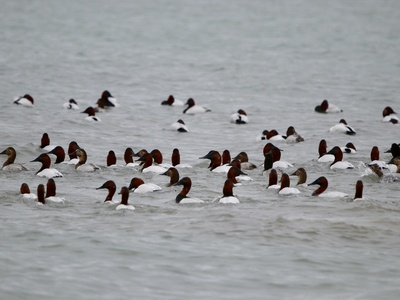
Canvasback
Large diving duck with sloping forehead and chestnut head on males. Dives for aquatic plants; notable on Great Salt Lake and major reservoirs in migration and winter.

Redhead
Round-headed diving duck with reddish head in males. Often found in large flocks with other diving ducks; common in Utah’s lakes and marshes in migration and winter.
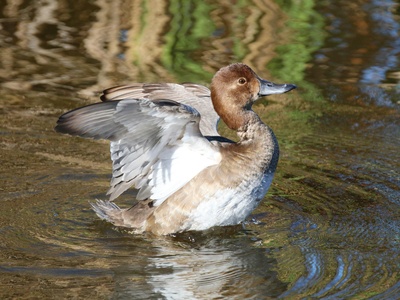
Ring-necked Duck
Medium diving duck with peaked head and thin neck ring. Often dives for vegetation; common in ponds and reservoirs, especially during migration periods.
Bufflehead
Tiny, iridescent-headed diving duck with flashy white patch on males. Fast and bubbly divers; common on small lakes and urban reservoirs through migration and winter.
Common Goldeneye
Black-and-white diving duck with round white cheek patch on males. Dives for fish and invertebrates; conspicuous on open water in colder months across Utah.
Common Merganser
Large fish-eating duck with slender serrated bill. Males have white bodies and dark heads; seen on rivers and big reservoirs, often in family groups during spring and summer.
Hooded Merganser
Small crested merganser with dramatic fan crest in males. Prefers wooded wetlands and nest cavities; notable for its striking crest and fishing behavior.
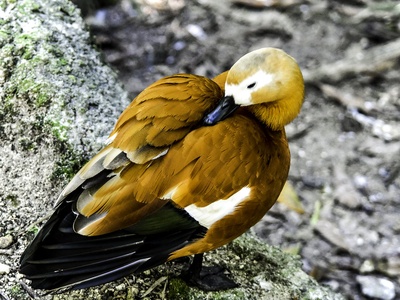
Ruddy Duck
Stout-tailed diving duck with bright chestnut breeding plumage in males. Common in marshes and shallow ponds during summer; known for stiff tail and head-bobbing displays.
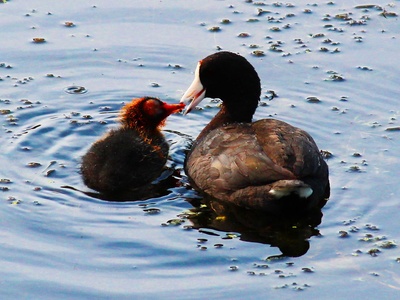
American Coot
Dark, chicken-like waterbird with white bill and lobed toes. Highly social and common in Utah wetlands; often seen feeding in flocks and vocal on the water.
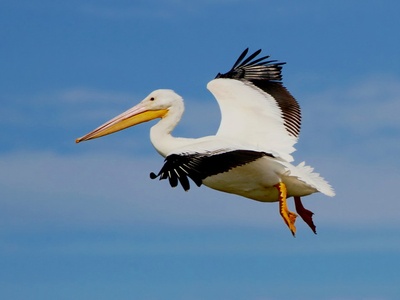
American White Pelican
Massive white bird with long bill and throat pouch. Flies in V-formations and forage in shallow lakes; spectacular when thousands concentrate at saline and freshwater wetlands.
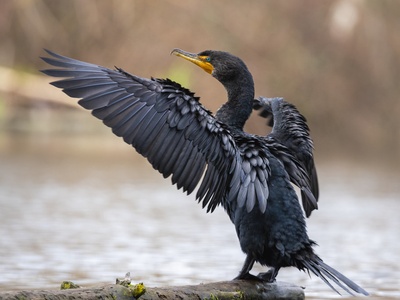
Double-crested Cormorant
Long-necked dark waterbird that dives for fish. Often seen perched with wings outstretched to dry; common on Utah reservoirs and lakes during summer.
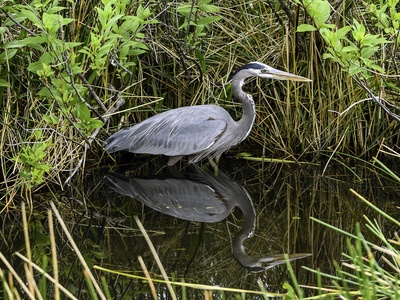
Great Blue Heron
Tall, long-legged wading bird with slate-blue plumage and slow deliberate movements. A standing sentinel of Utah wetlands, often seen hunting fish along marsh edges and reservoirs.
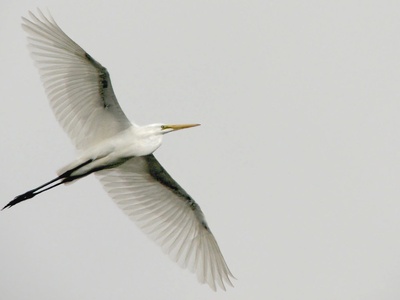
Great Egret
Large white heron with long S-shaped neck and yellow bill. Elegant and more widespread since recolonization; seen in wetlands during migration and summer.
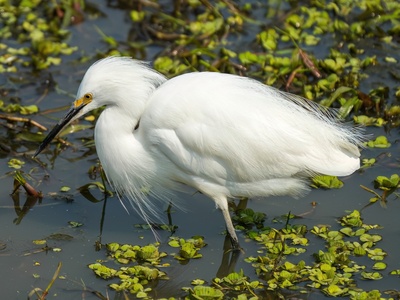
Snowy Egret
Small white egret with black bill and yellow feet. Graceful forager in shallow water; occasional but eye-catching visitor to Utah wetlands in warm months.
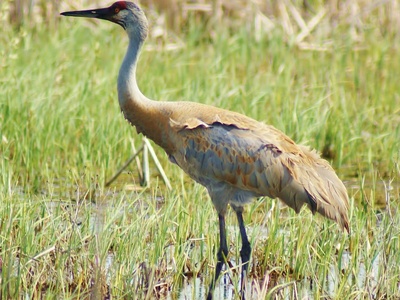
Sandhill Crane
Large grey crane with loud rolling trumpeting calls. Flocks stage and feed in wetlands and fields during migration; highly notable at Bear River and Great Salt Lake areas.
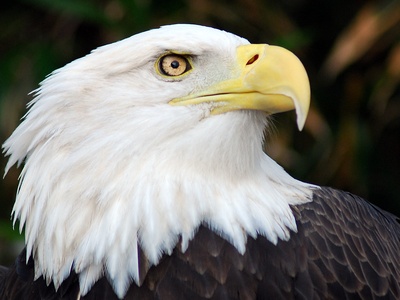
Bald Eagle
Impressive large raptor with white head and dark body in adults. Winters and breeds at major water bodies; often seen perched near fish-rich waters and impressive in flight.
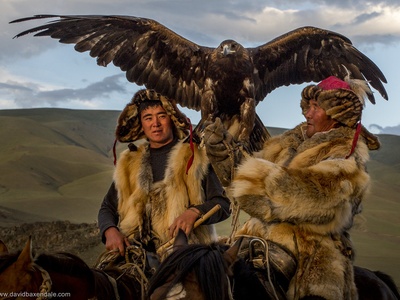
Golden Eagle
Powerful large raptor with long wings and dark plumage. Hunts over open terrain and updrafts; notable in Utah’s high country and desert cliffs.
Osprey
Fish-specialist raptor with distinctive diving behavior and white underparts. Nests on platforms and dead trees near water; reliable at large lakes and reservoirs in summer.
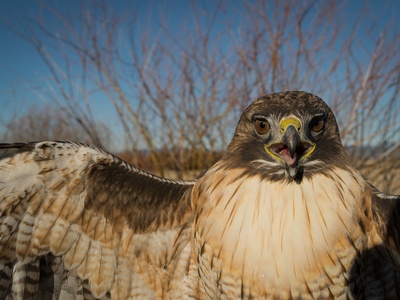
Red-tailed Hawk
Large, chunky hawk with rust-red tail and broad wings. Versatile predator visible from roadsides to mountains; one of Utah’s most familiar raptors.
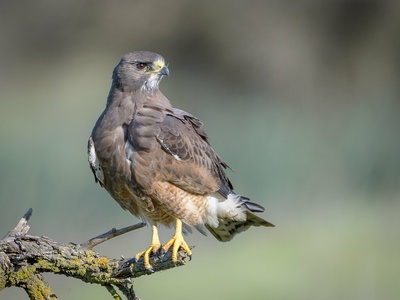
Swainson’s Hawk
Slim, long-winged hawk with dark belly band in some plumages. Migratory flocks pass through in spring/fall; nests on poles and trees in open country.
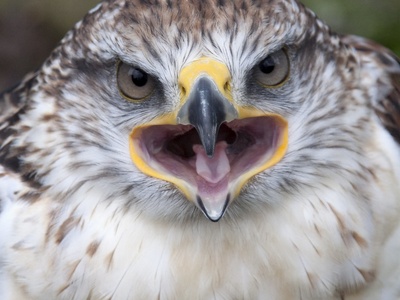
Ferruginous Hawk
Largest North American buteo with pale underparts and rust shoulders. Prefers open plains and badlands; a dramatic, fossorial-hunting raptor of Utah’s basins.
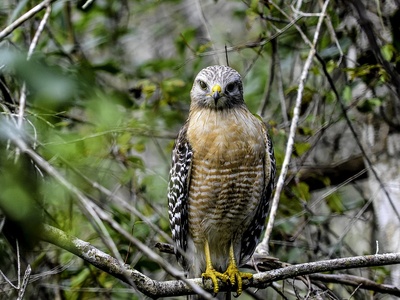
Cooper’s Hawk
Medium accipiter with rounded tail and agile flight. A stealthy forest predator of birds that increasingly uses urban woodlands and feeders to forage.
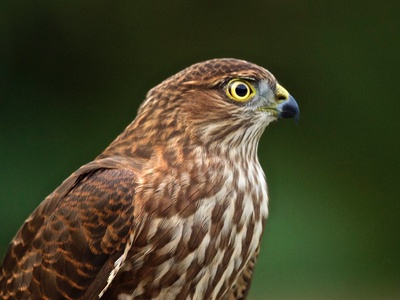
Sharp-shinned Hawk
Small accipiter often hunting songbirds with quick, direct flight. Seen in woodland and along riparian flyways during migration; secretive but noticeable at feeders.
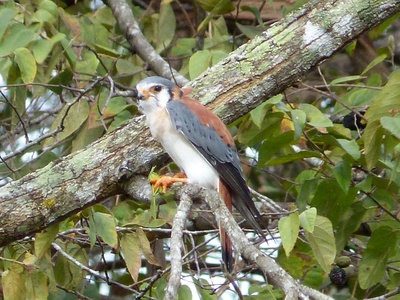
American Kestrel
Small colorful falcon with hovering hunting style. Often perched on wires and poles; widespread and visible throughout Utah year-round in open habitats.
Prairie Falcon
Slim falcon of arid landscapes, agile and fast. Nesting on cliffs and hunting small mammals and birds over sagebrush; a classic western desert raptor.
Peregrine Falcon
High-speed falcon famous for stoops; nests on cliffs and increasingly on tall urban structures. Seen hunting pigeons near lakes, canyons, and cities.
Turkey Vulture
Large soaring scavenger with bare red head. Soars on thermals and often seen circling over open areas; common in warmer months across Utah.
Black-billed Magpie
Long-tailed, bold corvid with black-and-white plumage. A noisy scavenger common in towns and open country; often in groups and very familiar to Utah residents.
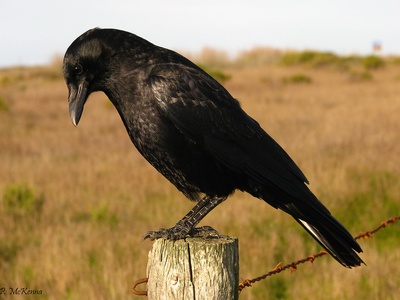
American Crow
Versatile all-purpose corvid found across landscapes. Highly social and intelligent; often seen in cities, fields, and near water where food is abundant.
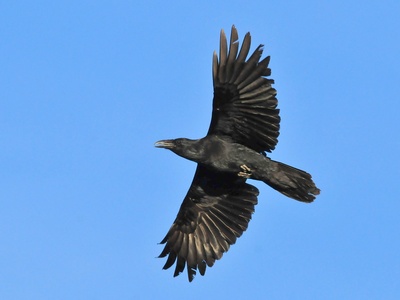
Common Raven
Large all-black corvid with shaggy throat feathers and deep croak. Widespread across Utah from deserts to alpine areas; noticeable for acrobatics and vocalizations.
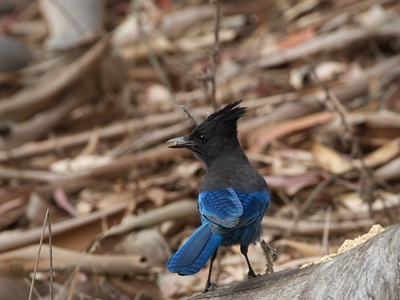
Steller’s Jay
Striking blue-and-black jay of coniferous forests. Bold at campsites and feeders in high country; distinctive crest and loud calls make it easy to find.
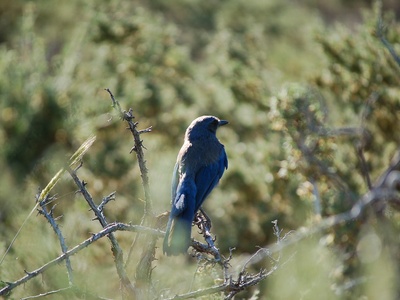
Woodhouse’s Scrub-Jay
Blue and gray jay of scrub and pinyon habitats. Curious and often found at roadsides or oak-pinyon areas; known for caching seeds and bold behavior.
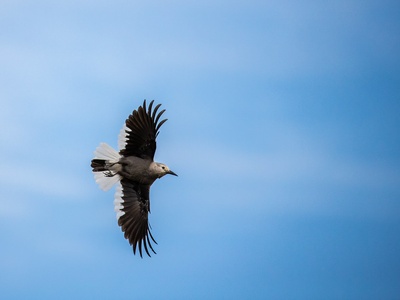
Clark’s Nutcracker
Stocky gray-and-black corvid that caches pine seeds. Closely tied to pine forests and altitudinal movements; essential for pine regeneration in Utah’s high country.
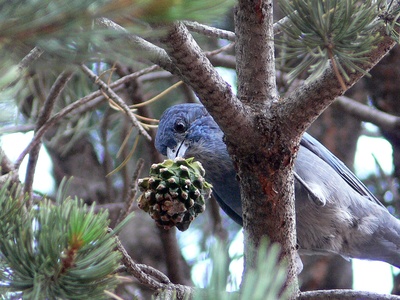
Pinyon Jay
Social blue jay of pinyon woodlands that feeds on pine seeds. Forms noisy flocks and is a signature species of pinyon-juniper habitats in southern Utah.
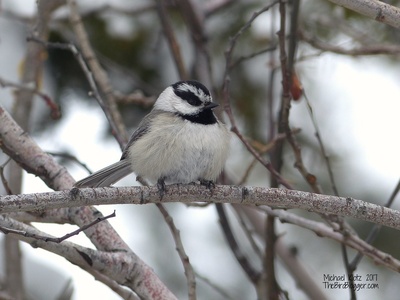
Mountain Chickadee
Small, energetic tit with a black head and white eyebrow. Frequent at feeders and forest edges; distinct call and affinity for high-elevation forests.
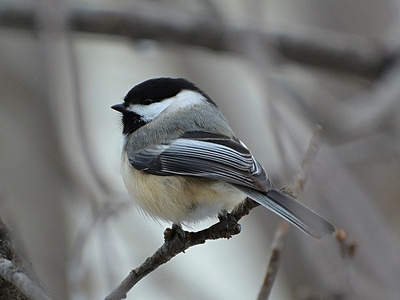
Black-capped Chickadee
Familiar small songbird with black cap and bib. Curious and bold at feeders; more common in northern and lower-elevation riparian zones.
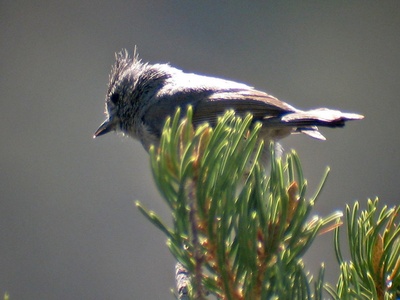
Juniper Titmouse
Small gray tit with a tufted crest and lively behavior. Specialist of juniper-scrub habitats and often heard before seen; common in arid woodlands.
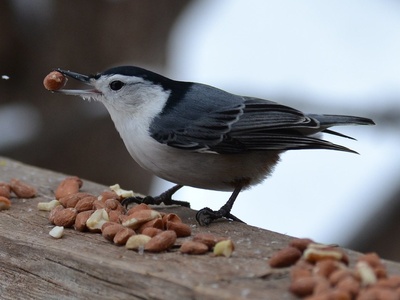
White-breasted Nuthatch
Stocky nuthatch with white face and blue-gray back. Climbs headfirst down tree trunks and visits feeders; common in mature deciduous and mixed woodlands.
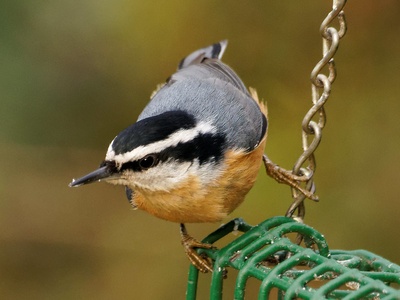
Red-breasted Nuthatch
Tiny, sharp-billed nuthatch with cinnamon underparts. Active in conifer canopies and at seed feeders during irruptive years; common in high-elevation forests.
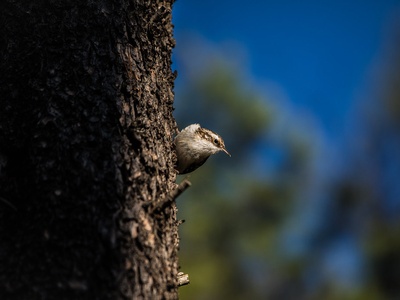
Brown Creeper
Cryptic, slender songbird that spirals up tree trunks searching for insects. Camouflaged plumage and distinctive creeping behavior make it a secretive but fascinating forest species.
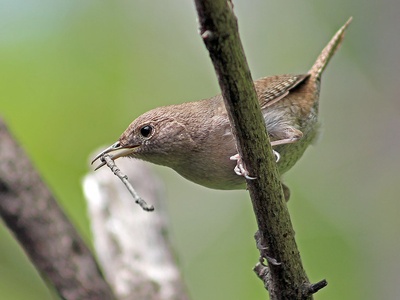
House Wren
Tiny, bubbly singer with cocked tail and plain plumage. Common in suburban yards, thickets, and riparian scrub during breeding season; energetic and easy to hear.
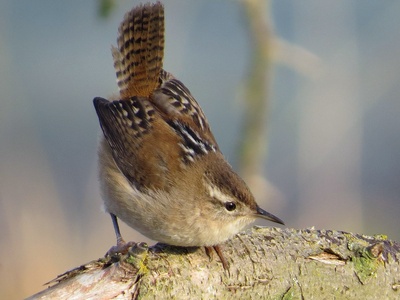
Marsh Wren
Small, streaked wren that favors dense cattails and bulrush. Notable for loud, bubbling song and secretive behavior; common at marsh edges and wetland habitats.
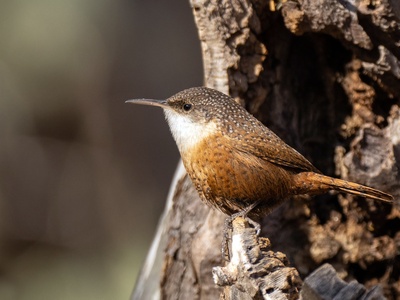
Canyon Wren
Reddish-brown wren with a haunting, downward-spiraling song. Specialized to steep rocky habitats and canyons; often heard long before seen.
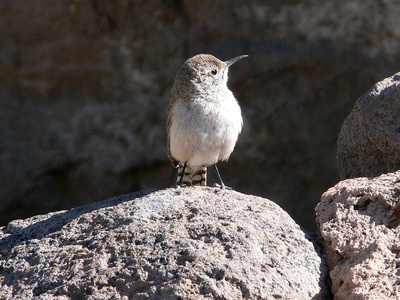
Rock Wren
Pale, slender wren that forages among stones and cliff faces. Bold and tail-flicking behavior; a familiar resident of arid rocky landscapes and canyon country.
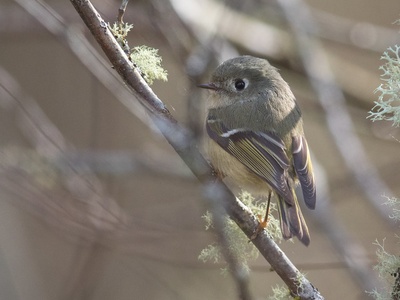
Ruby-crowned Kinglet
Tiny, active insectivore with a concealed ruby crown. Flickers constantly while foraging; common during migration and in winter flocks in wooded areas.
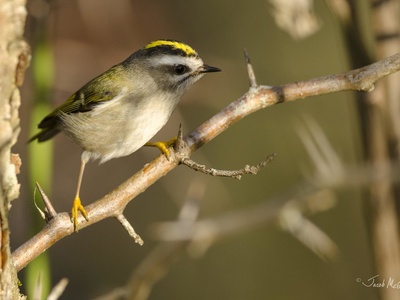
Golden-crowned Kinglet
Minute, high-energy bird with bright crown stripes. Forages in dense conifers and often joins mixed flocks; a winter staple in Utah’s mountains.
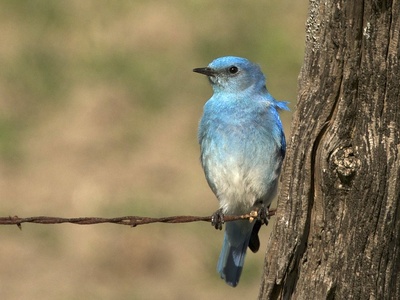
Mountain Bluebird
Sky-blue thrush-like species with vivid male coloration. Iconic of western landscapes and common in open sage and meadow habitats; a favorite for many birders.
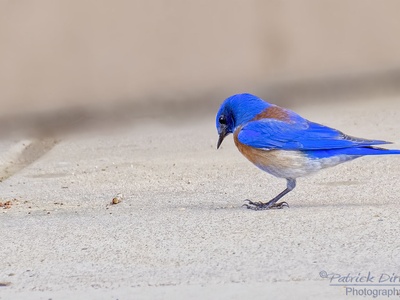
Western Bluebird
Smaller bluebird with warm rust breast and blue wings. Uses nest boxes and open woodlands; noticeable near edges and in mid-elevation habitats.
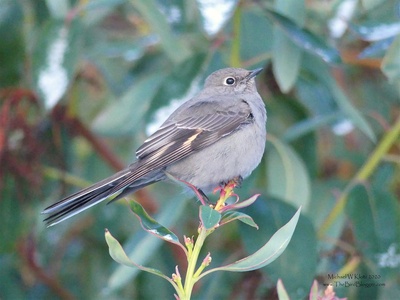
Townsend’s Solitaire
Gray, long-tailed thrush with melodious, repeated phrases. Often found in coniferous forests and pinyon-juniper transition zones; sings persistently in winter too.
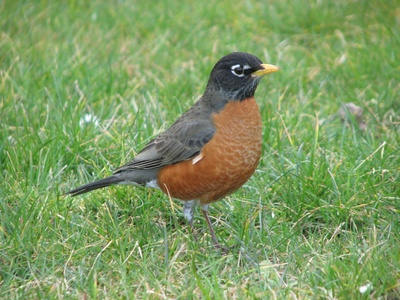
American Robin
Familiar orange-breasted thrush that announces spring. Ground-foraging feeder on worms and fruits; one of the most ubiquitous birds across Utah’s towns and wildlands.
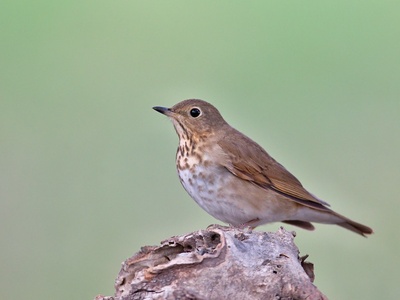
Hermit Thrush
Subtle, olive-brown thrush with clear, ethereal song. Often heard in quiet forested settings; a spring and summer visitor to higher elevations.
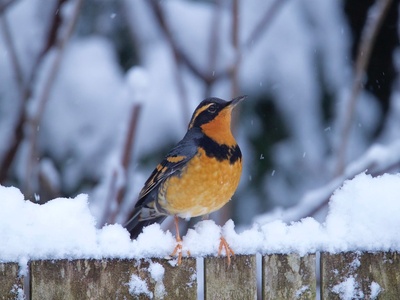
Varied Thrush
Dark, boldly patterned thrush with orange breast band in males. Mostly coastal but occasional in Utah during winter, appreciated for dramatic plumage and song.
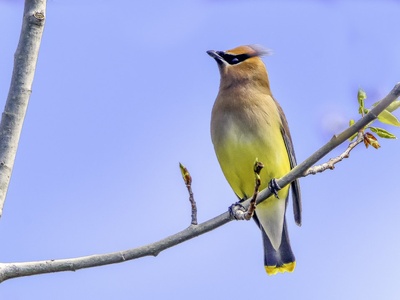
Cedar Waxwing
Sleek, crested bird with silky plumage and waxy wing tips. Feeds on fruits and berries in flocks; a conspicuous and gregarious visitor during migration and fruiting seasons.
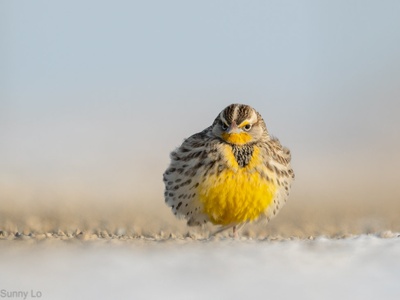
Western Meadowlark
Melodic, fluted singer perched on fences in open country. Yellow throat and black “V” on chest; emblematic of western prairies and farmland.
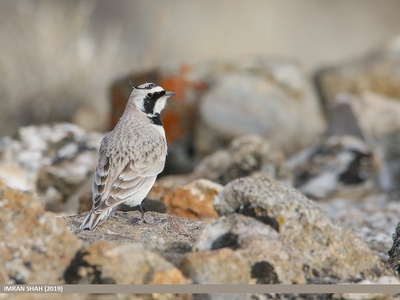
Horned Lark
Small ground-dwelling bird with pale face and tiny “horns.” Often in flocks on open ground; conspicuous in winter and breeding on barren habitats.
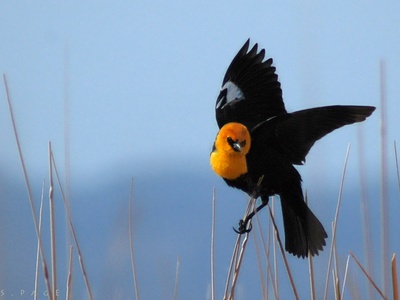
Yellow-headed Blackbird
Bold blackbird with bright yellow head in males. Nests in cattails and forms large breeding colonies; spectacular displays at marshes and wetlands.
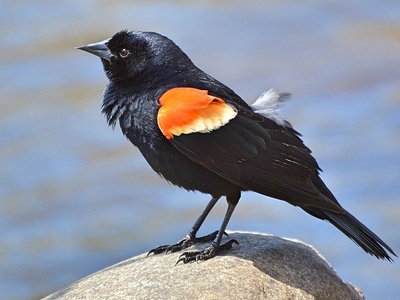
Red-winged Blackbird
Polygynous blackbird with red shoulder patches in males. Abundant in marshes and wet meadows; loud and territorial in breeding season.
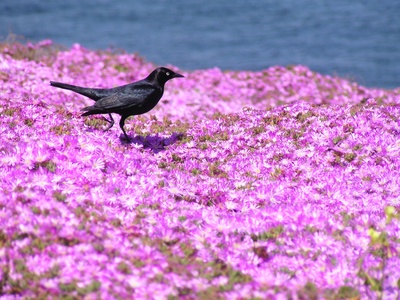
Brewer’s Blackbird
Glossy blackbird with iridescence in males. Often forages in open fields and parks; common and widespread across Utah.
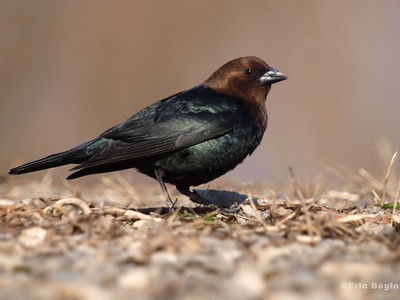
Brown-headed Cowbird
Brood-parasitic blackbird that lays eggs in other species’ nests. Frequent in open country and near grazing livestock; often noticed by alarmed host birds.
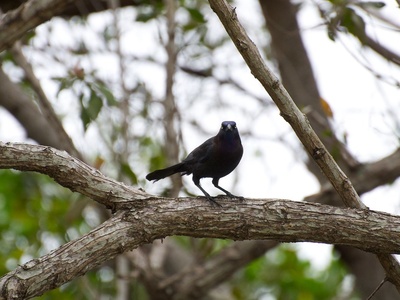
Common Grackle
Long-tailed blackbird with iridescent sheen. Increasingly seen in parts of Utah; forms noisy flocks and forages in open fields and parking lots.
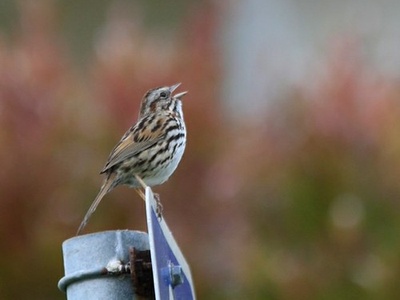
Song Sparrow
Streaked brown sparrow with strong, melodious song. Versatile and common in brushy habitats and wetlands; easy to hear and often conspicuous.
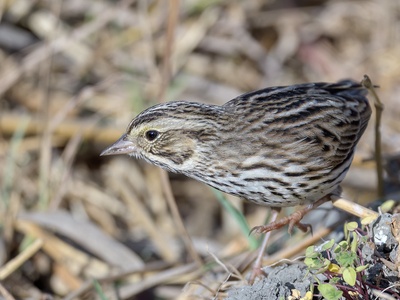
Savannah Sparrow
Small, streaky sparrow with a short conical bill and subtle head pattern. Prefers grassy areas and wet meadows; often nests on ground sites.
Vesper Sparrow
Plain, long-legged sparrow with white outer tail feathers and soft song. Prefers sparse vegetation and open country; characteristic of Utah’s grasslands.
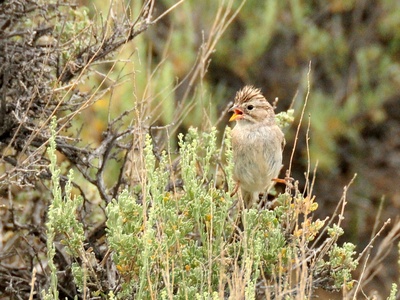
Brewer’s Sparrow
Small, plain sparrow of sagebrush with subtle streaking. An emblem of sage-steppe habitats; often heard more than seen and a key species in Utah’s shrublands.
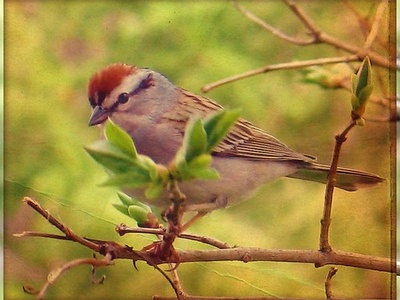
Chipping Sparrow
Bright-rumped with reddish cap and crisp song. Common around pines and town trees during breeding season; often nests in neighborhoods and parks.
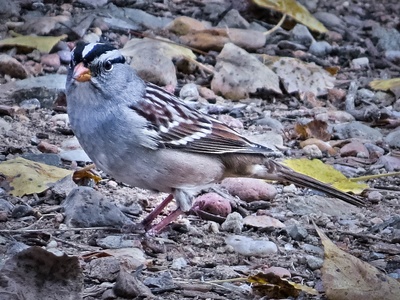
White-crowned Sparrow
Bold black-and-white striped crown in adults. Often abundant in migration and winter, singing clear phrases; frequents bushes and hedgerows.
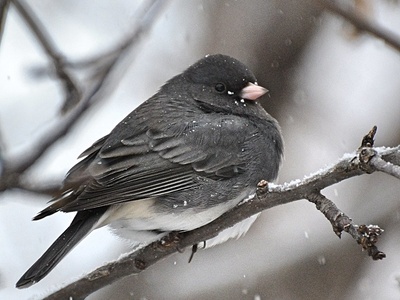
Dark-eyed Junco
Dark gray-and-white sparrow with flicking tail. Iconic winter bird at feeders; breeds in higher elevations and descends to valleys in colder months.
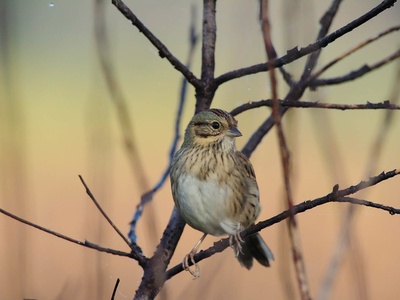
Lincoln’s Sparrow
Shy, streaked sparrow with buffy face and subtle song. Prefers dense brush and riparian tangles during migration; often heard more than seen.
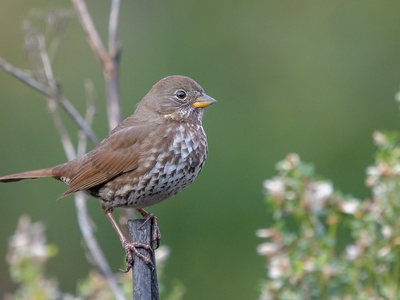
Fox Sparrow
Large, heavily streaked sparrow with rusty tones. Forages on ground in dense tangles; occasional in winter and migration, especially in brushy areas.
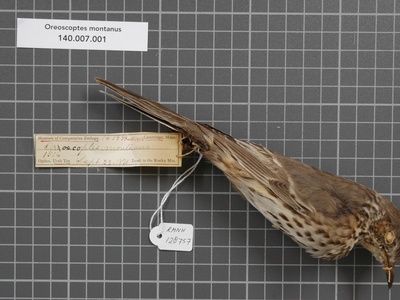
Sage Thrasher
Cryptic, streaked thrush-like bird that thrives in sagebrush. Notable for long, fluted songs and territorial displays; a species strongly tied to Utah’s sage ecosystems.
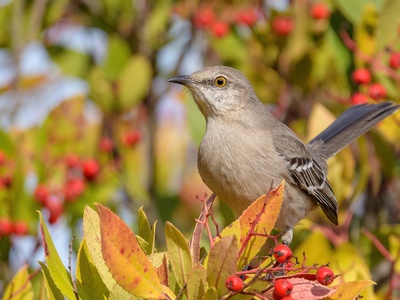
Northern Mockingbird
Mimic with long tail and white wing patches. Adaptable to urban and desert areas; flashy songster that often defends territories near homes.
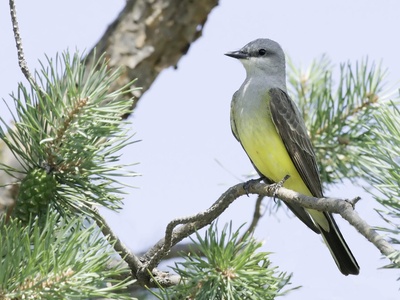
Western Kingbird
Bold-headed flycatcher with pale belly and gray head. Perches conspicuously on wires to hawk insects; common summer visitor throughout Utah’s open country.
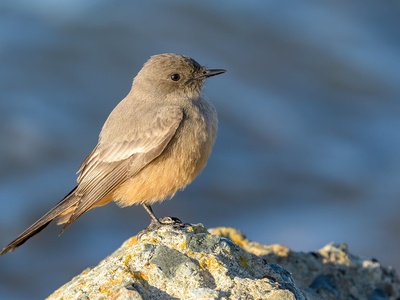
Say’s Phoebe
Plain, long-tailed flycatcher with soft peachy belly. Often seen at perches bobbing tail while sallying for insects; common in sage and desert regions.
Olive-sided Flycatcher
Tall-backed flycatcher often heard on conifer tops saying “quick-three beers.” Uncommon but noticeable during migration and in canyon riparian woodlands.
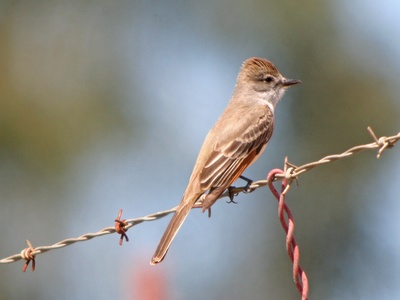
Ash-throated Flycatcher
Big, warm-toned flycatcher with subtle crest and large bill. Prefers arid canyons and pinyon-juniper; more common in southern Utah and desert oases.
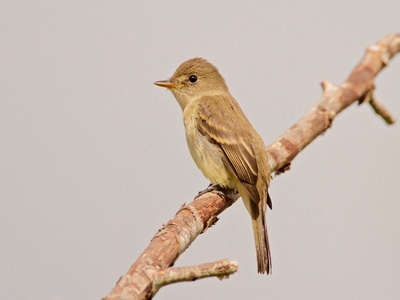
Willow Flycatcher
Subtle empidonax flycatcher with plaintive song. Favors dense willow tangles along streams and wet meadows; best identified by voice during breeding season.
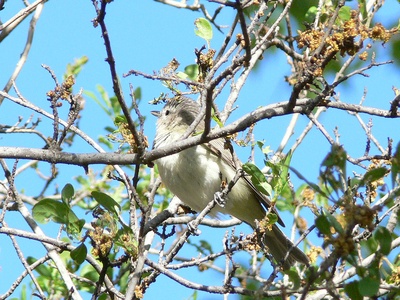
Warbling Vireo
Plain, soft-voiced vireo that warbles from leafy canopies. Often sings persistently in June; common along riparian corridors and suburban tree-lined streets.
Northern Shrike
Predatory songbird that impales prey on thorns or barbed wire. Winters in open country and is striking for its bold hunting behavior and hooked bill.
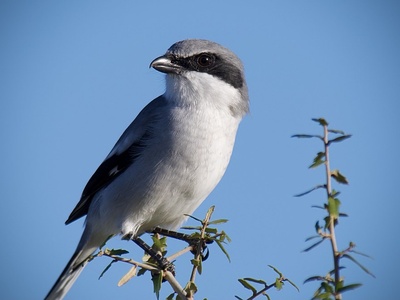
Loggerhead Shrike
Gray shrike with black mask and hooked bill. Hunts large insects and small vertebrates from conspicuous perches; associated with open sage-steppe habitats.
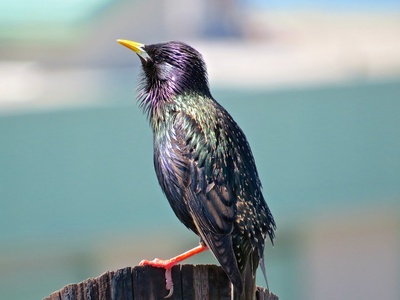
European Starling
Glossy iridescent bird introduced to North America. Forms large flocks, competes at nest cavities, and is common in urban and agricultural areas across Utah.
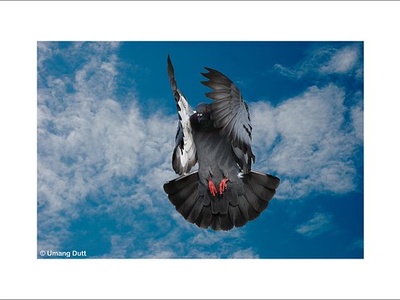
Rock Pigeon
Introduced city pigeon common on buildings and plazas. Variable plumage and adaptable habits; often seen in parks, bridges, and urban landscapes throughout Utah.
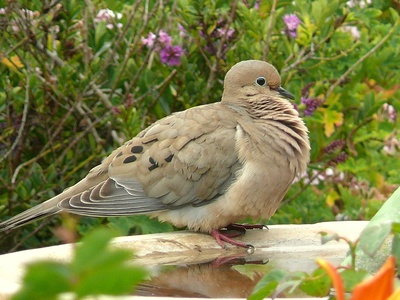
Mourning Dove
Soft cooing dove with long tail and warm brown plumage. Common in yards and open fields, nests on ledges and trees; a familiar backyard species.
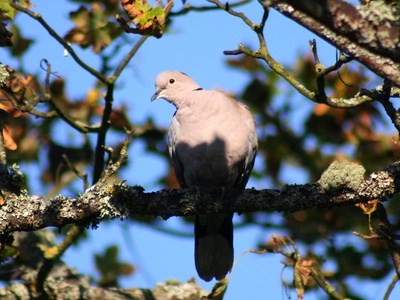
Eurasian Collared-Dove
Pale gray dove with black neck crescent; expanding range. Often noisy and conspicuous in towns, farmland, and riparian corridors across Utah.
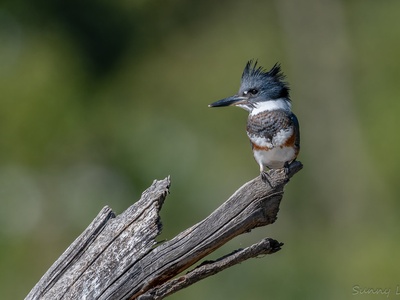
Belted Kingfisher
Stocky, blue-gray bird with shaggy crest; dives for fish from perches. A familiar sight along streams and reservoirs, rattling loudly when in flight.
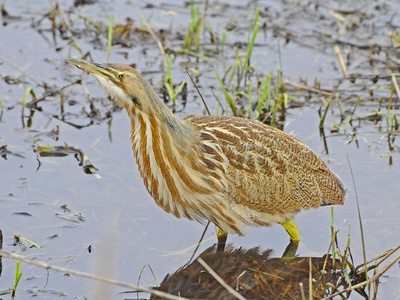
American Bittern
Cryptic, streaked heron-like bird that freezes with neck stretched to blend in. Secretive marsh inhabitant detected by booming calls during breeding season in wetlands.
Sora
Small, short-billed rail with chicken-like profile and secretive behavior. Prefers dense cattails and reeds, often heard more than seen; occasional in Utah marshes.
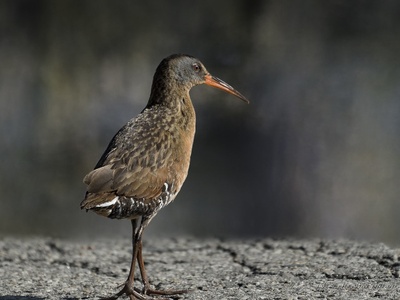
Virginia Rail
Slender, laterally compressed rail with long bill. Fast-moving and secretive in dense marsh vegetation; detected by clattering calls and occasional brief sightings at marsh edges.
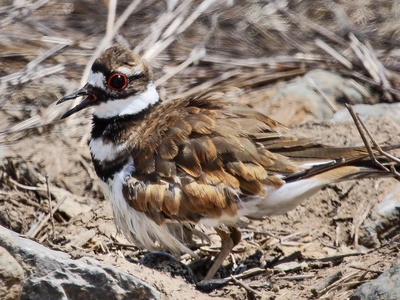
Killdeer
Bold, ringed plover known for broken-wing distraction display. Runs on mudflats and lawns; a widespread shorebird that nests on gravel roofs and bare ground.
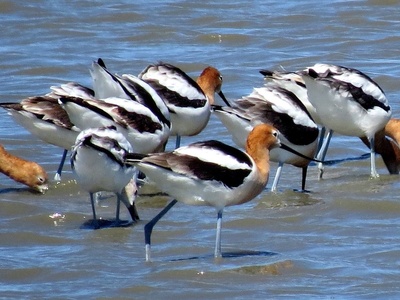
American Avocet
Elegant long-legged wader with upcurved bill and black-and-white summer pattern. Concentrates on saline flats and mudflats; iconic on Great Salt Lake and other western wetlands.
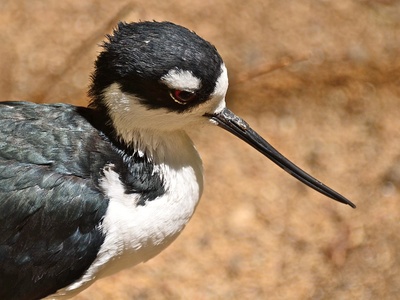
Black-necked Stilt
Tall, spindly-legged shorebird with black back and white underparts. Walks quickly in shallow water picking invertebrates; conspicuous in breeding colonies.
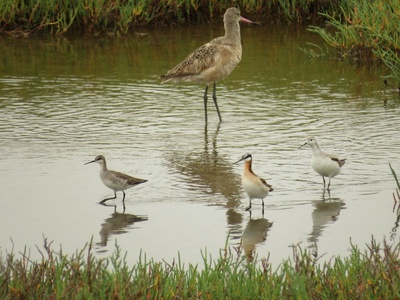
Wilson’s Phalarope
Odd, nicknamed “spinning” shorebird that forages in mud by spinning to stir prey. Females are more brightly colored; large migrations pass through Utah wetlands.
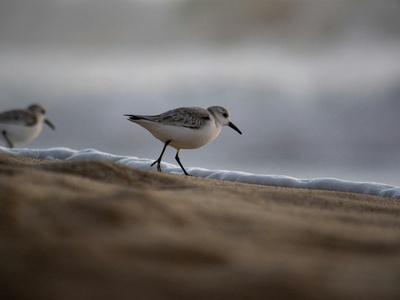
Snowy Plover
Small pale plover that nests on sparsely vegetated beaches and flats. Threatened in many areas; management at Great Salt Lake aims to protect nesting populations.
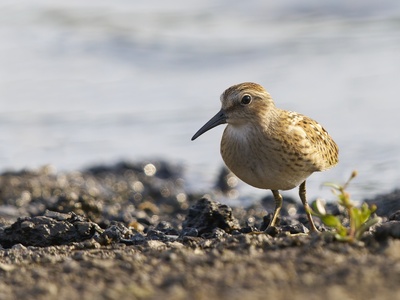
Least Sandpiper
Tiny, delicate peep with yellowish legs and quick probing bills. Abundant during migration on mudflats and marsh edges; fun to watch in mixed shorebird flocks.
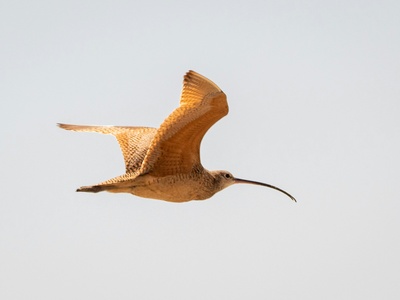
Long-billed Curlew
Large shorebird with extremely long downcurved bill and mottled plumage. Forages in open ground and playas; an unmistakable and iconic western species when present.