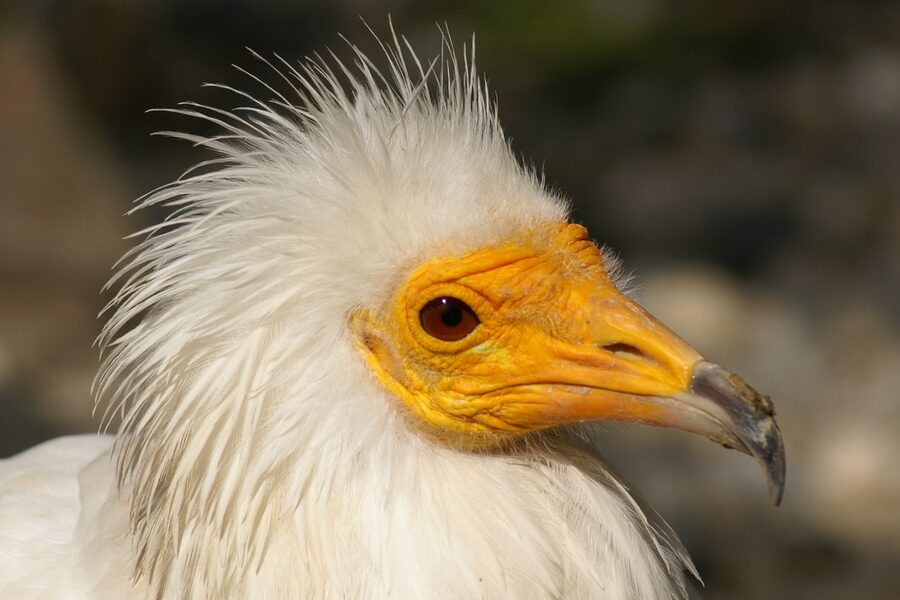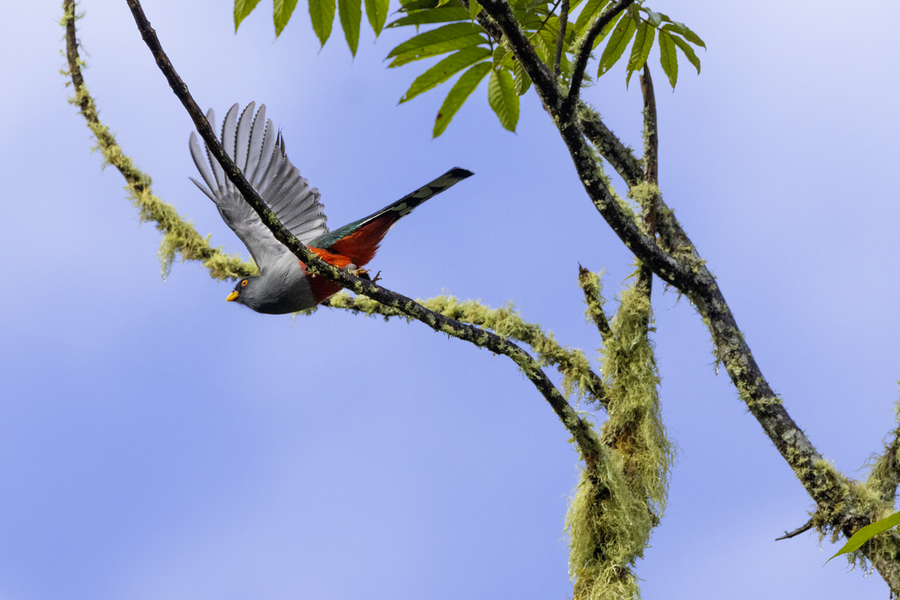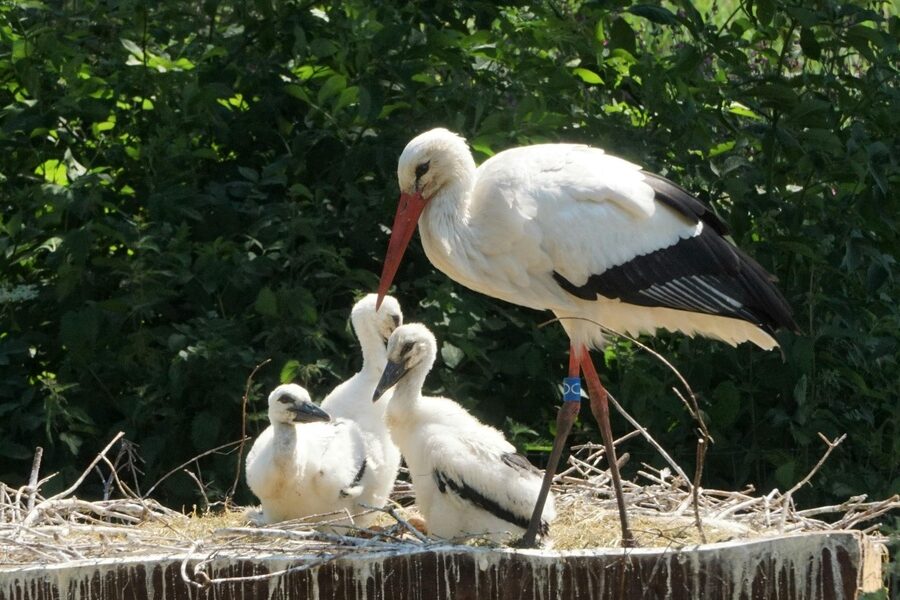
Zimbabwe’s birdlife threads through river valleys, miombo woodlands, and inland wetlands, making the country a rewarding place for both casual birdwatchers and serious observers. From seasonal migrants to resident species, the variety reflects Zimbabwe’s range of habitats and conservation areas.
There are 40 Birds of Zimbabwe, ranging from African Fish Eagle to Village Weaver. For each, you’ll find below Scientific name,Status,Habitat / Where found, so you can quickly see identification details, conservation status and typical locations you’ll find below.
Which habitats in Zimbabwe are best for spotting the greatest variety of birds?
Wetlands and river systems (like the Zambezi and Lake Kariba), miombo and mopane woodlands, and protected grasslands tend to host the richest mixes of species; visit during the dry season (May–October) when birds concentrate around water and are easier to observe.
How should I use this list when identifying birds in the field?
Use the Scientific name to confirm tricky IDs, check Status to know what’s common or rare, and match Habitat / Where found to narrow possibilities; combine the list with a field guide or app, listen for calls, and note habitat and behavior to improve accuracy.
Birds of Zimbabwe
| Common name | Scientific name | Status | Habitat / Where found |
|---|---|---|---|
| African Fish Eagle | Haliaeetus vocifer | Resident; LC | Large rivers, Zambezi, lakes, national parks |
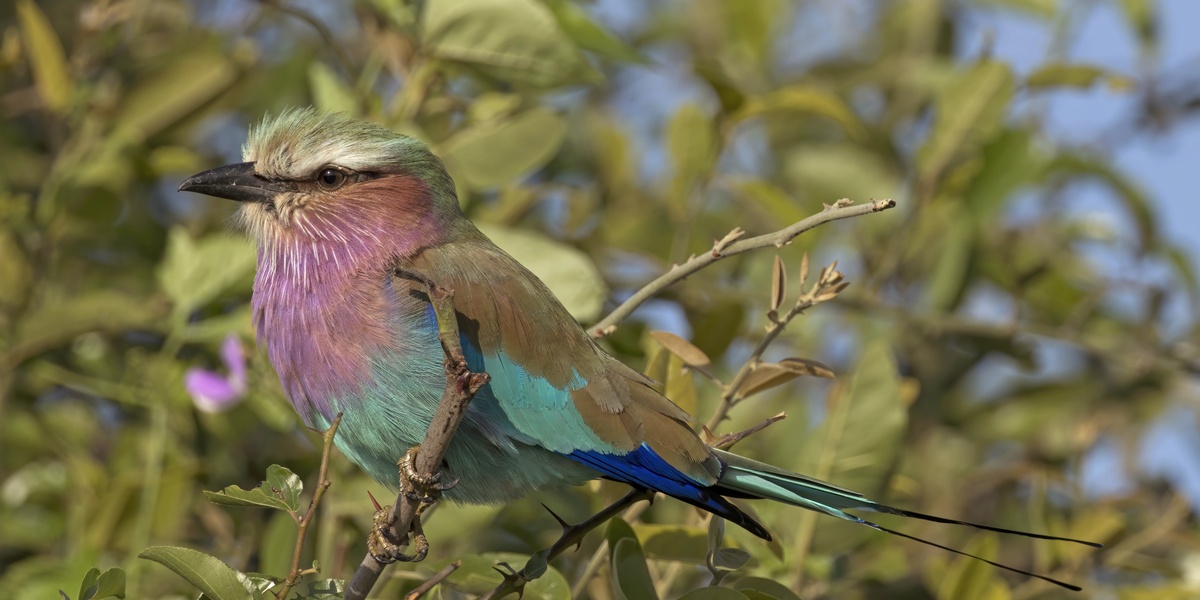
| Lilac-breasted Roller | Coracias caudatus | Resident; LC | Woodland edges, riverine, Zambezi valley |
| Southern Ground Hornbill | Bucorvus leadbeateri | Resident; VU | Open savanna, national parks, north and west |
| Helmeted Guineafowl | Numida meleagris | Resident; LC | Open woodland, farms, lowveld |
| Kori Bustard | Ardeotis kori | Resident; NT | Dry open plains, savanna, drier west |
| Pied Kingfisher | Ceryle rudis | Resident; LC | Rivers, dams, wetlands nationwide |
| Malachite Kingfisher | Corythornis cristatus | Resident; LC | Reed fringing, slow rivers, dams |
| Hamerkop | Scopus umbretta | Resident; LC | Shallow wetlands, pans, rivers, nationwide |
| African Spoonbill | Platalea alba | Resident; LC | Shallow lakes, pans, marshes |
| Grey Crowned Crane | Balearica regulorum | Resident; VU | Wet grasslands, dambos, eastern highveld |
| Saddle-billed Stork | Ephippiorhynchus senegalensis | Resident; LC | Riverine, large wetlands, Zambezi valley |
| Marabou Stork | Leptoptilos crumenifer | Resident; LC | Savanna, towns, garbage dumps, wetlands |
| Sacred Ibis | Threskiornis aethiopicus | Resident; LC | Lakes, wetlands, rivers nationwide |
| Egyptian Goose | Alopochen aegyptiaca | Resident; LC | Reservoirs, rivers, wetlands nationwide |
| Spur-winged Goose | Plectropterus gambensis | Resident; LC | Large lakes, marshes, floodplains |
| Lesser Flamingo | Phoeniconaias minor | Regular visitor; NT | Saline pans, soda lakes, Kariba |
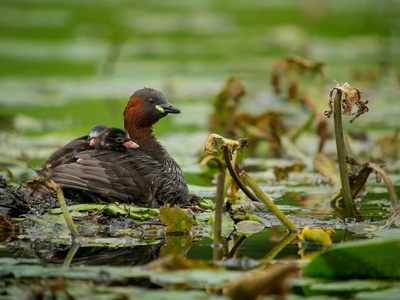
| Little Grebe | Tachybaptus ruficollis | Resident; LC | Small ponds, reed-fringed pans |
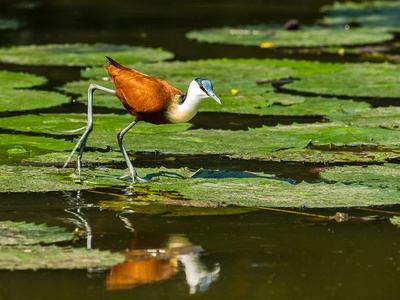
| African Jacana | Actophilornis africanus | Resident; LC | Floating vegetation, pans, marshes |
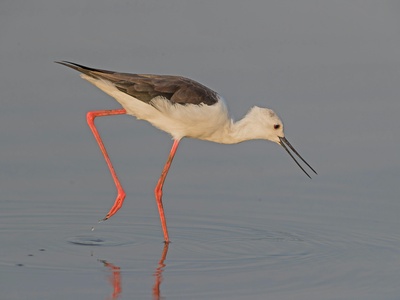
| Black-winged Stilt | Himantopus himantopus | Passage migrant; LC | Shallow pans, mudflats, wetlands |
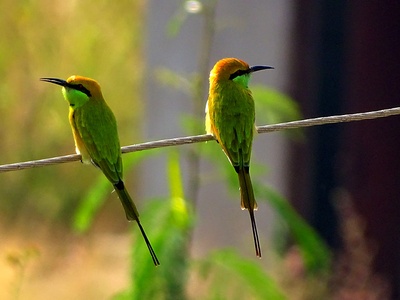
| Little Bee-eater | Merops pusillus | Resident; LC | Woodland edges, riverine, northern zones |
| European Bee-eater | Merops apiaster | Summer migrant; LC | Open hills, river valleys, sandbanks |
| Southern Yellow-billed Hornbill | Tockus leucomelas | Resident; LC | Open woodland, mopane, lowveld |
| African Grey Hornbill | Lophoceros nasutus | Resident; LC | Woodland, gardens, riverine |
| Southern Fiscal | Lanius collaris | Resident; LC | Bush, farmland edges, open scrub |
| Fork-tailed Drongo | Dicrurus adsimilis | Resident; LC | Woodland, savanna, gardens |
| Pied Crow | Corvus albus | Resident; LC | Towns, farmland, open woodland |
| Paradise Flycatcher | Terpsiphone viridis | Resident; LC | Wooded riverine, gardens, eastern highveld |
| Barn Swallow | Hirundo rustica | Summer migrant; LC | Open country, farmland, towns |
| Little Swift | Apus affinis | Resident; LC | Cliffs, towns, eaves, gorges |
| Malachite Sunbird | Cinnyris famosa | Resident; LC | Woodland, gardens, montane areas |
| Southern Red Bishop | Euplectes orix | Summer breeder; LC | Wet grassland, dambos, reedbeds |
| Village Weaver | Ploceus cucullatus | Resident; LC | Riverside trees, wetlands, gardens |
| Red-billed Quelea | Quelea quelea | Resident breeder; LC | Open grassland, agricultural areas |
| Cape Starling | Lamprotornis nitens | Resident; LC | Woodland, savanna, towns |
| Laughing Dove | Spilopelia senegalensis | Resident; LC | Town gardens, scrub, savanna |
| Speckled Mousebird | Colius striatus | Resident; LC | Woodland, gardens, savanna |
| Purple-crested Turaco | Gallirex porphyreolophus | Resident; LC | Riverine forest, woodlands, eastern highveld |
| Kurrichane Thrush | Turdus libonyana | Resident; LC | Woodland, gardens, riverine |
| Olive Thrush | Turdus olivaceus | Resident; LC | Montane forest, riverine woodlands |
| Rock Martin | Ptyonoprogne fuligula | Resident; LC | Cliffs, gorges, rocky outcrops, towns |
Images and Descriptions
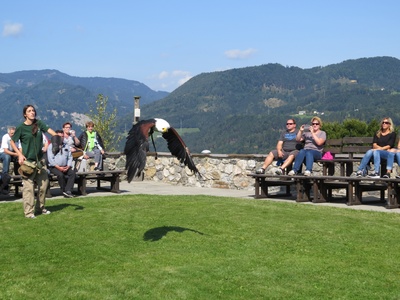
African Fish Eagle
A powerful raptor with a white head and chestnut body, famous for its ringing call. Frequently perches near water to hunt fish, easily seen at Lake Kariba, the Zambezi and major dams across Zimbabwe.
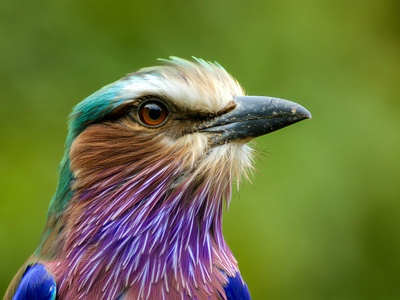
Lilac-breasted Roller
A flamboyant, colorful bird with lilac breast and turquoise belly, often perching conspicuously on wires or branches. Performs acrobatic flight displays and is a favorite subject for photographers in Hwange and Mana Pools areas.
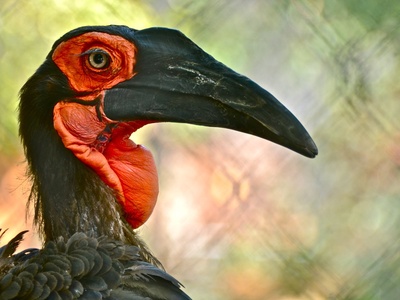
Southern Ground Hornbill
A large black ground-dwelling bird with red facial skin and deep booming calls. Walks in small family groups, preys on reptiles and insects; rare and conspicuous where protected in Hwange and Matobo National Park.
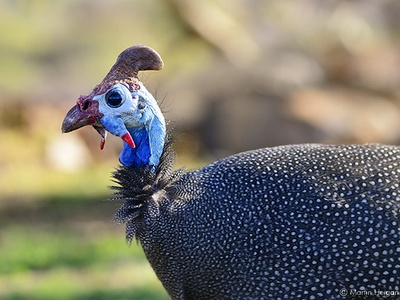
Helmeted Guineafowl
A distinctive plump bird with spotted grey plumage and bony helmet. Forages in groups on seeds and insects, commonly seen near farms and in open woodlands across Zimbabwe, noisy and social.
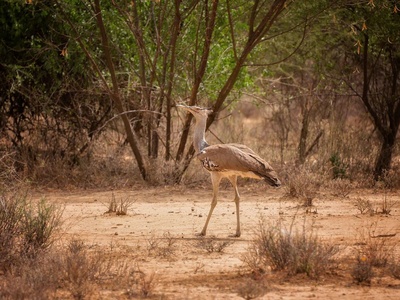
Kori Bustard
The largest flying landbird in Africa, heavy-bodied with cryptic brown patterning. Walks slowly across open plains, often seen at dawn or dusk. Use open grasslands and agricultural edges in western Zimbabwe.
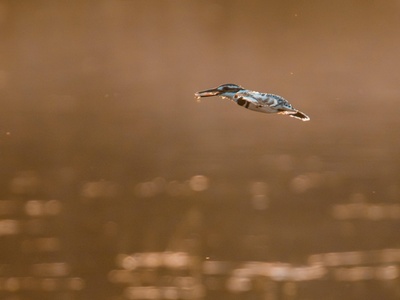
Pied Kingfisher
A black-and-white plunge-diving kingfisher that hovers before dropping to catch fish. Very common on reservoirs and the Zambezi, throughout the year; often seen perched on reeds or fishing from low perches.
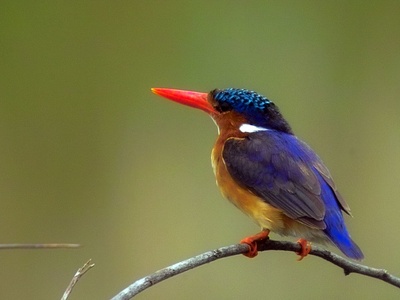
Malachite Kingfisher
A tiny, bright turquoise kingfisher with rufous underparts and a rapid dive for small fish and aquatic insects. Flickers among reeds; best seen at calm pools and sheltered river margins.
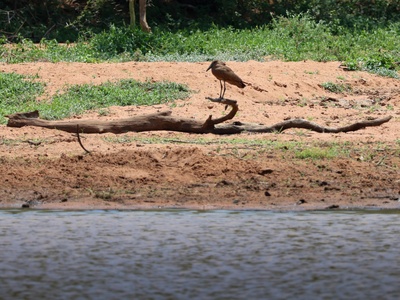
Hamerkop
A medium brown waterbird with a distinctive hammer-shaped head and large stick-built nests. Feeds on fish, frogs and invertebrates; conspicuous near shallow pans and riverbanks across Zimbabwe, present year-round and common in protected wetlands.
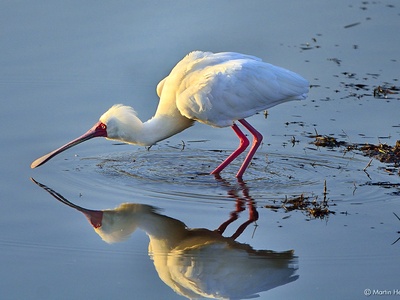
African Spoonbill
A white, long-legged wader with a spatulate bill used to sweep for small aquatic prey. Flies with dangling legs and feeds in shallow water; often seen in flocks at larger pans.
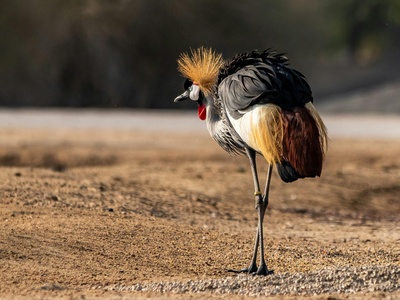
Grey Crowned Crane
A striking crane with golden crest, grey body and loud trumpeting calls. Nests in marshes and forms small flocks; rare and locally vulnerable but visible in protected wetlands and dambos.
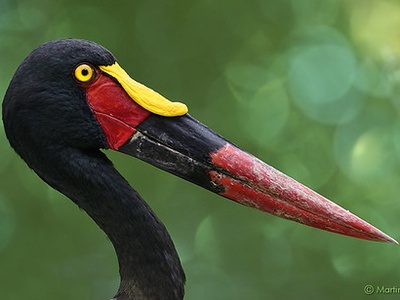
Saddle-billed Stork
A tall, black-and-white stork with a striking red and yellow bill and long legs. Solitary or paired, forages in shallow water; a memorable sight along large rivers and floodplains across Zimbabwe.
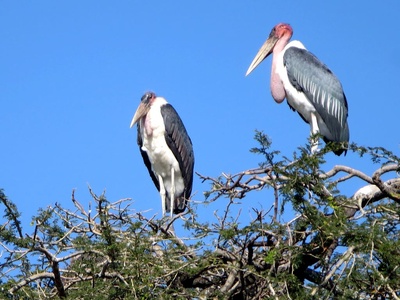
Marabou Stork
A large, ungainly stork with bare head and huge bill; scavenges at carcasses and rubbish sites and also hunts in wetlands. Often seen near towns and in open savanna areas.
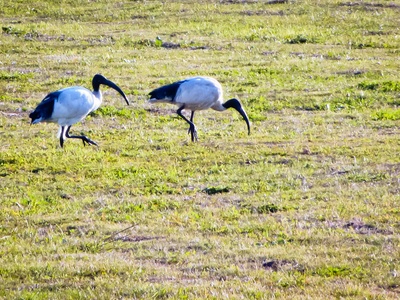
Sacred Ibis
A white ibis with bare black head and curved bill, often foraging in shallow water and grasslands. Forms large roosts and flocks; common at dambos, pans and along the Zambezi shoreline.
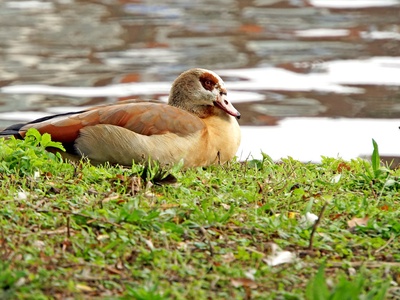
Egyptian Goose
A chunky goose with brown eye patches and bold wing pattern in flight. Common on dams and river systems, territorial during breeding and often seen in pairs or family groups near water.
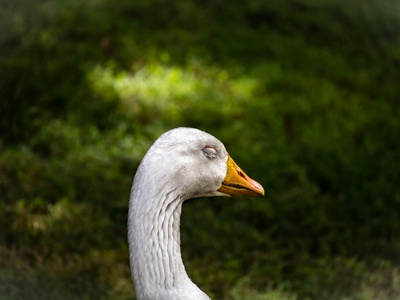
Spur-winged Goose
A large goose-like bird with bold black-and-white pattern and thick bill; grazes aquatic plants and feeds in shallow water. Seen on big lakes and seasonal floodplains, sometimes in flocks locally.
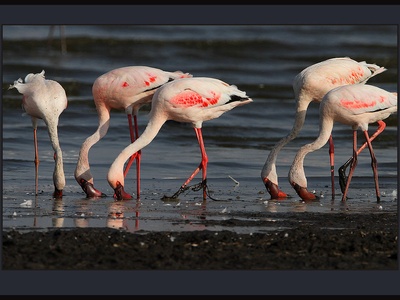
Lesser Flamingo
Tiny pink flamingo forming large, shimmering flocks on saline pans and soda lakes. Feeds on algae with specialized bill; numbers fluctuate but easily seen when conditions concentrate birds, often in Zimbabwe.
Little Grebe
A small, compact diving waterbird with a rounded profile and fine bill. Bustles underwater catching small fish and invertebrates; skulks among reeds but surfaces with quick bursts of activity, often.
African Jacana
A lightweight wader with long toes that walk on lily pads. Chestnut upperparts and golden face are distinctive; common in shallow vegetated pans and wetlands, often seen running and feeding on insects.
Black-winged Stilt
A slender, long-legged wader with black upperparts and white underparts and thin red legs. Picks small invertebrates from mud and shallow water; seen on ephemeral pans during the wet season.
Little Bee-eater
A small, vivid green and yellow bee-eater with rapid aerial sallies catching insects mid-flight. Often perched low on twigs near water; nests in burrows dug into sandy banks or termite mounds.
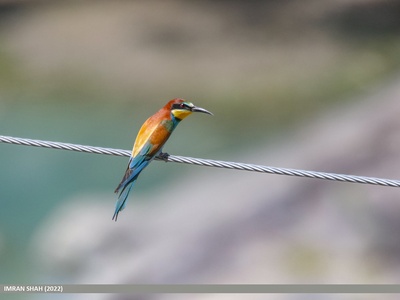
European Bee-eater
A colourful migrant with chestnut, green and yellow plumage, arriving in summer to nest in colonies in sandy banks. Aerial insectivore, spectacular in flight and noticeable in large groups during migration.
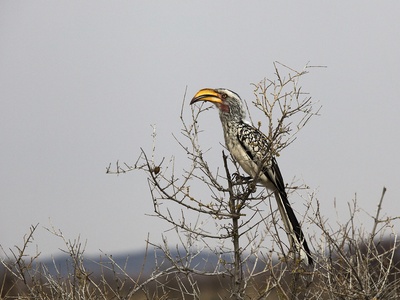
Southern Yellow-billed Hornbill
A common hornbill with a large curved yellow bill and black-and-white wings. Often seen perching conspicuously and feeding on insects and seeds; familiar at waterholes in savanna reserves across Zimbabwe.
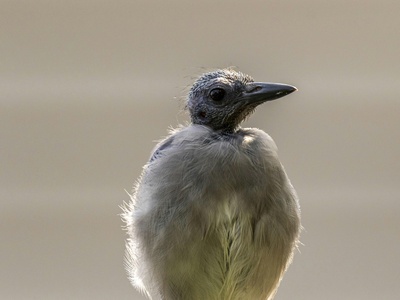
African Grey Hornbill
A medium-sized hornbill with grey plumage and curved bill, often nesting in tree cavities. Eats fruit and insects; common around villages and woodlands, often seen calling from treetops in Zimbabwe.
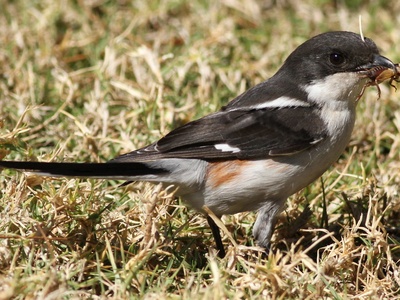
Southern Fiscal
A black-and-white shrike with a hooked bill that impales prey on thorns. Sits conspicuously on fences and shrubs hunting large insects, small birds and rodents; very common across open habitats.
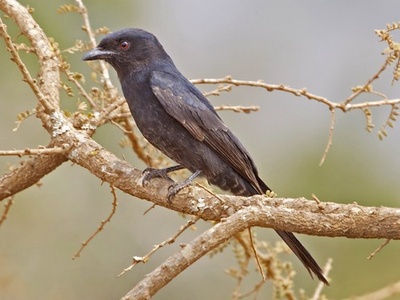
Fork-tailed Drongo
A glossy black bird with a distinctive forked tail and loud mimicking calls. Bold and aggressive, often follows mammals to snatch prey flushed by larger animals; common and conspicuous in Zimbabwe.
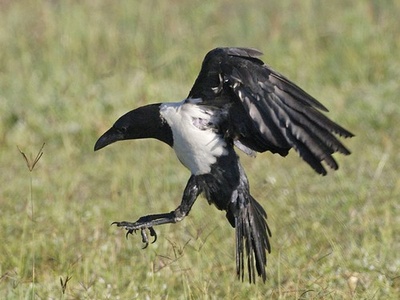
Pied Crow
A large black crow with a white belly patch, often seen scavenging around towns and farms. Highly adaptable and noisy, it nests in tall trees and frequents roadsides and waterholes.
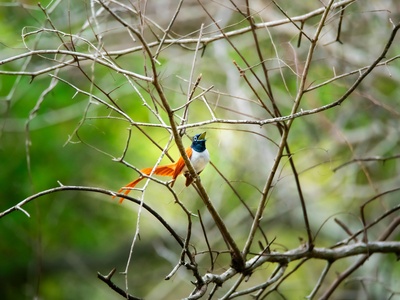
Paradise Flycatcher
A slender bird with long tail streamers (males) and rufous or white morphs. Flits through tree canopy catching insects; a graceful, noticeable species in riverine woodlands and large gardens across Zimbabwe.
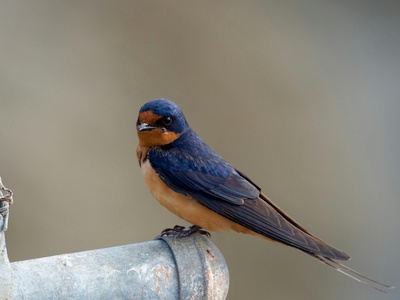
Barn Swallow
A sleek aerial insectivore with deeply forked tail and glossy blue upperparts, arriving in summer to breed. Nests on buildings and bridges; often forms flocks during migration and at roosts.

Little Swift
A compact, cigar-shaped swift with rapid wingbeats and a screaming call. Spends most of its life on the wing, feeding on aerial insects; nests under eaves and cliff ledges in towns and gorges.
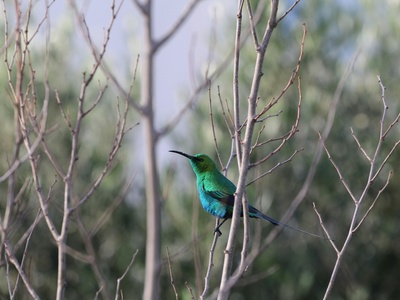
Malachite Sunbird
A long, curved-billed sunbird with iridescent green plumage (males) and long tail streamers. Visits flowers for nectar, hovering rarely; pairs and solitary birds frequent gardens, riverine thickets and hill slopes.
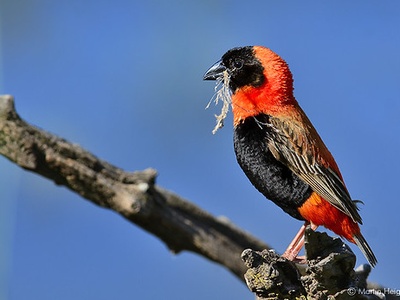
Southern Red Bishop
A bright red-and-black breeding male is striking; non-breeding male and females are streaked brown. Males display in reedbeds and grasslands in the wet season, building domed nests and forming breeding colonies.
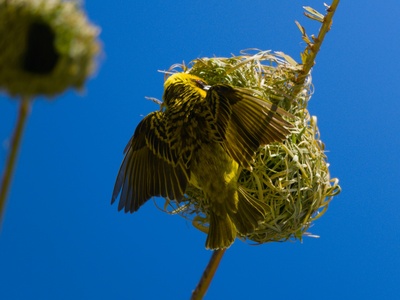
Village Weaver
A noisy colonial weaver that builds pendulous woven nests in trees. Males are yellow and black during breeding; common around water and in village gardens where they nest in colonies.
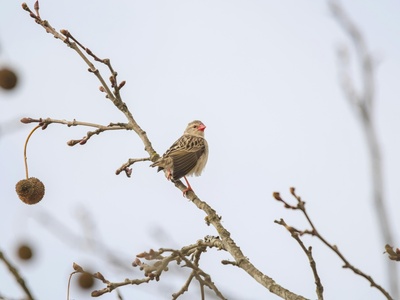
Red-billed Quelea
Possibly the world’s most numerous wild bird, small and sparrow-like with breeding males bright red-faced. Forms massive flocks that can devastate cereal crops; spectacular to watch in large communal roosts.
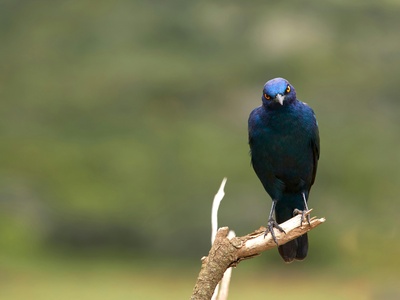
Cape Starling
A glossy metallic starling with white eye and raucous calls. Often seen in mixed flocks and at waterholes, it feeds on fruits and insects and adapts well to human-altered landscapes.
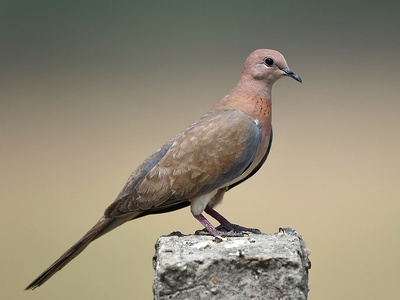
Laughing Dove
A small, gentle dove with pinkish-brown plumage and a soft cooing call. Often found on the ground near fences and gardens feeding on seeds; common in towns and open countryside.
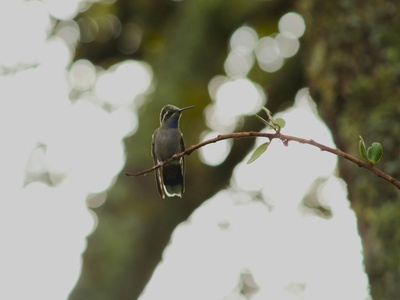
Speckled Mousebird
A soft grey-brown bird with a long tail and social behavior, often seen in noisy family groups. Feeds on fruits, flowers and leaves; creeps acrobatically among branches and hedgerows daily.
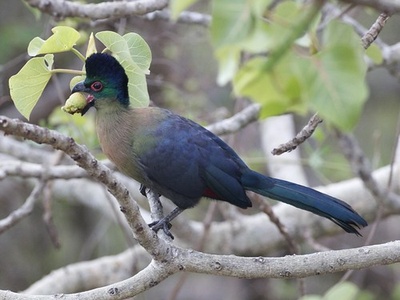
Purple-crested Turaco
A green-plumaged turaco with a purple crest and striking red primary feathers revealed in flight. Eats fruit and moves in small noisy flocks through riverine and evergreen patches in Zimbabwe.
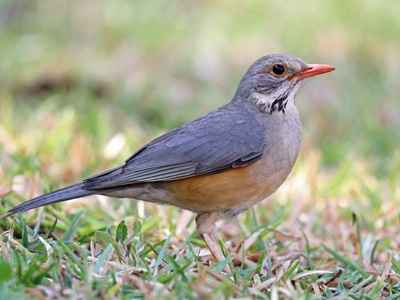
Kurrichane Thrush
A chunky thrush with warm brown upperparts and rufous underparts, often foraging on the ground for fruit and insects. Seen singly or in pairs in gardens and forest edges, with a melodic song.
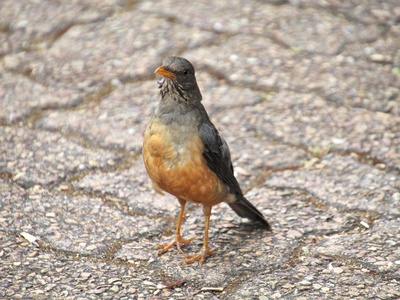
Olive Thrush
A shy thrush with olive-brown upperparts and pale underparts, singing rich fluty phrases. Prefers cooler highland forest and riverine thickets, and feeds on earthworms, fruits and insects on the forest floor.
Rock Martin
A small, brown swallow-like bird that nests on cliffs and under bridges. Flies low catching insects along escarpments and gorges; often seen around rocky terrain and old stone buildings in Zimbabwe.