When the 2010 Nobel Prize in Physics honored Andre Geim and Konstantin Novoselov for graphene, it wasn’t just a prize; it marked how a single materials discovery can seed decades of innovation across industries. That same dynamic is playing out now as chemistry faces mounting environmental constraints, faster global health challenges, and an urgent need for materials and discovery methods that scale from bench to plant.
Chemistry is entering a period of rapid, interconnected change—driven by sustainability demands, advanced materials, biomedicine, and powerful digital tools—and these 10 trends will determine which technologies move from lab benches into everyday life. The tour that follows groups the trends into four themes—sustainability, materials and manufacturing, healthcare, and digital/automation—and gives concrete examples industry people, students, and the informed public can watch for.
Sustainable and Green Chemistry

Sustainability is now a technical and market imperative driven by regulators, investors, and consumers who expect lower lifecycle emissions and safer products. Firms are shifting feedstocks, changing solvents and catalysts, and investing in carbon capture because policy and procurement increasingly reward lower-carbon chemistries.
Renewable feedstocks, carbon capture and utilization (CCU), and greener processes are the three practical levers. Expect corporate pilots to become standard operating practice rather than PR exercises as companies like Novozymes, LanzaTech, and Clariant push commercial deployments.
1. Renewable feedstocks and bio-based chemicals
Replacing petrochemical feedstocks with biomass and waste streams lowers carbon intensity and reduces supply risk. Industrial enzymes and fermentation platforms—tools perfected by firms such as Novozymes and Amyris—have driven commercial-scale bioprocessing advances since the mid-2010s.
Real-world outputs include bio-based plastics, solvents, and specialty intermediates for cosmetics and packaging. One familiar example is polylactic acid (PLA), a lactic-acid-derived bioplastic that has entered commercial packaging lines after scale-up in the 2010s.
2. Carbon capture, utilization, and conversion (CCU)
CCU turns captured CO2 into feedstocks or fuels, lowering net emissions while creating new revenue streams. Several pilot and commercial projects scaled from demonstrations in the 2010s into industrial pilots during the 2020s.
Applications range from converting CO2 to ethanol or polymers to embedding CO2-derived materials in cement and composites. LanzaTech’s gas fermentation platform, for example, produces ethanol from industrial off-gases, and modular capture units from companies like Carbon Clean are being integrated at plant sites.
3. Greener solvents and catalytic processes
Switching to lower-toxicity solvents and more selective catalysts reduces waste and energy use while easing regulatory risk under frameworks like REACH and recent TSCA updates. Major chemical firms, including BASF and Dow, are researching solvent substitutes and catalytic routes to cut hazardous reagents.
Pharma is already adopting continuous flow catalytic hydrogenations and bio-derived solvent systems to reduce solvent volumes and eliminate stoichiometric heavy-metal reagents. Expect these process changes to spread into fine chemicals and specialty manufacturing as regulations and procurement favor cleaner routes.
Materials and Advanced Manufacturing

Chemistry is central to next-generation materials for energy storage, electronics, coatings, and structural components. Among the future trends in chemistry, materials innovation enables entirely new product classes and performance envelopes.
Expect growth in 2D materials, smart responsive polymers, and additive manufacturing that prints chemically functional parts. These advances link lab discovery to devices and industrial-scale production.
4. 2D and nanoengineered materials for electronics and energy
Ultrathin 2D materials and nanostructures enable higher performance in batteries, sensors, and semiconductors. The 2010 Nobel Prize for graphene spurred a sharp increase in research into graphene, MXenes, and other layered materials that offer unusual electrical and mechanical properties.
Commercial uses already include graphene additives for conductive inks and EMI shielding, and MXene research is promising for high-power electrodes and supercapacitors. Early industrial deployments tend to be in composites and coatings where incremental property gains justify adoption.
5. Smart, stimuli-responsive, and self-healing materials
Materials that sense damage or change properties in response to stimuli can extend service life and cut maintenance costs. Lab-to-prototype demonstrations in the 2010s showed self-healing coatings that seal small cracks and shape-memory polymers that alter stiffness with temperature.
Practical uses include corrosion-preventing coatings for pipelines, shape-memory implants for minimally invasive procedures, and responsive sealants for aerospace. Reducing repair cycles translates directly into lower operating expenditures for infrastructure operators.
6. Additive manufacturing of functional materials and components
3D printing is moving beyond prototypes toward printing functional, chemically active components such as catalysts and battery architectures. Researchers and startups are printing electrodes and catalytic reactors and testing them at lab scale.
Use cases include bespoke catalysts for on-site chemical production and battery electrodes with architected porosity that improve ion transport. Some labs screen tens of thousands of design variants by printing and testing multiple architectures in parallel.
Healthcare and Pharmaceutical Chemistry
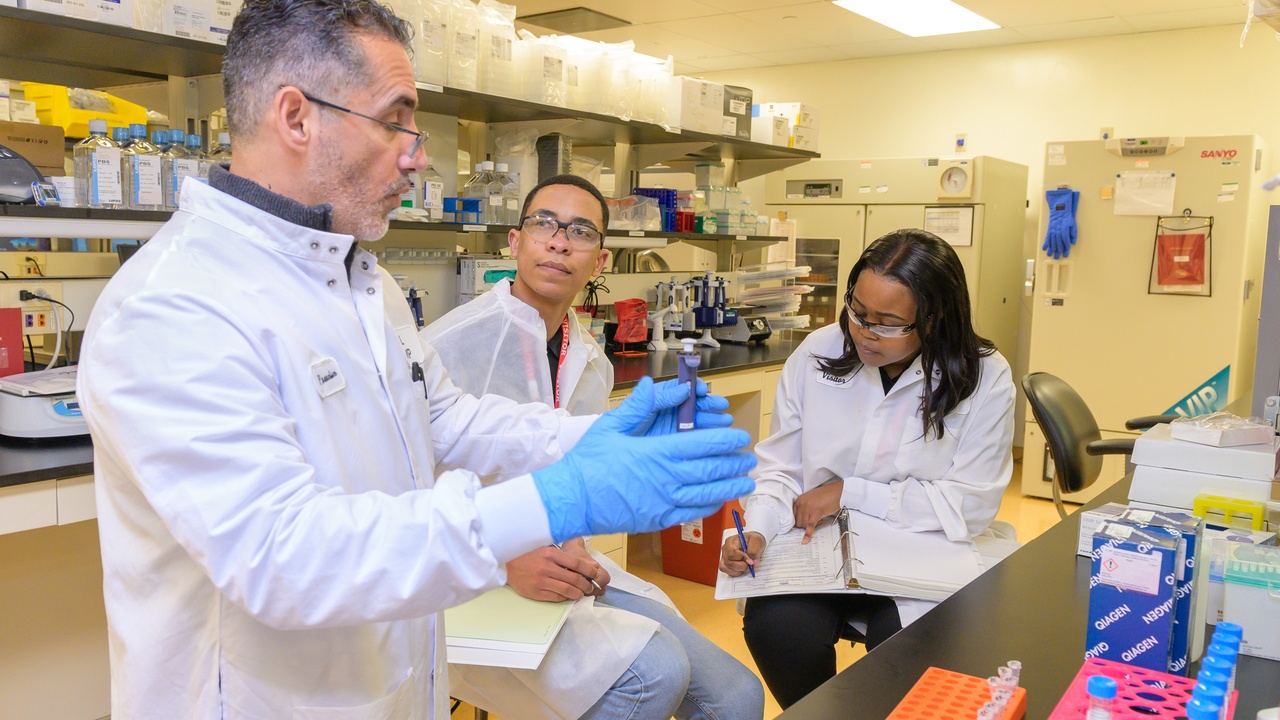
Chemistry underpins faster drug discovery, targeted delivery, and improved diagnostics. The rapid development of mRNA vaccines in 2020–2021 and advances in protein-structure prediction have compressed timelines and opened new therapeutic modalities.
Expect computation, new molecular formats, and delivery chemistry to continue reshaping how we create and deliver medicines.
7. AI-accelerated and personalized drug discovery
Machine learning speeds target identification and lead optimization, enabling more personalized medicines. AlphaFold’s 2020 CASP14 milestone for protein structure prediction demonstrated how computational models can change the front end of discovery.
Companies such as Atomwise and Insilico Medicine use data-driven molecular design and virtual screening to triage millions of virtual compounds and shorten early discovery from years toward months in select programs. That faster triage means human teams can focus experiments on higher-probability candidates.
8. Advanced delivery systems: lipid nanoparticles, nanocarriers, and smart formulations
Delivery chemistry determines whether potent molecules succeed clinically by controlling stability, targeting, and dosing. The 2020–2021 rollout of Moderna and Pfizer-BioNTech mRNA vaccines showcased how lipid nanoparticle (LNP) delivery enabled a new therapeutic modality at global scale.
Other work focuses on targeted cancer nanocarriers, stimuli-responsive release systems, and inhaled or transdermal formulations that improve efficacy and patient experience. Expect delivery platforms to be a key differentiator for next-generation biologics and nucleic-acid therapeutics.
Digitalization, Automation, and Computational Chemistry
Software, automation, and data are compressing discovery cycles and reducing human error. Predictive models propose candidates, autonomous labs test them, and high-throughput methods validate at scale so development loops run far faster than a decade ago.
These trends combine to push research from artisanal experiments toward reproducible, data-rich development pipelines.
9. Machine learning for property prediction and retrosynthesis
ML models predict properties and propose synthetic routes faster than human-only workflows, reducing blind experimentation. AlphaFold (2020) is one high-profile example in structural prediction, and commercial retrosynthesis platforms now assist chemists in route planning.
Teams are using predictive models to prioritize candidates and cut synthetic steps, with virtual screening at million-compound scales becoming common in industry. Assisted retrosynthesis has already shortened routes and reduced failed syntheses in several programs.
10. Autonomous laboratories and high-throughput experimentation
Robotic labs can run thousands of experiments with consistent reproducibility and much faster iteration than manual workflows. Academic ‘self-driving’ lab demonstrations and industrial pilots now report testing thousands to tens of thousands of conditions per week in automated setups.
Applications include accelerated catalyst discovery, rapid battery electrolyte screening, and formulation optimization where ML-guided experiment selection closes the loop between hypothesis and result in days rather than months.
Summary
- Sustainability will reshape raw-material choices and process chemistry as renewable feedstocks, CCU, and greener solvents gain industrial traction.
- Materials innovation—from 2D materials (a shift traceable to graphene in 2010) to self-healing polymers and printed functional parts—creates new product opportunities across energy and electronics.
- Healthcare advances rest on delivery chemistry and computation: mRNA LNPs (2020–2021) and AlphaFold (2020) show how faster science shortens development timelines.
- AI, predictive models, and autonomous labs are compressing discovery cycles, enabling teams to screen millions of virtual candidates and run thousands of automated experiments per week.
- Watch bio-based chemicals, AI-driven discovery platforms, and autonomous R&D facilities for early signs of broad commercial adoption—and consider how skills in sustainable process design and data-driven chemistry position you for the next wave of chemical innovation.