In November 1952 the ‘Ivy Mike’ test demonstrated the raw power of fusion reactions and set the stage for decades of research toward controlled fusion energy.
Since then, researchers have chased a nearly limitless, low-carbon alternative to fossil fuels as global energy demand rises and climate goals tighten. Engineers face some unique obstacles: achieving and holding temperatures on the order of 100 million kelvin, developing materials that survive intense neutron flux, and integrating novel generators with existing grids.
Fusion energy promises a nearly limitless, low-carbon source of power, but getting a practical fusion power plant requires solving distinctive scientific and engineering challenges; these 10 facts explain why fusion matters now more than ever.
Below are ten concise, evidence-backed points covering the science, recent milestones (ITER, NIF), fuel sources, and what fusion could mean for society.
H2: Science basics — How fusion actually works
Nuclear fusion combines light atomic nuclei into heavier ones, releasing energy when mass is lost in the process. Unlike fission, which splits heavy atoms, fusion mimics the reactions that power the Sun but requires different conditions on Earth. The paragraphs below unpack temperatures, fuels and the containment approaches that make fusion hard and fascinating.
1. Fusion is the same process that powers the Sun — but on Earth it needs much higher temperatures
The Sun fuses hydrogen into helium in its core at roughly 15 million kelvin, using gravitational pressure to hold dense plasma together.
Terrestrial fusion must instead rely on kinetic confinement or magnetic fields, so devices aim for temperatures around 100 million kelvin or more to overcome the electrostatic repulsion between nuclei.
At those temperatures matter becomes a plasma — an ionized gas of free electrons and nuclei — and controlling that plasma is the central physics challenge of fusion research.
2. The most practical fuel is deuterium–tritium, not plain hydrogen
Today the deuterium–tritium (DT) reaction is the most achievable fuel mix because it has the highest reaction cross-section at attainable temperatures.
Deuterium is naturally present in seawater — roughly one deuterium atom per 6,500 hydrogen atoms (about 0.015% of hydrogen), so a liter of seawater contains on the order of 0.03 grams of deuterium.
Tritium is rare and must be bred, typically from lithium in a reactor blanket, which is why lithium resources and breeding technologies are central to long-term fuel supply planning.
3. Containment is the central engineering problem: magnetic and inertial approaches
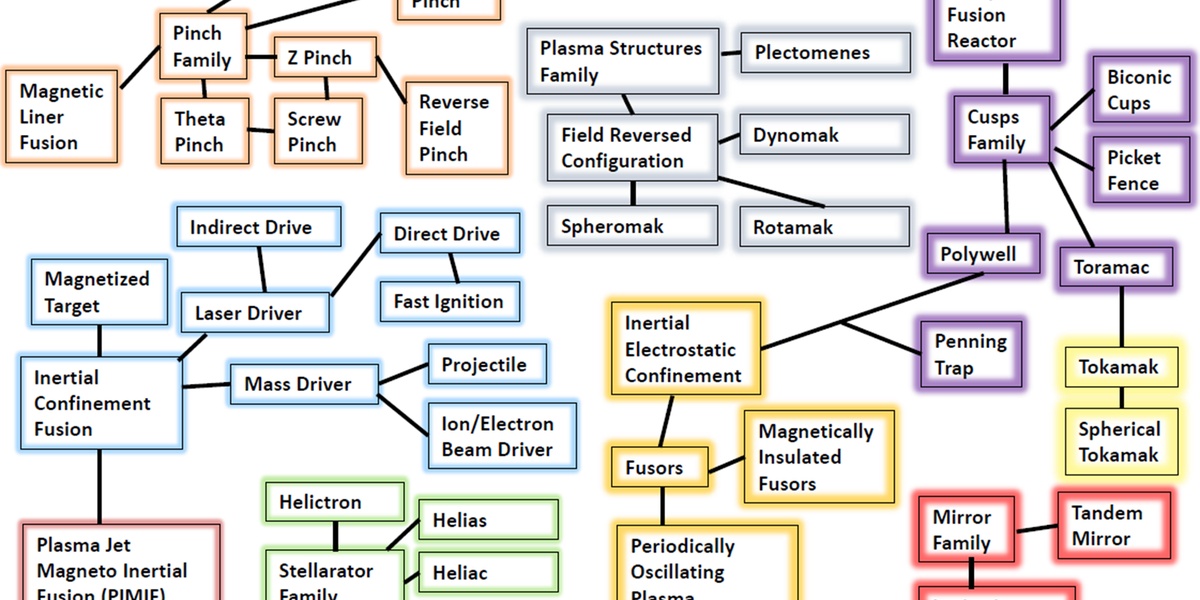
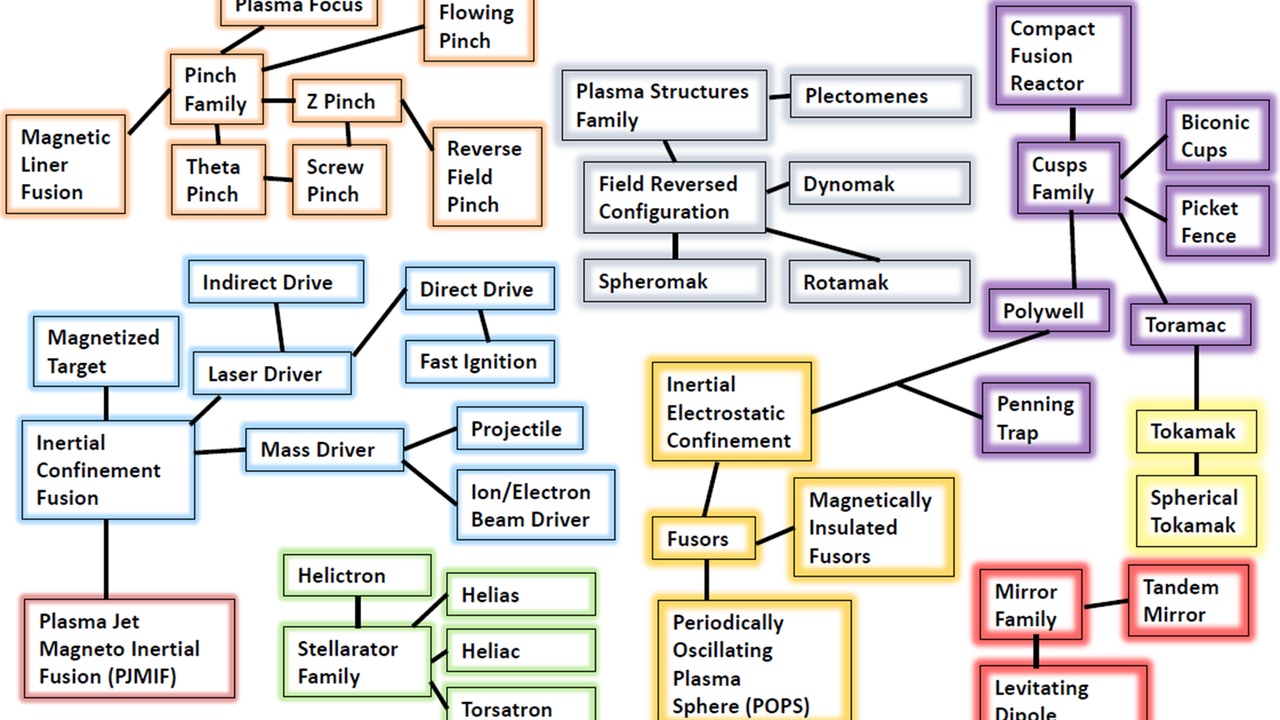
Holding plasma hot and dense enough for fusion is the core engineering hurdle. Two broad strategies dominate research.
Magnetic confinement uses strong fields to suspend plasma for long pulses; tokamaks (ITER, JET) and stellarators are the main concepts. These systems aim for millisecond-to-second or longer dwell times and require massive magnets and active control systems.
Inertial confinement compresses small fuel capsules with intense energy (typically lasers) into extreme density and temperature for nanoseconds. The National Ignition Facility (NIF) is the leading example of that approach, focusing on single-shot implosions rather than steady-state operation.
H2: Recent milestones — Where fusion research stands today
Progress over the past decades has been incremental but real: improved magnets, new materials, and landmark experiments have pushed fusion from theoretical promise toward engineering demonstration. The items below highlight high-profile milestones and why they matter.
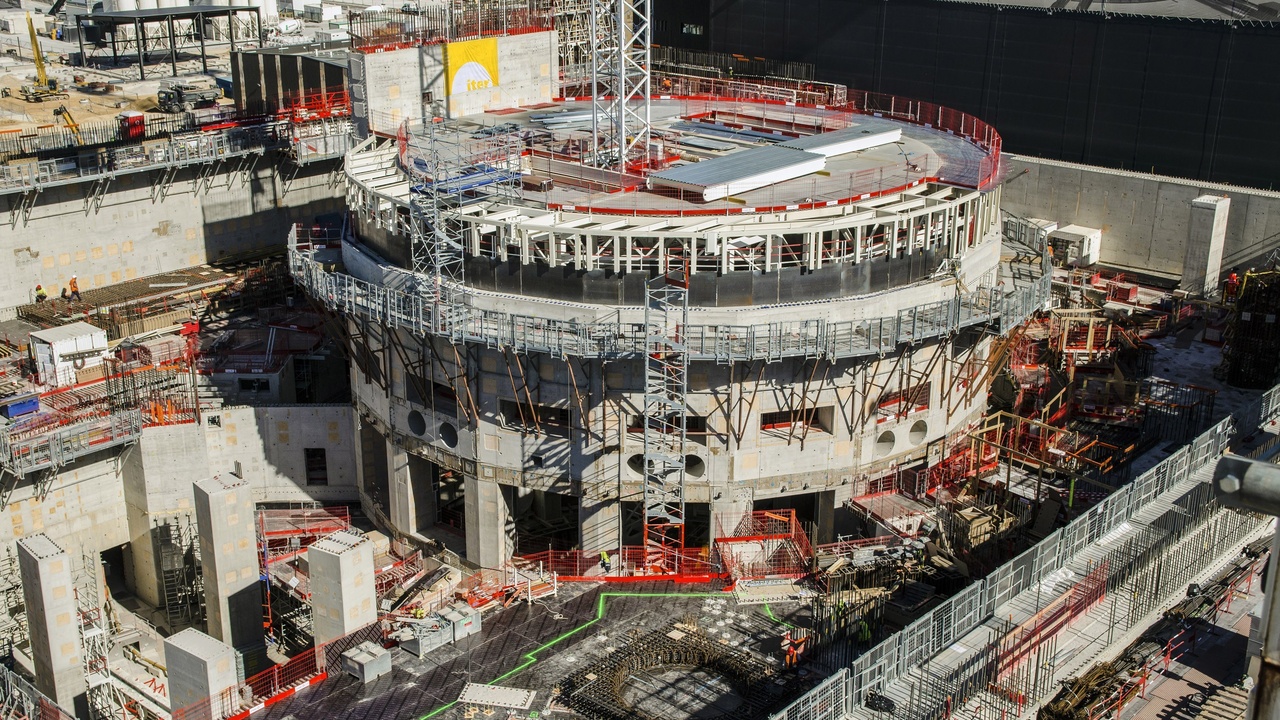
4. ITER is the world’s largest fusion experiment and a major international bet
ITER, under construction in Cadarache, France, is a multinational project involving the EU, China, India, Japan, South Korea, Russia and the USA.
The tokamak is enormous — several stories tall with megampere-level plasma currents — and it aims to demonstrate sustained burning plasma and a gain of roughly Q ≈ 10, meaning ten times more fusion power than the external heating power supplied to the plasma.
ITER plans to achieve first plasma in the late 2020s with phased steps toward higher performance through the 2030s; showing that large-scale, long-pulse operation is feasible would be a vital step toward commercialization.
5. Inertial confinement scored a high-profile breakthrough in late 2022
In December 2022 the National Ignition Facility at Lawrence Livermore National Laboratory reported a shot in which the fuel capsule produced more fusion energy than the laser energy delivered to the capsule.
Specifically, that experiment measured about 3.15 MJ of fusion yield from roughly 2.05 MJ of laser energy on target, a scientific milestone often described as ignition for the capsule.
However, the total facility energy input is far larger and translating the physics result into a practical power plant involves enormous additional engineering, repetition rates, and efficiency challenges.
6. Tokamaks have set several important performance records over decades
Tokamaks like JET (UK), DIII-D (USA) and EAST (China) have repeatedly extended confinement times, pulse lengths and peak fusion power, providing a steady stream of operational knowledge.
JET produced megawatts of fusion power in the 1990s, including a ~16 MW short-pulse record in 1997, and modern upgrades in magnets and control systems continue to boost performance.
Recent developments in high-temperature superconducting magnets and private-sector compact tokamaks (for example, projects from Commonwealth Fusion Systems and Tokamak Energy) aim to shrink device size and cost while retaining or improving performance.
H2: Real-world implications — Why fusion would matter to society
If fusion becomes commercially viable it could reshape energy systems: large-scale low-carbon generation, abundant fuel supplies, different waste and safety profiles, and new grid-integration options. The next four points explore those practical consequences.
7. Fusion offers high energy density and near-zero carbon emissions at the point of generation
Fusion releases far more energy per unit mass than chemical reactions: a gram-scale amount of fusion fuel can, in rough order-of-magnitude terms, provide energy comparable to many tons of coal.
Operationally, fusion plants would emit essentially no CO2; lifecycle emissions come mainly from construction, materials and decommissioning, not from steady operation.
That combination — very high energy density plus low operational emissions — is what makes fusion attractive for decarbonizing sectors that need concentrated power.
8. Fuel is widely available: seawater and lithium mean long-term supplies
Deuterium is abundant in the oceans; the total inventory of deuterium corresponds to energy resources that could, at current human consumption rates, last millions of years.
Lithium, used to breed tritium in most DT designs, is widely distributed and currently mined in countries like Australia and Chile; recycling and improved breeder designs can extend supplies and reduce supply-chain risks.
Because the primary materials are broadly available, many nations could host fusion reactors, easing geopolitical energy dependence compared with fossil fuel imports.
9. Fusion could provide reliable baseload power that complements renewables
Solar and wind are variable; a functioning fusion plant would offer steady, dispatchable output that complements variable renewables and reduces the need for fossil-fired backup.
For example, a hypothetical 1 GW fusion plant operating as baseload could smooth regional supply, shave peak demand, and free up storage or demand-response resources to handle short-term variability.
That steady output also supports electrification of hard-to-decarbonize sectors, such as high-temperature industrial processes like steelmaking or chemical feedstock production.
10. Fusion presents safety and nonproliferation advantages over fission, but it’s not risk-free
Fusion reactors do not run a sustained chain reaction, so they lack the same meltdown risk profile as fission plants; accident scenarios differ and are generally less catastrophic in terms of runaway reactions.
Radioactive waste from fusion is mainly activation of structural materials by neutrons; that waste tends to have shorter half-lives than many fission byproducts, though material choice and recycling matter for waste management.
Tritium requires careful accounting because it’s radioactive and has industrial uses, so safeguards, monitoring and strong engineering controls will be part of any deployment to manage proliferation and public-safety concerns.
Summary
- These 10 facts about fusion energy show that the physics is proven and milestones at NIF and tokamaks (like ITER and JET) mark real progress, but translating results into power plants requires major engineering advances.
- Abundant fuels — deuterium in seawater and lithium for tritium breeding — offer long-term supply potential, and fusion’s high energy density means small fuel volumes could produce large amounts of power.
- Fusion’s operationally low carbon footprint, different waste profile and lack of a chain-reaction meltdown risk make it an attractive complement to renewables for future grids.
- Continued investment in materials, magnets, breeding technology and regulatory frameworks will determine whether fusion moves from experimental milestones to commercial reality.