In 2015 researchers published the first sequenced genome of an octopus (Octopus bimaculoides), revealing a surprising expansion of genes linked to neural complexity and skin patterning. That discovery cracked open new questions about how complex behavior can evolve in a branch of animals so distant from vertebrates.
Octopuses combine unusual anatomy, surprising intelligence, and evocative behaviors that challenge how we think about cognition and evolution. Their eight flexible arms, three hearts, and rapid color-changing skin make them physically alien and scientifically fascinating.
For anyone curious about marine life or cognition, these animals matter for three reasons: they push neuroscientists to rethink distributed neural control, they inspire engineers working on soft robotics, and they force practical conversations about fisheries and welfare. Below are seven compelling, well-supported facts about octopuses, grouped into three themed sections: biology, behavior, and human relevance.
Octopus Biology and Physiology
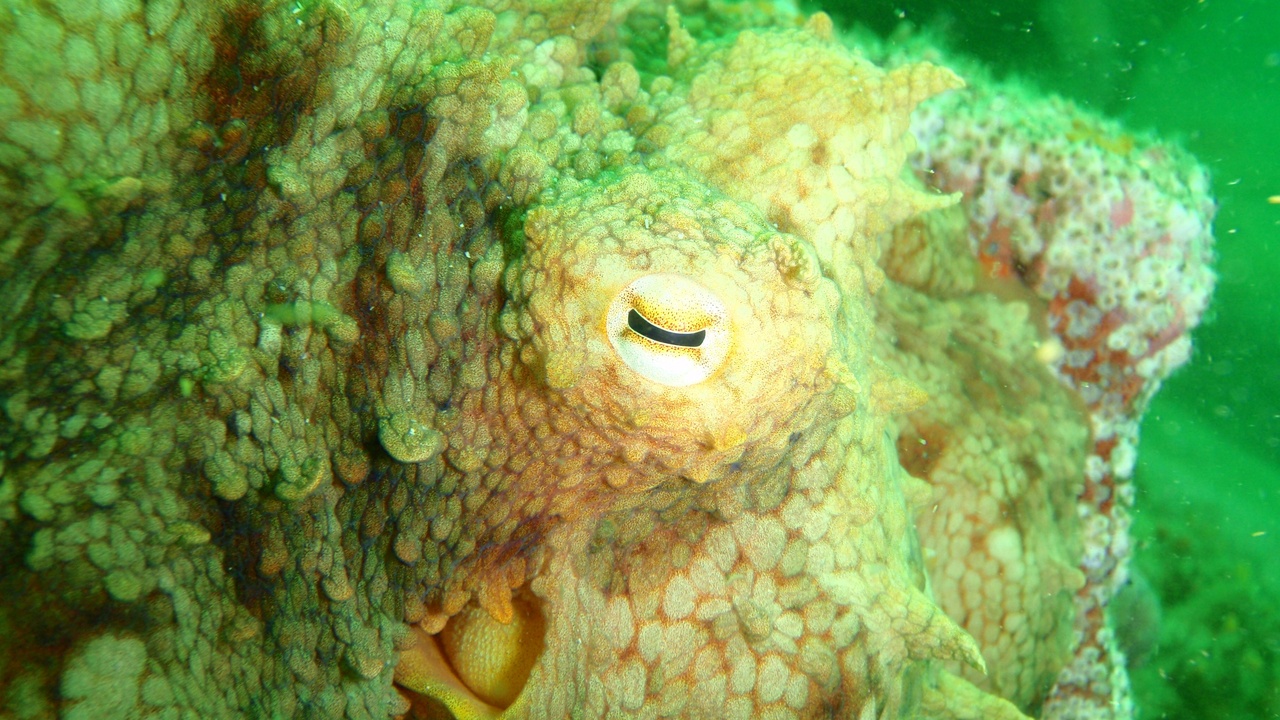
Octopuses are built very differently from fish or mammals. Their bodies combine extreme flexibility, a high density of neurons, and blood chemistry tailored for cold or oxygen-poor water. Together these traits let octopuses be active predators, rapid camouflage artists, and surprisingly dexterous problem-solvers.
Marine institutions such as NOAA and the Smithsonian provide accessible overviews of cephalopod anatomy, while the 2015 Octopus bimaculoides genome paper gave molecular context for neural and skin complexity. The three facts below highlight heart and blood physiology, the distributed nervous system, and life-history strategies that shape their ecology and husbandry.
1. Three hearts and blue blood
Octopuses have three hearts and copper-based blue blood. Two branchial hearts pump blood through the gills, and a systemic heart delivers oxygenated blood to the rest of the body.
The blue hue comes from hemocyanin, a copper-containing oxygen carrier that is more efficient than hemoglobin in cold or low-oxygen seawater. This biochemical tradeoff helps species such as the Giant Pacific octopus (Enteroctopus dofleini) thrive in chilly North Pacific habitats.
NOAA and Smithsonian resources explain that the three-heart arrangement supports an active lifestyle while still matching the constraints of ocean habitats, and it helps explain why some cephalopods are strong, fast hunters despite unconventional circulatory chemistry.
2. A distributed brain: about 500 million neurons
Octopuses are unusually neuron-rich: estimates for species like Octopus vulgaris put counts in the range of roughly 300–500 million neurons. Uniquely, a large portion of those neurons are not in a central brain but distributed through the arms.
The arms contain peripheral neural ganglia capable of local sensing and decision-making, so they can reach, explore, and manipulate objects with a degree of autonomy. Lab tests—maze navigation, detour tasks, and object discrimination—demonstrate flexible problem solving that aligns with this anatomy.
The 2015 Octopus bimaculoides genome highlighted expansions in gene families tied to neural development and skin patterning, offering a genetic explanation for both cognitive capacity and rapid camouflage.
3. Fast growth and short lives: strategies for survival
Many octopus species mature quickly and live only 1–5 years. Smaller coastal species often reach the end of life in 1–2 years, while larger species such as Enteroctopus dofleini can live up to about 3–5 years in the wild.
Most are semelparous—reproducing once and then dying—so a single reproductive event consumes substantial energy and ends the adult stage. That life-history strategy affects population resilience and how fisheries and aquaria plan for breeding and care.
For aquaria, short lifespans mean husbandry programs must plan frequent breeding cycles and account for the welfare implications of intensive care for intelligent, short-lived animals.
Behavior, Cognition, and Sensory Skills
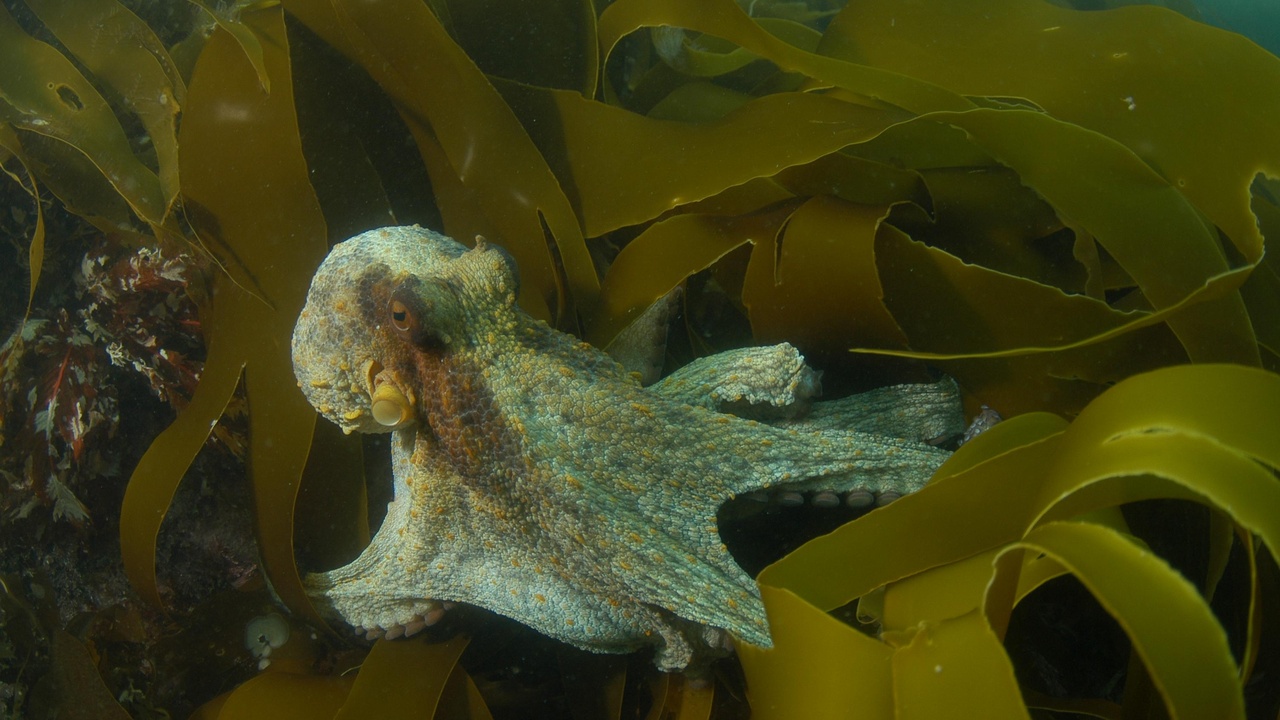
Octopus behavior spans clever problem-solving, tool use, and astonishing skin control. Laboratory experiments and field observations together have revealed arms that explore like independent minds, skin that shifts color and texture in milliseconds, and species that mimic other marine animals.
Behavioral studies published in journals such as PLOS and Marine Biology, plus field reports, supply the evidence for complex cognition and elaborate anti-predator strategies. Two notable behavior categories—tool use and camouflage—have both scientific and practical implications.
4. Tool use and clever problem solving
Octopuses use tools and solve multi-step problems. In captivity, individuals routinely open screw-top jars and solve mazes; some aquarium reports document octopuses unscrewing lids to access food.
In the field, the veined octopus (Amphioctopus marginatus) was observed collecting and carrying coconut shells to assemble portable shelters—a behavior documented in field studies and popularized in a 2009 paper that reported multiple individuals using shells as tools.
These findings matter because they demonstrate complex behavior in a non-vertebrate lineage and challenge experiments to probe memory and planning (examples include delayed-reward and detour tasks run at several marine labs).
5. Masterful camouflage and mimicry
Octopuses change color, pattern, and even skin texture with phenomenal speed. Chromatophores (pigment sacs), iridophores (reflective layers), and papillae (muscle-controlled bumps) work together to produce camouflage and communication.
Some studies measure color and pattern transitions that occur in less than a second when a threat appears, allowing an octopus to disappear against complex seafloor backgrounds. The mimic octopus (Thaumoctopus mimicus), described in 1998, goes further by impersonating other species such as lionfish or sea snakes to avoid predators.
Engineers and materials scientists study these systems as blueprints for adaptive surfaces and dynamic camouflage, with applications ranging from responsive textiles to sensor-integrated displays.
Octopuses and People: Research, Technology, and Conservation

Octopuses connect to human science in three clear ways: neuroscience insights about distributed control, practical inspiration for soft robotics, and conservation and ethical challenges driven by fisheries and captive care. The 2015 genome milestone has accelerated multidisciplinary research across these areas.
These facts about octopuses therefore matter beyond curiosity: they inform how engineers design manipulators, how neuroscientists model non-centralized control, and how policymakers weigh welfare and harvests.
6. A muse for neuroscience and soft robotics
Octopus anatomy and behavior are models for distributed neural control and soft actuators. In the 2010s multiple university groups published prototypes of soft robotic arms that borrow octopus principles—compliance, suction-based adhesion, and continuum manipulation.
The 2015 Octopus bimaculoides genome provided genetic evidence for neural and skin complexity, encouraging computational neuroscientists to model decentralized control systems where local sensors and neural circuits offload processing from a central brain.
Practical outcomes include soft grippers used in delicate manufacturing and surgical tools that can conform around organs. Academic labs at institutions such as Harvard, MIT, and several European universities have published prototypes and demonstrations in robotics conferences and journals.
7. Conservation, fisheries, and ethical questions
Octopuses are the target of substantial regional fisheries: some countries report annual catches measured in thousands of tons, and global demand for cephalopods has grown in recent decades. That pressure, coupled with habitat change, raises management concerns.
Ethically, their high intelligence and short, semelparous lives provoke debate about keeping octopuses in aquaria and using them in research. Several countries now include cephalopods in animal welfare legislation for research, and aquaria such as the Monterey Bay Aquarium publish specialized care guidelines.
Readers can support sustainable practices by choosing certified seafood, backing reputable marine NGOs (for example, WWF or local conservation trusts), visiting accredited aquaria that follow welfare standards, and supporting research programs that monitor stocks and habitats.
Summary
Below are a few concise takeaways that capture the most surprising and actionable points from the seven facts above.
- Octopuses have three hearts and copper-based blue blood that suits cold or low-oxygen waters.
- A large portion of their ~300–500 million neurons sits in the arms, enabling local processing and impressive problem-solving.
- They use tools (e.g., veined octopus and coconut shells) and perform tasks in labs like jar-opening, showing flexible cognition.
- The 2015 Octopus bimaculoides genome was a milestone linking gene expansions to neural and skin complexity, and it spurred robotics and neuroscience work.
- Human interactions raise real conservation and ethical questions—support sustainable seafood, accredited aquaria, and research-focused NGOs to help balance use and protection.