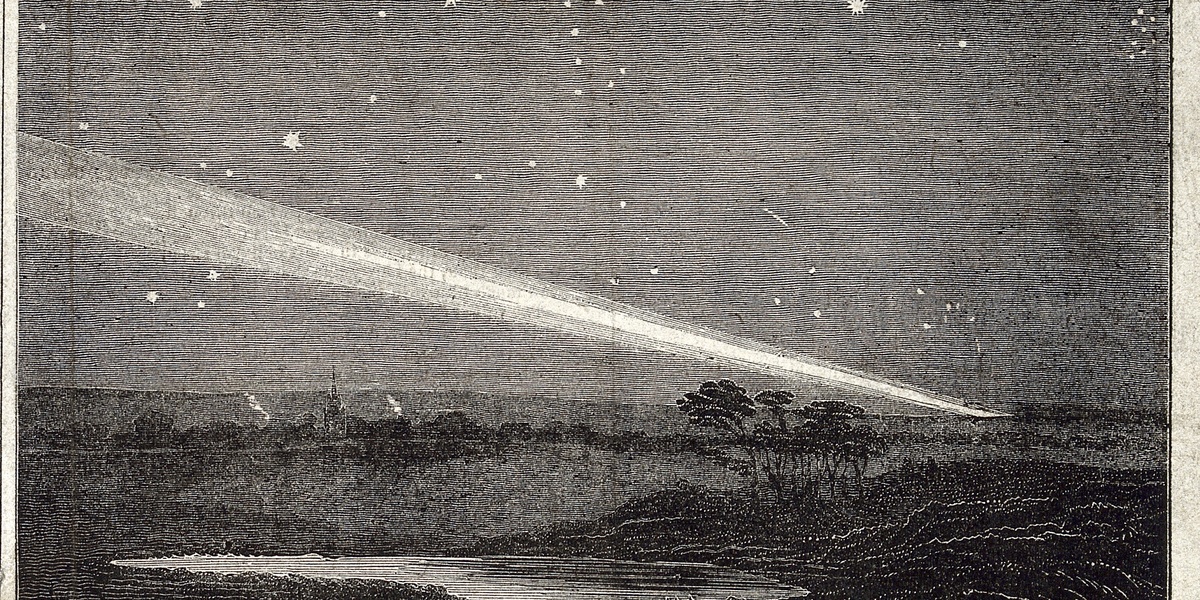
In 1066 a bright, unfamiliar star—Halley’s Comet—was stitched into the Bayeux Tapestry, a portent for an anxious era. Fast forward to 1910 and Halley’s return caused a very different kind of stir: newspapers brimmed with breathless warnings about cometary gases as the globe looked up in equal parts wonder and worry. Those two moments, separated by 844 years, show how comets have held our attention.
But comets matter for more than spectacle. They are icy time capsules from about 4.6 billion years ago, carrying water, dust and organic molecules that record conditions in the planet-forming disk. Modern spacecraft and laboratory analysis let scientists read that record—so comets inform questions about how the solar system formed and whether bodies like Earth received key ingredients for life.
Below are eight concise, evidence-backed facts that explain what comets are, how they behave, why they matter to Earth, and how missions from Giotto to Rosetta and New Horizons changed our view of these primitive bodies.
What comets are and how they formed
1. Icy remnants of the early solar system
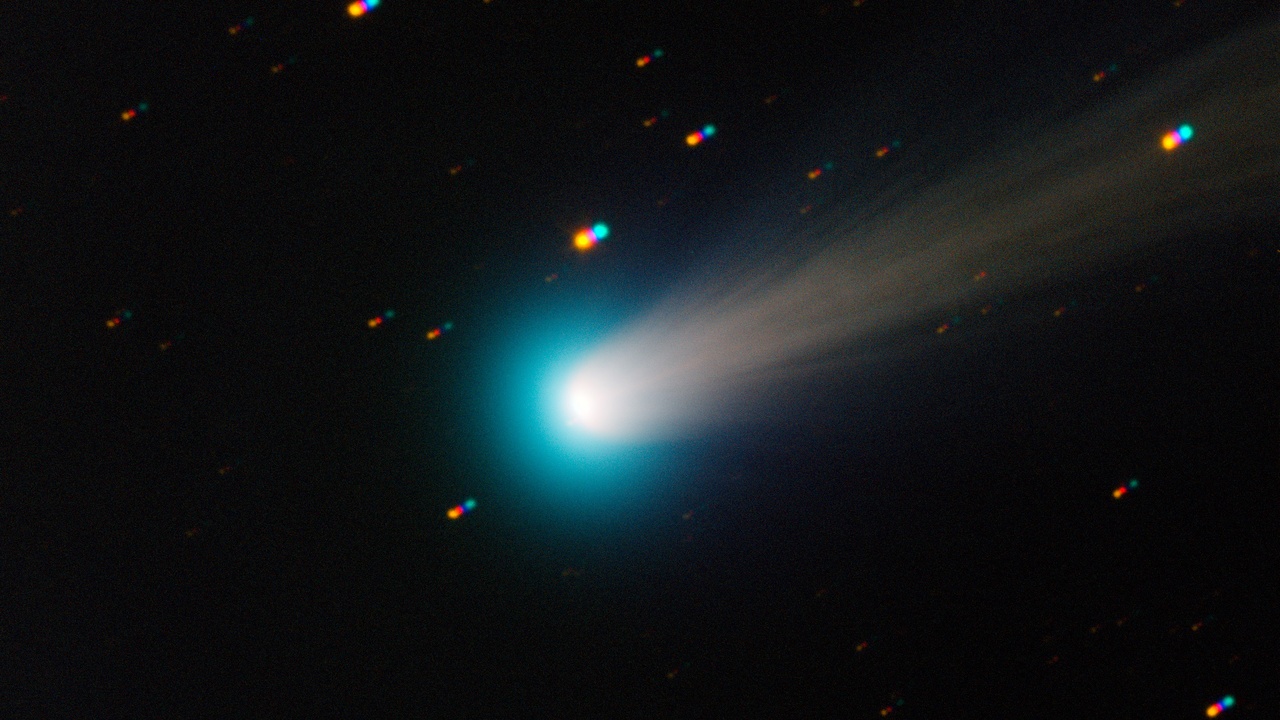
Comets are small bodies made of volatile ices (water, carbon monoxide, carbon dioxide), silicate dust and a mix of organic molecules. They condensed from the cold outer regions of the protoplanetary disk about 4.6 billion years ago and have largely avoided the heating and differentiation that reshaped planets.
Radiometric dating of meteorites establishes the solar system’s age, and spectroscopy—combined with sample returns—reveals comet chemistry. For example, Rosetta’s mass spectrometers detected complex organics on 67P/Churyumov–Gerasimenko, and the interstellar visitor 2I/Borisov (2019) provided an external comparison that shows comets are chemically diverse yet familiar in key volatiles.
Think of a comet as a “dirty snowball” in the classical sense, but refined: porous, layered, and peppered with organic-rich dust rather than a pristine sphere of frozen water alone. Studying that preserved material helps reconstruct conditions in the disk where planets formed.
2. Two main reservoirs: Kuiper Belt and Oort Cloud
There are two dominant comet reservoirs. The Kuiper Belt sits beyond Neptune at roughly 30–50 AU and supplies most short-period comets; the distant Oort Cloud, perhaps extending out to ~50,000 AU, is a spherical shell that feeds long-period visitors. Source region affects orbital predictability and mission planning.
Short-period comets—like 1P/Halley with its ~76-year return—have more predictable orbits and are practical mission targets. Long-period comets, such as Comet Hale–Bopp (bright in 1997), arrive from far beyond and often have unpredictable trajectories, which complicates both observation campaigns and spacecraft rendezvous.
Knowing a comet’s origin helps planners choose launch windows and instruments. A Kuiper Belt target generally requires less delta-v and longer mission timelines that allow detailed reconnaissance, whereas an Oort Cloud visitor typically rewards rapid-response observation from Earth and space telescopes.
3. Comet nuclei range widely in size and shape
Nucleus sizes span from tiny bodies under a kilometer to tens of kilometers across. Rosetta measured 67P at roughly 4 km across, while Arrokoth (2014 MU69) imaged by New Horizons is about 36 km in its longest dimension and is a contact binary—two lobes joined together.
Shapes vary dramatically: roughly spherical, elongated, bilobed, or rubble piles with large cliffs and pits. Size and shape influence how sunlight penetrates, how fast ices sublimate, and how active a comet appears when it nears the Sun—factors that determine brightness and mission feasibility.
Small nuclei can exhaust their volatiles quickly and fade from view, while larger bodies may sustain activity over many perihelion passages. That diversity is why missions target a range of comets to sample different physical regimes.
How comets behave and what we observe
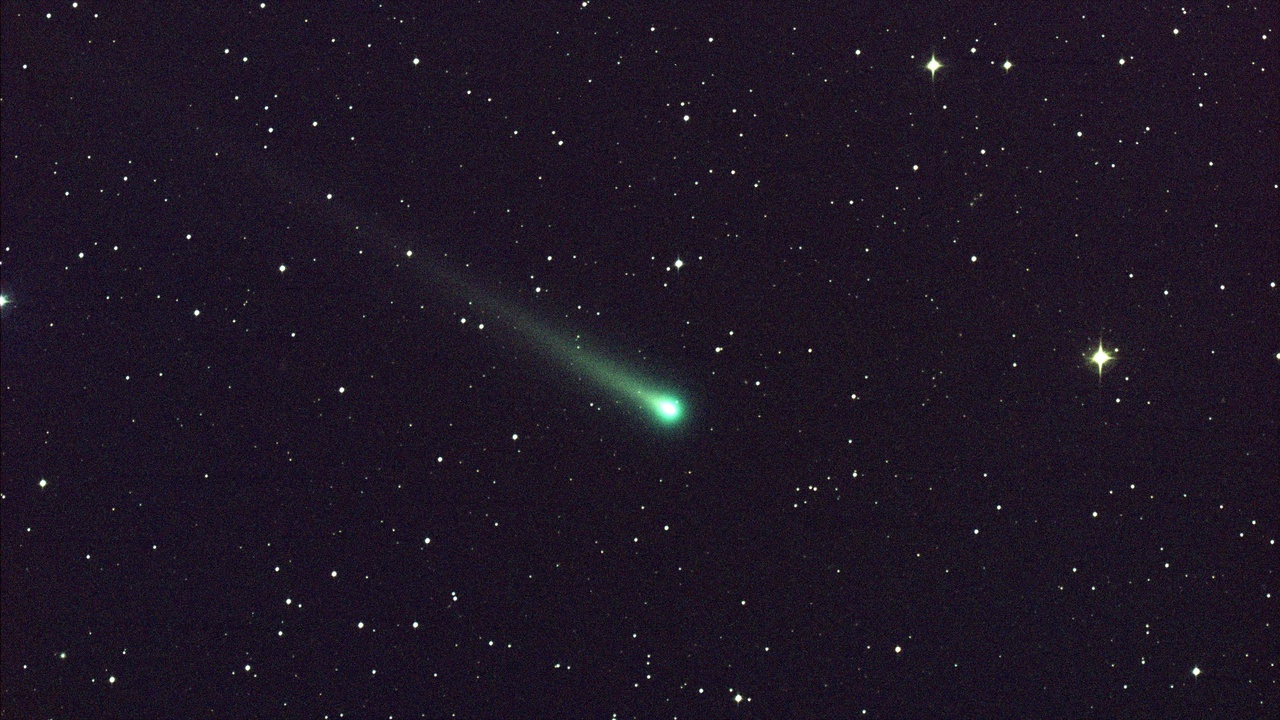
From telescopes and spacecraft we’ve learned many facts about comets’ visible behavior: comae, dust and ion tails, variable brightness, and outbursts. Observations across wavelengths—optical, UV, infrared and radio—reveal both the physical mechanisms and the chemical fingerprints of sublimated ices.
4. Tails form when ices sublimate and interact with solar radiation
As a comet approaches the Sun, solar heating causes ices to sublimate and release gas and entrained dust, creating a coma around the nucleus and one or more tails. Dust tails scatter sunlight and tend to curve along the comet’s orbit; ion tails are plasma swept almost directly away from the Sun by the solar wind.
Tails can be enormous—Hyakutake in 1996 produced an ion tail reported at over 100 million kilometers—and ionized particles can be accelerated to hundreds of kilometers per second by the solar wind. Tail morphology and spectroscopy are diagnostic tools that tell us about composition, particle sizes, and local space-weather conditions.
Brightness and tail length scale with heliocentric distance and the amount of exposed volatile material. Sudden outbursts can reveal subsurface reservoirs, while steady jets mark regions of preferential erosion on the nucleus surface.
5. Comets seed meteor showers and occasional impacts
Every time a comet sheds dust, it leaves a stream along its orbit. When Earth crosses that stream we see meteor showers. The Perseids, which peak around August 12 each year, come from comet 109P/Swift–Tuttle; the Leonids (peak about November 17) trace to 55P/Tempel–Tuttle and have produced spectacular storms historically in 1833 and 1966.
On rarer occasions, comet fragments impact planets. A dramatic example occurred in 1994 when fragments of Shoemaker–Levy 9 collided with Jupiter, producing observable fireballs and scars. Those events show that cometary debris can pose impact hazards, and they also offer unique opportunities to study planetary atmospheres under sudden perturbation.
6. Space missions have transformed comet science
Direct spacecraft encounters provided ground truth on composition, structure and activity. Giotto flew past Halley in 1986, Stardust returned dust samples from Wild 2 to Earth in 2006, and Rosetta arrived at 67P in 2014 and followed it through perihelion with the Philae lander aboard.
Those missions revealed complex organics, layered surfaces, high porosity and surprising heterogeneity. Stardust’s returned grains let laboratory instruments identify minerals and organic components at micrometer scales, while Rosetta mapped cliffs, pits, and seasonal changes that refined comet evolution models.
These facts about comets emerged because missions combined imaging, in-situ mass spectrometry, and sample analysis—turning hypotheses from mid-20th-century models into detailed, testable science that guides future sample-return planning.
Comets’ significance to Earth and human culture

Comets occupy a dual role: they are scientific objects that preserve early Solar System material and cultural icons that have inspired art, myth and sometimes fear. Scientific measurements—particularly of isotopes and organics—tie comet studies directly to questions about Earth’s beginnings.
7. Possible suppliers of Earth’s water and organic precursors
Comets contain water and complex organic molecules, so they were long considered candidates to have delivered volatiles to the early Earth. Isotopic ratios, especially deuterium-to-hydrogen (D/H), provide critical constraints: Rosetta measured 67P’s D/H and found it higher than Earth’s ocean value, suggesting that comets like 67P were not the primary source of our oceans.
That result, combined with Stardust’s returned organics from Wild 2, indicates a nuanced picture: some comets may have contributed organics and water, but carbonaceous asteroids likely played a major role as well. For origins-of-life models and exoplanet habitability studies, these mixed results show delivery pathways can be varied and planet-specific.
Ongoing and future sample-return missions, plus laboratory studies, aim to quantify the relative contributions of comets and asteroids to planetary inventories with greater precision.
8. Cultural touchstones and scientific milestones
Halley’s Comet is a useful thread through history: recorded in the Bayeux Tapestry for 1066 and widely reported in 1910, it helped normalize the idea of predictable comet returns. In the 1950s Fred Whipple proposed the “dirty snowball” model, a turning point that made comet behavior testable by spacecraft.
Public fascination—sometimes panicked, often curious—has supported funding and interest for observational programs and missions. Rosetta (2014–2016) stands as a modern milestone: the first long-term rendezvous that tracked a comet through perihelion and returned unprecedented datasets used by hundreds of researchers worldwide.
Art, literature and records of surprising apparitions have kept comets in the public imagination, and that cultural traction continues to be an asset for science outreach and mission advocacy.
Summary
- Comets are ancient, icy remnants from about 4.6 billion years ago that preserve volatiles and organics useful for reconstructing the early solar system.
- Tails and comae form when solar heating sublimates ices; ion tails trace the solar wind while dust tails curve along the orbit.
- Missions such as Giotto (1986), Stardust (sample return 2006) and Rosetta (2014–2016) provided concrete chemical and structural data that transformed comet science.
- Comets have shaped human culture (Bayeux Tapestry, 1066; 1910 Halley) and remain relevant to origin-of-water and organics debates—ongoing observations and missions will sharpen the answers.