Arizona’s varied geology—from basin-fill sediments to high‑grade porphyry and skarn deposits—has produced many collectible and scientifically important mineral specimens. Local museums, mine dumps and annual shows highlight how Arizona’s mining history shaped the range of colors and crystal habits you can find.
There are 45 Minerals in Arizona, ranging from Acanthite to Wulfenite; for each mineral, the table lists Category/use,Color / appearance,Notable Arizona localities — you’ll find below.
Where are the best places to find these minerals in Arizona?
Many notable specimens come from historic mining districts: Bisbee and Jerome for copper and associated minerals, the Globe‑Miami–Globe area, Morenci, and Tombstone among others; museum displays and local rock shops are good starting points before visiting field sites.
Can I legally collect mineral specimens in Arizona?
Collecting rules vary: private land requires owner permission, national parks and monuments prohibit removal, and some public land (BLM/USFS) allows casual collecting within limits — always check land manager regulations, respect reclamation areas, and get permits if needed.
Minerals in Arizona
| Name | Category/use | Color / appearance | Notable Arizona localities |
|---|---|---|---|
| Azurite | secondary copper mineral/collector specimen | deep sky to royal blue, often crystalline or massive | Bisbee (Cochise County), Morenci (Greenlee County) |
| Malachite | secondary copper mineral/collector specimen | bright to deep green, banded botryoidal or fibrous forms | Bisbee (Cochise County), Jerome (Yavapai County) |
| Chrysocolla | secondary copper mineral/gemstone/collector specimen | blue-green, often massive or as botryoidal crusts | Bisbee (Cochise County), Globe-Miami (Gila County) |
| Turquoise | gemstone | sky blue to greenish blue, often veined or matrix-bound | Kingman (Mohave County), Sleeping Beauty mine area (Pinal County) |
| Cuprite | ore/collector specimen | deep red to brick-red metallic crystals and earthy masses | Bisbee (Cochise County), Ray (Pinal County) |
| Chalcopyrite | ore | brassy yellow metallic, tarnishes iridescently | Morenci (Greenlee County), Ajo (Pima County) |
| Bornite | ore/collector specimen | peacock iridescent blues, purples, bronze tarnish | Bisbee (Cochise County), Miami (Gila County) |
| Chalcocite | ore | lead-gray to black metallic masses and crystals | Morenci (Greenlee County), Clifton-Morenci district |
| Covellite | secondary copper mineral/collector specimen | indigo to indigo-black metallic, often iridescent | Bisbee (Cochise County), Morenci (Greenlee County) |
| Tenorite | secondary copper oxide/collector specimen | black to steel-gray earthy or crystalline | Ajo (Pima County), Bisbee (Cochise County) |
| Brochantite | secondary copper mineral/collector specimen | emerald to blue-green prismatic crystals or fibrous crusts | Bisbee (Cochise County), Morenci (Greenlee County) |
| Atacamite | secondary copper mineral/collector specimen | dark to bright green prismatic or botryoidal crystals | Bisbee (Cochise County), Globe-Miami (Gila County) |
| Rosasite | secondary copper mineral/collector specimen | blue-green botryoidal crusts with silky luster | Bisbee (Cochise County), Morenci (Greenlee County) |
| Aurichalcite | secondary copper-zinc mineral/collector specimen | light blue to greenish-blue silky tufts or crusts | Bisbee (Cochise County), Globe area (Gila County) |
| Linarite | collector specimen | brilliant deep blue glassy acicular crystals | Bisbee (Cochise County), Tombstone area (Cochise County) |
| Pseudomalachite | collector specimen/secondary copper mineral | dark green to bluish-green botryoidal masses | Bisbee (Cochise County), Jerome (Yavapai County) |
| Libethenite | collector specimen | deep green to emerald green small prismatic crystals | Grandview Mine (Gila County), Bisbee area |
| Olivenite | collector specimen | olive to dark green prismatic or radial crystals | Bisbee (Cochise County), Tombstone (Cochise County) |
| Enargite | ore/collector specimen | steel-gray to black metallic, subhedral crystals | Clifton-Morenci district (Greenlee County), Bisbee (Cochise County) |
| Tetrahedrite | ore/collector specimen | dark gray to black metallic with reddish tarnish | Bisbee (Cochise County), Globe-Miami (Gila County) |
| Wulfenite | collector specimen/ore | bright orange to yellow tabular crystals | Red Cloud Mine (La Paz County), Mammoth-St. Anthony (Pinal County) |
| Mimetite | collector specimen | yellow to brownish-yellow barrel-shaped crystals | Mammoth-St. Anthony Mine (Pinal County), Bisbee (Cochise County) |
| Pyromorphite | collector specimen | bright green to yellow-green hexagonal crystals | Mammoth area (Pinal County), Globe-Miami (Gila County) |
| Cerussite | collector specimen/ore | colorless to white, high luster, twinned crystals | Tombstone (Cochise County), Ray Mine (Pinal County) |
| Anglesite | collector specimen/ore | colorless to gray or yellowish, prismatic crystals | Tombstone area (Cochise County), Ray Mine (Pinal County) |
| Galena | ore | steel gray, metallic cubic crystals | Tombstone (Cochise County), Patagonia (Santa Cruz County) |
| Sphalerite | ore | brown to black resinous crystals, yellow-red streak | Tombstone (Cochise County), Bisbee district (Cochise County) |
| Smithsonite | collector specimen/ore | pale green, blue, or pink botryoidal masses | Mammoth-St. Anthony (Pinal County), Bisbee (Cochise County) |
| Hemimorphite | collector specimen/ore | white to blue radiating crystal sprays, botryoidal forms | Jumbo Mine area (Santa Cruz County), Bisbee (Cochise County) |
| Fluorite | collector specimen/industrial mineral | purple, green, blue, clear cubic crystals | Tombstone area (Cochise County), Santa Rita district (Pima County) |
| Barite | industrial mineral/collector specimen | white to colorless, tabular or bladed crystals | Morenci (Greenlee County), Verde Valley (Yavapai County) |
| Gypsum | industrial mineral/collector specimen | colorless to white, fibrous or clear crystals | Gila County evaporite localities, Salt River valley deposits |
| Quartz | collector specimen/gemstone | clear to smoky, prismatic crystals and druses | Tombstone (Cochise County), Superstition Mountains (Pinal County) |
| Peridot (Olivine) | gemstone | yellowish-green to olive green gemmy crystals | San Carlos area (Gila County), Apache County localities |
| Hematite | ore/collector specimen | metallic silver to earthy red-brown, specular crystals | Iron-bearing deposits, Santa Rita Mountains (Pima County) |
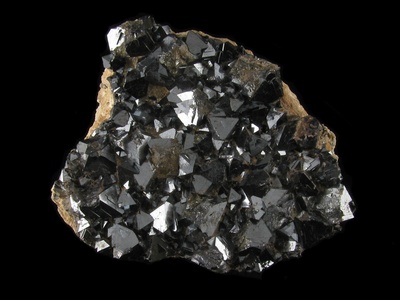
| Magnetite | ore/industrial mineral | black metallic grains, strongly magnetic | Magnetite-bearing skarns and igneous bodies around Tombstone and Morenci |
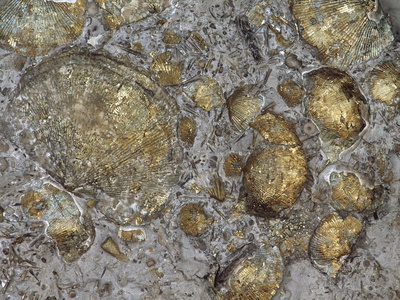
| Pyrite | collector specimen/ore | brassy metallic cubes and pyritohedra | Many Arizona mines including Bisbee and Jerome districts |
| Goethite | secondary iron mineral/collector specimen | yellow-brown to dark brown earthy or fibrous masses | Morenci (Greenlee County), Bisbee (Cochise County) |
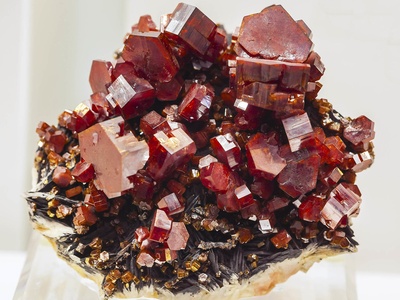
| Vanadinite | collector specimen/ore | bright red to brown hexagonal crystals | Mammoth-St. Anthony (Pinal County), Globe-Miami area (Gila County) |
| Calcite | collector specimen/industrial mineral | clear to white rhombohedral crystals, variable colors | Many Arizona localities including Bisbee and Tombstone districts |
| Dolomite | industrial mineral | white to gray rhombohedral crystals, sugary masses | Sedimentary sequences across Arizona, mining districts |
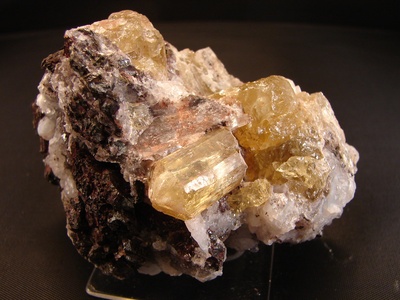
| Apatite | industrial mineral/collector specimen | green, blue, or colorless hexagonal prisms | Pegmatite and skarn localities in Pinal and Yavapai Counties |
| Jarosite | secondary sulfate/collector specimen | yellow to brown earthy or crystalline masses | Morenci (Greenlee County), Ajo (Pima County) |
| Alunite | secondary mineral/industrial specimen | white to pinkish granular masses | Silver Bell and porphyry copper districts (Pima County) |
| Acanthite | silver ore/collector specimen | metallic lead-gray to dark silvery black crystals | Tombstone (Cochise County), historic silver districts |
Images and Descriptions
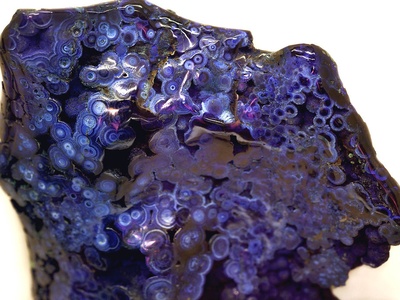
Azurite
A vivid blue copper carbonate that forms striking crystals and crusts in oxidized copper veins. Popular with collectors and common at Bisbee and other Arizona copper districts, azurite signals copper-rich weathering zones and makes attractive display specimens.
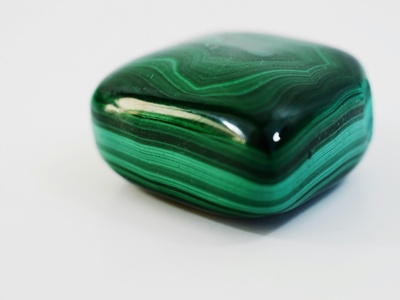
Malachite
Green copper carbonate often replacing other copper ores; malachite forms botryoidal and banded masses. It’s a classic Arizona mineral prized by collectors and sometimes cut for decorative cabochons and inlay work.
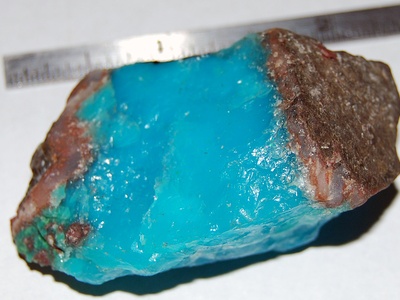
Chrysocolla
A hydrated copper silicate that makes brilliant blue-green masses and crusts. Very common in Arizona copper mines, chrysocolla is popular for lapidary use and as attractive matrix material for collectors.

Turquoise
Famous phosphate gemstone that occurs in Arizona host rocks and mine deposits. Kingman and other districts produce gem turquoise prized for jewelry; it’s a cultural icon and a key rockhounding target.
Cuprite
A copper oxide with deep red, gemmy crystals and earthy forms. Cuprite is an important indicator of oxidized copper zones and produces attractive specimens prized by collectors.
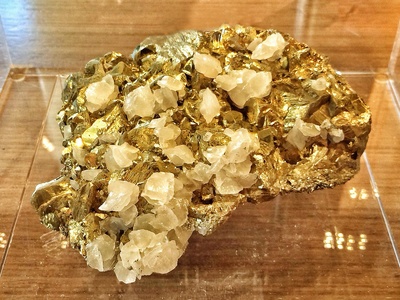
Chalcopyrite
The most ubiquitous copper-iron sulfide ore in Arizona porphyry and massive sulfide deposits. Chalcopyrite is the main source of copper; it’s common in ore veins and valued by miners and mineral collectors.
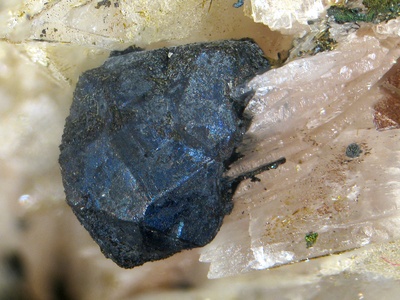
Bornite
A copper-iron sulfide known as “peacock ore” for its colorful tarnish. Occurs in Arizona copper deposits and is a favorite display mineral for collectors because of its brilliant surface colors.
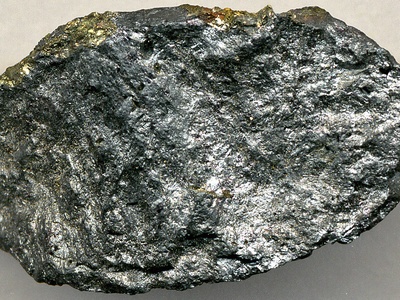
Chalcocite
A high-grade copper sulfide ore that produces dark metallic masses and crystals. Chalcocite is economically important in Arizona copper mines and commonly found in supergene-enriched zones.
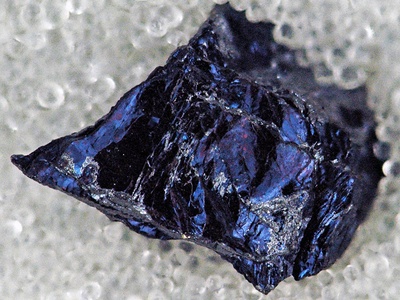
Covellite
A striking deep indigo copper sulfide that forms thin iridescent plates and crusts. Covellite is a sought-after collector mineral in Arizona oxidized zones.
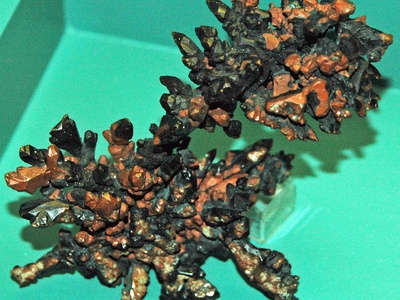
Tenorite
A copper oxide forming black, often earthy or botryoidal coatings in oxidized portions of copper deposits. Tenorite marks advanced oxidation and is part of Arizona’s diverse copper mineral suites.
Brochantite
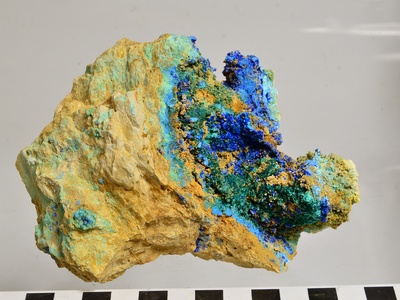
A copper sulfate-hydroxide that forms vivid green, needle-like crystals in oxidized zones. Brochantite is valued by collectors and indicates copper-rich weathering.
Atacamite
A chloride-bearing copper mineral that forms green crystals and crusts in dry oxidized copper deposits. Atacamite is a colorful collector favorite in Arizona’s arid mine environments.
Rosasite
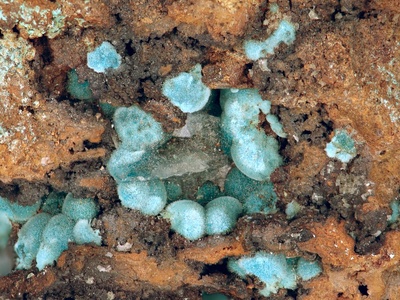
A copper-zinc carbonate·hydroxide that forms attractive blue-green botryoidal crusts and small crystals. Rosasite is commonly associated with chlorargyrite and other secondary minerals in Arizona old workings.
Aurichalcite
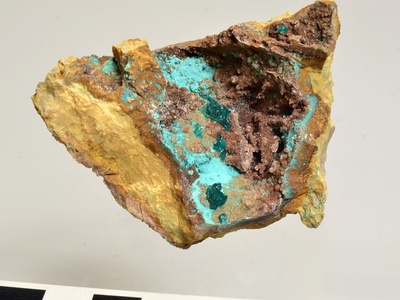
A soft, delicate copper-zinc carbonate that forms pale blue tufts and crusts. Aurichalcite is a common supergene mineral in Arizona’s oxidized zinc-copper mines and popular with collectors for its fine habits.
Linarite
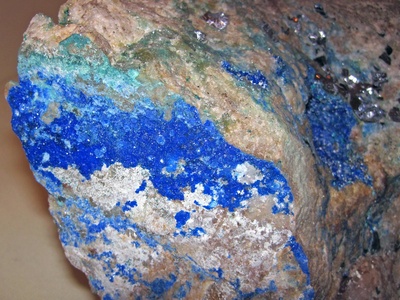
A striking cobalt-blue basic sulfate that forms needle-like crystals in oxidized copper-iron deposits. Linarite is a showy collector mineral historically found at Bisbee and other Arizona mines.
Pseudomalachite
A copper phosphate that resembles malachite but is chemically distinct. Pseudomalachite forms attractive botryoidal masses and crusts in Arizona oxidized zones, interesting to both collectors and researchers.
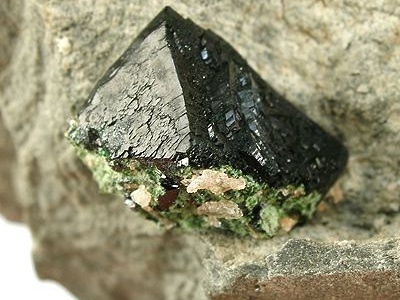
Libethenite
A rare copper phosphate forming small, bright green crystals in oxidized arsenic-rich veins. Libethenite is prized for its vivid color and aesthetic crystal habit in Arizona localities.
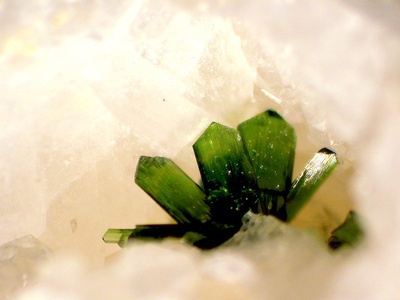
Olivenite
A copper arsenate that yields olive-green crystals and aggregates in oxidized zones. Olivenite is a classic Arizona collector mineral, occurring with other secondary copper arsenates.
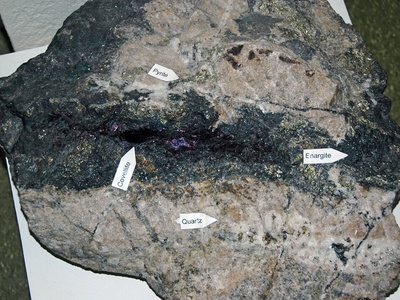
Enargite
A copper-arsenic sulfide ore present in some Arizona high-sulfidation systems. Enargite is an important copper ore mineral and forms interesting metallic crystals valued by collectors.
Tetrahedrite
A complex copper-antimony sulfosalt occurring in many Arizona polymetallic veins. Tetrahedrite is both an ore mineral and a distinctive specimen for collectors due to its crystal forms.
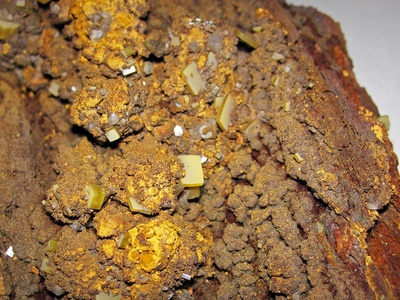
Wulfenite
A lead molybdate that forms brilliant orange-yellow thin tabular crystals. Wulfenite is one of Arizona’s most celebrated collector minerals, with showy specimens from several western Arizona mines.
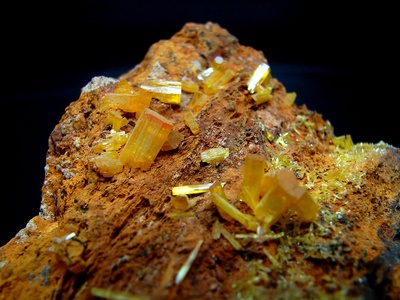
Mimetite
A lead-arsenate chloride forming yellow prismatic or barrel-shaped crystals in oxidized lead zones. Mimetite specimens from Arizona are sought by collectors for their bright colors and crystal forms.
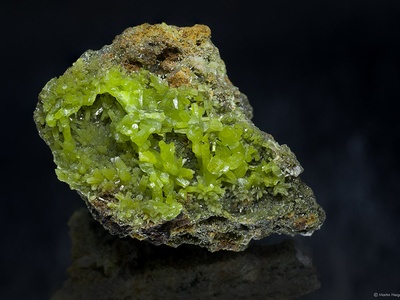
Pyromorphite
A lead phosphate forming small bright green hexagonal crystals on oxidized lead deposits. Pyromorphite from Arizona is valued by collectors and indicates secondary mineralization in ore shoots.
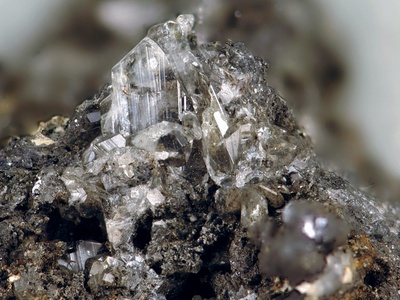
Cerussite
Lead carbonate that forms gemmy, high-luster crystals and twinned forms in oxidation zones. Cerussite is an important, attractive secondary lead mineral found in Arizona’s historic lead-silver districts.
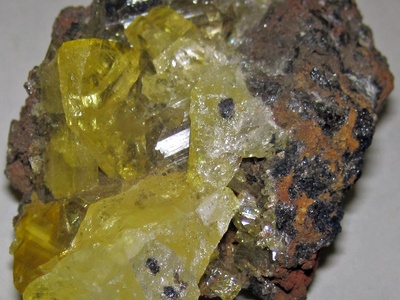
Anglesite
Lead sulfate formed by oxidation of galena; anglesite produces well-formed, lustrous crystals that are popular with collectors in Arizona’s oxidized mines.
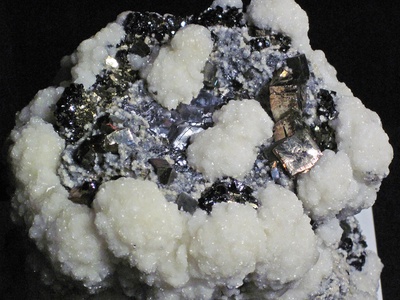
Galena
Primary lead sulfide ore occurring in many Arizona vein deposits. Galena is an important historical ore mineral and forms cubic crystals that attract mineral collectors.
Sphalerite
The main zinc ore mineral often found with galena and other sulfides. Sphalerite occurs in Arizona’s polymetallic veins and makes attractive crystal specimens when well-formed.
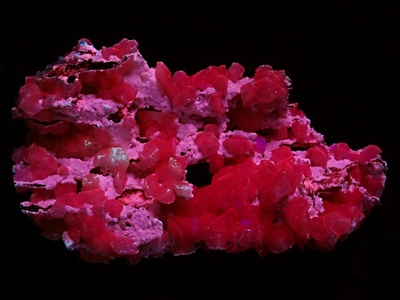
Smithsonite
Zinc carbonate that forms smooth botryoidal and globular masses in oxidized zones. Smithsonite from Arizona is popular for colorful, aesthetic specimens and sometimes used as ornamental stone.
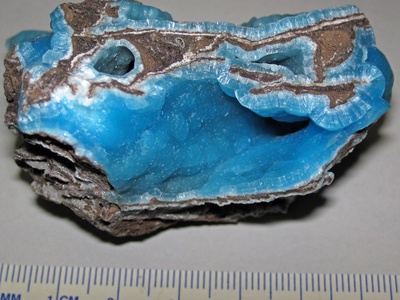
Hemimorphite
A zinc silicate forming striking radiating or botryoidal crystals in oxidized zinc deposits. Hemimorphite is a sought-after collector mineral in several Arizona mines.
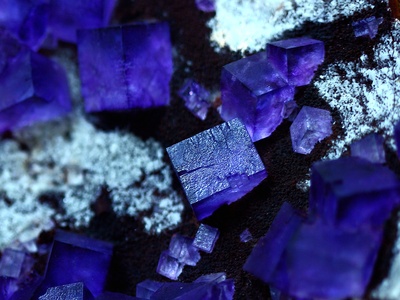
Fluorite
Calcium fluoride that forms well-developed cubic crystals in vein systems. Fluorite occurs in Arizona and is used industrially; colorful crystals are popular with collectors.
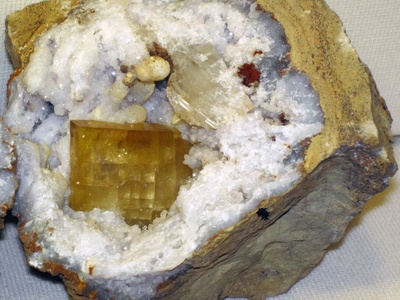
Barite
A common barium sulfate that forms bladed or tabular crystals and massive deposits. Barite occurs with polymetallic ores in Arizona and is used industrially as well as collected for crystal forms.
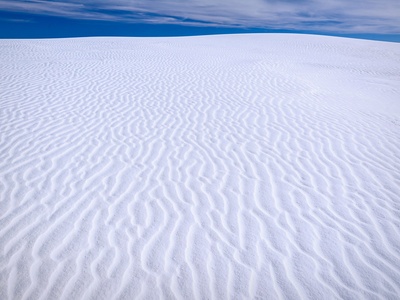
Gypsum
A common sulfate mineral forming clear to fibrous crystals and selenite plates. Gypsum appears in evaporite settings and mine workings in Arizona and has industrial uses in construction.
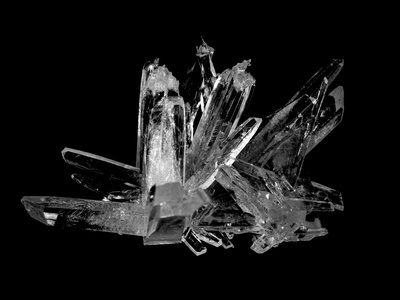
Quartz
One of the most common minerals, forming transparent to smoky prismatic crystals. Arizona produces attractive quartz specimens and occasional gem-quality pieces used in jewelry and as classic collector specimens.
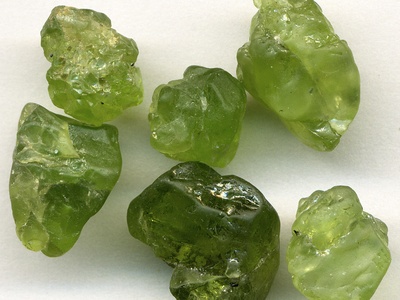
Peridot (Olivine)
Gem-quality olivine known as peridot occurs in mantle-derived basaltic host rocks in Arizona. San Carlos and other localities produce gem peridot that is cut for jewelry and collected by enthusiasts.
Hematite
An iron oxide important as an ore and common alteration product. Hematite forms metallic crystals and earthy red ochres in Arizona and is significant for both mining and collectors.
Magnetite
An iron oxide that forms magnetic black grains and massive ore bodies. Magnetite is an iron ore in Arizona and occurs in skarns and igneous-related deposits.
Pyrite
“Fool’s gold” is abundant in Arizona sulfide deposits, forming cubic and striated crystals. Pyrite is common, makes aesthetic specimens, and indicates sulfide mineralization.
Goethite
An iron hydroxide forming earthy or acicular masses during oxidation of iron-bearing minerals. Goethite colors soils and gossans and is common in Arizona mine oxidation zones.
Vanadinite
A lead vanadate that forms vivid red hexagonal crystals in oxidized lead deposits. Vanadinite specimens from Arizona are prized for their color and crystal form.
Calcite
A ubiquitous carbonate mineral forming a wide variety of crystal habits and colors. Calcite is widespread in Arizona veins, cavities, and sedimentary rocks, popular with collectors and used industrially.
Dolomite
A common carbonate mineral forming rhombohedral crystals and massive beds. Dolomite occurs in Arizona’s sedimentary rocks and as alteration of limestone, with both geological and industrial importance.
Apatite
A phosphate mineral occurring in pegmatites, skarns, and hydrothermal veins. Apatite in Arizona appears as prismatic crystals and is an important phosphate mineral for study and collection.
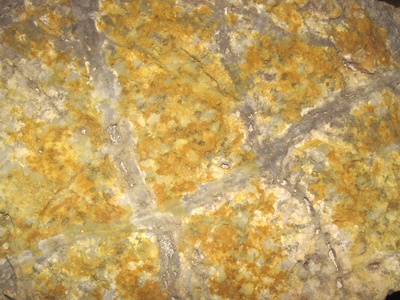
Jarosite
An iron sulfate common in acidic, oxidized zones of copper deposits. Jarosite forms yellow crystalline crusts in Arizona mines and is a marker of advanced sulfide oxidation.
Alunite
An alteration mineral formed in hydrothermally altered rocks above porphyry copper systems. Alunite is notable in Arizona’s mining districts and can indicate acidic sulfate alteration.
Acanthite
A major silver sulfide mineral that forms dark metallic crystals in Arizona’s historic silver mines. Acanthite specimens are sought after by collectors and reflect past silver mining in the state.