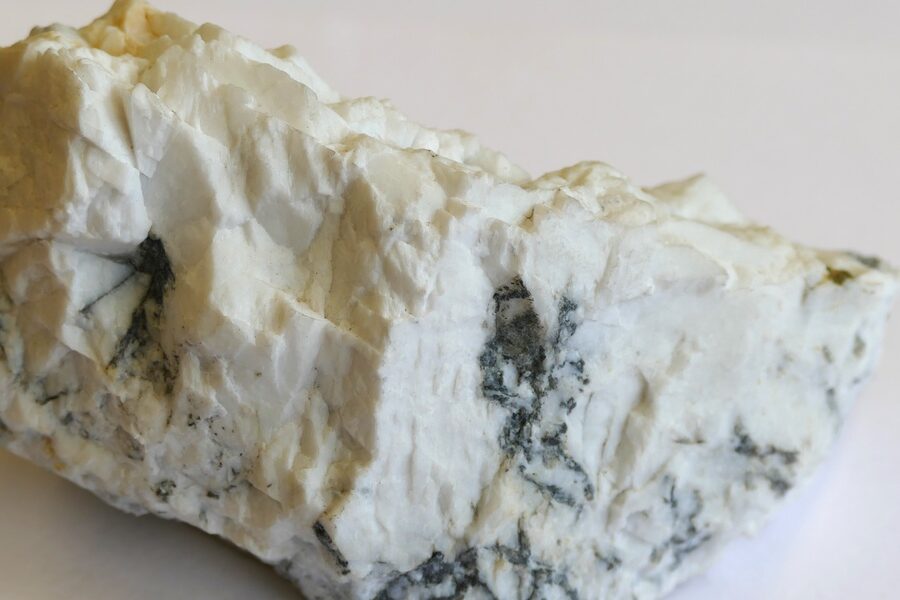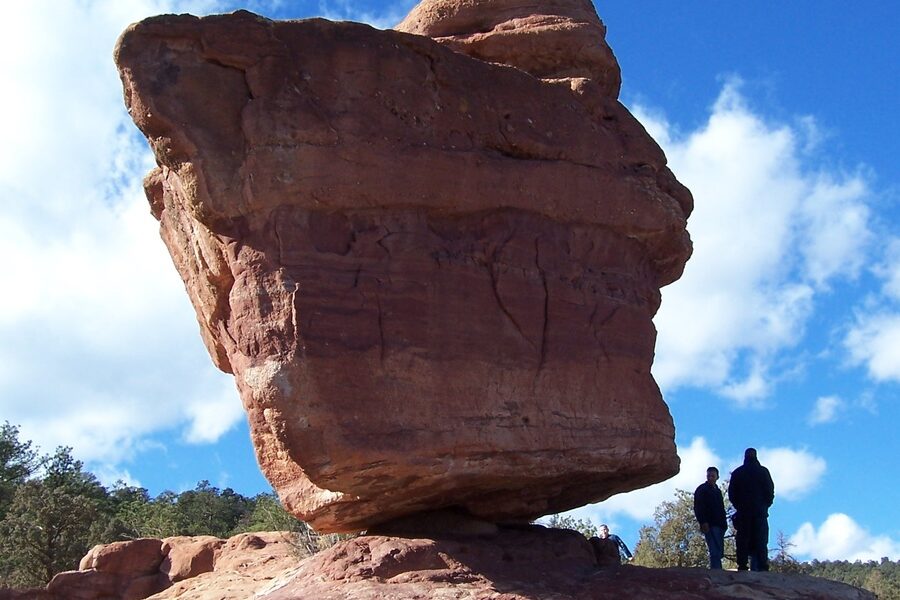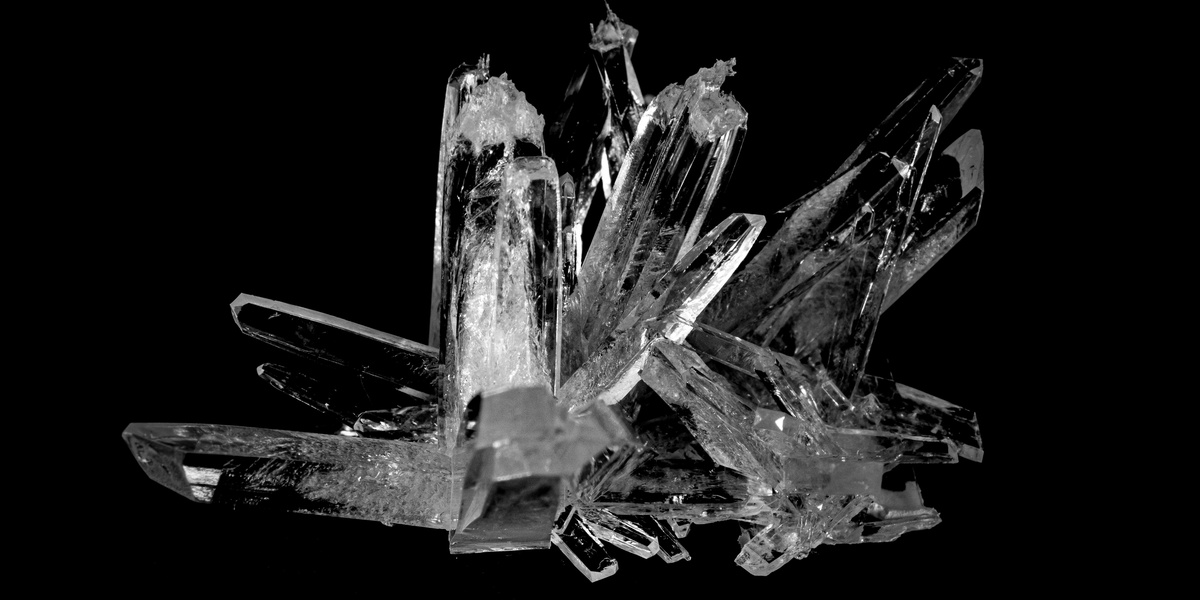
From the red cliffs of southern canyons to the salt flats and alpine pockets, Utah’s varied landscapes reveal a long, complex geologic story — volcanic flows, sedimentation and hydrothermal activity have left a wide mineral record across the state.
There are 42 Minerals in Utah, ranging from Albite to Uranophane; for each entry the data are shown as Formula,Hardness (Mohs),Main localities (Utah counties/areas), which you’ll find below.
How can I identify common minerals in Utah while out in the field?
Start with simple observations: color, crystal habit, and luster, then use a pocket knife or a glass plate to test hardness and a ceramic tile for streak. Note the locality (county/formation) since many minerals are tied to specific areas, photograph specimens, and consult the list below for formula and hardness to confirm identifications.
Are there restrictions or safety concerns when collecting minerals in Utah?
Always check land ownership and local rules—national parks and some wilderness areas prohibit collecting, and private land requires permission. Be cautious with uranium-bearing minerals like uranophane (avoid prolonged handling and store samples safely), follow local regulations, and use proper PPE when digging or handling unknown specimens.
Minerals in Utah
| Name | Formula | Hardness (Mohs) | Main localities (Utah counties/areas) |
|---|---|---|---|
| Quartz | SiO2 | 7 | Statewide; Thomas Range (Juab), Bingham Canyon (Salt Lake) |
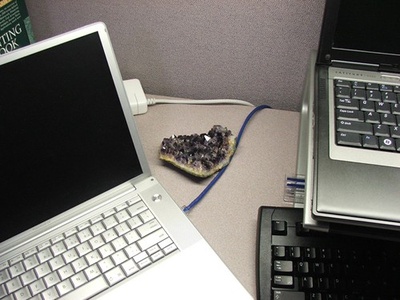
| Amethyst | SiO2 | 7 | Thomas Range (Juab), central Utah pegmatites |
| Smoky Quartz | SiO2 | 7 | Little Cottonwood Canyon (Salt Lake), Thomas Range (Juab) |
| Chalcedony | SiO2 | 7 | Statewide gravels and cavities; Capitol Reef area |
| Selenite | CaSO4·2H2O | 2 | Great Salt Lake Desert (Tooele/Box Elder), Dugway area |
| Gypsum | CaSO4·2H2O | 2 | Great Salt Lake Desert (Tooele/Box Elder), southwestern Utah |
| Halite | NaCl | 2.5 | Bonneville Salt Flats (Box Elder), Great Salt Lake shores |
| Calcite | CaCO3 | 3 | Bingham Canyon (Salt Lake), Park City (Summit) |
| Dolomite | CaMg(CO3)2 | 3.5 | Carbonate districts; Bingham Canyon (Salt Lake) |
| Aragonite | CaCO3 | 3.5 | Lake and cave deposits; Salt Lake region |
| Fluorite | CaF2 | 4 | Spor Mountain (Beaver), various mine veins |
| Topaz | Al2SiO4(F,OH)2 | 8 | Topaz Mountain, Thomas Range (Juab) |
| Beryl | Be3Al2Si6O18 | 7.5 | Thomas Range (Juab), pegmatites statewide |
| Tourmaline | Complex borosilicate | 7 | Thomas Range (Juab), central pegmatites |
| Apatite | Ca5(PO4)3(F,Cl,OH) | 5 | Pegmatites, Thomas Range (Juab) |
| Orthoclase | KAlSi3O8 | 6 | Little Cottonwood Canyon (Salt Lake), intrusive rocks |
| Microcline | KAlSi3O8 | 6 | Granites and pegmatites (Wasatch, Juab) |
| Albite | NaAlSi3O8 | 6 | Pegmatites and greisens; Thomas Range (Juab) |
| Muscovite | KAl2(AlSi3O10)(OH)2 | 2.5 | Pegmatites, Bingham Canyon (Salt Lake) |
| Biotite | K(Mg,Fe)3AlSi3O10(OH)2 | 2.5 | Granites and metamorphics (Wasatch) |
| Pyrite | FeS2 | 6 | Mines statewide; Bingham Canyon (Salt Lake) |
| Marcasite | FeS2 | 6 | Tintic District (Juab/Utah), mine veins |
| Chalcopyrite | CuFeS2 | 4 | Bingham Canyon (Salt Lake), porphyry ores |
| Bornite | Cu5FeS4 | 3 | Bingham Canyon (Salt Lake), hydrothermal veins |
| Chalcocite | Cu2S | 3.5 | Bingham Canyon (Salt Lake), sulfide veins |
| Galena | PbS | 2.5 | Park City (Summit), Tintic District (Juab/Utah) |
| Sphalerite | (Zn,Fe)S | 4 | Tintic District (Juab/Utah), Park City (Summit) |
| Hematite | Fe2O3 | 6 | Iron County iron districts, Bingham Canyon (Salt Lake) |
| Magnetite | Fe3O4 | 6 | Iron County, igneous intrusions (Wasatch) |
| Goethite | FeO(OH) | 5.5 | Weathered iron deposits, mine oxidized zones statewide |
| Malachite | Cu2CO3(OH)2 | 3.5 | Bingham Canyon (Salt Lake), oxidized copper zones |
| Azurite | Cu3(CO3)2(OH)2 | 3.5 | Bingham Canyon (Salt Lake), Tintic District |
| Native Copper | Cu | 3 | Oquirrh Mountains/Bingham Canyon (Salt Lake) |
| Native Silver | Ag | 2.5 | Park City (Summit), Tintic District (Juab/Utah) |
| Native Gold | Au | 2.5 | Lode and placer districts (Duchesne, Tooele regions) |
| Molybdenite | MoS2 | 1.5 | Bingham Canyon (Salt Lake), porphyry systems |
| Barite | BaSO4 | 3.5 | Tintic District (Juab/Utah), Spor Mountain (Beaver) |
| Autunite | Ca(UO2)2(PO4)2·nH2O | 2.5 | San Juan County (Colorado Plateau), White Canyon |
| Carnotite | K2(UO2)2(VO4)2·3H2O | 2.5 | San Juan & Grand Counties (Colorado Plateau) |
| Uranophane | Ca(UO2)2(SiO3OH)2·5H2O | 2.5 | Colorado Plateau (San Juan County) |
| Opal | SiO2·nH2O | 5.5 | Southwestern Utah (Washington County), various seams |
| Celestine | SrSO4 | 3.5 | Evaporite-bearing basins; Great Salt Lake region |
Images and Descriptions
Quartz
Common, glassy crystal found statewide in veins and pegmatites. Clear, milky, or smoky forms are collectible; forms well-terminated crystals at Thomas Range and gangue veins at Bingham Canyon, easy to identify by its hardness and conchoidal fracture.
Amethyst
Purple variety of quartz prized by collectors. Occurs as crystals and drusy coatings in vugs; color ranges pale to deep purple. Notable at Thomas Range pockets, often cut for jewelry or kept as display crystals.

Smoky Quartz
Brown to black variety of quartz common in alpine veins and pegmatites. Smoky crystals form well-shaped points and geodes; identified by smoky color, transparency, and typical quartz hardness.
Chalcedony
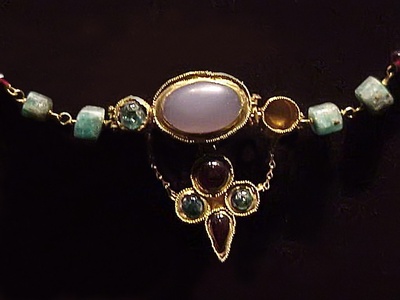
Cryptocrystalline quartz that forms rounded nodules and bands. Often found as botryoidal or concentric patterns; attractive for lapidary work and small cabinet specimens from Utah gravels and cavities.
Selenite
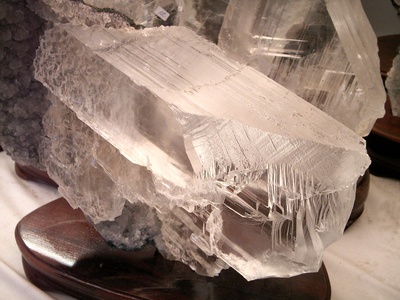
Transparent, bladed gypsum variety forming large, clear crystals or sheet-like masses. Notable for soft, easily scratched surfaces and pearly luster; spectacular large crystals occur in playa and evaporite settings.

Gypsum
Common evaporite mineral forming needles, fibrous masses, and plates. Soft and paper-like; forms in lakebeds and playas and often associated with halite, making it easy to identify and collect.
Halite
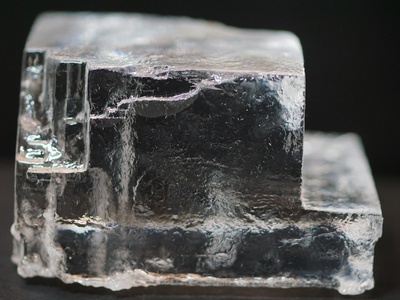
Rock salt from ancient lake evaporation, white to translucent cubic crystals with salty taste. Forms crusts and crystals on salt flats; brittle and easy to dissolve so typically left in place by collectors.
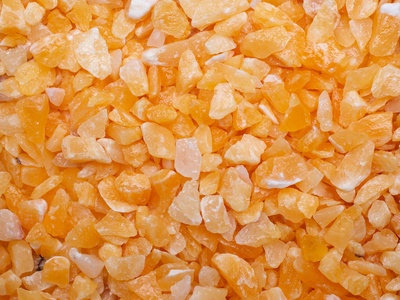
Calcite
Widespread carbonate forming rhombohedral crystals, scalenohedra, and crystalline masses. Exhibits strong double refraction and reacts with dilute acid; bright, varied habits make it common and collectible.
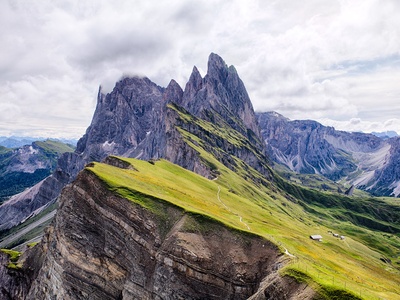
Dolomite
Calcium-magnesium carbonate forming saddle-shaped rhombs and botryoidal masses. Often associ ated with calcite in carbonate rocks; recognizable by curved crystal faces and weaker reaction to acid.
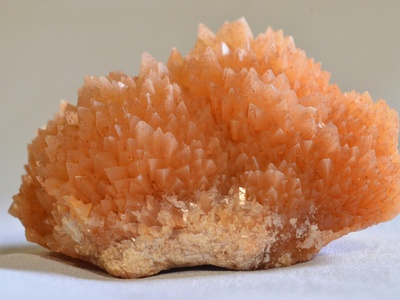
Aragonite
A carbonate polymorph of calcite forming needle-like, branching crystals and encrustations. Common in springs, evaporite settings, and cave deposits; notable for radiating clusters and aragonite’s distinctive crystal habit.
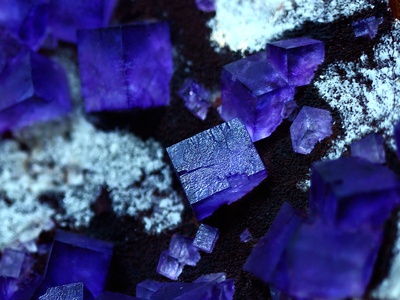
Fluorite
Colorful cubic crystals from colorless to purple, green, or blue. Found in hydrothermal veins and fluorine-rich deposits; fluoresces under UV and is valued by collectors for crystal form and color.
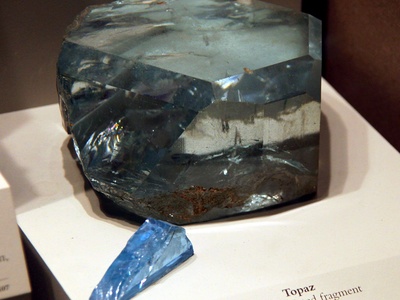
Topaz
Well-known gem mineral forming pale to deep yellow, blue, or colorless prismatic crystals. Hard and lustrous, topaz from the Thomas Range is prized for gem cutters and as collector specimens.
Beryl
Beryl occurs as hexagonal prismatic crystals; gem varieties include emerald and aquamarine. Collectors seek gemmy and crystal specimens from pegmatites and pneumatolitic veins in central Utah.
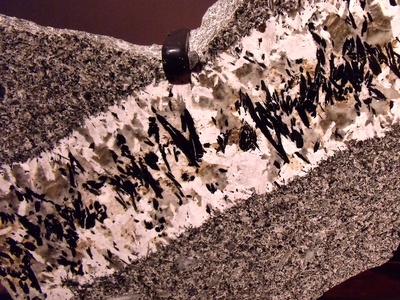
Tourmaline
Black to colorful prismatic crystals from the tourmaline group occur in pegmatites. Elbaite (colorful) and schorl (black) are found; striated crystals and good terminations make them attractive collector pieces.
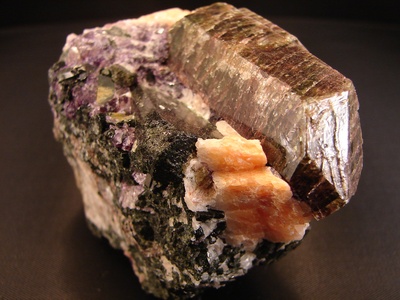
Apatite
Common phosphate mineral in pegmatites and hydrothermal veins, forming hexagonal prisms. Often green, blue, or brown; used to recognize phosphate-rich pegmatites and occasionally cut as a collector gem.
Orthoclase
A potassium feldspar that forms blocky, often pinkish crystals in granites and pegmatites. Shows two cleavage directions and can form attractive crystal twins; common in Utah granitic terrains.
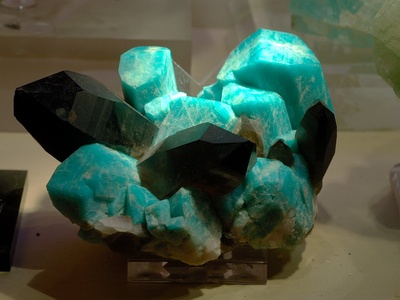
Microcline
A potassium feldspar variety that forms distinctive green (amazonite) or pink crystals. Amazonite microcline from pegmatites is prized for color and blocky crystal habit and is a classic collector mineral.
Albite
Sodium-rich plagioclase feldspar occurring as white to gray tabular crystals. Common in pegmatites and hydrothermal zones; helpful in identifying feldspathic rocks and pegmatitic environments.
Muscovite
Silver to pale mica forming thin flexible sheets. Common in pegmatites and altered rocks; easily peeled into sheets and valued as an indicator of pegmatitic mineralization.
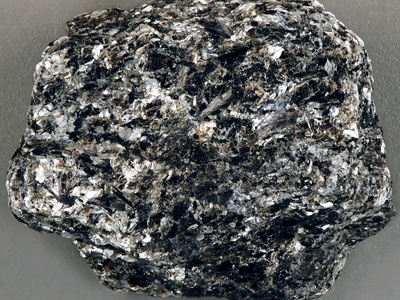
Biotite
Dark mica common in igneous and metamorphic rocks. Forms shiny, brown to black flaky sheets; used by collectors and geologists to interpret rock histories.
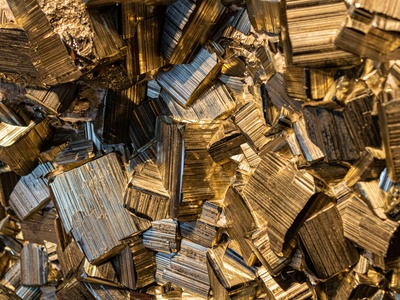
Pyrite
Brassy metallic sulfide forming cubic crystals and masses known as “fool’s gold.” Common in hydrothermal veins and sedimentary deposits, easily identified by streak, crystal habit, and hardness.
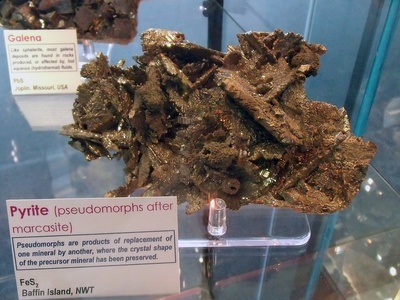
Marcasite
Iron sulfide similar to pyrite but forms pale, radiating, or spearhead crystals. Often brittle and oxidizes to brown iron oxides; collected for unusual crystal habits in historical mines.
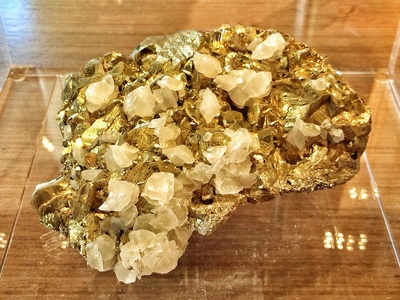
Chalcopyrite
A brassy copper-iron sulfide common in copper deposits. Tarnishes colorful iridescence, valuable as an ore mineral; forms massive and crystalline aggregates in Utah porphyry systems.
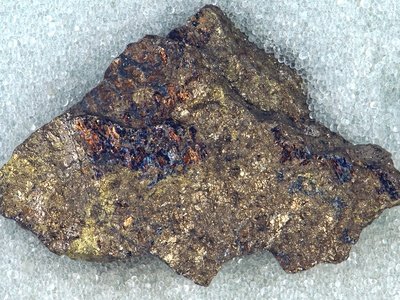
Bornite
Also called peacock ore for its iridescent tarnish, bornite is a copper-iron sulfide. Softish and colorful when weathered, notable in copper-rich deposits and as attractive display material.
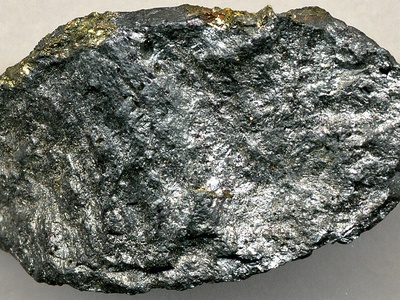
Chalcocite
A high-copper sulfide important as an ore; dark metallic to black, often massive. Forms in supergene enrichment zones and is a key copper-bearing mineral in Utah deposits.
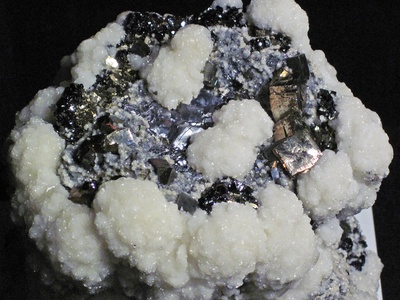
Galena
Dense, metallic lead sulfide forming cubic, cleavage-dominant crystals. Common in silver-lead veins; heavy feel and bright metallic luster make it easy to recognize in Utah mining districts.
Sphalerite
Main zinc ore, forming resinous to submetallic crystals that range brown to black. Commonly associated with galena and other sulfides in Utah base-metal mines.
Hematite
Iron oxide occurring as earthy to metallic masses and specular crystals. Found in banded iron deposits and hydrothermal zones; distinctive red streak and high density aid identification.
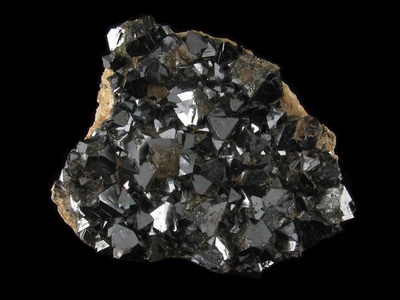
Magnetite
Black magnetic iron oxide common in igneous and metamorphic rocks. Often occurs as octahedral crystals or granular masses; magnetism helps confirm identification in the field.
Goethite
An iron oxyhydroxide forming brownish botryoidal or stalactitic masses from weathering of sulfides. Common as an oxidation product in Utah mines and soils; earthy luster and yellow-brown color are typical.
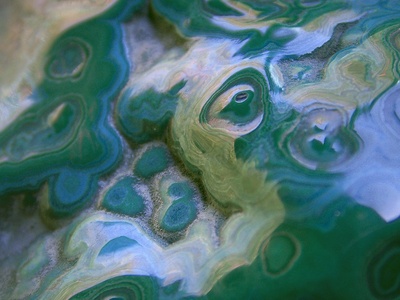
Malachite
Green copper carbonate forming botryoidal crusts and banded masses. Often accompanies azurite and is a classic indicator of copper oxidation zones and attractive for collectors.
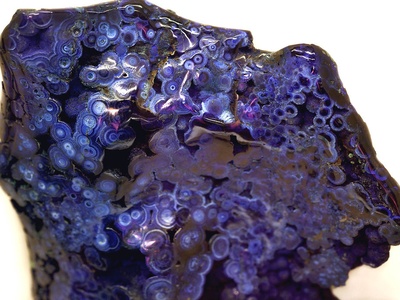
Azurite
Deep blue copper carbonate that forms striking crusts and nodules in oxidized copper deposits. Prized for color and association with malachite on old mine dumps and vein exposures.
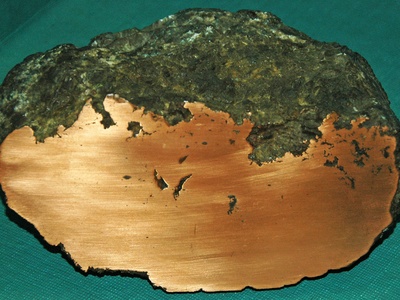
Native Copper
Metallic reddish-brown native metal occurring as wires, masses, and coatings. Collectible when preserved in matrices; indicates local copper mineralization and is a classic novelty specimen.
Native Silver
Metallic silver occurring as wires, masses, and alloyed with other native elements. Historically important in Utah mining districts, easily recognized by bright metallic luster and malleability.
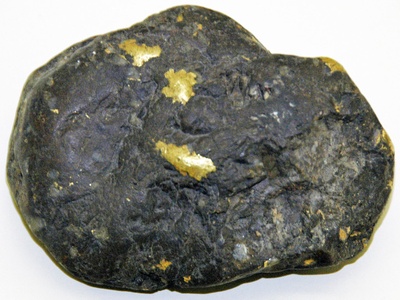
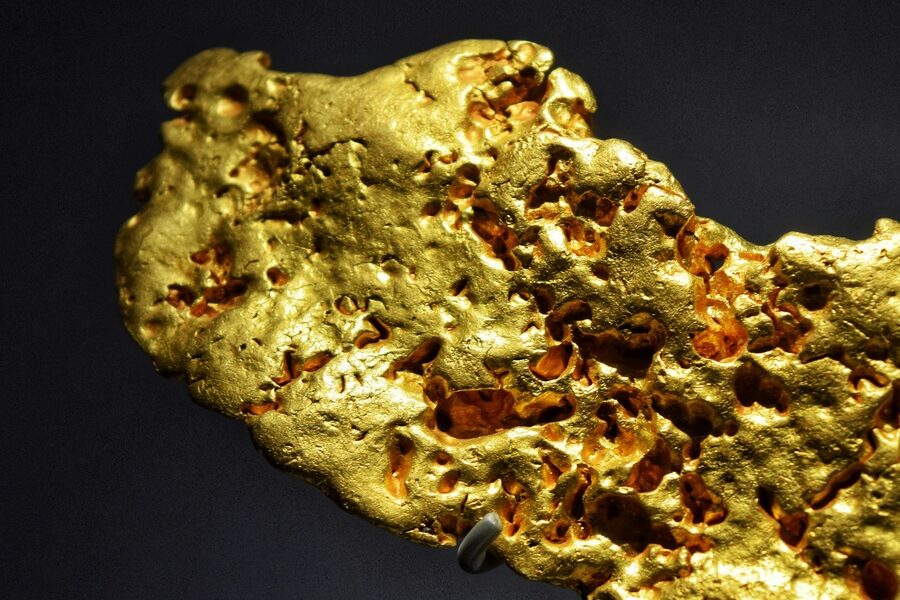
Native Gold
Metallic yellow native metal occurring in quartz veins and placer gravels. Heavy, malleable, and unmistakable when visible; historically sought in Utah’s gold-bearing districts and small placer operations.
Molybdenite
Soft, lead-gray metallic molybdenum sulfide with a flaky habit. Occurs in porphyry and hydrothermal systems as a primary ore; greasy feel and low hardness are diagnostic.
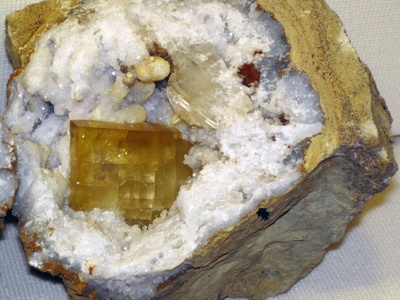
Barite
Heavy sulfate mineral forming tabular crystals or massive layers in veins. Noted for high specific gravity and white-to-colorless appearance; common gangue mineral in various Utah deposits.
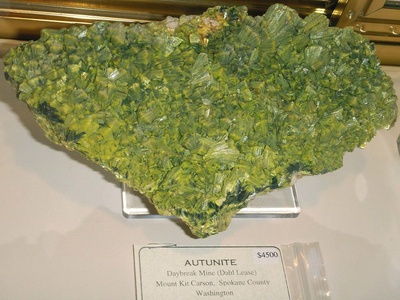
Autunite
Yellow-green, fluorescent uranium phosphate forming tabular crystals and coatings. Found in sandstone-hosted uranium deposits of the Colorado Plateau; radioactive so handled with care.
Carnotite
Bright yellow to greenish uranium-vanadium mineral in sandstones. Historically important ore of uranium and vanadium on the Colorado Plateau; vibrant color makes it distinctive.
Uranophane
Yellow, silky to fibrous secondary uranium mineral forming crusts and coatings. Common in oxidized uranium deposits; fluorescent and radioactive, typically encountered in weathered zones.
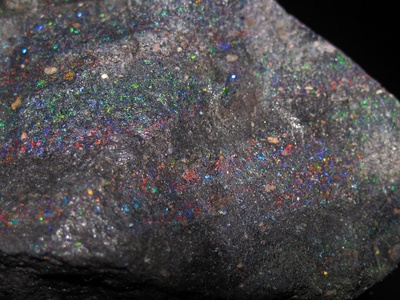
Opal
Hydrated silica occurring as seam, fire, and potch opal. Forms in cavities and replacement deposits; valued for play-of-color in gem varieties and as interesting seam fillings in Utah.
Celestine
Strontium sulfate forming delicate tabular crystals and masses in evaporites and carbonate-hosted deposits. Pale blue to colorless crystals are attractive; occurs with gypsum and halite in playa settings.