In the mid-19th century, whale oil lit cities and powered industry — today the same animals help stabilize ocean ecosystems and surprise scientists with feats of intelligence.
That shift—from resource to steward—matters for fisheries, carbon storage, tourism and scientific knowledge (and for coastal jobs from Alaska to South Africa). The IWC moratorium on commercial whaling in 1986 marks a turning point: protections since then have enabled recovery in some populations and spurred research programs that revealed unexpected roles for whales in ocean health.
Below are 10 interesting facts about whales that span biology, behavior, and the ways people interact with and protect them.
Biology and Physiology

Whales show extremes of size and specialized anatomy, from the plumbing of rorqual throats to sensitive hearing tuned for long-range sound. They evolved physiological adaptations for deep dives and long migrations, and their feeding systems range from fine baleen filters to precise toothed hunting. The next three facts cover size, sound production, and those varied feeding strategies.
1. The blue whale is the largest animal ever known
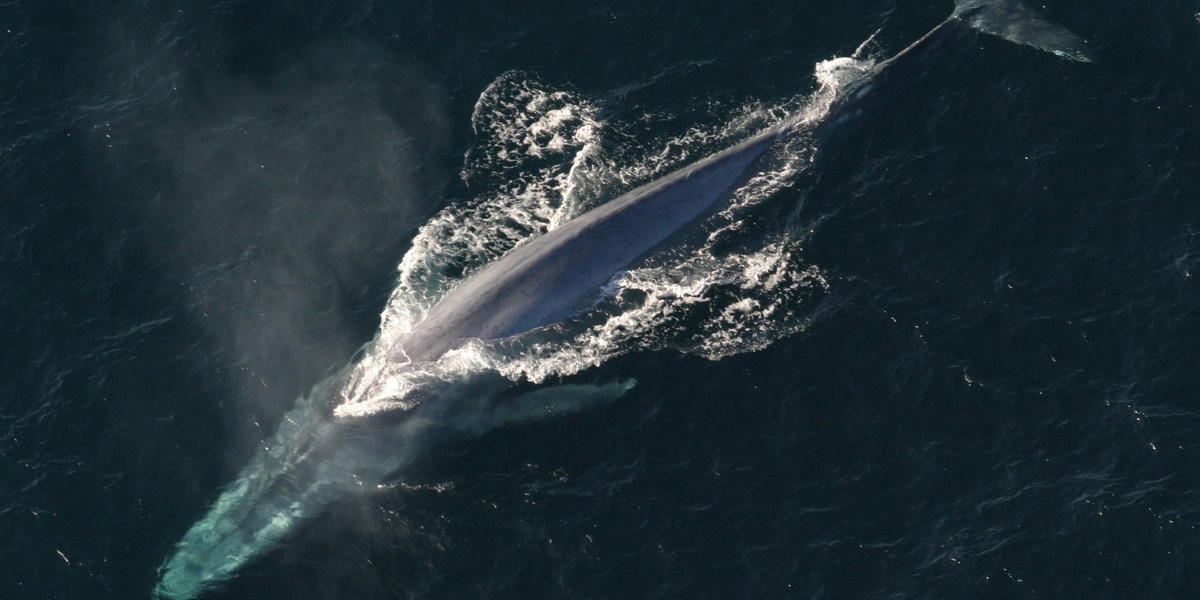
Blue whales (Balaenoptera musculus) are the largest animals to have lived on Earth, routinely reaching about 25–30 meters (80–100 feet) in length and weighing roughly 150–200 metric tons.
Scientists document these sizes from measured strandings and coordinated ship- and aerial-survey programs; museum records and survey specimens support the upper-range estimates. A feeding blue whale can consume several tons of Antarctic krill in a single day during peak feeding, which helps explain their seasonal migrations between polar feeding grounds and warmer breeding areas.
2. Whale songs and vocalizations are astonishingly complex
Humpback whales produce long, structured songs that can last from about 5 to 30 minutes and repeat in sequences; other species make clicks, moans and infrasound that travel for hundreds of kilometers.
Researchers using passive acoustic monitoring (NOAA and academic teams) have tracked frequency ranges from low infrasound up into several kilohertz, and discovered regional “dialects” that change over years (work beginning in the 1970s helped reveal these patterns). Scientists now use calls to estimate population size, assess ship-noise impacts, and locate whales for protection and study.
3. Feeding adaptations vary: baleen filters vs. toothed hunting
Whales split into two broad feeding strategies: baleen whales (mysticetes) filter tiny prey with baleen plates, while toothed whales (odontocetes) pursue larger prey using echolocation and coordinated hunting.
Rorquals like blue and humpback whales perform lunge-feeding, expanding throat pleats to engulf huge volumes—sometimes many tons—of water and prey. Toothed species such as sperm whales dive deep for squid, and dolphins use teamwork and sound to herd fish. Humpback bubble-net feeding and sperm whale deep-sea foraging are concrete examples of how anatomy and behavior match diet and habitat.
Behavior, Intelligence, and Social Life

Many whale species are social and exhibit cultural traditions: learned hunting techniques, stable family groups, and long-distance migrations are common. These behaviors reflect high cognitive abilities and create population-specific identities that matter for conservation.
The following facts describe social structure, cultural transmission and migrations that tie distant ecosystems together.
4. Many whale species live in stable social groups or pods
Toothed whales, especially orcas, often form tight matrilineal groups that remain together for decades. Michael Bigg’s photo-identification work in the 1970s first revealed individual residency and life-long associations in the Pacific Northwest.
Resident and transient killer whales in that region show distinct dialects and hunting styles; removing a single adult—through capture or death—can disrupt pod structure and reproduction. That social stability has direct conservation implications for management and recovery.
5. Whales exhibit cultural behaviors and learned hunting tactics
Certain hunting methods and social rituals spread by learning rather than inheritance. For example, some orca groups in Patagonia and the southern cone learned to intentionally beach themselves to catch seals, a technique documented in observational studies during the 1990s and 2000s.
Humpback bubble-net feeding is a learned cooperative tactic that appears in discrete communities and can persist across years. Because these cultural traits are local, losing a population can mean losing unique behaviors forever.
6. Some whales migrate thousands of miles each year
Many baleen whales migrate seasonally between high-latitude feeding areas and low-latitude breeding sites. Eastern North Pacific gray whales make among the longest known migrations—roughly 12,000–14,000 miles round-trip.
Satellite tagging and tracking programs (NOAA and university teams) have mapped stopovers and critical habitats along these routes, showing how migrations link feeding grounds, coastal ecosystems and the threats whales face in multiple national jurisdictions.
Human Interaction, Conservation, and Climate Roles

Whales have been central to human economies for centuries, and modern policy and science have shifted priorities toward protection and ecosystem services such as carbon storage. Legal milestones like the IWC moratorium in 1986 and tools like marine protected areas and vessel-speed rules now guide recovery and risk reduction.
Below are facts that connect history, commerce and climate with practical conservation actions.
7. Centuries of commercial whaling reshaped populations (and laws followed)
Industrial whaling from the 1800s through the mid-20th century drove severe declines in many whale species. The International Whaling Commission’s 1986 moratorium on commercial whaling marked a legal turning point.
Since protections began, some species—like humpbacks in parts of the North Atlantic and Pacific—have rebounded thanks to monitoring and recovery programs (IWC, IUCN, NOAA). Others remain endangered, underscoring that regulation plus targeted conservation are both required.
8. Whale watching fuels a multi-billion-dollar industry
Whale watching generates substantial revenue worldwide—commonly cited estimates put the industry at about $2 billion annually—and supports tens of thousands of local jobs in places like Baja California, Iceland, Alaska and South Africa.
When managed responsibly (using guidelines from NOAA and UNESCO), tourism creates incentives to protect whales and their habitats. But poor practices—close approaches, high-speed passes—can stress animals, so following viewing-distance rules matters.
9. Whales help the carbon cycle — they act as ocean climate allies
Whales contribute to carbon sequestration both alive and after death. Living whales support the “whale pump,” releasing nutrients that fuel phytoplankton growth at the surface, which in turn absorbs CO2.
Studies from the 2010s onward estimate that a single great whale can sequester on the order of tens of tons of CO2 over its lifetime (often cited around ~33 tons per whale when accounting for carcass sequestration). Protecting and restoring whale populations therefore has measurable climate benefits as a nature-based strategy.
10. Modern threats — and practical steps people can take
Today’s main threats include ship strikes, fishing gear entanglement, ocean noise, plastic and chemical pollution, and climate-driven shifts in prey and habitat. Entanglement and collisions cause hundreds of reported whale injuries and deaths globally each year.
Individuals can act: choose responsible whale-watching operators, reduce single-use plastics, support marine protected areas and speed-reduction policies (NOAA guidance), and back reputable organizations such as IUCN and WWF. Policy changes—like speed zones in key habitats and gear modifications to reduce entanglement—already show measurable benefits.
Summary
- Whales are more than large animals: they drive food webs, support coastal economies and help sequester carbon.
- The 1986 IWC moratorium marked a major policy shift that, along with modern protections, enabled recoveries and expanded research into whale biology and behavior.
- Complex social cultures, long migrations (some over 10,000 miles) and diverse feeding adaptations make whale populations unique and vulnerable.
- Whale watching creates important local income (roughly $2 billion globally) but must be managed with best practices to avoid harm.
- Learn more about these facts about whales and support conservation: choose responsible tourism, reduce plastic use, and back evidence-based policies and protected areas.