Wheels and axles are everywhere — on bikes, carts, factory machines and old watermills — and noticing where they sit helps you see how simple parts make heavy work easier. A quick look around a street, workshop or farm shows familiar shapes with very different purposes.
There are 20 Examples of Wheels and Axles, ranging from Bicycle crank/chainring to Water wheel. For each entry I list Common location,Typical size (cm),Mechanical advantage so you can compare how size and placement change performance — you’ll find below.
How do I pick the right wheel-and-axle example for a DIY project?
Choose based on the load, available space, and the mechanical advantage you need. Smaller axles with larger wheels give more advantage but take more room; toughness of materials and ease of mounting also matter. Use the Common location,Typical size (cm),Mechanical advantage columns below to match a real-world example to your needs.
How is mechanical advantage calculated for these wheels and axles?
Mechanical advantage is typically the ratio of wheel radius to axle radius (or output force divided by input force). For gears or cranks it’s the ratio of effective radii or tooth counts; that ratio tells you how much the design multiplies force versus speed.
Examples of Wheels and Axles
| Name | Common location | Typical size (cm) | Mechanical advantage |
|---|---|---|---|
| Doorknob | Home door | 5 | 6.25 |
| Steering wheel | Car interior | 35 | 11.67 |
| Ship’s wheel | Boat helm | 100 | 10.00 |
| Car drive wheel | Automobile | 60 | 7.50 |
| Train wheelset | Railway | 100 | 10.00 |
| Wagon wheel | Farm/cart | 80 | 10.00 |
| Ferris wheel | Amusement park | 6,000 | 20.00 |
| Pottery wheel | Ceramics studio | 30 | 15.00 |
| Water wheel | Historic mill | 300 | 18.75 |
| Hand-crank winch | Workshop | 30 | 3.00 |
| Motor pulley | Machine room | 10 | 5.00 |
| Flywheel (engine) | Automotive | 30 | 6.00 |
| Gearwheel on shaft | Factory machine | 20 | 5.00 |
| Valve handwheel | Industrial plant | 12 | 7.50 |
| Lathe handwheel | Machine shop | 20 | 10.00 |
| Capstan (ship) | Deck equipment | 60 | 6.00 |
| Conveyor drive roller | Factory conveyor | 15 | 3.75 |
| Bicycle crank/chainring | Bicycle drivetrain | 20 | 6.67 |
| Spinning wheel (textile) | Traditional craft | 50 | 16.67 |
| Garage door drum | Home garage | 12 | 6.00 |
Images and Descriptions
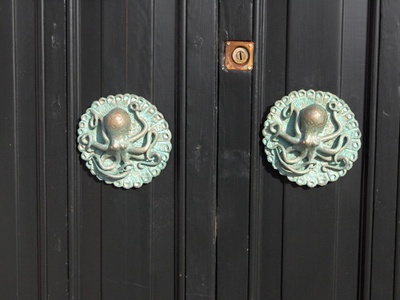
Doorknob
A small round knob rigidly mounted on a spindle; turning the knob rotates the spindle (axle) to retract the latch. Compact and common, it multiplies hand torque so you can open doors with modest effort.
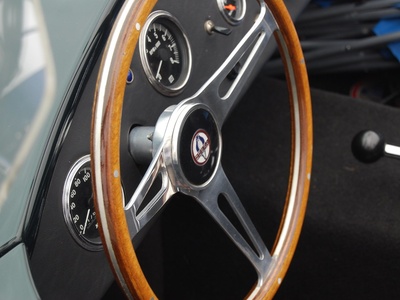
Steering wheel
The car steering wheel is a large rim fixed to the steering column (axle). Turning the wheel transmits torque down the column to steer the wheels; its large diameter gives good mechanical advantage for precise control.
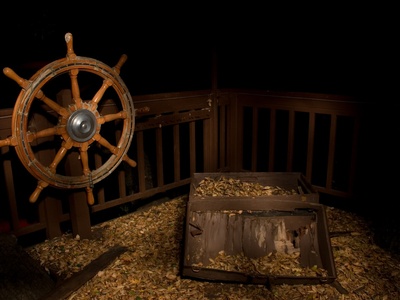
Ship’s wheel
A classic ship’s wheel is bolted to the helm shaft so wheel and axle turn together. Sailors apply force at the rim to turn a heavy rudder system; the large wheel radius gives leverage in rough seas.
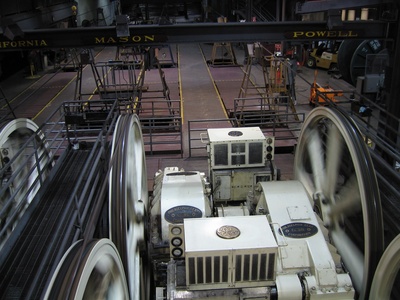
Car drive wheel
The driven car wheel is splined to the axle shaft so they rotate together and transmit engine torque to the road. Its size balances traction and torque, converting shaft rotation into forward motion on the tire.
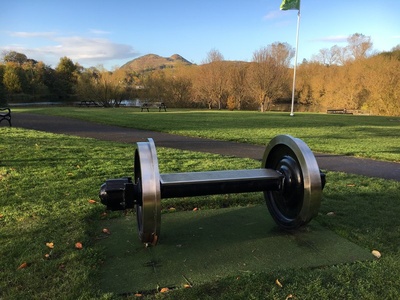
Train wheelset
Paired train wheels are typically mounted on a solid axle so both wheels and axle rotate together. That rigid assembly transmits locomotive torque and evenly supports heavy loads over rails.
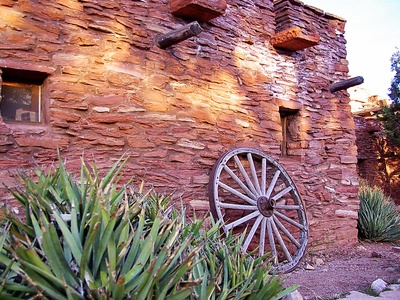
Wagon wheel
Traditional wagon wheels are fixed to a rotating axle so the wheel and axle turn as one. This simple mechanical link moves heavy loads with limited force and was foundational in early transport.

Ferris wheel
A giant wheel rigidly mounted on a central axle; motors turn the axle and the wheel together, lifting passenger gondolas. The enormous wheel radius gives high leverage, smoothing rotation and reducing required input torque.
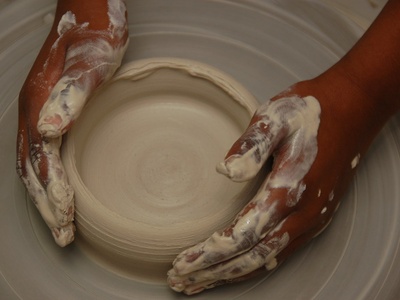
Pottery wheel
The pottery wheel is a flat disc attached to a spindle; the wheel and axle rotate together to spin clay. Potters use the steady, leveraged rotation to shape symmetrical vessels by hand.

Water wheel
A large wooden or metal wheel is keyed to a central shaft so wheel and axle rotate together when water pushes the blades. It converts flowing water into rotational power for milling or pumping with substantial leverage.
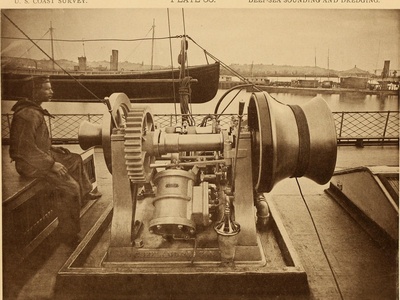
Hand-crank winch
A hand-cranked winch has a rim or crank wheel fixed to a winding drum shaft. Turning the crank applies torque directly to the drum (axle), winding cable and lifting loads with improved mechanical advantage from the crank radius.
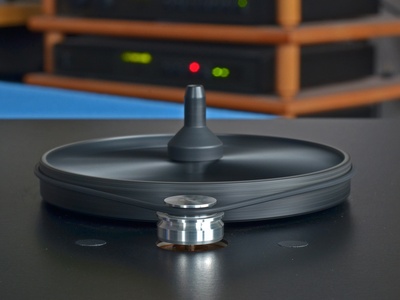
Motor pulley
A V-belt pulley mounted solidly on a motor shaft rotates with the axle to transmit power via belts. The pulley’s radius sets mechanical advantage between motor torque and driven machine speed.
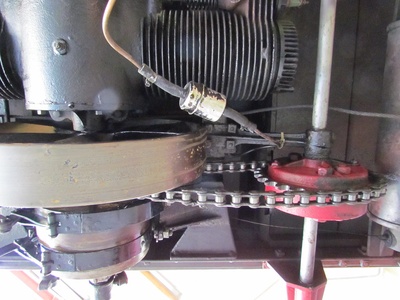
Flywheel (engine)
An engine flywheel is bolted to the crankshaft so wheel and shaft rotate together, smoothing power pulses by storing rotational energy. Its large mass and radius provide rotational inertia and leverage for steady operation.
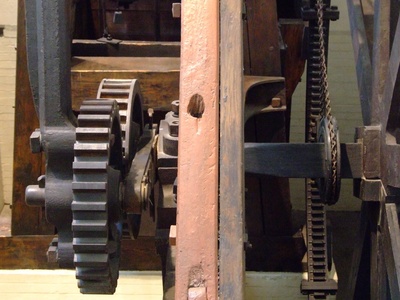
Gearwheel on shaft
A gear is often keyed to a shaft so the gear (wheel) and axle turn together to transmit torque and change speed or direction. It’s fundamental in machinery where reliable power transfer is needed.
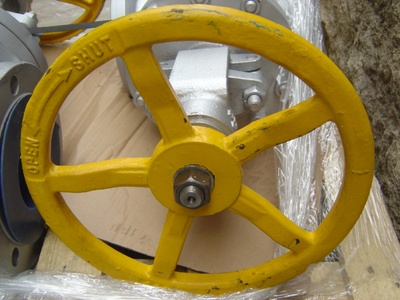
Valve handwheel
A valve wheel is mounted on the valve stem so turning the handwheel rotates the stem (axle) and opens or closes flow. The wheel gives leverage for precise control of valves used in plumbing and process systems.
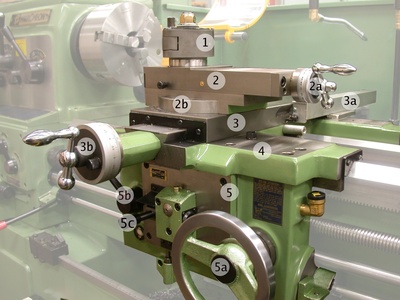
Lathe handwheel
Handwheels on lathes are attached to threaded shafts; wheel and shaft rotate together so the operator can finely position tooling or springs. The large rim makes small adjustments easy and repeatable.
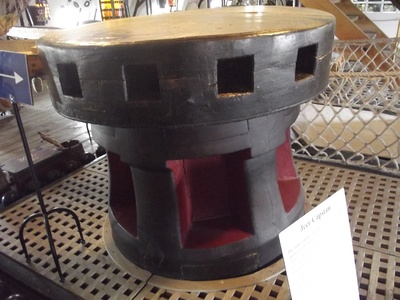
Capstan (ship)
A capstan is a vertical drum rigidly mounted on a shaft; sailors push bars on the rim to rotate the drum and haul heavy lines. The mounted wheel-and-axle converts human force into sustained pulling power.
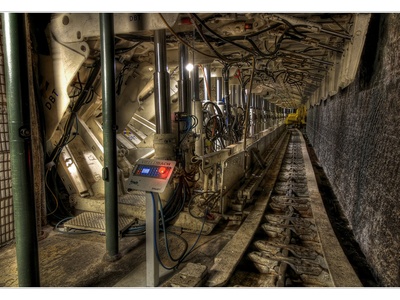
Conveyor drive roller
The drive roller is a cylindrical drum fixed to a shaft; motor torque turns the shaft and roller together to move belts or materials. Its size and radius define the torque and speed delivered to the conveyor.
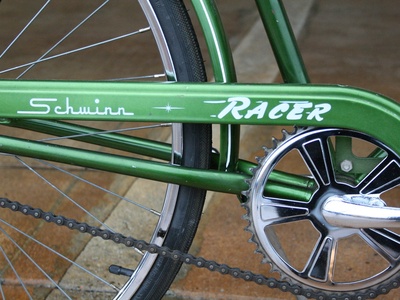
Bicycle crank/chainring
The chainring is bolted to the crank spindle so the ring and spindle rotate together when you pedal. That wheel-and-axle converts rider force into chain motion, trading force and speed via ring size.
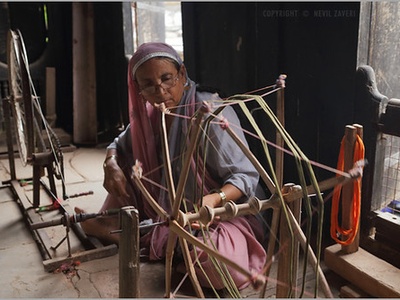
Spinning wheel (textile)
A large rim wheel is mounted on an axle so they rotate together; spinners use the rim’s momentum to draw out fibers and twist yarn. The wheel’s radius gives leverage and steadiness to hand spinning.

Garage door drum
The roll-up garage door drum is fixed to its shaft so the drum and axle rotate together, winding the door curtain. The drum radius gives mechanical advantage for lifting panels with a torsion or motorized spring system.