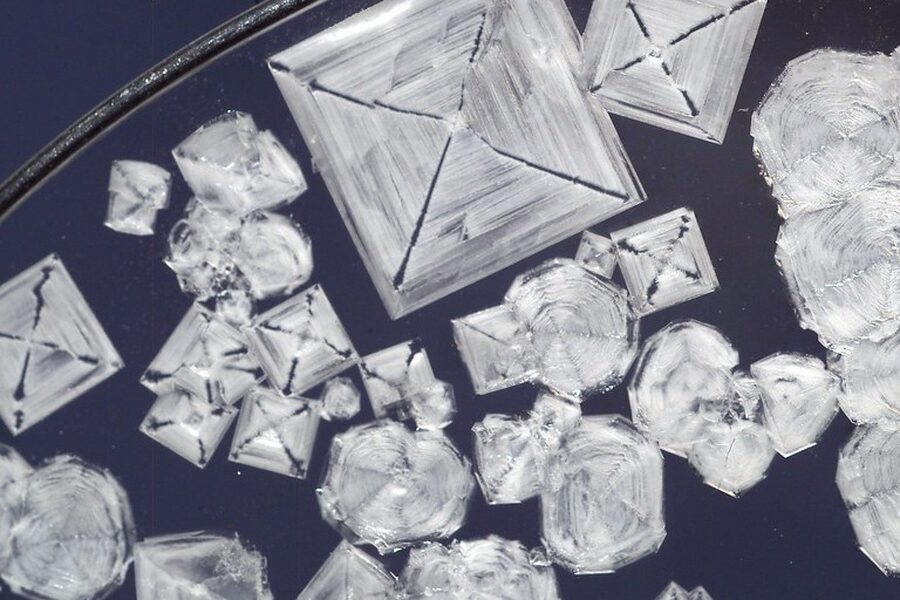
Magnesium compounds show up everywhere once you start looking: in antacids, fertilizers, fireproofing materials, bath salts, lab reagents, and even the chemistry that helps build carbon-carbon bonds. The phrase covers a big family of substances, but they don’t all behave the same way. Some are barely soluble in water. Some are strongly basic. Some are used as gentle supplements. Some are aggressive, highly reactive reagents that chemists treat with respect.
Table of contents
- What counts as a magnesium compound?
- The main kinds of magnesium compounds
- Common magnesium compounds at a glance
- What they’re used for
- How they’re made or found
- Safety and storage
- Why the differences matter
What counts as a magnesium compound?
A magnesium compound is any chemical substance that contains magnesium combined with one or more other elements or groups. Magnesium itself is the element Mg, a lightweight alkaline earth metal. Once it bonds with oxygen, chlorine, sulfur, carbonates, hydroxide, or organic groups, you get a different compound with different properties.
That difference matters because “magnesium” by itself tells you almost nothing useful. Magnesium oxide behaves nothing like magnesium chloride. Magnesium hydroxide is a mild base used in medicine. Magnesium sulfate is a soluble salt with a long history in labs and spas. Organomagnesium reagents are a whole different animal — famously useful, famously moisture-sensitive.
For a basic reference on the element itself, the Royal Society of Chemistry has a clean summary of magnesium’s chemistry.
The main kinds of magnesium compounds

1) Magnesium oxides and hydroxides
These are the “basic” magnesium compounds people run into first.
Magnesium oxide (MgO) is a white solid with a very high melting point. It’s used in refractory materials, kiln linings, electrical insulation, and as a source of magnesium in industrial formulations. Because it resists heat so well, it’s common anywhere materials have to survive serious temperature.
Magnesium hydroxide (Mg(OH)2) is best known as milk of magnesia. It’s only sparingly soluble in water, which is exactly why it works as an antacid and mild laxative rather than acting like a harsh caustic. It neutralizes excess stomach acid without turning into a chemistry experiment in your gut.
The NIH Office of Dietary Supplements also notes magnesium’s role in human nutrition, which is why some magnesium salts show up in supplements.
2) Magnesium carbonates
Magnesium carbonate (MgCO3) is a white powder found in minerals and used in things like antacids, sports chalk, and as a drying agent in some settings. It’s also a useful intermediate in making magnesium oxide.
This family can be a little messy in real life because magnesium carbonate often exists in hydrated or basic forms rather than one perfectly tidy formula. Chemistry enjoys exceptions almost as much as it enjoys making students memorize exceptions.
3) Magnesium chlorides
Magnesium chloride (MgCl2) is highly soluble and forms hydrates easily. It’s used in dust control, de-icing, paper production, and as a magnesium source in some industrial processes. It’s one of the more practical magnesium salts because it dissolves readily and is easy to work with in water-based systems.
It also appears in some nutritional and supplement products, though the form matters a lot for absorption and tolerance. For a broader overview of salts, see List of Salts.
4) Magnesium sulfates
Magnesium sulfate (MgSO4) is probably the best-known magnesium salt outside chemistry classrooms. The hydrated form, magnesium sulfate heptahydrate, is Epsom salt. It’s used in baths, agriculture, laboratory work, and medicine.
In medicine, magnesium sulfate has important clinical uses, including treatment of certain complications in pregnancy. The U.S. National Library of Medicine has a straightforward overview of its medical use and precautions.
5) Magnesium nitrates and other inorganic salts
Magnesium nitrate (Mg(NO3)2) is a soluble salt used in fertilizers, analytical chemistry, and some industrial formulations. Like other nitrates, it can act as an oxidizing agent under the right conditions, so it’s handled with normal laboratory caution.
Other magnesium salts include magnesium phosphate, magnesium fluoride, and magnesium bromide, each with its own niche based on solubility, reactivity, and stability.
6) Organomagnesium compounds
These are the chemist’s workhorses.
The most famous are Grignard reagents, with the general form RMgX, where R is an organic group and X is a halogen. They’re used to build carbon-carbon bonds, which is a big deal in organic synthesis. If you want to make a carbon chain longer or attach a functional group in a controlled way, Grignard chemistry is one of the classic tools.
These compounds are so reactive toward water and oxygen that they’re usually prepared and used under dry, controlled conditions. Leave them out in the open and they stop being useful in a hurry.
For a quick look at which elements magnesium reacts with, see the article 10 Elements Magnesium Reacts With.
Common magnesium compounds at a glance
| Compound | Formula | Main properties | Common uses |
|---|---|---|---|
| Magnesium oxide | MgO | White, heat-resistant, basic oxide | Refractories, insulation, industrial magnesium source |
| Magnesium hydroxide | Mg(OH)2 | Sparingly soluble, mild base | Antacid, laxative, wastewater treatment |
| Magnesium carbonate | MgCO3 | White powder, low solubility | Antacids, chalk, precursor to MgO |
| Magnesium chloride | MgCl2 | Highly soluble, hygroscopic | De-icing, dust control, industrial processing |
| Magnesium sulfate | MgSO4 | Soluble salt, often hydrated | Bath salts, fertilizer, medicine, lab use |
| Magnesium nitrate | Mg(NO3)2 | Soluble, oxidizing nitrate salt | Fertilizer, chemical processing |
| Grignard reagent | RMgX | Highly reactive, moisture-sensitive | Organic synthesis, carbon-carbon bond formation |
What they’re used for
Medicine and supplements
Magnesium compounds in medicine are usually chosen for a specific combination of solubility, gentleness, and bioavailability. Magnesium hydroxide and magnesium sulfate are the classic examples, but supplement labels can also feature magnesium citrate, magnesium glycinate, and magnesium oxide. They do not absorb the same way, and they do not feel the same in the body.
Agriculture
Plants need magnesium because it sits at the center of chlorophyll. No magnesium, no efficient photosynthesis. That’s why magnesium sulfate and magnesium nitrate show up in fertilizer blends and soil amendments. A magnesium-deficient plant often develops yellowing between leaf veins, especially in older leaves.
Industry
Magnesium oxide is a high-temperature material. Magnesium chloride is useful for de-icing and dust suppression. Magnesium hydroxide can help in wastewater treatment by neutralizing acidic streams. That mix of base chemistry, solubility, and thermal stability gives magnesium compounds a lot of industrial mileage.
Laboratory chemistry
Magnesium salts are standard lab reagents, but organomagnesium compounds are the headline act. Grignard reagents are central to synthetic organic chemistry, and their reactivity is exactly why they’re so useful. They’re also why every intro orgo lab smells faintly of “please keep this dry.”
For a broader chemistry reference on inorganic salts and their properties, PubChem’s compound database is a good place to verify formulas and identifiers.
How they’re made or found
Magnesium compounds occur naturally in minerals such as magnesite (magnesium carbonate), dolomite (a calcium magnesium carbonate), and epsomite (magnesium sulfate hydrate). Seawater and brines are also rich sources of magnesium ions, which is why magnesium salts are often extracted from large-scale salt and mineral processing streams.
Industrial production usually depends on the target compound. Magnesium oxide can be made by heating magnesium carbonate or magnesium hydroxide. Magnesium chloride is often obtained from brines or seawater processing. Magnesium sulfate may be mined, purified from natural deposits, or produced by reacting magnesium-containing materials with sulfuric acid.
Safety and storage
Most common magnesium salts are not especially dangerous, but “not especially dangerous” is not the same as “eat it with a spoon.”
- Dust control matters for powders like magnesium oxide and carbonate.
- Hygroscopic salts like magnesium chloride absorb moisture and can clump or dissolve on contact with humid air.
- Irritation is possible with concentrated solutions, especially for eyes and skin.
- Organomagnesium compounds need dry, inert conditions and careful handling because they react violently with water.
If you’re working in a lab or industrial setting, the SDS for the exact compound is the document that matters. Same element, different compound, different hazards.
Why the differences matter
“Magnesium compound” is a family name, not a single substance. The useful distinctions come down to solubility, basicity, thermal stability, and reactivity. Magnesium oxide is built for heat. Magnesium hydroxide is built for gentle neutralization. Magnesium sulfate is soluble and versatile. Magnesium chloride is practical in water-rich systems. Grignard reagents are built for synthesis, as long as you keep water far away.
That’s the real chemistry here: magnesium is a modest-looking element that turns up in a wide range of forms, and each form earns its place by doing something specific. Once you know the major types, the label stops being vague and starts telling you something useful.
Summary
Magnesium compounds include a broad set of inorganic salts, oxides, hydroxides, and organomagnesium reagents. The big differences come from structure and bonding, which control how each compound behaves in water, heat, medicine, agriculture, and synthesis. If you’re comparing magnesium compounds, start with the formula and the intended use — that usually tells you most of what you need to know.