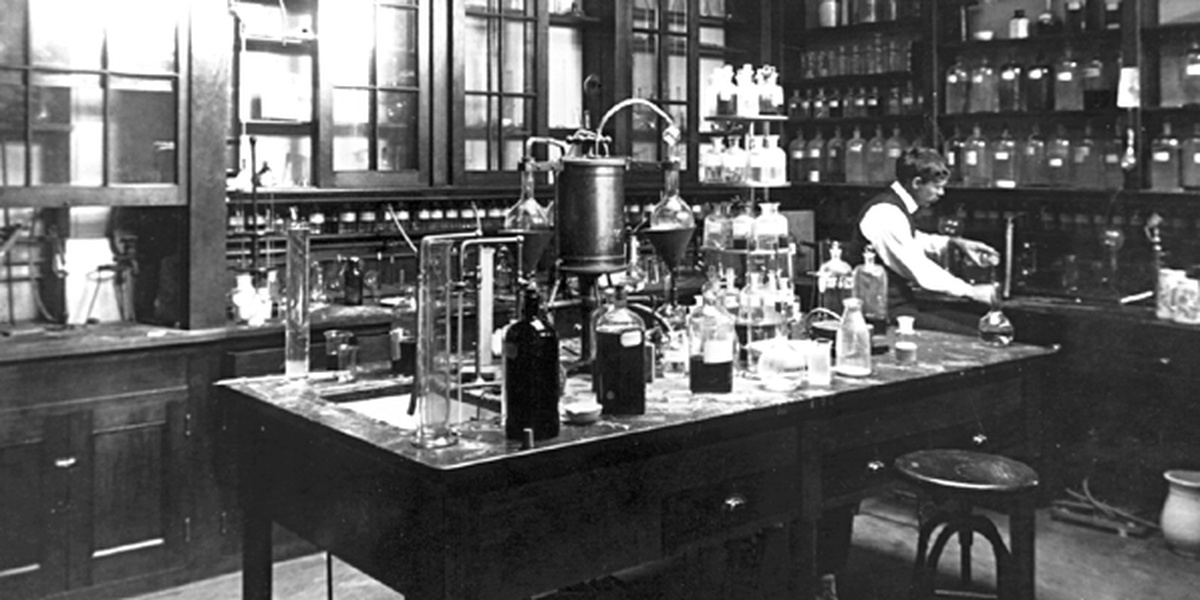
When the structure of DNA was published in 1953, a new era in molecular science began — one that has repeatedly reshaped medicine and industry.
That arc of progress has kept accelerating: CRISPR moved from concept to a research tidal wave after 2012, and in 2020 structure-prediction tools cut months of biophysical work to minutes for many proteins. These advances matter because they change what diseases we can treat, how fast industry can decarbonize, and which skills employers will demand.
Biochemistry is entering a decade of rapid, practical change: from AI-predicted proteins and mRNA therapeutics to sustainable biofactories and tighter ethical oversight, these 10 future trends will determine which labs and companies succeed and which problems get solved. Below are 10 future trends in biochemistry that will shape research, products, and policy.
Medical and Therapeutic Innovations
Clinical successes in recent years—most visibly the emergency-use authorization of mRNA vaccines in 2020–2021—are a test case for how quickly lab discoveries can become treatments. Faster pipelines will shorten development timelines, expand treatable conditions, and make truly personalized options feasible.
1. Precision therapeutics guided by proteomics and single-cell biochemistry
Precision therapeutics will increasingly depend on high-resolution biochemical profiling at the single-cell and protein level. Single-cell RNA-seq platforms took off after 2012 with companies like 10x Genomics commercializing workflows that let labs profile thousands of cells per experiment, and mass spectrometry proteomics has become sensitive enough to enter oncology trial biomarker pipelines.
The result is better patient stratification: clinicians can pick immune therapies for the patients most likely to respond, track emerging drug resistance in real time, and shorten the path from biomarker discovery to targeted trials. Proteogenomics studies that link tumor mutations to altered protein expression are already changing how some cancer trials are designed.
2. Expansion of mRNA and nucleic acid therapeutics
mRNA moved from a promising idea to mainstream medical practice with the 2020–2021 vaccine rollout, demonstrating months‑long design-to-clinic timelines instead of years. Emergency approvals in 2020 showcased how rapidly sequence design, lipid nanoparticle delivery, and manufacturing can be aligned.
Beyond infectious disease, mRNA platforms now power efforts in protein replacement, oncolytic mRNA, and personalized cancer vaccines where a patient’s tumor neoantigens guide bespoke formulations. Companies such as Moderna and BioNTech are expanding pipelines to oncology and rare diseases, and advances in delivery chemistry are widening the therapeutic window.
3. Enzyme, metabolic and gene-editing therapies for previously untreatable conditions
Targeted manipulation of enzymes and metabolic pathways is unlocking treatments for inherited and metabolic disorders. Since CRISPR rose to prominence in 2012, gene-editing programs have progressed into human trials, and collaborations—like CRISPR Therapeutics’ programs with Vertex—aim for curative strategies rather than chronic management.
Enzyme-replacement therapies for lysosomal storage disorders (for example, Gaucher and Fabry disease) have improved dosing and delivery, and in vivo gene therapies are moving into late-stage trials. The clinical pipeline now contains programs that could transform once-untreatable conditions into diseases with one-time or infrequent interventions.
Tools, Automation and Computational Design
New computational tools and automation are shortening discovery cycles by cutting routine bottlenecks and improving reproducibility. Predictive algorithms plus robotics let fewer people do more experiments faster and with less waste.
4. AI-driven molecular design and predictive biochemistry
AI tools have made accurate protein and small-molecule predictions much more feasible. DeepMind’s AlphaFold stunned the field with its 2020 CASP performance, and for many proteins structure prediction times dropped from weeks or months to minutes, enabling faster target validation and candidate triage.
That change de-risks early-stage projects: teams can screen designs in silico, prioritize enzyme variants for synthesis, and bring industrial biocatalysts to pilot scale more quickly. Startups are applying machine learning to enzyme engineering, and pharma is using ML to shrink the number of wet‑lab cycles needed to find viable candidates.
5. Advances in structural biology and single-molecule imaging
Cryo-EM, cryo-electron tomography (cryo-ET) and single-molecule fluorescence now reach resolutions that change what we can observe. Since cryo-EM became widely adopted in the 2010s and earned the 2017 Nobel Prize in Chemistry, institutions have deployed Thermo Fisher instruments like the Titan Krios to solve structures of membrane proteins and large complexes.
Seeing transient assemblies and conformational states improves rational drug design and validates AI predictions, closing a loop between in silico models and experimental structure. Single-molecule FRET and related methods add kinetic detail that static structures alone cannot provide.
6. Lab automation, microfluidics and organ-on-chip systems
Automation and micro-scale systems are making experiments faster, cheaper, and more reproducible. Automated liquid handlers from firms such as Hamilton and Tecan increase throughput and consistency, and microfluidic droplet platforms shrink reagent use while enabling large, parallel assays.
Organ-on-chip platforms (for example, Emulate) are improving preclinical human relevance, letting researchers test toxicity and efficacy on patient-derived tissues and reducing animal use. The net effect: smaller teams can run more informative screens and iterate designs at industrial speed.
Industrial, Agricultural and Environmental Biochemistry
Biochemical advances are reshaping industry and agriculture, replacing petrochemical processes, remediating polluted sites, and boosting crop resilience. Engineered biology is becoming a practical tool for sustainability and circular manufacturing.
7. Sustainable biomanufacturing and synthetic biology for materials
Synthetic biology is substituting bio-derived alternatives for petrochemical feedstocks at increasing scale. Companies like Ginkgo Bioworks and Amyris have moved from lab demonstrations into commercial programs that produce fragrances, specialty chemicals, and precursor molecules from engineered microbes.
Custom enzymes and redesigned pathways lower energy requirements and waste, and investors have shown growing interest in the sector as firms scale pilot plants to production. Over the next decade expect more bio-based polymers and commodity substitutes to reach price parity with petrochemical equivalents.
8. Bioremediation and agricultural biochemistry to address pollution and food security
Engineered microbes and enzyme treatments will be central to cleaning environments and enhancing agriculture. Pseudomonas strains and other biodegrading microbes are used in pilot programs to break down hydrocarbons at spill sites, and enzyme seed coatings have shown yield gains and stress resilience in field trials.
These approaches can reduce fertilizer runoff, accelerate landfill and spill cleanup, and increase drought tolerance in crops, but field deployment requires careful regulatory and ecological oversight. Expect phased rollouts with monitored pilot sites before broad adoption.
Data, Policy and Workforce Trends
Non-technical trends will determine how biochemical advances are used: data integration, governance, ethics, and training are as important as lab breakthroughs. Attention to these issues will shape who benefits from the science.
9. Multi-omics, big data integration and digital twins of biological systems
Integrating genomics, proteomics, metabolomics and clinical records will power discoveries that single datasets miss. Large population cohorts now number in the hundreds of thousands, and cloud-based platforms let researchers combine multi-omics at scale to build predictive models and virtual patient avatars.
These future trends in biochemistry include digital-twin patients that can simulate therapy responses and help prioritize trials, but they rely on standards, interoperability, and secure data sharing. Public–private consortia and cloud providers are already building the infrastructure for these pipelines.
10. Ethical, regulatory and workforce evolution (biosecurity, policy, and training)
Policy, ethics, and workforce development will be as important as technical progress. Regulators and international bodies such as the WHO are increasingly focused on frameworks for gene editing and biosecurity, and national agencies are updating oversight for novel modalities.
Practical implications include licensing pathways for new therapies, mandatory DNA‑synthesis screening programs at providers, and expanded training programs that combine wet‑lab skills with data science and ethics. Institutions and funders that invest in interdisciplinary education will find their graduates in high demand.
Summary
- Medical innovation will be faster and more personalized thanks to single‑cell proteomics, mRNA platforms, and gene-editing programs that aim for curative rather than chronic care.
- AI-driven design and improved structural imaging are cutting development time: expect fewer wet‑lab iterations and more in silico triage before synthesis.
- Synthetic biology and enzyme engineering are moving from pilot projects to commercial biomanufacturing, offering lower‑carbon alternatives to petrochemicals and new routes for remediation.
- Data integration and digital twins will boost predictive medicine, but realizing those gains requires standards, secure data sharing, and workforce retraining in computation and ethics.
- Follow developments, support ethical governance at your institution or workplace, and consider upgrading skills that mix wet‑lab and data science to stay relevant in the decade ahead.