The movement of Earth’s outer shell shapes everything from mountain ranges to ocean basins and the distribution of earthquakes and volcanoes. Looking at the pieces that make up that shell helps explain regional geology and why some coastlines are more active than others.
There are 20 Tectonic Plates, ranging from African to Sunda. For each plate, data are organized into columns: Classification,Area (10^6 km2),Location — you’ll find these details below.
How are the plates classified in this list?
Plates are grouped by their tectonic role and size: major plates, minor plates, and recognized microplates where applicable. The Classification column notes that status, the Area (10^6 km2) gives a standardized surface estimate, and Location summarizes the primary regions each plate spans so you can quickly compare scope and type.
Why do area values differ between sources?
Area estimates come from different mapping resolutions and definitions of plate boundaries (especially around diffuse or complex margins). The figures here use widely accepted modern datasets, but expect small variations as surveys improve and redefinitions occur.
Tectonic Plates
| Name | Classification | Area (10^6 km2) | Location |
|---|---|---|---|
| Pacific | Major | 168.72 | Pacific Ocean |
| North American | Major | 75.90 | North America & adjacent ocean |
| Eurasian | Major | 67.80 | Europe & much of Asia |
| African | Major | 61.30 | Africa & surrounding oceans |
| Antarctic | Major | 60.90 | Antarctica & Southern Ocean |
| South American | Major | 43.60 | South America & adjacent Atlantic |
| Australian | Major | 47.30 | Australia & surrounding seas |
| Indian | Major | 11.50 | Indian subcontinent & Indian Ocean |
| Nazca | Minor | 15.60 | Eastern Pacific off South America |
| Cocos | Minor | 2.80 | Eastern Pacific off Central America |
| Caribbean | Minor | 2.75 | Caribbean Sea & islands |
| Scotia | Minor | 1.07 | Southern Atlantic near Antarctica |
| Philippine Sea | Minor | 5.50 | West Pacific east of Philippines |
| Arabian | Minor | 5.10 | Arabian Peninsula & adjacent seas |
| Somali | Minor | 16.90 | Eastern Africa & adjacent Indian Ocean |
| Juan de Fuca | Micro | 0.25 | Northeast Pacific off US/Canada |
| Rivera | Micro | 0.04 | Eastern Pacific off Mexico |
| Gorda | Micro | 0.05 | Northeast Pacific off US west coast |
| Sunda | Minor | 6.50 | Southeast Asia (Sunda Shelf) |
| Okhotsk | Micro | 5.00 | Northeast Asia (Sea of Okhotsk) |
Images and Descriptions

Pacific
Earth’s largest plate; mostly oceanic, bounded by many divergent, convergent and transform margins including the Ring of Fire. Interacts with North American, Philippine, Nazca and Antarctic plates; named for the Pacific Ocean and central role in global subduction and spreading.
North American
Large continental plate covering North America and adjacent ocean floor; boundaries include mid-ocean ridges, the San Andreas transform and subduction zones. Contacts Eurasian, Pacific, Caribbean and Juan de Fuca plates; central to continental geology and seismic hazards across western North America.
Eurasian
Huge plate spanning Europe and much of Asia; includes continental crust and parts of ocean basins. Bounded by convergent zones with Indian and Arabian plates, transforms and mid-ocean ridges. Name usage sometimes overlaps with smaller Amur and Okhotsk blocks.

African
Large plate under Africa and surrounding oceans; includes the East African Rift where continental breakup is occurring. Bordered by divergent mid-ocean ridges and transform faults interacting with Eurasian, Antarctic, South American and Arabian plates.
Antarctic
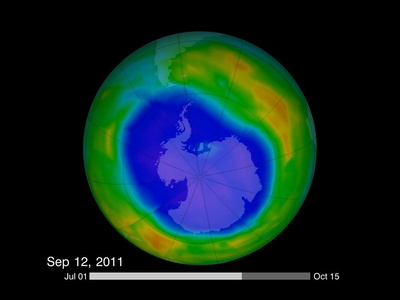
Plate centered on Antarctica, mostly oceanic and continental crust; hosts slow spreading ridges and extensive transform margins. Interacts with Pacific, African, South American and Australian plates; notable for cold, stable cratonic interior and role in global plate reconstructions.
South American
Contains the South American continent and adjacent Atlantic seafloor; eastern margin is divergent along the Mid-Atlantic Ridge, western margin is an active subduction zone with the Nazca plate producing the Andes and frequent earthquakes.
Australian
Covers Australia, nearby oceanic crust and parts of the Indian Ocean; interacts with Pacific, Eurasian and Antarctic plates. Its motion drives collision and subduction in Southeast Asia and the southwest Pacific, and it is sometimes considered part of the Indo-Australian composite plate.
Indian
Indian plate carries the Indian subcontinent and extends under the Indian Ocean; famously collided with Eurasia creating the Himalaya. Bounded by divergent ridges, subduction zones, and transform faults; sometimes treated as separate from or part of the larger Indo-Australian plate.
Nazca
Oceanic plate off South America’s west coast; subducting beneath the South American plate along a major convergent margin. Responsible for the Andean orogeny, frequent megathrust earthquakes and the Peru–Chile Trench; named for the Nazca region and culture offshore.
Cocos
Small oceanic plate in the eastern Pacific off Central America; subducts beneath the Caribbean and North American plates producing volcanism in Central America. Bounded by the East Pacific Rise and transform faults; originates from spreading and ridge segmentation.
Caribbean
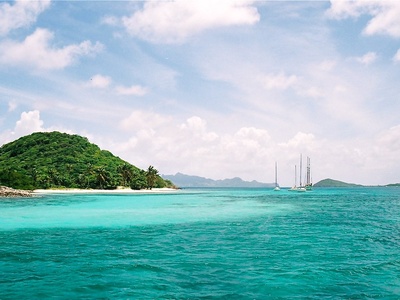
Covers the Caribbean Sea and nearby islands; bounded by complex convergent and transform boundaries with the North and South American plates. Includes subduction zones and strike-slip faults producing earthquakes and volcanic arcs like the Lesser Antilles; name from the region.
Scotia
Small plate near southern South America between the Atlantic and Pacific; formed by complex back-arc spreading and transforms. Interacts with South American and Antarctic plates, controlling seismicity and opening the Scotia Sea; notable for its role in southern ocean circulation gateways.
Philippine Sea
Oceanic plate east of the Philippines; bounded by subduction zones forming the Philippine Trench and Ryukyu arc, and by spreading centers. Interacts with Eurasian, Pacific and Philippine microplates, driving frequent earthquakes and volcanic activity in the western Pacific.
Arabian
Plate carrying the Arabian Peninsula; moving northward into Eurasia producing the Zagros and Anatolian deformation. Bounded by divergent Red Sea rift, transform faults, and continental collision zones; important for regional seismicity and oil-bearing sedimentary basins.
Somali
Minor plate covering the eastern African margin and adjacent Indian Ocean; interior breakup along the East African Rift separates Somalia from the African plate. Bordered by the Nubian/African, Arabian and Indian plates; active rifting shapes East African geology.
Juan de Fuca
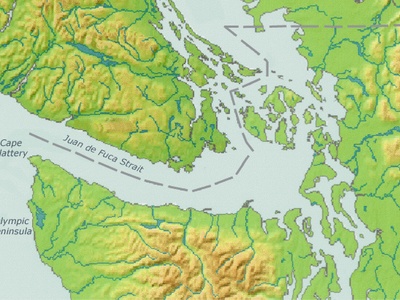
Small oceanic plate off the Pacific northwest of North America; subducting beneath the North American plate and producing the Cascadia megathrust zone. Bounded by the Juan de Fuca Ridge and transform faults; source of major earthquake and tsunami hazard.
Rivera
Tiny oceanic plate off western Mexico near the East Pacific Rise; interacts with the Pacific and Cocos plates. Subduction and transform activity produce local volcanism and seismicity; named after the nearby Revillagigedo and Rivera fracture zones and islands.
Gorda
Small oceanic microplate north of the Juan de Fuca plate off the US west coast; bounded by spreading ridges and transform faults. Interacts with Juan de Fuca and North American plates, producing complex deformation and local seismicity in the Cascadia region.
Sunda
Minor plate including Southeast Asia’s Sunda Shelf and part of the Malay Archipelago; bounded by the Sunda Trench and complex collision zones. Interacts with Eurasian, Australian and Philippine plates, driving Indonesia’s intense seismicity and volcanic arc systems.
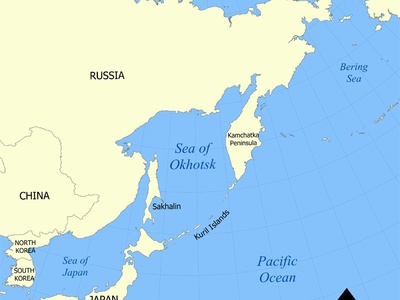
Okhotsk
Microplate in northeast Asia including parts of eastern Russia, Sea of Okhotsk and northern Japan margin; interacts with Eurasian, Pacific and Amur plates. Bounded by convergent and transform boundaries, it influences regional tectonics and seismicity in the Kuril and Japan arcs.