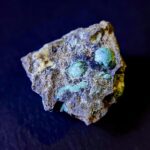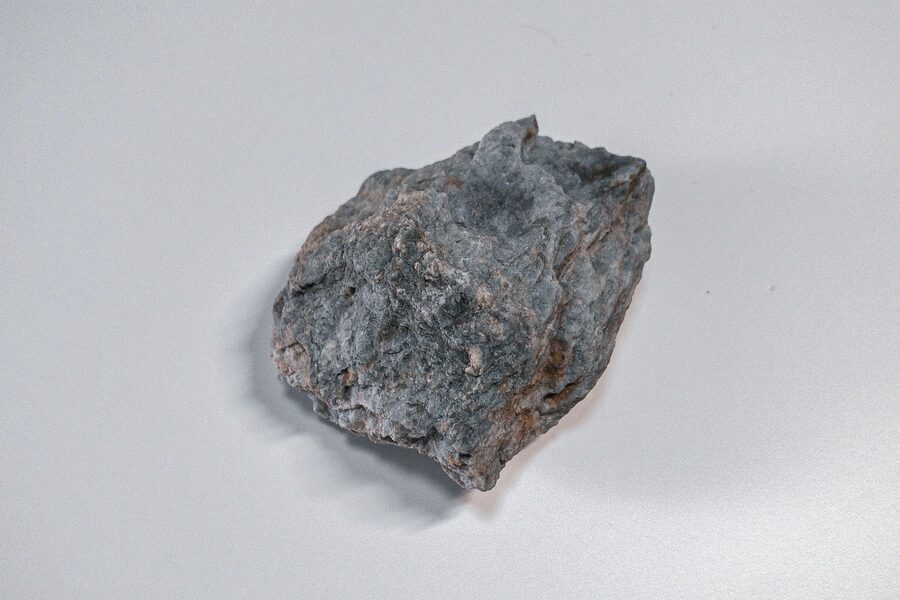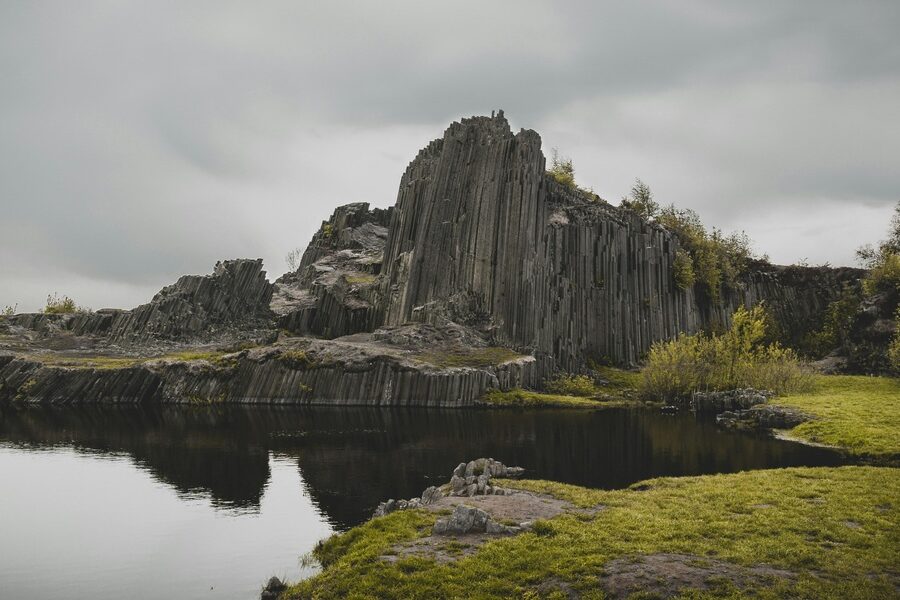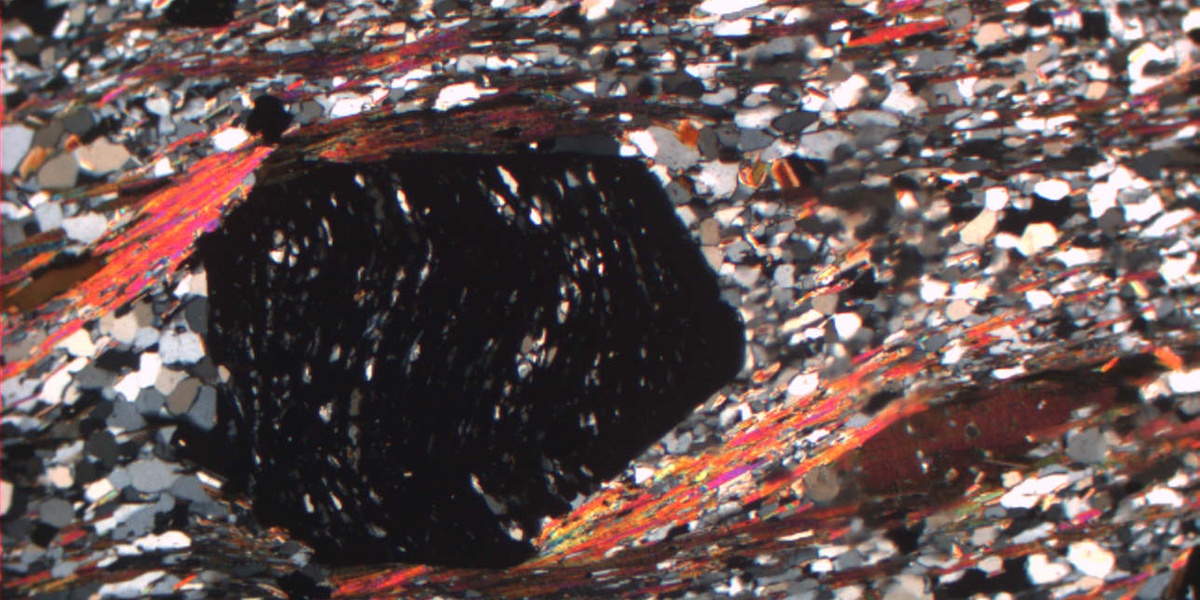
New Hampshire’s hills and ledges tell a long geologic story — from coastal metamorphic rocks to inland pegmatites — and many common backyard stones hide interesting mineral specimens. Whether you’re a collector, hiker, or student, the state’s mineral occurrences reward a little patience and a good eye.
There are 38 Minerals in New Hampshire, ranging from Albite,Zircon. For each mineral I list Chemical formula,Primary localities (towns/counties),Common size (mm) so you can quickly compare species, likely towns, and expected crystal sizes — you’ll find below.
Where are the best places in New Hampshire to look for these minerals?
Focus on known pegmatite districts, old mine sites, and glacial erratic-rich areas in the White Mountains and the Seacoast; specific towns and counties are given in the Primary localities column below, and local rock‑and‑mineral clubs often share up-to-date collecting spots and permissions.
How should I use the table to identify a specimen I found?
Start by comparing obvious traits (color, crystal habit, and size) to the Common size (mm) entry, then check likely nearby sources in Primary localities (towns/counties); use the Chemical formula to confirm composition with simple field tests or reference guides, and consult local experts for tricky identifications.
Minerals in New Hampshire
| Name | Chemical formula | Primary localities (towns/counties) | Common size (mm) |
|---|---|---|---|
| Quartz | SiO2 | Littleton-Lisbon area (Grafton County),Mt. Washington (Coos County) | 1–300 |
| Smoky quartz | SiO2 (variety) | Littleton-Lisbon area,Grafton County pegmatites | 5–150 |
| Microcline | KAlSi3O8 | Conway/Conway granitoids,Grafton County pegmatites | 5–150 |
| Orthoclase | KAlSi3O8 | Conway granite areas,Grafton County | 10–200 |
| Albite | NaAlSi3O8 | Littleton-Lisbon pegmatites,Grafton County | 1–120 |
| Plagioclase (oligoclase) | (Na,Ca)(Al,Si)4O8 | Granites and pegmatites,Grafton County | 5–100 |
| Muscovite | KAl2(AlSi3O10)(OH)2 | Pegmatites,granites (Littleton area) | 0.5–50 |
| Biotite | K(Mg,Fe)3(AlSi3O10)(OH)2 | Granites,metamorphic zones (statewide) | 0.5–40 |
| Lepidolite | K(Li,Al)3(Al,Si,Rb)4O10(F,OH)2 | Littleton-Lisbon pegmatites,Grafton County | 2–80 |
| Tourmaline (schorl) | NaFe3Al6(BO3)3Si6O18(OH)4 | Littleton-Lisbon pegmatites,Grafton County | 5–120 |
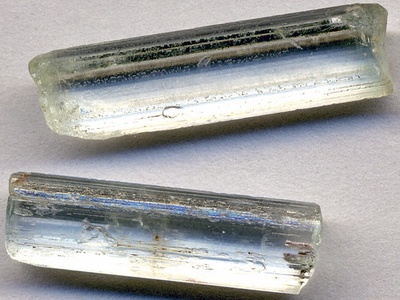
| Beryl (aquamarine/goshenite) | Be3Al2Si6O18 | Littleton-Lisbon pegmatites,Grafton County | 5–200 |
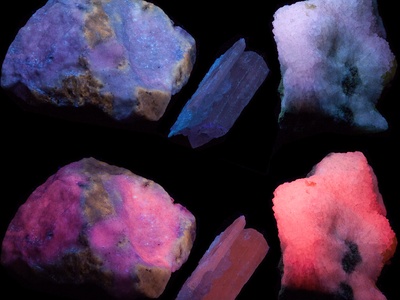
| Spodumene | LiAlSi2O6 | Littleton-Lisbon pegmatites,Grafton County | 10–200 |
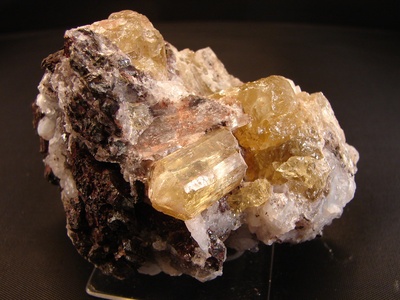
| Apatite | Ca5(PO4)3(F,Cl,OH) | Pegmatites and granites statewide (Littleton) | 1–50 |
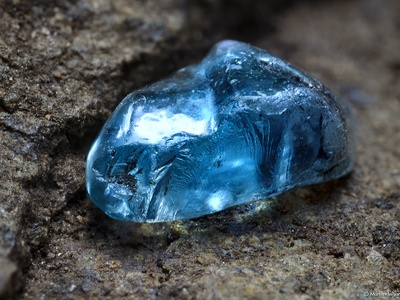
| Zircon | ZrSiO4 | Granites and pegmatites (statewide) | 0.2–10 |
| Rutile | TiO2 | Metamorphic rocks,pegmatite inclusions (Grafton/Coos) | 0.1–20 |
| Titanite (sphene) | CaTiSiO5 | Metamorphic rocks (White Mountains) | 1–20 |
| Ilmenite | FeTiO3 | Metamafic bodies and heavy mineral concentrates | 0.5–50 |
| Magnetite | Fe3O4 | Iron-rich layers,masses statewide | 0.5–100 |
| Hematite | Fe2O3 | Iron-rich deposits and metamorphosed zones | 0.5–50 |
| Pyrite | FeS2 | Veins,pegmatites,metamorphic rocks (statewide) | 1–30 |
| Chalcopyrite | CuFeS2 | Copper-bearing veins and historic mines | 1–50 |
| Galena | PbS | Historic lead-silver veins and mine sites | 1–50 |
| Sphalerite | ZnS | Zinc-bearing veins,historic mines | 1–60 |
| Calcite | CaCO3 | Veins,marbles,geodes (statewide) | 0.5–200 |
| Dolomite | CaMg(CO3)2 | Marble exposures and veins (various counties) | 1–100 |
| Epidote | Ca2(Al,Fe)3(SiO4)3(OH) | Metamorphic and skarn zones (White Mountains) | 1–80 |
| Chlorite | (Fe,Mg,Al)3(Si,Al)4O10(OH)2 | Metamorphic rocks statewide | 0.1–50 |
| Kyanite | Al2SiO5 | Metamorphic schists (White Mountains region) | 5–80 |
| Garnet (almandine) | (Fe,Mg)3Al2Si3O12 | Metamorphic schists and pegmatites (statewide) | 1–40 |
| Columbite (columbite-group) | (Fe,Mn)(Nb,Ta)2O6 | Littleton-Lisbon pegmatites,Grafton County | 1–20 |
| Analcime | NaAlSi2O6·H2O | Ossipee ring-dike (Carroll County) | 2–50 |
| Natrolite | Na2Al2Si3O10·2H2O | Ossipee ring-dike (Carroll County) | 0.5–40 |
| Stilbite | (Na,Ca)2Al4Si9O24·7H2O | Ossipee ring-dike (Carroll County) | 1–60 |
| Heulandite | Ca(Al2Si7O18)·6H2O | Ossipee ring-dike and basalt cavities | 2–80 |
| Chabazite | Ca,Na,KAl2Si4O12·6H2O | Ossipee ring-dike (Carroll County) | 1–30 |
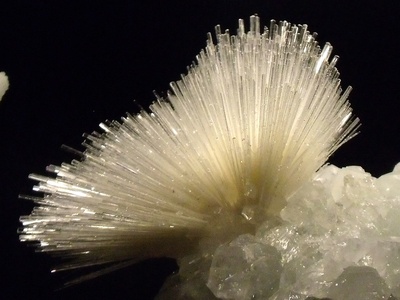
| Mesolite | Na2Ca2(Al2Si3O10)3·8H2O | Ossipee ring-dike (Carroll County) | 0.5–40 |
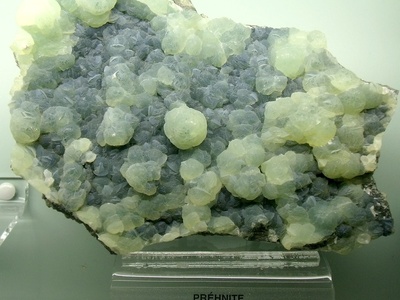
| Prehnite | Ca2Al2Si3O10(OH)2 | Hydrothermal veins,amygdaloids (various) | 1–40 |
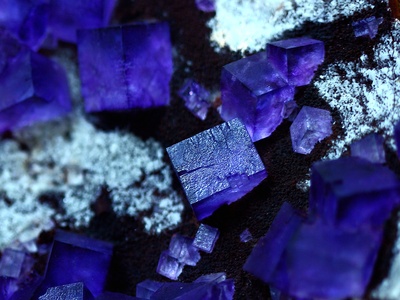
| Fluorite | CaF2 | Select vein localities and pegmatites (historic) | 1–80 |
Images and Descriptions
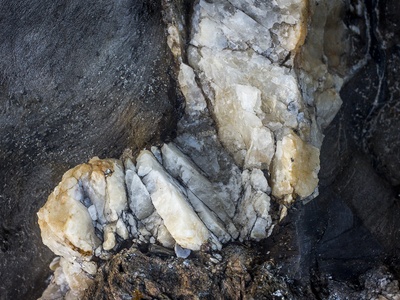
Quartz
Common hard silica forming prismatic crystals and masses. Often found in pegmatites and veins in northern NH; crystals range small to many centimeters. Look for glassy luster, conchoidal fracture; notable for large collector specimens and smoky varieties.

Smoky quartz
Brown-to-black quartz variety common in NH pegmatites and alpine veins. Identified by smoky color and glassy luster; sizes often several centimeters. Popular with collectors for deep coloration and well-formed crystals from Littleton area pockets.
Microcline
A potassium feldspar common in Conway and pegmatites; often blocky with cross-hatched tartan twinning. Colors range cream to pink; important rock-forming mineral and collectible for gemmy, well-twinned crystals.
Orthoclase
Potassium feldspar frequent in New Hampshire granites and outcrops. Typically cream to pink, shows two cleavage directions and pearly luster. Large crystal masses occur in pegmatites and are useful for rock identification and collecting.
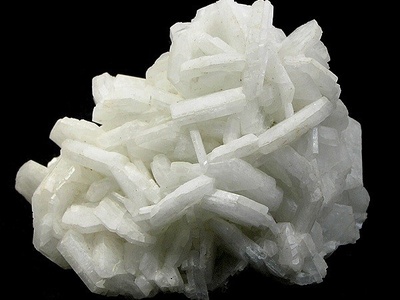
Albite
Sodium-rich plagioclase common in pegmatites and granites; white to gray, often cleaves into blocks. Look for striations and pearly luster on cleavage; notable in zoned pegmatites and as matrix for gem crystals.
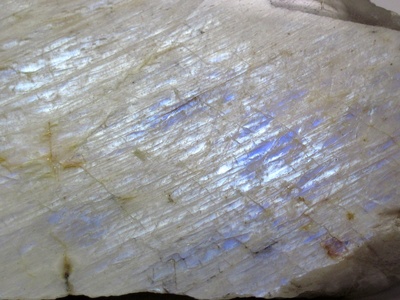
Plagioclase (oligoclase)
Plagioclase feldspar variety common in NH igneous rocks. Shows twinning striations and pearly cleavage faces. Useful for identifying igneous rock types; often forms sizeable tablet-like crystals.
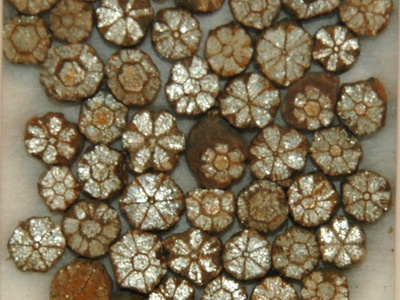
Muscovite
Silvery to pale mica occurring as thin flexible sheets in pegmatites and metamorphic rocks. Identified by perfect basal cleavage and pearly sheen; collectors value large, transparent flakes and mica books from pegmatites.
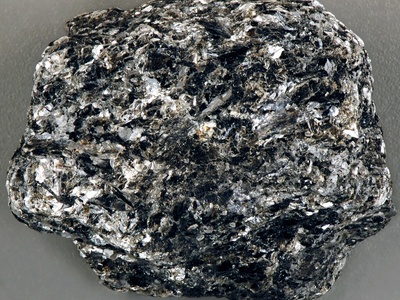
Biotite
Dark brown to black mica common in NH igneous and metamorphic rocks. Thin flexible sheets with shiny basal surfaces; useful field indicator of rock metamorphism and common in hand specimens.
Lepidolite
Lilac to pink lithium mica found in rare pegmatites. Identified by color, pearly luster, and mica cleavage. Sought by collectors for attractive color and association with spodumene and beryl.
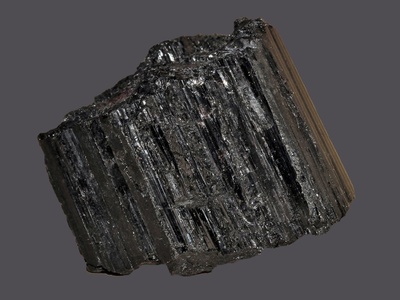
Tourmaline (schorl)
Black to dark brown schorl commonly forms elongated prismatic crystals in pegmatites. Hard, striated, and columnar; excellent for collectors when well-terminated. Often occurs with beryl and lepidolite.
Beryl (aquamarine/goshenite)
Beryl occurs in NH pegmatites; aquamarine (blue) and colorless goshenite have been found. Crystals can be gemmy and several centimeters. Identify by hexagonal prisms, hardness, and glassy luster; prized by mineral collectors.
Spodumene
Lithium pyroxene common in granite pegmatites, sometimes large prismatic crystals. Colorless to pink (kunzite) or green; identified by 2 cleavages and adamantine luster. Notable for gem-quality varieties and lithium mineralization.
Apatite
Common phosphate mineral in pegmatites and pegmatitic pockets. Hexagonal crystals often greenish; identified by resinous luster and brittle tenacity. Collectible small crystals often used in educational collections.
Zircon
Dense accessory mineral forming small tetragonal crystals in granites and pegmatites. Brown-red to clear; identifiable by high density and adamantine luster. Important for geochronology and common in mineral suites.
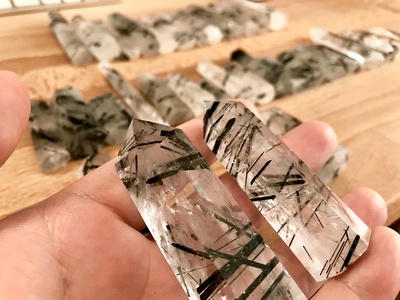
Rutile
Titanium oxide commonly as slender reddish-brown needles and inclusions in quartz. Notable for rutile-silk inclusions and high luster; sought as micromount and inclusion specimens.
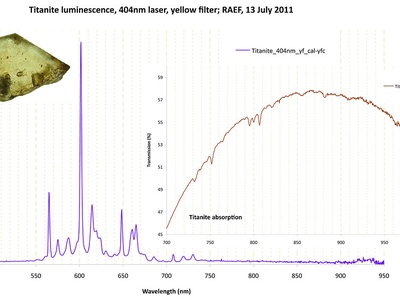
Titanite (sphene)
Common accessory mineral in metamorphic rocks; wedge-shaped crystals with adamantine luster and high relief. Brown, yellow or green; valued for gemmy, high-refractive-index crystals and as an index mineral.
Ilmenite
Black opaque iron-titanium oxide occurring in mafic intrusives and heavy-mineral sands. Metallic luster, magnetic; collected for ore mineral interest and as a common accessory in igneous rocks.
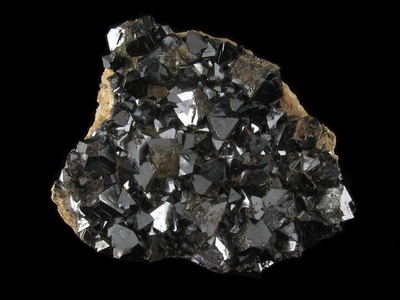
Magnetite
Magnetic iron oxide found in metamorphic and igneous rocks; black and metallic with octahedral crystals. Easy to ID with magnet; historically important as iron ore and common in NH geology.
Hematite
Red-brown iron oxide occurring as earthy masses or metallic crystals. Identified by reddish streak and density; notable historically in small iron occurrences and for distinctive color in hand samples.
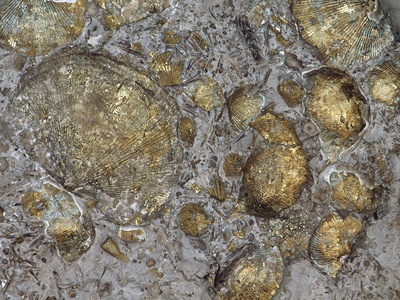
Pyrite
Brassy metallic sulfide forming cubic crystals and masses. Common in many NH deposits; identified by pale brass color and hardness. Popular collector pieces include pyrite cubes and druzy coatings.
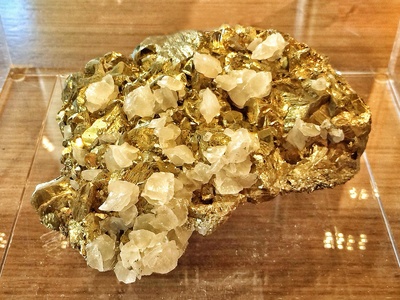
Chalcopyrite
Brassy yellow copper-iron sulfide; softer than pyrite and often tarnishes. Found in hydrothermal veins and old mine workings. Sought by collectors for bright crystals and association with other sulfides.
Galena
Dense, metallic lead sulfide occurring as cubic crystals in vein deposits. Noted from certain historic mines; heavy with bright cleavage faces. Collectible when well-formed and associated with other sulfides.
Sphalerite
Zinc sulfide common in hydrothermal veins; brown to black with resinous luster. Identified by cleavage and streak; important ore mineral historically and for association with galena and chalcopyrite.
Calcite
Common carbonate forming rhombohedral crystals and scalenohedral “dogtooth” forms. Widespread in veins and marbles across NH; effervesces in acid and often shows twinning. Collectible for clear, well-formed crystals.
Dolomite
Magnesium carbonate common in metamorphosed carbonate rocks; forms rhombohedral crystals and masses. Identified by pearly luster and reaction to acid when powdered. Notable in local marble exposures.
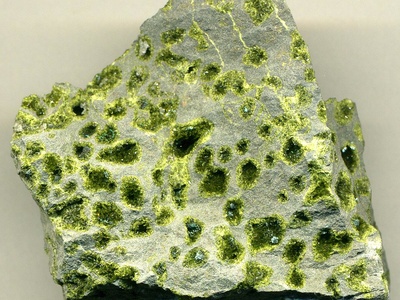
Epidote
Green prismatic crystals common in contact metamorphic and skarn environments. Identified by pistachio-green color and elongate habit. Appreciated by collectors for well-formed crystals on host rock.
Chlorite
Green flaky to fibrous mineral common in low-grade metamorphism. Soft with greasy luster and foliated habit; often forms coatings and replacement textures useful in mapping metamorphic grade.
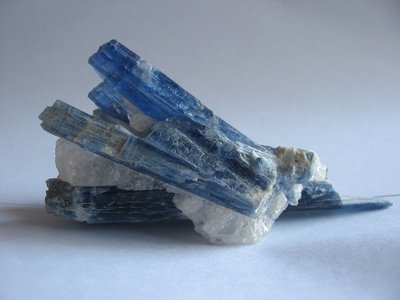
Kyanite
Blue to gray bladed aluminosilicate found in high-pressure metamorphic rocks. Identified by bladed habit and directional hardness differences. Collectible for striking blue blades and useful as an index mineral.
Garnet (almandine)
Deep red to brown almandine garnets occur as rounded to dodecahedral crystals in metamorphic rocks and pegmatites. Hard and glassy, often in matrix; popular with collectors and used as metamorphic indicators.
Columbite (columbite-group)
Black dense oxide in rare lithium pegmatites. Forms submetallic, blocky crystals associated with tantalum-niobium mineralization. Collected by mineral hunters targeting rare-element pegmatites.
Analcime
Zeolite common in Ossipee ring-dike cavities; white to pink trapezohedral crystals. Identified by distinctive shape and pearly luster; popular collector mineral from Ossipee zeolite suites.
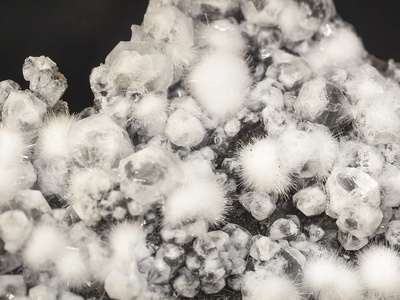
Natrolite
White to colorless fibrous zeolite occurring in cavities; needle-like radiating sprays are diagnostic. Widely collected from Ossipee for attractive sprays and associations with other zeolites.
Stilbite
Common zeolite with sheaf-like or fan-shaped crystals in cavities. Pale colors and pearly luster make it attractive; a staple mineral for collectors from Ossipee.
Heulandite
Zeolite group mineral with tabular crystals and pearly luster. Occurs in Ossipee and local cavities; identified by cleavage and habit. Popular for display specimens with other zeolites.
Chabazite
Trap-shaped zeolite forming lustrous, blocky crystals in cavity-lined vugs. Collectible from Ossipee ring-dike; notable for distinctive crystal forms and associations with other zeolites.
Mesolite
White to colorless fibrous zeolite producing radiating sprays. Found in Ossipee cavities and valued for delicate, fine needle crystals among zeolite collectors.
Prehnite
Pale green botryoidal to crystalline mineral occurring in veins and cavities. Identified by soft green color and waxy luster; collected as attractive crusts and small crystal aggregates.
Fluorite
Colorful cubic mineral occasionally reported in NH veins and pegmatites. Identified by cubic cleavage and fluorescence; prized when colorful cubes or well-formed crystals are present in localities.