Whether you’re prepping for a lab exercise, studying corrosion or planning an industrial reaction, recognizing strong acids makes predicting reactivity and handling risks much easier. A quick, practical list helps you spot patterns in strength, typical uses and safety needs.
There are 10 Examples of Strong Acids, ranging from Chloric acid to p-Toluenesulfonic acid; for each you’ll find below Formula,Dissociation (pKa approx.),Common uses — you’ll find below.
How do strong acids differ from weak acids in practice and measurement?
Strong acids essentially fully dissociate in water, so they show very low (often negative) pKa values, high conductivity, and predictable proton availability in reactions; weak acids only partially dissociate, so their effective acidity depends more on concentration and equilibrium.
What safety steps are recommended when handling strong acids like Chloric acid or p‑Toluenesulfonic acid?
Use appropriate PPE (acid-resistant gloves, goggles, lab coat), work in a fume hood, store acids in compatible containers away from bases and organics, have neutralizing agents and spill kits ready, and follow waste-disposal and emergency procedures specific to each acid.
Examples of Strong Acids
| Name | Formula | Dissociation (pKa approx.) | Common uses |
|---|---|---|---|
| Hydrochloric acid | HCl | Strong; essentially fully dissociates in water (pKa ≲ −6) | Pickling steel, pH adjustment, lab reagent |
| Hydrobromic acid | HBr | Strong; essentially fully dissociates in water (pKa ≲ −9) | Producing bromides, organic synthesis, crystal growth |
| Hydroiodic acid | HI | Strong; essentially fully dissociates in water (pKa ≲ −10) | Iodide synthesis, organic reductions, laboratory reagent |
| Nitric acid | HNO3 | Strong; largely dissociates in water (pKa ≈ −1.4) | Fertilizer production, explosives, etching, lab reagent |
| Perchloric acid | HClO4 | Very strong; fully dissociates in water (pKa ≪ 0) | Analytical chemistry, research reagent, occasional oxidizer |
| Chloric acid | HClO3 | Strong; largely dissociates in water (pKa ≲ −1) | Oxidizer, occasional industrial oxidant, laboratory use |
| Sulfuric acid | H2SO4 | First dissociation complete (pKa ≲ −3); second dissociation pKa ≈ 2.0 | Fertilizers, batteries, chemical manufacturing, dehydration |
| Triflic acid | CF3SO3H | Superacid; very strong in water (pKa ≪ 0, ≈ −14) | Acid catalyst, organic synthesis, reagent in research |
| Methanesulfonic acid | CH3SO3H | Strong; largely dissociates in water (pKa ≈ −1.9) | Electroplating, esterifications, acid catalyst, industrial processes |
| p-Toluenesulfonic acid | p-TsOH | Strong organic acid; largely dissociates in water (pKa ≈ −2.8) | Organic acid catalyst, esterifications, polymer chemistry |
Images and Descriptions
Hydrochloric acid
Common mineral acid used industrially and in laboratories. It fully dissociates in water, is corrosive to metals and tissue, and is used for steel pickling, pH control, and cleaning. Handle with gloves, goggles, and proper ventilation.

Hydrobromic acid
Strong inorganic acid used to make bromide salts and in organic synthesis. It dissociates nearly completely in water, is strongly corrosive and emitting fumes; use in fume hood, avoid skin contact, and store in compatible containers.
Hydroiodic acid
Very strong hydrohalic acid commonly used to prepare iodide salts and in reductions. It dissociates almost completely in water, is highly corrosive and can release toxic iodine vapor; handle in fume hood with protective gear.
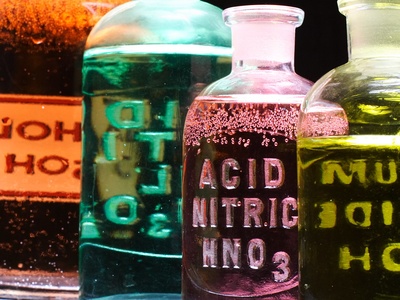
Nitric acid
Strong oxidizing acid used for fertilizers, explosives, and metal etching. It largely dissociates in water, is corrosive and a powerful oxidizer that can cause violent reactions with organics; store cool, avoid mixing with organics, use PPE.
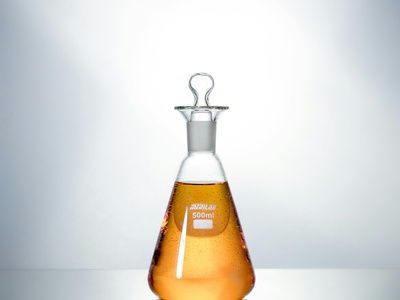
Perchloric acid
Extremely strong acid and oxidizer; fully dissociates in water. Used in research and some analysis but forms shock-sensitive perchlorate salts when concentrated. Highly dangerous when hot or concentrated; requires specialized fume hoods and strict safety controls.
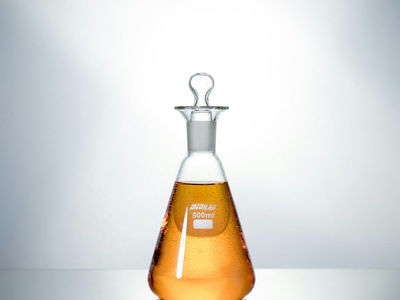
Chloric acid
Strong inorganic oxyacid that largely dissociates in water; less commonly used due to instability. It’s a strong oxidizer and can decompose explosively, especially when concentrated or heated. Handle dilute solutions cautiously with appropriate protective equipment.
Sulfuric acid
Very common, highly corrosive diprotic acid. First proton dissociates completely; second dissociation is weaker. Used in fertilizers, batteries, and manufacturing. Concentrated acid is dehydrating and reacts violently with organics; handle slowly adding acid to water and use full PPE.
Triflic acid
Trifluoromethanesulfonic (triflic) acid is a very strong, non-oxidizing superacid used in organic synthesis and catalysis. It dissociates extensively in water, is corrosive and moisture-sensitive; handle with care in dry, controlled environments and with appropriate PPE.
Methanesulfonic acid
Methanesulfonic acid is a strong, non-volatile organic acid that dissociates well in water and is used for esterification and electroplating. It’s less oxidizing than mineral acids, but still corrosive; store properly and use eye and skin protection.
p-Toluenesulfonic acid
p-Toluenesulfonic acid (p-TsOH) is a strong, crystalline organic acid often used as an acid catalyst in organic reactions. It dissolves and dissociates well in water, is easier to handle than mineral superacids, but remains corrosive and hygroscopic.