North America hosts a wide mix of habitats — from Gulf marshes and eastern wetlands to western plains and boreal forests — that shape which plants and animals live here. That variety creates pockets of species found nowhere else, and knowing those endemics helps understand the continent’s ecological identity.
There are 14 Endemic Species of North America, ranging from American alligator to Whooping crane. Entries are organized under Scientific name,Range,Conservation status so you can quickly see each species’ identity, distribution and level of threat; you’ll find below.
How is “endemic” defined for species on this list?
“Endemic” here means a species native to and naturally restricted within North America (the continental region), not introduced from elsewhere; the list excludes widespread species and focuses on those whose natural range is limited to this region.
How can I use the list for conservation or field observation?
Use the Scientific name,Range,Conservation status columns to prioritize sites and seasons for observation or protection: range points guide where to look, scientific names avoid confusion, and conservation status highlights species needing urgent attention.
Endemic Species of North America
| Common name | Scientific name | Range | Conservation status |
|---|---|---|---|
| Axolotl | Ambystoma mexicanum | Mexico: Mexico City (Xochimilco canal system) | Critically Endangered (IUCN) |
| Devils Hole pupfish | Cyprinodon diabolis | USA: Nevada (Devils Hole, a single geothermal pool) | Critically Endangered (IUCN) |
| California condor | Gymnogyps californianus | USA: California, Arizona; Mexico: Baja California | Critically Endangered (IUCN) |
| Whooping crane | Grus americana | Canada: Wood Buffalo National Park (Alberta/NWT); USA: Aransas County, Texas; reintroduced populations in multiple states and provinces | Endangered (IUCN) |
| Puerto Rican parrot | Amazona vittata | Puerto Rico (El Yunque and montane forests) | Critically Endangered (IUCN) |
| Jamaican iguana | Cyclura collei | Jamaica (ground and limestone forests) | Critically Endangered (IUCN) |
| Cuban solenodon | Solenodon cubanus | Cuba (eastern mountainous forests) | Endangered (IUCN) |
| Black-footed ferret | Mustela nigripes | USA: Great Plains reintroduction sites (Wyoming, Montana, South Dakota, Arizona, Colorado); Canada: Saskatchewan (reintroduced) | Endangered (IUCN) |
| Island fox | Urocyon littoralis | USA: California: Channel Islands (multiple islands) | Endangered (IUCN) |
| American alligator | Alligator mississippiensis | USA: southeastern states (Florida, Louisiana, Georgia, Alabama, Mississippi, South Carolina, North Carolina, Texas) | Least Concern (IUCN) |
| American pika | Ochotona princeps | USA: western mountain ranges (Rockies, Sierra Nevada); Canada: British Columbia, Alberta | Least Concern (IUCN) |
| Red wolf | Canis rufus | USA: historically southeastern states; current wild population limited to coastal North Carolina (reintroduced) | Critically Endangered (IUCN) |
| Piping plover | Charadrius melodus | USA: Atlantic coast and Great Lakes shorelines; Canada: Atlantic provinces and Ontario | Near Threatened (IUCN) |
| Kirtland’s warbler | Setophaga kirtlandii | USA: Michigan (breeding); Bahamas (wintering) | Near Threatened (IUCN) |
Images and Descriptions
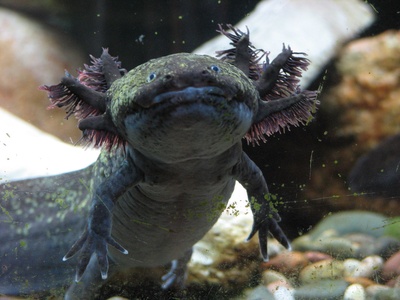
Axolotl
A neotenic salamander confined to Mexico City’s Xochimilco canals, famous for retaining juvenile gills into adulthood. Critically endangered from habitat loss and pollution; notable for extraordinary regenerative abilities and its role in scientific research.
Devils Hole pupfish
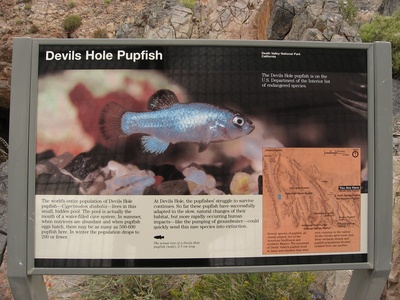
A tiny fish confined to one geothermal pool in Nevada’s Devils Hole. Critically endangered with only a handful of individuals; famous as one of the world’s rarest vertebrates and a striking example of extreme endemism.
California condor
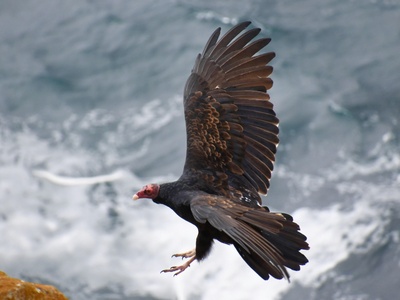
North America’s largest land bird, once nearly extinct. Lives in rugged western canyons and coastal areas; critically endangered despite captive-breeding recoveries. Notable for its huge wingspan and role as a scavenger in western ecosystems.
Whooping crane
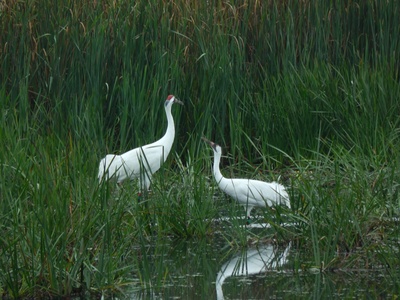
A towering white crane with a red crown that migrates between Canada and coastal Texas. Endangered due to habitat loss and past hunting; iconic conservation story with careful habitat protection and reintroduction programs.
Puerto Rican parrot
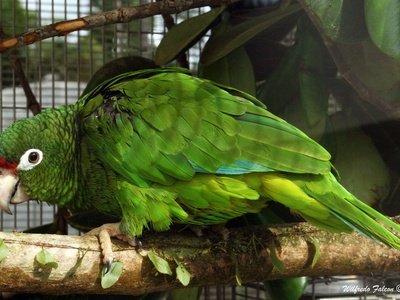
A bright green parrot endemic to Puerto Rico’s forests, severely reduced by deforestation and storms. Critically endangered with intensive captive-breeding and release efforts; notable as one of the rarest parrots and a focus of island conservation.
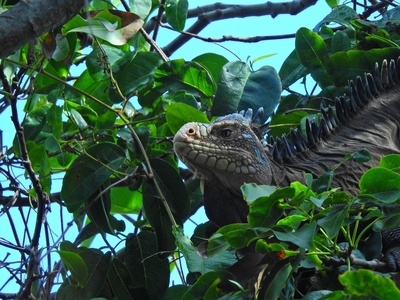
Jamaican iguana
A large, ground-dwelling iguana rediscovered after being presumed extinct; restricted to Jamaica’s limestone forests. Critically endangered from habitat loss and invasive predators; notable as a charismatic flagship species for Jamaican conservation.
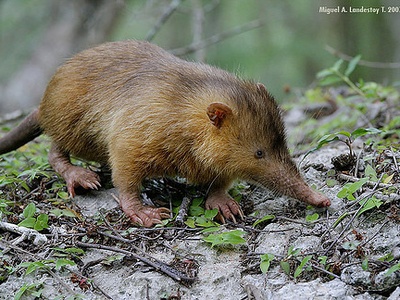
Cuban solenodon
A nocturnal, long-snouted insectivore endemic to eastern Cuba. Endangered due to habitat loss and introduced predators; remarkable for primitive mammal traits, a toxic bite, and important evolutionary significance.
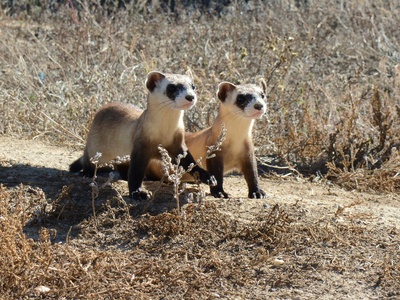
Black-footed ferret
A slender nocturnal carnivore specialized on prairie dogs, once thought extinct in the wild. Endangered but slowly recovering via captive-breeding and reintroduction; a conservation icon of North American grasslands.
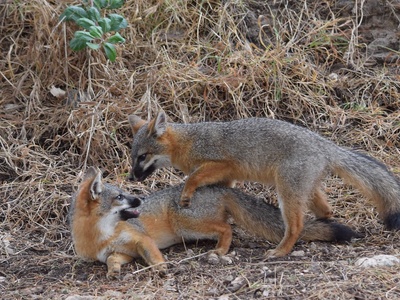
Island fox
A small fox species unique to California’s Channel Islands, adapted to island life with reduced size and varied island-specific diets. Endangered from disease and introduced predators; recovery programs have produced notable come-backs on several islands.
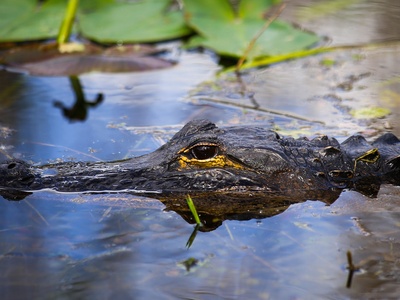
American alligator
A swamp-dwelling apex predator of the southeastern US, iconic for freshwater wetlands. Once heavily hunted, populations recovered through legal protection; notable for creating “gator holes” that support diverse wetland life.
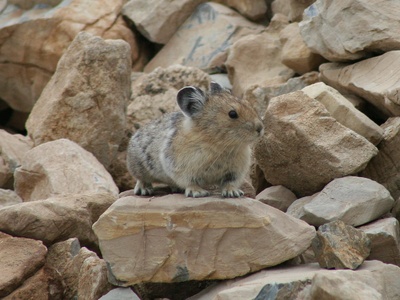
American pika
A small, high-elevation lagomorph living among talus and alpine meadows. Sensitive to warming climates, it’s a notable indicator of mountain ecosystem health and vulnerability to climate change.
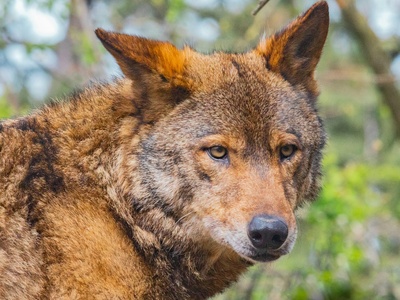
Red wolf
A medium-sized wolf native to the southeastern US, now one of the world’s most endangered canids. Threatened by habitat loss, hybridization, and persecution; notable for complex recovery efforts and ongoing controversy.
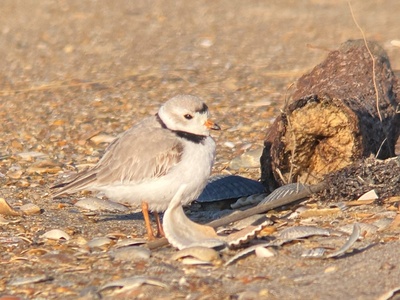
Piping plover
A small pale shorebird that nests on sandy beaches and lakeshores. Near threatened due to habitat disturbance and predation; widely known for beach-nesting conservation programs and volunteers protecting nests.
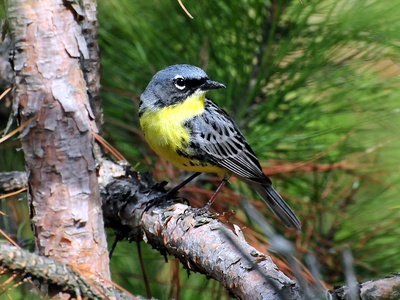
Kirtland’s warbler
A rare songbird that breeds almost exclusively in young jack pine forests in Michigan and winters in the Bahamas. Famous for intense habitat management; a conservation success after dramatic declines in the 20th century.