In the chemistry lab, industry, or classroom, knowing which compounds fully ionize in water helps predict conductivity, reaction pathways, and safety precautions. A clear list makes it quicker to pick the right reagent or explain observations during experiments.
There are 20 Strong Electrolytes, ranging from Ammonium chloride to Sulfuric acid. For each, I list Formula,Dissociation,Category details you’ll find below.
How are strong electrolytes identified in water?
Strong electrolytes are substances that essentially fully dissociate into ions when dissolved, so their solutions conduct electricity well; common examples include strong acids, strong bases, and soluble ionic salts. Identification is practical: high conductivity, complete dissociation in textbooks, and large equilibrium constants indicate a strong electrolyte.
When is it important to use a strong electrolyte in an experiment?
Choose a strong electrolyte when you need predictable ion concentrations or high conductivity—for example, calibrating conductivity meters, establishing ionic strength in kinetics studies, or running electrolytic cells. Also consider handling and dilution safety, especially with corrosive examples like sulfuric acid.
Strong Electrolytes
| Name | Formula | Dissociation | Category |
|---|---|---|---|
| Hydrochloric acid | HCl | HCl(aq) -> H+(aq) + Cl-(aq) | Strong acid |
| Hydrobromic acid | HBr | HBr(aq) -> H+(aq) + Br-(aq) | Strong acid |
| Hydroiodic acid | HI | HI(aq) -> H+(aq) + I-(aq) | Strong acid |
| Nitric acid | HNO3 | HNO3(aq) -> H+(aq) + NO3-(aq) | Strong acid |
| Perchloric acid | HClO4 | HClO4(aq) -> H+(aq) + ClO4-(aq) | Strong acid |
| Sulfuric acid | H2SO4 | H2SO4(aq) -> 2H+(aq) + SO4^2-(aq) | Strong acid |
| Lithium hydroxide | LiOH | LiOH(s) -> Li+(aq) + OH-(aq) | Strong base |
| Sodium hydroxide | NaOH | NaOH(s) -> Na+(aq) + OH-(aq) | Strong base |
| Potassium hydroxide | KOH | KOH(s) -> K+(aq) + OH-(aq) | Strong base |
| Rubidium hydroxide | RbOH | RbOH(s) -> Rb+(aq) + OH-(aq) | Strong base |
| Cesium hydroxide | CsOH | CsOH(s) -> Cs+(aq) + OH-(aq) | Strong base |
| Barium hydroxide | Ba(OH)2 | Ba(OH)2(s) -> Ba^2+(aq) + 2OH-(aq) | Strong base |
| Sodium chloride | NaCl | NaCl(s) -> Na+(aq) + Cl-(aq) | Soluble ionic salt |
| Potassium chloride | KCl | KCl(s) -> K+(aq) + Cl-(aq) | Soluble ionic salt |
| Sodium nitrate | NaNO3 | NaNO3(s) -> Na+(aq) + NO3-(aq) | Soluble ionic salt |
| Potassium nitrate | KNO3 | KNO3(s) -> K+(aq) + NO3-(aq) | Soluble ionic salt |
| Sodium sulfate | Na2SO4 | Na2SO4(s) -> 2Na+(aq) + SO4^2-(aq) | Soluble ionic salt |
| Potassium sulfate | K2SO4 | K2SO4(s) -> 2K+(aq) + SO4^2-(aq) | Soluble ionic salt |
| Ammonium chloride | NH4Cl | NH4Cl(s) -> NH4+(aq) + Cl-(aq) | Soluble ionic salt |
| Magnesium sulfate | MgSO4 | MgSO4(s) -> Mg^2+(aq) + SO4^2-(aq) | Soluble ionic salt |
Images and Descriptions
Hydrochloric acid
Hydrochloric acid is a common strong mineral acid that dissociates completely to H+ and Cl- in water. Widely used for pH adjustment, metal cleaning, and chemical synthesis. Highly corrosive; requires protective handling and ventilation.

Hydrobromic acid
Hydrobromic acid is a strong, simple binary acid that fully ionizes to H+ and Br- in water. Used in organic synthesis, bromide production, and laboratory chemistry. Corrosive and fuming; handle with appropriate PPE and ventilation.
Hydroiodic acid
Hydroiodic acid is a powerful strong acid that dissociates completely to H+ and I- in aqueous solution. It’s used in organic reductions and iodide salt preparation. Highly corrosive and reducing; store and use under controlled conditions.
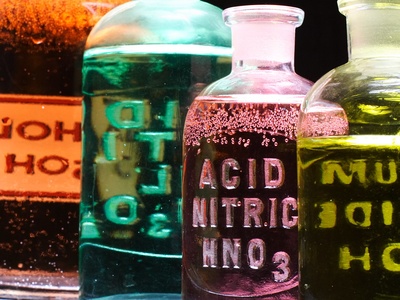
Nitric acid
Nitric acid is a major strong oxidizing acid that forms H+ and NO3- in water. Common in fertilizer manufacture, metal etching, and laboratory reagents. Concentrated solutions are strongly oxidizing and corrosive; avoid organics and follow strict safety.
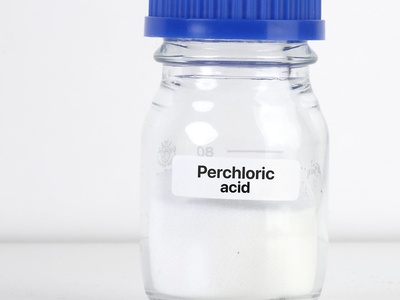
Perchloric acid
Perchloric acid is a very strong acid that dissociates to H+ and ClO4- in water. Used in analytical chemistry and etching; concentrated solutions and hot perchloric acid can be explosive with organic materials. Handle with extreme care and specialized procedures.
Sulfuric acid
Sulfuric acid is a dense diprotic strong acid; in water it supplies two protons overall (2H+ and SO4^2-), with the first proton fully dissociating. Widely used in batteries, fertilizers, and chemical synthesis; highly corrosive and dehydrating.
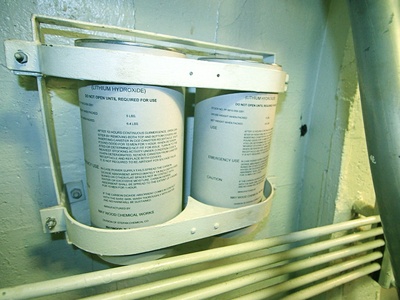
Lithium hydroxide
Lithium hydroxide is a strong base that dissociates completely to Li+ and OH- when dissolved. Used in battery electrolytes, CO2 scrubbers, and ceramics. It’s caustic and can cause burns; handle with gloves and eye protection.
Sodium hydroxide
Sodium hydroxide (lye) is a ubiquitous strong base that separates into Na+ and OH- in water. Common in soap making, drain cleaners, and industrial synthesis. Extremely caustic; contact causes severe burns and requires careful handling and storage.
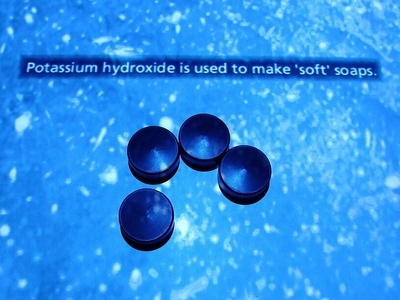
Potassium hydroxide
Potassium hydroxide is a strong, soluble base producing K+ and OH- in aqueous solution. Used in biodiesel production, electrolytes, and fertilizers. Like other strong bases it’s highly caustic and must be handled with eye protection and gloves.
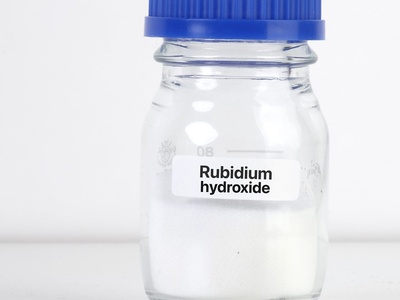
Rubidium hydroxide
Rubidium hydroxide is a strong alkali that dissociates fully to Rb+ and OH- in aqueous solution. It’s used mainly in specialty research and glass work. Chemically similar to other Group 1 hydroxides and is highly corrosive.
Cesium hydroxide
Cesium hydroxide is a very strong, highly soluble base that gives Cs+ and OH- in water. Mostly of interest in research and specialty inorganic chemistry. Extremely caustic; reacts vigorously with acids and must be stored under dry, controlled conditions.
Barium hydroxide
Barium hydroxide is a strong base that yields Ba^2+ and two OH- ions in solution. More soluble than some other alkaline earth hydroxides and used in titrations and organic synthesis. Toxic if ingested; avoid inhalation and skin contact.
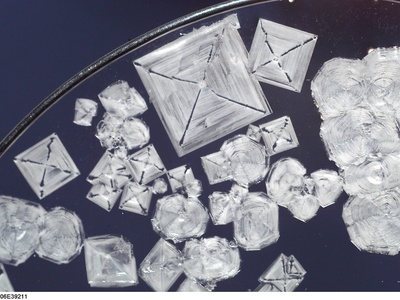
Sodium chloride
Sodium chloride is the common table salt that dissociates completely into Na+ and Cl- in water. Ubiquitous in food processing, de-icing, and labs as an electrolyte source. Solutions conduct electricity well; solid is non-conductive until dissolved.
Potassium chloride
Potassium chloride dissociates to K+ and Cl- in water and is widely used as a fertilizer, medical potassium supplement, and lab reagent. Aqueous solutions are conductive and useful for ionic strength adjustment in experiments.
Sodium nitrate
Sodium nitrate is a highly soluble salt that dissociates into Na+ and NO3- in water. Used in fertilizers, food curing, and pyrotechnics. Nitrate solutions are good conductors; handle and store carefully as oxidizing salts can promote combustion.
Potassium nitrate
Potassium nitrate dissolves to K+ and NO3- and is a common oxidizer in fertilizers, fireworks, and laboratory oxidations. Aqueous solutions conduct electricity well; store away from fuels and reducing agents to prevent hazardous reactions.
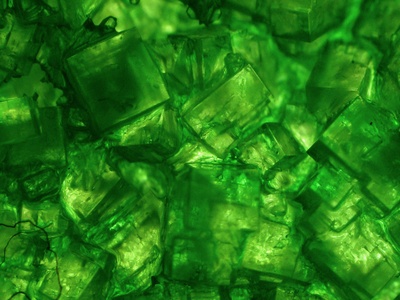
Sodium sulfate
Sodium sulfate is a soluble salt that produces two Na+ ions and one sulfate ion in solution. Used as a drying agent, in detergents, and for chemical manufacture. Solutions conduct electricity and are commonly used to adjust ionic strength.
Potassium sulfate
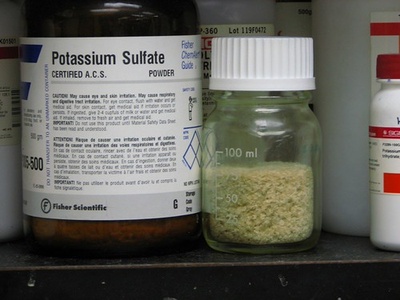
Potassium sulfate dissociates into 2K+ and SO4^2- in water and is primarily used as a potassium fertilizer with low chlorine. It’s highly soluble and useful for supplying potassium in agriculture and some industrial processes.
Ammonium chloride
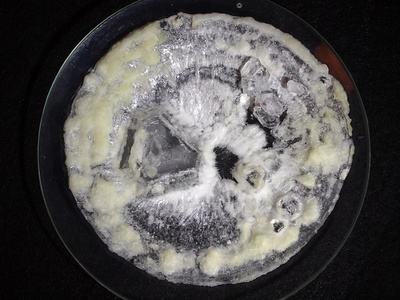
Ammonium chloride dissolves to NH4+ and Cl- and is used in fertilizers, cooling baths, and as a flux in metalworking. In solution the ammonium ion can act as a weak acid competitively, but the salt itself is a strong electrolyte.
Magnesium sulfate
Magnesium sulfate (Epsom salt) is a soluble ionic compound that dissociates into Mg^2+ and SO4^2- in water. Used in medicine, bath salts, and agriculture; solutions conduct well and provide bioavailable magnesium and sulfate ions.