The Human Genome Project finished in 2003 after 13 years and roughly $3 billion — today a whole human genome can be sequenced for under $1,000, and that change has reshaped what’s possible in biology.
Data volumes have exploded, algorithms have improved, and clinics now demand actionable results. Traditional lab workflows can’t keep up with the pace of data generation. That gap is both an opportunity and a bottleneck for patients and researchers.
Computational biology is shifting from niche research pipelines to infrastructure that will reshape medicine, drug discovery, and how we study life — these are eight concrete trends to watch.
AlphaFold’s public breakthroughs (2020–2021) are a recent milestone that shows how fast progress can translate into tools researchers use immediately. Below are eight trends, grouped into three categories: Clinical & Medical Impact, Methods & Models, and Data Infrastructure & Governance.
First, the clinical impacts.
Clinical and Medical Impact

This category covers trends that will change patient care, diagnostics, and drug pipelines. Faster models and larger datasets are shortening the path from lab finding to bedside decision. Clinical sequencing, automated interpretation, and predictive analytics are already shortening time-to-treatment for some patients.
Large projects and regulatory approvals are evidence that translation is underway. The NIH All of Us Research Program (launched 2018) and multiple FDA-cleared genomic tests show clinical uptake. Still, regulators and providers are paying close attention to safety, validity, and equity.
1. Personalized drug discovery and treatment selection
Computational methods are enabling tailored therapeutics from patient genomes and molecular profiles. Machine learning speeds candidate identification by prioritizing compounds or targets from high-content screens.
Companies such as Recursion Pharmaceuticals and Insilico Medicine have used ML-guided screening and design to move lead candidates toward IND-enabling studies in the late 2010s and 2020s. Adaptive trial designs powered by modeling can shorten time-to-patient for promising agents.
Real-world uses include oncology treatment matching, rare-disease variant interpretation, and N-of-1 genome-guided therapies that produced measurable outcomes in single-patient cases. One paper paraphrased a common claim: “ML can dramatically reduce screening timelines,” reflecting the concrete time savings some groups report.
2. Clinical genomics at scale (routine sequencing and interpretation)
Genomic sequencing and automated interpretation are becoming part of routine clinical workflows. Sequencing costs that fell from about $3 billion for the first genome (2003) to under $1,000 by the mid-2010s make wider access feasible.
Large programs such as All of Us (launched 2018) are building population-scale resources that improve variant annotation. Clinical labs now use Illumina platforms, DRAGEN pipelines, and commercial interpretation services like Invitae to deliver reports within clinical timelines.
Challenges remain: variant interpretation bottlenecks, inconsistent reporting formats, and the need for standardized clinical-grade pipelines. As databases grow, automated pipelines reduce turnaround time, but human review and consensus standards are still required for many results.
3. Predictive models for early detection and triage
Predictive analytics are shifting care toward earlier intervention and better resource allocation. Models that flag sepsis, predict readmission, or screen retinal images have shown measurable improvements in clinical workflows.
For example, the IDx-DR diabetic retinopathy algorithm earned FDA clearance (2018) and is used for autonomous screening. Hospital sepsis early-warning systems and telemedicine triage tools have reduced time-to-intervention in several deployments.
Wearable-based monitoring (studies with Apple and Fitbit collaborations) expands continuous surveillance outside the clinic. Equity, validation across populations, and EHR integration are critical caveats before broad adoption.
Methods, Models, and Computational Advances
Algorithmic breakthroughs are the engine behind clinical translation and industrial use. Deep learning, faster simulations, and more reliable inference methods are expanding what models can predict and design.
These future trends in computational biology build on milestones like AlphaFold (2020/2021) and the spread of high-performance GPU compute. The next wave focuses on function, multiscale links, and trustworthy models.
4. Deep learning for structure and function (beyond AlphaFold)
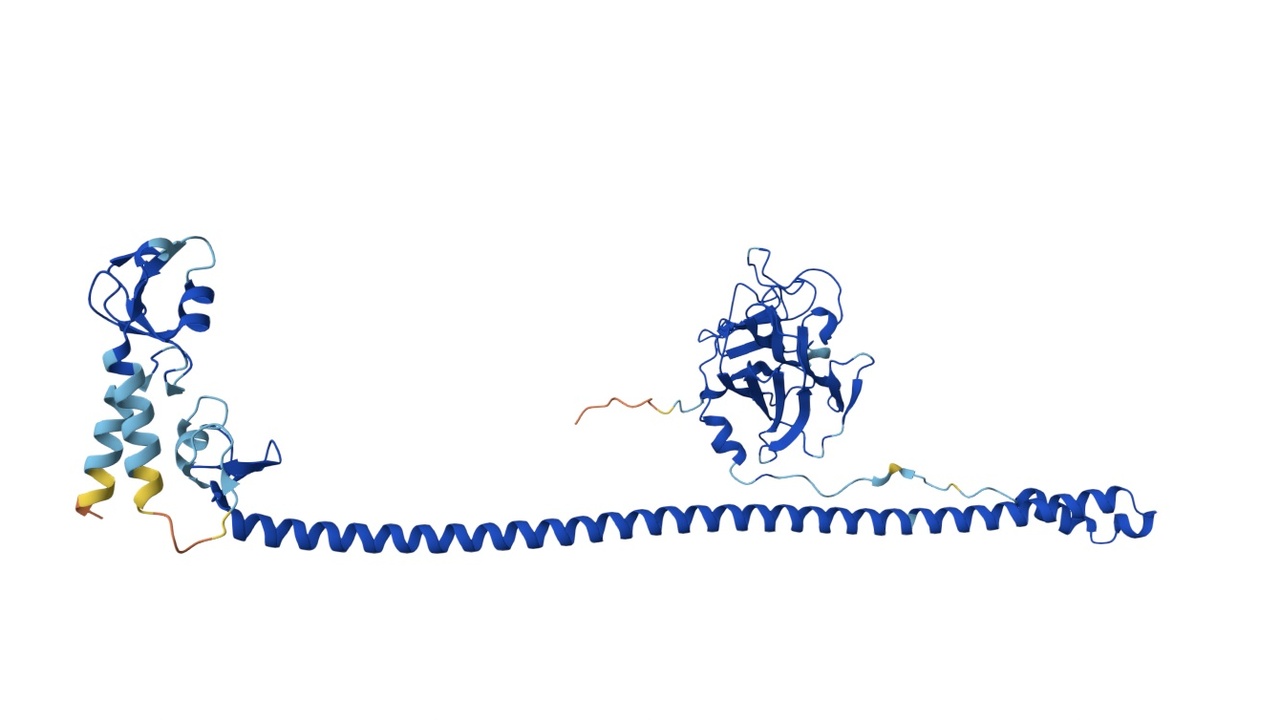
Protein structure prediction was only the first step. Models now help predict interactions, design proteins, and annotate function at scale. AlphaFold’s 2020–2021 work made predicted structures for most of the human proteome widely available.
RoseTTAFold (2021) and follow-on tools further lowered the barrier to model-based design. The AlphaFold database and related resources now host hundreds of thousands of predicted structures that researchers use for enzyme engineering and antibody design.
Academic groups and startups use these models to design synthetic proteins for therapeutics and industry, accelerating cycles that previously required months of wet-lab iteration.
5. Multiscale modeling and ‘digital twins’ of biological systems
Multiscale models connect molecules to cells, tissues, and organisms. The idea of a biological “digital twin” is emerging for dosing, chronic-disease management, and personalized simulation of interventions.
Groups combine molecular dynamics tools (GROMACS, OpenMM) with systems-biology models and organ-on-chip data to run in silico trials that can complement animal testing. Heavy GPU and cloud use have cut many simulation wall-times from weeks to days in routine workflows.
Commercial and academic efforts are building patient-level twins for chronic conditions to test treatment strategies virtually. Computational cost and model validation against clinical outcomes remain active engineering challenges.
6. Interpretable, causal, and robust machine learning
Interpretability and causal inference are rising priorities as models move into clinical use. Regulators and clinicians increasingly ask for explanations they can act on, not just performance numbers.
Tools like SHAP values, causal graphs, and counterfactual analyses are being incorporated into pipelines to explain risk scores and identify causal biomarkers rather than mere correlations. These methods help detect distribution shift and confounding.
Robust validation across diverse cohorts and transparent reporting build trust and reduce the chance of harmful model failures in deployment.
Data Infrastructure, Privacy, and Collaboration

Impact depends on access to data, standards, and collaborative platforms. Federated and privacy-preserving computation, reproducible pipelines, and open science initiatives determine who benefits from advances.
Initiatives such as GA4GH, Terra, and Nextstrain show how standards and shared platforms accelerate work. Large consortia and public databases scale annotation and enable reproducible studies, but ethical and equitable representation must be addressed.
7. Federated learning and privacy-preserving computation
Federated and secure-computation approaches let institutions collaborate without sharing raw data. Models are trained across sites using federated learning, secure enclaves, or homomorphic encryption prototypes.
During the COVID-19 era, federated efforts collected insights across dozens of hospitals while keeping patient data on site. GA4GH standards help make those collaborations interoperable by defining schemas and APIs.
Barriers include communication overhead, heterogeneous local data, and legal constraints. Still, federated approaches are a pragmatic way to scale models for rare diseases and multi-center clinical prediction tasks.
8. Open science, reproducibility, and community platforms
Open tools and standards are democratizing computational biology. Platforms like Nextstrain (active during 2020–2022), Terra workspaces, and public databases such as the AlphaFold DB sped research during the pandemic and beyond.
Nextstrain’s real-time dashboards tracked tens of thousands of genomes and informed public-health responses. Terra workspaces let consortia share reproducible pipelines, while open databases accelerate follow-up studies.
Funding and governance for sustained open infrastructure remain open questions. Long-term impact depends on sustainable models, clear data governance, and broad representation in shared datasets.
Summary
These eight trends cluster around three pillars: clinical translation, better models, and improved data practices. Each pillar already shows practical wins and realistic challenges to address.
- Protein structure AI (AlphaFold/RoseTTAFold) rapidly moved from papers to public databases and practical design workflows.
- Routine clinical genomics and ML-guided treatment selection are enabling more personalized care and faster candidate selection.
- Federated learning and standards (GA4GH, Terra) let institutions collaborate while protecting patient data.
- Interpretable and causal methods are essential for clinical trust and regulatory acceptance.