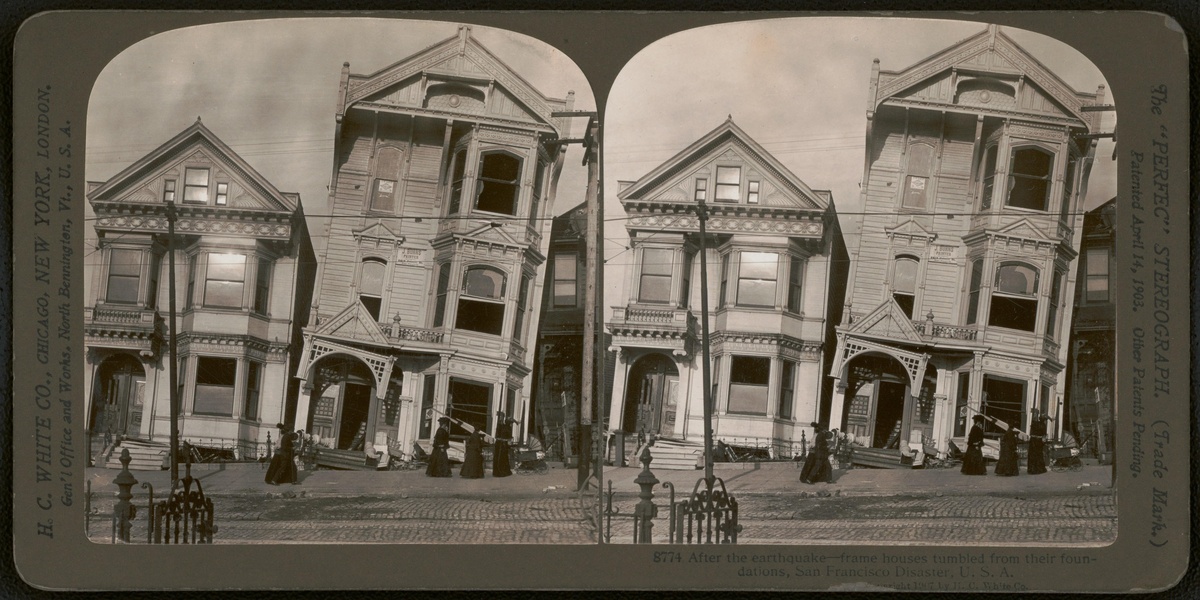
On April 18, 1906, a magnitude ~7.9 earthquake devastated San Francisco and sparked beliefs about quakes that persist a century later; fires and the collapse of much of the city killed an estimated 3,000 people and left a lasting imprint on public memory.
Dramatic events like that are memorable, and media simplification, vivid anecdotes, and cognitive shortcuts help myths spread. A viral social post recommending people stand in doorways during shaking is a recent example — widely shared, often wrong, and potentially dangerous.
Many widely held ideas are outdated, misleading, or flat-out incorrect, and acting on them can cost lives or undermine preparedness. This article debunks ten common misconceptions, explains the science and engineering behind the facts, and gives clear safety and policy guidance.
We’ll cover ten myths, grouped into three categories — scientific misunderstandings, safety and preparedness errors, and engineering, prediction, and policy myths — and offer practical corrections you can use now.
Scientific misunderstandings about earthquakes
Before turning to safety and policy, it’s useful to clear up basic science. Misconceptions about where quakes occur, how we measure them, and what patterns mean can make guidance seem confusing — and they influence hazard maps and planning.
1. Myth: Earthquakes only happen along well-known fault lines
The idea that quakes only strike obvious fault zones is false. While plate boundaries host most large earthquakes, stress accumulates and releases inside plates too.
Historic intraplate events include the New Madrid sequence (1811–1812), with magnitudes estimated roughly 7.5–8.0, which shook the central United States well away from active plate margins. More recently, the August 23, 2011, M5.8 quake near Mineral, Virginia, caused surprising damage hundreds of kilometers from the epicenter.
USGS analyses show tectonic stress can be stored on buried or poorly mapped faults, so hazard maps and insurance models must account for low-probability, high-impact intraplate risks rather than assuming safety where no surface fault is visible.
2. Myth: The Richter scale is used to measure earthquake size today
Charles Richter introduced his local magnitude scale in 1935 for small-to-moderate Southern California quakes, but seismology has moved on for large events.
For major earthquakes scientists now use the moment magnitude scale (Mw), which better estimates total released energy. For example, the March 11, 2011, Tohoku event is reported as Mw 9.1. Early news reports sometimes cite different numbers because preliminary methods differ; magnitude, depth, and distance together determine shaking and damage.
3. Myth: A small quake (foreshock) guarantees a bigger one is coming
People often treat small shocks as a reliable early-warning signal, but foreshocks are neither consistent nor predictive in most cases.
Only a minority of mainshocks are preceded by identifiable foreshocks, according to USGS summaries and peer-reviewed studies that analyze foreshock frequency and patterns. The 2011 Tohoku sequence had foreshock activity, but that pattern is exceptional rather than typical.
Monitoring foreshocks can inform short-term operational choices in critical facilities, but relying on them for public predictions produces false alarms and unnecessary disruption rather than reliable forecasts.
4. Myth: Deep earthquakes are less dangerous than shallow ones
Depth matters, but the relationship between depth and hazard is nuanced. Shallow earthquakes (less than about 70 km) usually produce stronger surface shaking close to the epicenter, so they often cause more localized damage.
Intermediate events (70–300 km) and deep quakes (>300 km) tend to be felt over wider areas but generally produce lower intensities at the surface near the epicenter. The April 25, 2015, Nepal Mw 7.8 earthquake was shallow and caused severe local destruction, illustrating why depth must be considered alongside magnitude, distance, and local geology.
Practically, building codes and emergency plans use depth as one factor among several when assessing expected shaking and designing resilience measures.
Safety and preparedness myths that put people at risk
Misinformation shapes behavior during earthquakes. Official guidance from agencies such as FEMA, the USGS, and the Red Cross reflects evidence about what keeps people alive.
Below are several widespread safety myths and clear, practical corrections you can use immediately.
5. Myth: You should stand in a doorway during an earthquake
Old advice about doorways comes from houses built differently a century ago. Modern guidance favors Drop, Cover, and Hold On rather than rushing to a doorway.
FEMA and the USGS explain that moving during strong shaking increases the chance of injury from falling debris or broken glass. Instead, drop to the ground, take cover under a sturdy table or desk if available, and hold on until shaking stops.
If you’re in bed, stay there and protect your head. In a car, pull over safely and remain inside until shaking ends. Moving to doorways in modern buildings often exposes people to more hazards than it avoids.
6. Myth: Animals reliably predict earthquakes
Many people report odd animal behavior before quakes, but controlled studies show such anecdotes do not form a reliable, generalizable predictive signal.
The Haicheng case in China (1975) is often cited as a successful prediction based partly on animal behavior, but researchers debate how much of the warning was based on instrumented monitoring and evacuations versus retrospective interpretation. In the 2004 Indian Ocean event (December 26, 2004) there was no consistent animal-warning pattern that saved lives across the region.
Observations of animals can complement scientific monitoring and spark closer scrutiny, but they should never replace sensors, official warnings, and preparedness planning.
7. Myth: It’s safe to return home immediately after shaking stops
Stopping shaking is a momentary relief, not a green light. Aftershocks, gas leaks, damaged utilities, and structural instability are real hazards in the hours and weeks after a mainshock.
USGS aftershock statistics show large events are followed by many aftershocks; some can be strong enough to cause further collapse. After the January 12, 2010, Haiti earthquake (Mw 7.0), damaging aftershocks continued for weeks and hampered rescue and recovery.
Before re-entering structures, check for obvious signs of damage, smell for gas, turn off utilities if safe to do so, and follow official inspection orders. When in doubt, wait for a qualified building inspection.
8. Myth: Once a big earthquake releases strain, the area is ‘safe’ for a long time
Releasing strain on one patch of fault does not guarantee reduced hazard everywhere. Earthquakes redistribute stress, sometimes increasing stress on neighboring faults and raising short-term risk in nearby areas.
Researchers studying Coulomb stress transfer have linked events such as the June 28, 1992, Landers earthquake to increased likelihood of subsequent ruptures like the 1999 Hector Mine quake. The April 4, 2010, El Mayor–Cucapah event also triggered regional changes.
That means communities should not assume a single large event eliminates future risk; monitoring, inspection, and rebuilding to better standards remain crucial.
Engineering, prediction, and policy myths
Misunderstandings about what engineering and policy can achieve influence investments and expectations. Below are two common myths and the practical reality behind them.
9. Myth: Buildings can be made completely earthquake-proof
There is no practical way to make structures absolutely indestructible against all earthquakes, but modern engineering dramatically reduces collapse risk and saves lives.
Design goals focus on life safety and, increasingly, functional recovery. Techniques such as base isolation, energy-dissipating dampers, and targeted retrofits reduce shaking forces and damage. Countries like Japan use base isolation widely, and retrofitting programs in California and New Zealand have improved performance.
Building-code upgrades after events like the 1995 Kobe earthquake have lowered casualty rates in later quakes, even if some older buildings remain vulnerable. The right mix of codes, enforcement, and targeted retrofit investments yields large public-safety benefits.
10. Myth: Earthquakes can be reliably predicted days to weeks in advance
Reliable short-term prediction measured in days or weeks is not supported by current science. The distinction between long-range prediction and early warning is crucial.
Operational systems deliver seconds-to-minutes of advance notice by detecting an earthquake’s initial waves and broadcasting alerts. Examples include Japan’s EEW, Mexico’s SASMEX (used effectively in Mexico City on September 19, 2017), and the U.S. ShakeAlert system. Those alerts enable automatic actions like slowing trains, opening elevator doors, and sending public alarms.
Haicheng 1975 is often mentioned as an exception, but its status is debated. For now, prepare with resilience and early-warning integrations rather than expecting reliable multi-day forecasts.
Summary
- Drop, Cover, and Hold On works; standing in doorways is outdated and often unsafe.
- Seismic science uses moment magnitude (not Richter for big quakes), recognizes intraplate events, and treats depth as one of several hazard factors.
- Short-term prediction on the scale of days–weeks isn’t reliable; operational early-warning systems provide seconds to minutes for protective actions.
- Engineering reduces collapse risk but doesn’t make buildings indestructible; retrofit programs and code enforcement measurably save lives.
- Update your emergency kit, practice official drills, check local building-inspection guidance, and follow authoritative sources such as the USGS and FEMA for reliable information about myths about earthquakes.