South Dakota’s mix of Black Hills uplift, glacial till, and river gravels gives the state a surprising mineral variety worth exploring. From roadside outcrops to old mining dumps, hobbyists and researchers find distinct specimens that tell the region’s geological story.
There are 34 Minerals in South Dakota, ranging from Agate (Fairburn) to Zircon. For each entry the list includes Chemical formula,Hardness (Mohs),Localities (SD); you’ll find these organized details below.
Can I legally collect minerals on public land in South Dakota?
Rules vary by land type: collecting a few rocks for personal use is often allowed on many BLM and USFS lands, but national parks, state parks, and private property usually prohibit removal without a permit or permission. Always check land-management agency regulations, obtain permission from landowners, and follow size/quantity limits to stay legal and respectful.
What are quick field tips to tell Agate (Fairburn) from Zircon?
Agate (Fairburn) shows banded, colorful chalcedony and rounded nodules often in gravels; it’s relatively soft (around 6.5–7 on Mohs) and reacts visually to light. Zircon is typically small, high-density, prismatic or rounded crystals, often brown to reddish and noticeably heavier; a loupe and hardness test help, but when in doubt record the find and compare to the Chemical formula,Hardness (Mohs),Localities (SD) data you’ll find below.
Minerals in South Dakota
| Mineral | Chemical formula | Hardness (Mohs) | Localities (SD) |
|---|---|---|---|
| Quartz | SiO2 | 7 | Black Hills, statewide pegmatites and veins |
| Amethyst | SiO2 | 7 | Custer and Pennington counties, Black Hills |
| Agate (Fairburn) | SiO2 | 7 | Custer and Fall River counties, Belle Fourche River gravels |
| Chalcedony | SiO2 | 7 | Black Hills gravels and vugs |
| Jasper | SiO2 | 7 | Black Hills and Missouri River gravels |
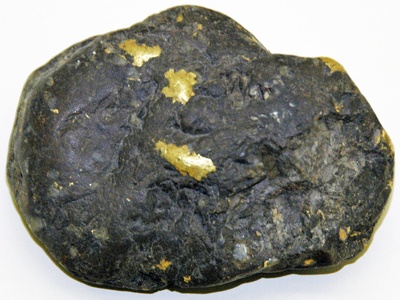
| Native gold | Au | 2.5-3 | Lawrence County (Homestake/Homestake district), Deadwood area |
| Galena | PbS | 2.5 | Lead-Deadwood district, Lawrence County |
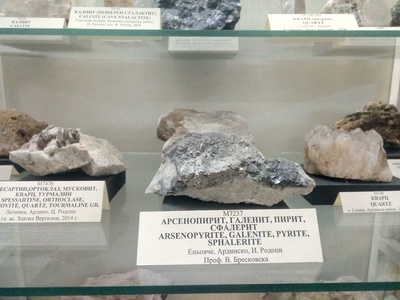
| Sphalerite | ZnS | 3.5-4 | Lead-Deadwood district, Pennington County |
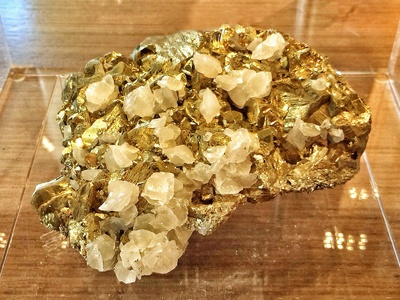
| Chalcopyrite | CuFeS2 | 3.5-4 | Black Hills veins, Lead-Deadwood district |
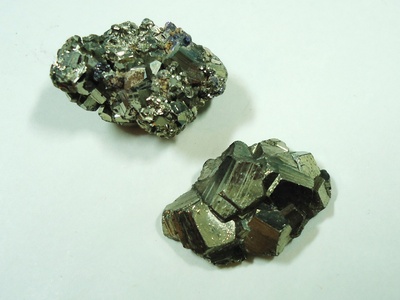
| Pyrite | FeS2 | 6-6.5 | Widespread Black Hills veins and placer deposits |
| Marcasite | FeS2 | 6-6.5 | Lead-Deadwood area, crystallized forms in veins |
| Calcite | CaCO3 | 3 | Custer and Fall River County vugs and veins |
| Dolomite | CaMg(CO3)2 | 3.5-4 | Black Hills carbonate rocks, widespread exposures |
| Barite | BaSO4 | 3-3.5 | Lawrence and Pennington counties, hydrothermal veins |
| Fluorite | CaF2 | 4 | Lead-Deadwood veins, some Black Hills occurrences |
| Hematite | Fe2O3 | 5.5-6.5 | Iron-bearing deposits, Black Hills and Custer area |
| Magnetite | Fe3O4 | 5.5-6.5 | Black Hills igneous/metamorphic rocks, Custer area |
| Garnet (almandine) | Fe3Al2(SiO4)3 | 6.5-7.5 | Sioux Quartzite near Sioux Falls, SE SD |
| Muscovite | KAl2(AlSi3O10)(OH)2 | 2-2.5 | Pegmatites in Black Hills, surficial outcrops |
| Biotite | K(Mg,Fe)3AlSi3O10(OH)2 | 2.5-3 | Black Hills metamorphic rocks and schists |
| Orthoclase (feldspar) | KAlSi3O8 | 6 | Pegmatites and Sioux Quartzite, Black Hills and SE SD |
| Plagioclase (feldspar) | (Na,Ca)(Al,Si)4O8 | 6-6.5 | Widespread igneous/metamorphic rocks in Black Hills |
| Cerussite | PbCO3 | 3-3.5 | Lead-Deadwood oxidized zones, Lawrence County |
| Anglesite | PbSO4 | 3.5-4 | Lead-Deadwood oxidized zones, Lawrence County |
| Pyromorphite | Pb5(PO4)3Cl | 3.5-4 | Lead-Deadwood district, specimen localities |
| Wulfenite | PbMoO4 | 2.5-3 | Rare occurrences in Lead-Deadwood oxidized zones |
| Malachite | Cu2CO3(OH)2 | 3.5-4 | Oxidized copper occurrences in Black Hills |
| Azurite | Cu3(CO3)2(OH)2 | 3.5-4 | Oxidized copper zones, Black Hills |
| Uraninite | UO2 | 5-6 | Uranium occurrences in Custer and Fall River counties |
| Autunite | Ca(UO2)2(PO4)2·10–12H2O | 2-2.5 | Secondary uranium deposits in Black Hills |
| Tourmaline (schorl) | NaFe3Al6(BO3)3Si6O27(OH)4 | 7-7.5 | Black Hills pegmatites, Custer County |
| Epidote | Ca2(Al,Fe)3(SiO4)3(OH) | 6-7 | Metamorphic rocks of the Black Hills |
| Zircon | ZrSiO4 | 7.5 | Pegmatites and granites in Black Hills |
| Epidote-group (clinozoisite) | Ca2Al3Si3O12(OH) | 6-7 | Various Black Hills localities and skarn zones |
Images and Descriptions
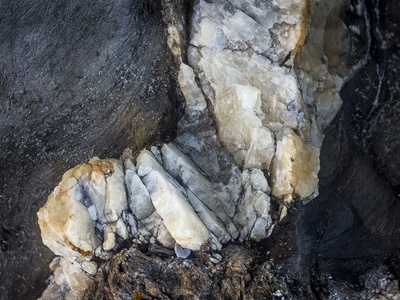
Quartz
Transparent to milky crystals common across South Dakota; classic prismatic quartz crystals and drusy vugs occur in Black Hills veins and gravels. Easy to identify, hardy, and a staple for collectors and rockhounds searching stream gravels and outcrops.
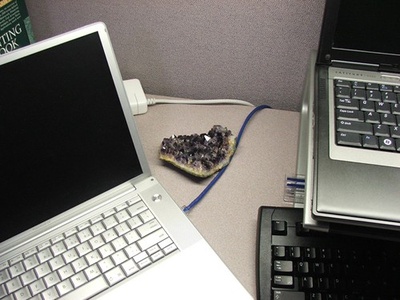
Amethyst
Purple variety of quartz found in Black Hills pockets and gravels. Often forms clustered, translucent crystals; color ranges pale to deep violet. Popular with collectors for aesthetics; best found in weathered veins or local stream gravels.
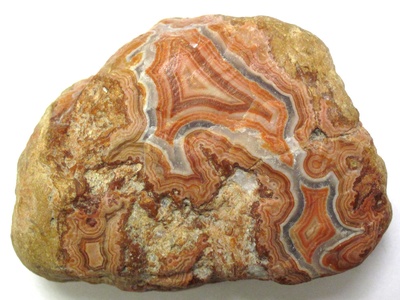
Agate (Fairburn)
Fairburn agates are banded chalcedony famous in the Black Hills; show bright reds, oranges and white banding. Collected from gravels and creeks; prized by lapidaries and rockhounds for attractive polished gems.
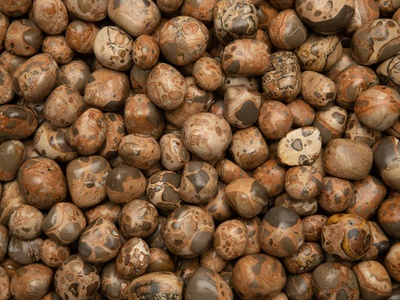
Chalcedony
Microcrystalline quartz forming waxy, translucent nodules and botryoidal masses. Found in cavities and gravels around the Black Hills. Often mistaken for agate or jasper; popular for small, durable specimens and cabochon material.

Jasper
Opaque, colorful variety of chalcedony; usually red, brown or green. Occurs in gravels and weathered outcrops across the state. Durable and attractive for polishers; easy to spot by bright, earthy colors.
Native gold
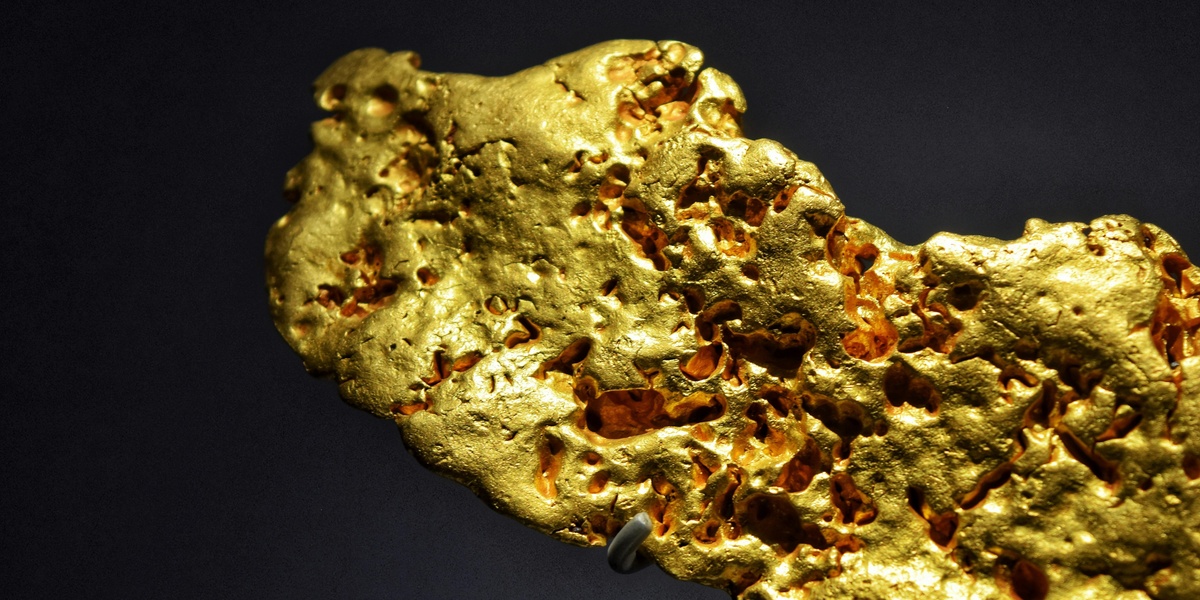
Gold occurs in Black Hills veins, historically mined at Homestake. Appears as yellow metallic flakes or wire gold in quartz. Heavy and soft, great for panning and historic mineral displays; regulated collecting in mine areas.

Galena
Dense, metallic lead sulfide with bright cubic crystals common in historic Lead-Deadwood ore shoots. Easy to identify by heft and cleavage. Popular with collectors; often associated with secondary colorful lead minerals.
Sphalerite
Primary zinc ore occurring with galena and chalcopyrite in Black Hills veins. Resinous to submetallic luster, brown to black crystals. Collectors value lustrous crystals; found in vein material and mine dumps.
Chalcopyrite
Brassy, brassy-gold sulfide often with iridescent tarnish. Common in mineralized zones of the Black Hills. Easily mistaken for pyrite but softer; shows in vein material and is a common collector’s sulfide.
Pyrite
Fool’s gold forms brassy cubic crystals and masses in veins and gravels. Very common and easy to identify by metallic luster and crystal form. Popular for educational collections and decorative specimens.
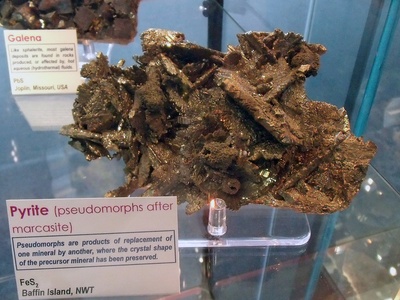
Marcasite
Polymorph of pyrite that forms pale, brittle, twinned crystals and spear-shaped forms. Found in sulfide-bearing veins in the Black Hills. Crystals can be delicate; handle with care due to tendency to oxidize.
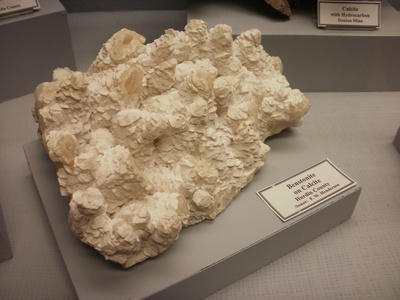
Calcite
Common and versatile carbonate forming rhombohedral, scalenohedral crystals and sparkling vug fillings. Occurs in many Black Hills localities. Reacts with acid and shows cleavage; great for teaching crystal habits and local collecting.
Dolomite
Common carbonate mineral in sedimentary units and replacement zones. Often forms pinkish to buff rhombs in outcrops. Collectible for crystal forms and common in roadside exposures and quarries.
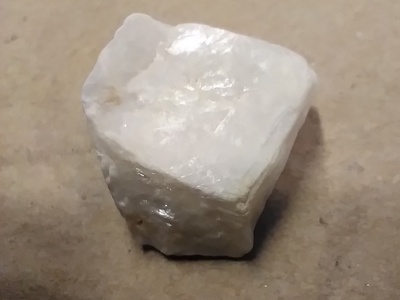
Barite
Heavy, bladed or tabular crystals in vein deposits of the Black Hills. White to colorless and dense, barite forms attractive specimens. Collectors seek well-formed crystals from vein exposures and old workings.
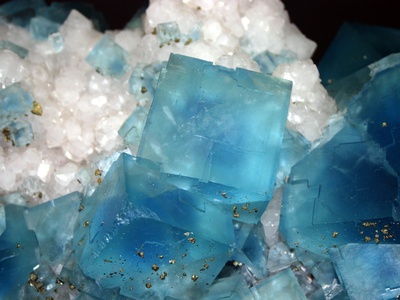
Fluorite
Colorful cubic fluorite occurs locally in mineralized veins; colors range purple to green. Softer than quartz and fluoresces under UV. Sought after by collectors when well-formed crystals are available.
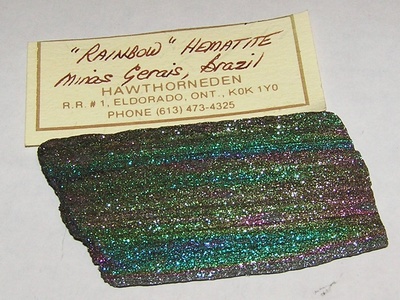
Hematite
Reddish-black iron oxide that forms earthy masses and metallic crystals. Found in iron-bearing horizons and as weathering product in mines. Collected for its color and as an iron ore mineral specimen.
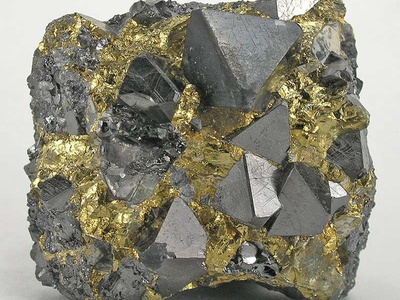
Magnetite
Strongly magnetic iron oxide often in igneous and metamorphic rocks of the Black Hills. Forms black, metallic grains or octahedral crystals. Handy for field ID due to magnetism; used in teaching and collecting.
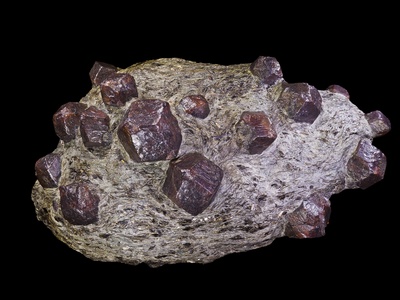
Garnet (almandine)
Dark red to brown almandine garnets occur in the Sioux Quartzite; typically small, dodecahedral crystals. Durable and gemmy when large, they make attractive, easy-to-identify specimens for collectors and students.
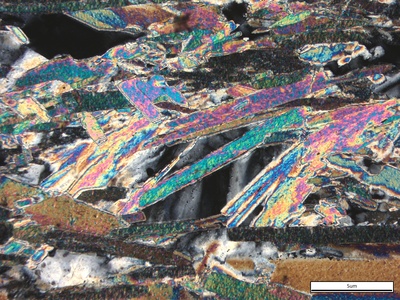
Muscovite
Light-colored mica forming flexible, silvery sheets in pegmatites and schists. Common in Black Hills pegmatites; sheets make good classroom specimens and are easy to split into thin flakes.
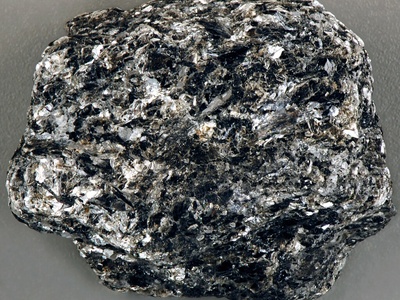
Biotite
Dark brown-to-black mica in metamorphic rocks and pegmatites. Forms shiny, platy flakes. Common in regional metamorphic rocks and a familiar indicator mineral for rockhounds exploring outcrops.
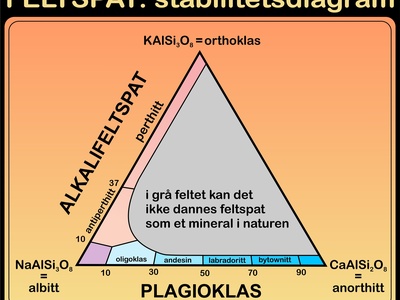
Orthoclase (feldspar)
Pink to white feldspar crystals occur in pegmatites and metamorphic Sioux Quartzite. Hard and blocky with good cleavage; useful in identifying granitic and metamorphic rocks and a common collector mineral.
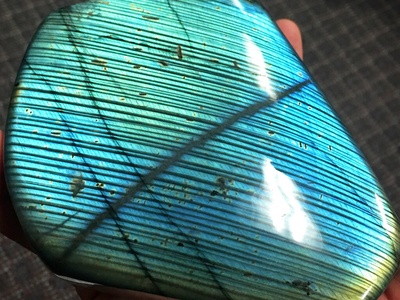
Plagioclase (feldspar)
Common rock-forming feldspar ranging from albite to anorthite in local igneous and metamorphic units. Cleavage and striations help ID; typical in hand samples and educational collections.

Cerussite
Attractive, often twinned lead carbonate crystals formed by oxidation of galena. Colorless to gray with high luster; prized secondary mineral from old lead mines and historic dump collections.
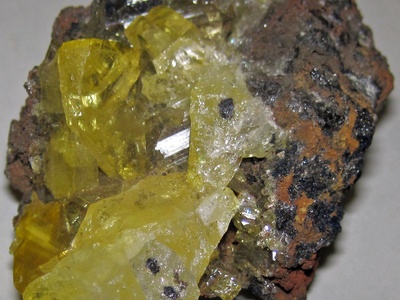
Anglesite
Translucent to white lead sulfate that forms lustrous crystals in mine oxidation zones. Found with cerussite and other secondary lead minerals; collectible for bright, glassy crystals on matrix.
Pyromorphite
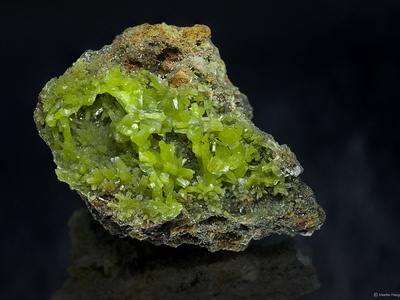
Bright green to brown lead phosphate forming chunky hexagonal crystals in oxidized lead veins. Highly sought by collectors for striking colors and well-formed crystals in historic lead mine areas.

Wulfenite
Orange-yellow tabular lead molybdate crystals reported from oxidized zones of some Black Hills lead deposits. Collectors prize thin, lustrous plates when available; occurrences are typically limited and localized.
Malachite
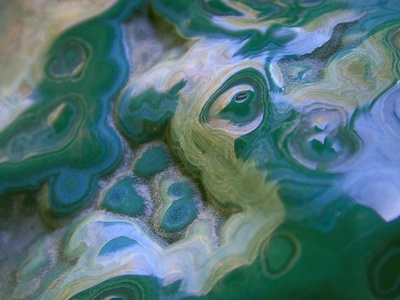
Bright green secondary copper carbonate forming botryoidal crusts and masses in weathered copper-bearing veins. Attractive and commonly used as an educational specimen; indicates copper mineralization nearby.
Azurite
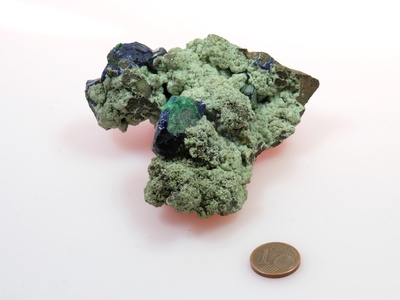
Deep blue secondary copper carbonate often associated with malachite in oxidized zones. Forms vivid specimens that polish well; sought by collectors for color and association with copper deposits.
Uraninite
Primary uranium oxide found in Black Hills uranium-bearing veins and breccias. Dark, dense and radioactive—collect only with permission and proper safety. Historically significant for uranium exploration in the region.

Autunite
Yellow, flaky uranium phosphate that fluoresces under UV. Forms as a secondary mineral in oxidized uranium zones. Attractive and fluorescent, but radioactive—handle with care and follow regulations.
Tourmaline (schorl)
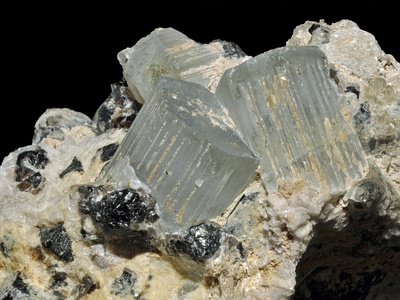
Black prismatic tourmaline crystals found in Black Hills pegmatites. Durable and striated, commonly occurring as schorl. Great for collectors seeking well-formed, aesthetic crystals from pegmatite exposures.
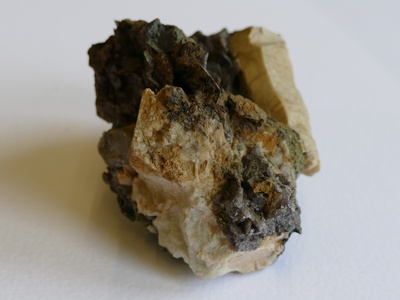
Epidote
Green pistachio-colored crystals and masses in altered metamorphic rocks and veins. Distinctive green color helps identification; commonly seen in schists and contact zones around the Black Hills.
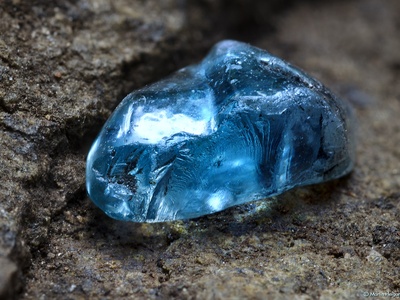
Zircon
Small, often gemmy zircon crystals in pegmatites and granitic rocks. High hardness and density make it notable; collectors value gem-quality grains and their use in age-dating regional geology.
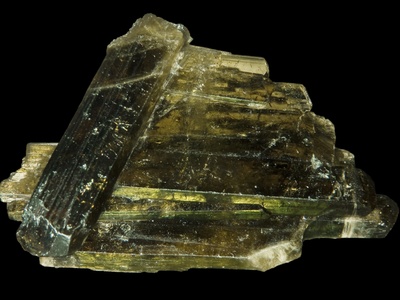
Epidote-group (clinozoisite)
Clinozoisite and related epidote-group minerals appear in skarns and altered carbonate rocks. Typically pistachio-green prismatic crystals; collected for color and occurrence in contact metamorphic settings.