
Explore seven concrete benefits of inorganic chemistry — from materials and catalysis to electronics, healthcare, and environmental solutions. This hub post explains why inorganic chemistry matters to everyday life and careers, and links to detailed articles on each benefit so you can learn practical applications, job paths, and real-world impact. Perfect for students, professionals, and curious readers seeking clear, accessible science.
7 Benefits of Inorganic Chemistry (and why it is important to you)
Continue reading
0 Comments
8 Elements Nickel Reacts With
This hub lists the 8 elements nickel reacts with, explains the reaction types and typical conditions, and links to detailed posts for each element. Ideal for students, researchers, and lab technicians seeking clear reaction profiles and practical examples.
Continue reading
0 Comments

Examples of Frictional Force: The Complete List
This comprehensive guide presents 30 Examples of Frictional Force, each showing the friction type, a typical coefficient (μ), and common locations where it occurs. Perfect for students, educators, and engineers, the list clarifies how friction influences motion and wear in everyday and technical settings. Explore clear, real-world cases to compare coefficients and apply the concepts.
Continue reading
0 Comments
Branches of Chemistry: The Complete List
This comprehensive post lists all 32 Branches of Chemistry, providing concise descriptions, core focuses, key topics, and typical applications for each. Ideal for students, educators, and professionals looking to compare branches and find which area best fits their study, research, or career goals.
Continue reading
0 Comments
Decomposition Reactions: The Complete List
This comprehensive list presents 25 balanced Examples of Decomposition Reactions, covering thermal, photolytic, and catalytic pathways. Each entry includes the balanced equation, reaction type, and conditions (°C, catalysts, light) to help students and lab personnel quickly identify mechanisms, plan experiments, or study common decomposition processes.
Continue reading
0 Comments
8 Myths and Misconceptions About Neutrons
This post debunks eight common myths and misconceptions about neutrons — from their role in atomic stability to misunderstandings about neutron radiation and detection. Each myth is clearly explained and linked to deeper articles so you can explore evidence, experiments, and practical implications.
Continue reading
0 Comments

List of Scientists Born In Brazil
Explore a curated List of Scientists Born In Brazil featuring 26 influential figures across physics, biology, medicine, engineering and more. Each entry lists their field, lifespan, and birthplace, with concise context on their key contributions. Perfect for students, educators and anyone researching Brazilian scientific history — read on to meet the pioneers who shaped science in Brazil and beyond.
Continue reading
0 Comments

List of Science Museums in Louisiana
Explore 11 Science Museums in Louisiana, from hands-on children’s discovery centers to university planetariums. This curated list provides each museum’s city, focus, and notable exhibits to help families, educators, and science enthusiasts plan visits and discover the state’s top interactive science destinations.
Continue reading
0 Comments
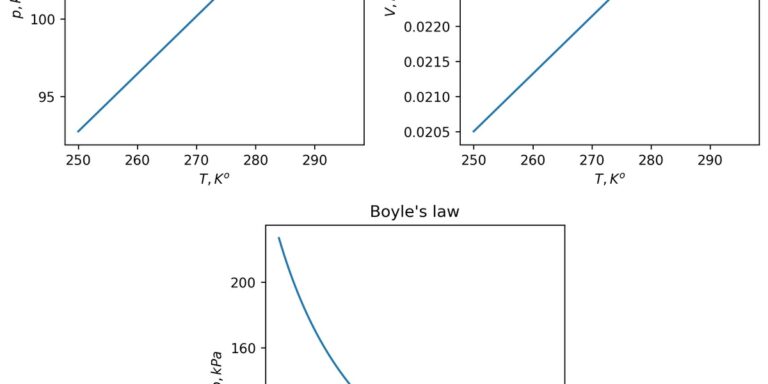
Examples of Ideal Gases
This post presents 12 Examples of Ideal Gases commonly encountered in labs and everyday life, with typical temperatures, pressures, and compressibility factors (Z) to show when the ideal gas approximation holds. Read concise profiles of each gas—helium, hydrogen, nitrogen, oxygen, argon, methane, and others—plus practical notes on deviations and when to apply real-gas corrections.
Continue reading
0 Comments
List of Radon Compounds
This post lists eight known or proposed Radon Compounds, providing each formula along with the experimental evidence and measured or estimated stability (half-life in seconds). Because radon is a heavy, radioactive noble gas with limited chemistry, the guide summarizes researcher findings, confidence levels, and implications for inorganic and radiochemistry.
Continue reading
0 Comments