Kyrgyzstan’s mountains and valleys host a rich mosaic of plant life shaped by altitude, climate and isolated basins. Local herbaria and field surveys reveal many species found nowhere else, tied to specific ranges and elevation bands across the country.
There are 50 Endemic Plants of Kyrgyzstan, ranging from Aflatun Onion,Zinaida’s Tulip to show the breadth of local endemism; for each species the data are organized as Scientific name,Range,Elevation range (m) — you’ll find below.
How is “endemic” defined for these plants and how reliable is the list?
Endemic here means species recorded as native and restricted to Kyrgyzstan based on published floras, herbarium specimens and recent field surveys; the list reflects current taxonomic consensus but may change with new research or discoveries.
Can I visit sites to see these plants in the wild and what should I know before going?
Many endemics occur in remote or protected areas, so plan with local guides, check access rules, visit in the appropriate season for flowering, and avoid collecting or disturbing plants — photographic records and GPS-safe routes are the best practice.
Endemic Plants of Kyrgyzstan
| Name | Scientific name | Range | Elevation range (m) |
|---|---|---|---|
| Alay Fritillary | Fritillaria olgae | Alay Range, particularly the northern slopes and Alay Valley | 1,500–2,500 |
| Spathulate Onion | Allium spathulatum | Fergana and Chatkal Ranges, on rocky and scree slopes | 1,800–3,000 |
| Korolkov’s Leek | Allium korolkowii | Tien Shan and Pamir-Alay ranges within Kyrgyzstan | 1,600–3,200 |
| Zinaida’s Tulip | Tulipa zenaidae | Talas Alatau and adjacent ranges in western Kyrgyzstan | 1,200–2,400 |
| Aflatun Onion | Allium aflatunense | Fergana and Chatkal Ranges of the western Tien Shan | 1,300–2,500 |
| Knorring’s Larkspur | Delphinium knorringianum | Inner and Central Tien Shan ranges | 2,800–3,800 |
| Kirghiz Sweetvetch | Hedysarum kirghisorum | Central and Inner Tien Shan, on gravelly riverbeds and slopes | 2,000–3,500 |
| Masar Milkvetch | Oxytropis masarensis | Alay and Trans-Alay ranges in southern Kyrgyzstan | 3,000–4,100 |
| Fergana Onion | Allium ferganicum | Fergana Range, on dry, rocky, and gravelly slopes | 1,000–2,000 |
| Aman’s Gagea | Gagea amanii | Talas Alatau, found in subalpine meadows and screes | 2,500–3,300 |
| Alay Milkvetch | Astragalus alaicus | Alay and Trans-Alay ranges, high-altitude steppes and screes | 2,500–4,000 |
| Big-capsule Milkvetch | Astragalus macrosemius | Issyk-Kul region and central Tien Shan | 1,700–2,800 |
| Vvedensky’s Tulip | Tulipa vvedenskyi | Chatkal Range, western Tien Shan | 1,500–2,600 |
| Lipsky’s Rhubarb | Rheum lipskyi | Alay and Trans-Alay Ranges | 2,800–4,200 |
| Issyk-Kul Fescue | Festuca issykkulensis | Shores and surrounding mountains of Lake Issyk-Kul | 1,600–2,500 |
| Atashen Lousewort | Pedicularis ataschtensis | Alay Range, in alpine meadows and on moist slopes | 3,000–4,000 |
| Fergana Iris | Juno ferganica | Fergana Range, on loess and gravel slopes | 800–1,800 |
| Kirghizian Cousinia | Cousinia kirghizorum | Central Tien Shan, on dry, rocky slopes | 2,000–3,200 |
| Rafigan’s Onion | Allium rafiganii | Fergana Range, western Tien Shan | 1,400–2,200 |
| Talas Primrose | Primula talassica | Talas Alatau range, in subalpine meadows | 2,400–3,300 |
| Korovin’s Eremurus | Eremurus korovinii | Fergana Range, on foothills and rocky slopes | 1,200–2,000 |
| Schischkin’s Oxytropis | Oxytropis schischkinii | Inner Tien Shan, high alpine zones | 3,500–4,500 |
| Fergana Fritillary | Fritillaria ferganensis | Fergana and Chatkal Ranges | 1,500–2,700 |
| Alay Rose | Rosa alaica | Alay Range and northern slopes of the Trans-Alay | 1,800–3,000 |
| Tien Shan Poppy | Papaver tianschanicum | Central and Inner Tien Shan ranges | 2,800–4,000 |
| Ruprecht’s Acantholimon | Acantholimon ruprechtii | Alay and Trans-Alay ranges, in high-altitude desert and scree | 2,800–4,100 |
| Komarov’s Corydalis | Corydalis komarovii | Alay and Trans-Alay ranges | 2,500–3,800 |
| Kamelin’s Saussurea | Saussurea kamelinii | Inner Tien Shan, on high-altitude screes | 3,400–4,200 |
| Talas Scutellaria | Scutellaria talassica | Talas Alatau range, in mountain steppes and on rocky slopes | 1,500–2,500 |
| Semenov’s Honeysuckle | Lonicera semenovii | Tien Shan ranges within Kyrgyzstan, especially near Issyk-Kul | 1,800–3,000 |
| Kirghiz Birch | Betula kirghisorum | Talas Alatau and adjacent ranges of the western Tien Shan | 1,800–2,800 |
| White-leaved Ligularia | Ligularia anoleuca | Inner Tien Shan, along streams and in wet alpine meadows | 3,000–3,800 |
| Pyataeva’s Tanacetopsis | Tanacetopsis pjataevae | Central Tien Shan, on dry scree and rocky slopes | 2,500–3,500 |
| Kirghiz Waldheimia | Waldheimia kirghisorum | Inner Tien Shan, high alpine screes and moraines | 3,400–4,300 |
| Sewerzow’s Pseudoseris | Pseudoseris sewerzowii | Western Tien Shan, often in juniper woodlands or on rocky slopes | 1,500–2,800 |
| Hairy-fruited Spirea | Spiraea lasiocarpa | Talas Alatau and Chatkal Range in the western Tien Shan | 1,600–2,700 |
| Fergana Stonecrop | Rosularia ferganica | Fergana Range, on rock crevices and stony slopes | 1,000–2,000 |
| Botschantzev’s Salt-tree | Halimodendron botschantzevii | Endemic to the Issyk-Kul basin | 1,600–1,800 |
| Talas Rock Jasmine | Androsace talassica | Talas Alatau, on alpine screes and rock ledges | 2,800–3,700 |
| Alay Cinquefoil | Potentilla alaica | Alay Range, subalpine and alpine meadows | 2,400–3,600 |
| Prostrate Ostrovskia | Ostrovskia sublimis | Fergana Range, on rocky slopes and in light woodland | 1,400–2,500 |
| Nikitin’s Onion | Allium nikitinae | Alay valley and foothills of the Trans-Alay range | 2,200–3,200 |
| Issyk-Kul Dracocephalum | Dracocephalum issykkulense | Issyk-Kul basin and surrounding Terskey Alatau slopes | 1,700–2,800 |
| Fergana Scabious | Lomelosia ferganensis | Fergana Range, on dry, stony slopes | 1,200–2,100 |
| Kamelin’s Rhaponticum | Rhaponticum kamelinii | Alay Range, in subalpine meadows | 2,300–3,400 |
| Tashiro’s Lousewort | Pedicularis tashiroi | Central Tien Shan, high alpine meadows | 3,200–4,100 |
| Alay Catchfly | Silene alaica | Alay Range, rocky slopes and screes | 2,000–3,300 |
| Chatkal Whitlow-grass | Draba chatkalensis | Chatkal Range, on alpine screes and rock crevices | 2,800–3,800 |
| Gnezdilova’s Puccinellia | Puccinellia gnezdilovae | Issyk-Kul basin, on saline and alkaline soils near the shore | 1,600–1,700 |
| Kirghiz Oxytropis | Oxytropis kirghisica | Inner Tien Shan, on stony slopes and alpine steppes | 2,800–3,900 |
Images and Descriptions

Alay Fritillary
A rare and stunning fritillary with checkered, bell-shaped flowers in shades of purple and yellow. A prized find for botanists, it is a conservation target in Kyrgyzstan’s southern mountains.
Spathulate Onion
A delicate wild onion with loose umbels of pink or lilac star-shaped flowers. Its narrow, flat leaves are distinctive. This species is a true local of the western Tien Shan ranges within Kyrgyzstan.
Korolkov’s Leek
A robust wild leek with a striking spherical head of bright pink to purple flowers. Often found in subalpine meadows, its impressive flower globes stand out in the high-altitude landscape.
Zinaida’s Tulip
A beautiful and highly sought-after tulip with bright red, yellow-based petals. It is a jewel of Kyrgyzstan’s spring flora, often found on stony, sunny slopes. Its rarity makes conservation a priority.
Aflatun Onion
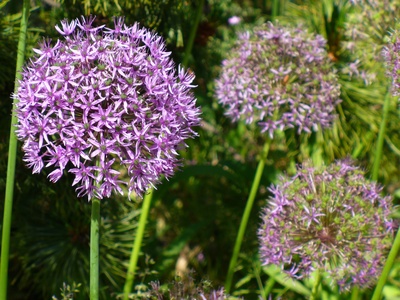
Famous for enormous, globe-shaped heads of starry purple flowers on tall stems. While cultivated worldwide as ‘Purple Sensation’, the true wild species is endemic to Kyrgyzstan’s mountains.
Knorring’s Larkspur
A high-altitude larkspur with intense blue or violet flowers in a dense spike. It thrives on alpine scree slopes and moraines, adding a splash of vivid color to the rocky landscape.
Kirghiz Sweetvetch
This perennial has pinnate leaves and produces showy spikes of pink or purple pea-like flowers. It’s an important plant for stabilizing soils in its harsh mountain environment.
Masar Milkvetch
A classic high-altitude cushion plant, forming dense, spiny mounds with hairy leaves and bright purple flowers that sit close to the cushion. It’s perfectly adapted to wind-swept alpine screes.
Fergana Onion
A medium-sized onion with a loose umbel of pinkish-purple flowers. This species is restricted to the specific ecological conditions of the Fergana Range, making it a unique element of the local flora.
Aman’s Gagea
A small, delicate spring bulb with bright yellow star-like flowers. Like other “goose onions,” it’s one of the first plants to bloom after the snow melts, heralding spring in the high mountains.
Alay Milkvetch
A low-growing, often stemless milkvetch with silvery, hairy leaves and clusters of purple or lilac flowers. It’s a hardy plant adapted to the extreme conditions of southern Kyrgyzstan’s mountains.
Big-capsule Milkvetch
This milkvetch is notable for its large, inflated seed pods and spikes of creamy-white or yellowish flowers. It grows on stony slopes and in mountain steppes, adding to the region’s rich legume diversity.
Vvedensky’s Tulip
A spectacular and rare tulip with large, brilliant red flowers, often with a black, yellow-bordered blotch at the base. It is a prized species among tulip enthusiasts and a key conservation target.
Lipsky’s Rhubarb
A robust rhubarb with large, rounded leaves and a tall flower stalk bearing dense panicles of small, creamy flowers. It’s a striking feature of the high-altitude meadows and rocky slopes in southern Kyrgyzstan.
Issyk-Kul Fescue
A type of bunchgrass adapted to the specific sandy and gravelly soils of the Issyk-Kul basin. It plays a key role in stabilizing the local ecosystem and is a unique component of the lake’s endemic flora.
Atashen Lousewort
A semi-parasitic plant with fern-like leaves and a dense spike of unusually shaped, two-lipped flowers, typically in shades of pink or purple. It’s a fascinating member of the high-altitude plant community.
Fergana Iris
A beautiful bulbous iris with intricate flowers in shades of pale lilac, yellow, and white. It blooms early in spring, taking advantage of winter moisture. This is a local specialty of the Fergana valley foothills.
Kirghizian Cousinia
A spiny, thistle-like plant with woolly-white leaves and striking pink or purple flower heads. These hardy plants are well-defended and add architectural interest to the mountain steppe landscape.
Rafigan’s Onion
This distinct wild onion produces a hemisphere of white to pale pink flowers with prominent dark midveins. It’s a narrow endemic, confined to the slopes of the Fergana Range, highlighting the area’s biodiversity.
Talas Primrose
A lovely primrose with a basal rosette of leaves and a cluster of pink or lilac flowers with a yellow eye. It grows in damp meadows and near streams, bringing early summer color to the mountains.
Korovin’s Eremurus
A foxtail lily with a tall, dramatic spike of white, star-shaped flowers. While other Eremurus are widespread, this species is a specialist of the Fergana region, adding elegance to the early summer landscape.
Schischkin’s Oxytropis
A classic high-alpine cushion plant forming tight, dense domes to survive extreme cold and wind. It produces vibrant purple flowers that sit right on the cushion, a gem for those exploring Kyrgyzstan’s highest elevations.
Fergana Fritillary
This fritillary has nodding, bell-shaped flowers of a dusky brownish-purple, often with subtle checking. It prefers shrubby slopes and light woodlands, blooming shortly after the snow melts in spring.
Alay Rose
A wild rose species with prickly stems, delicate pinnate leaves, and lovely single pink flowers. It is a hardy shrub of mountain slopes and river valleys, providing food and shelter for local wildlife.
Tien Shan Poppy
A beautiful alpine poppy with large, delicate flowers of yellow or orange, borne on hairy stems above feathery foliage. It brightens up scree slopes and moraines, a fragile but resilient inhabitant of the high mountains.
Ruprecht’s Acantholimon
This plant forms hard, prickly, dome-shaped cushions. In summer, it produces short stems with delicate pink or white papery flowers. It’s a key species of the high-altitude “thorny cushion” plant communities.
Komarov’s Corydalis
An unusual Corydalis with finely divided, fern-like leaves and spikes of spurred, tubular flowers, often in shades of yellow or cream. It is found on scree slopes and among rocks in the high southern mountains.
Kamelin’s Saussurea
A unique plant related to thistles, often with a dense woolly covering that protects it from cold and UV radiation. It has a compact head of purple flowers nestled in the woolly bracts.
Talas Scutellaria
A skullcap species with upright stems, toothed leaves, and whorls of two-lipped, typically blue or violet flowers. It is a unique member of the mint family found only in this western Kyrgyz range.
Semenov’s Honeysuckle
A compact, shrubby honeysuckle with small leaves and pairs of creamy-yellow, trumpet-shaped flowers. Unlike climbing honeysuckles, it forms a small bush adapted to mountain conditions.
Kirghiz Birch
A rare birch tree, often growing as a large shrub or small tree. It is distinguished by its bark and leaf shape from other birches in the region. It is a relict species of significant conservation concern.
White-leaved Ligularia
A striking plant with large, heart-shaped leaves that are white and woolly beneath. It produces a tall spike of bright yellow, daisy-like flowers, making it a conspicuous sight in high-altitude wetlands.
Pyataeva’s Tanacetopsis
A perennial herb related to tansies, with silvery, finely divided aromatic leaves. It bears clusters of button-like yellow flower heads without prominent rays. It’s well-adapted to dry, sunny mountain environments.
Kirghiz Waldheimia
A low-growing, aromatic cushion plant with feathery leaves and relatively large, solitary, white or pinkish daisy-like flowers. A true high-alpine specialist, it blooms in the short summer season above 3,400 meters.
Sewerzow’s Pseudoseris
A peculiar plant with a basal rosette of dandelion-like leaves and a nearly leafless stem topped by a single, large, pale yellow flower head. It is an unusual and rare member of the daisy family.
Hairy-fruited Spirea
A deciduous shrub with arching branches and clusters of small white or pinkish flowers. It’s distinguished by its hairy fruits. This spirea is an important component of the mountain shrub layer.
Fergana Stonecrop
A small succulent forming tight rosettes of fleshy leaves, similar to a Sempervivum. It sends up a short stalk with bell-shaped, pinkish or yellowish flowers. It’s perfectly adapted to dry, rocky habitats.
Botschantzev’s Salt-tree
A spiny, drought-tolerant shrub related to peas, with silvery leaves and purple flowers. It is adapted to the saline and sandy soils around the great lake, making it a unique local species.
Talas Rock Jasmine
A tiny cushion-forming plant with small rosettes of leaves and solitary, stemless pink or white flowers. It is a miniature jewel of the high mountains, often found tucked into rock crevices.
Alay Cinquefoil
A perennial herb with strawberry-like leaves, typically silvery-hairy beneath. It produces clusters of bright yellow, five-petaled flowers throughout the summer, adding color to the mountain grasslands.
Prostrate Ostrovskia
A magnificent and rare bellflower relative with whorls of large leaves and a terminal cluster of huge, pale lilac, bell-shaped flowers. It is a highly sought-after, almost mythical plant for botanists.
Nikitin’s Onion
A wild onion with narrow, cylindrical leaves and a dense, spherical umbel of bright pink flowers. It is a local endemic of the high-altitude steppe environments in the far south of Kyrgyzstan.
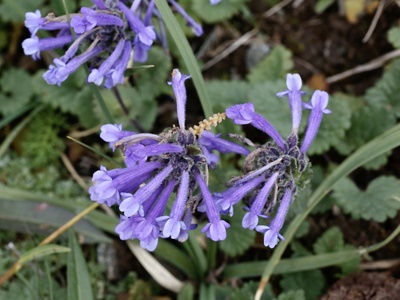
Issyk-Kul Dracocephalum
A “dragonhead” species from the mint family with toothed leaves and whorls of purple-blue, hooded flowers. It is aromatic and thrives in the unique climate of the Issyk-Kul depression.
Fergana Scabious
A pincushion-flower with dissected leaves and long-stalked, flattened heads of lilac or pinkish flowers. It is a drought-tolerant plant that attracts numerous pollinators during its summer blooming period.
Kamelin’s Rhaponticum
A robust, thistle-like plant without spines, featuring large, solitary pinkish-purple flower heads. It is a striking plant of the summer meadows, related to the maral root known for its medicinal properties.
Tashiro’s Lousewort
A lousewort with finely cut, ferny leaves and a spike of pink flowers with a distinctly long, curved beak or hood. Like its relatives, it is semi-parasitic on the roots of other plants.
Alay Catchfly
A low-growing, tufted perennial with narrow leaves and relatively large, pale pink or whitish flowers with notched petals. The inflated calyx (the tube behind the petals) is a characteristic feature of many catchflies.
Chatkal Whitlow-grass
A tiny cushion or mat-forming plant with hairy rosettes of leaves and short stems bearing clusters of small, four-petaled yellow flowers. It is a hardy pioneer species of high-altitude rocky ground.
Gnezdilova’s Puccinellia
An alkali-grass species specifically adapted to the salty marshes and wet meadows around Lake Issyk-Kul. It is a crucial plant for this unique habitat, though easily overlooked by casual observers.
Kirghiz Oxytropis
A stemless, silky-haired perennial with pinnate leaves and dense heads of bright violet-purple flowers rising directly from the base. It is a colorful and common component of the high-altitude turf.