Fossil beds, museum displays and coastal digs all tell the long story of vertebrate evolution, and jawless fish are a key chapter. Whether you’re skimming a field guide or inspecting a specimen label, these species help trace how modern fishes and tetrapods emerged.
There are 29 Examples of Jawless Fish, ranging from Anglaspis,Tremataspis. For each entry you’ll find below the data organized as Scientific name,Status,Typical size (cm), so you can quickly compare lineage, conservation or fossil status and typical body size — see the list you’ll find below.
How do jawless fish fit into the evolution of vertebrates?
Jawless fish are among the earliest vertebrates; they lack true jaws and paired fins but share features like a notochord and cranium. Their anatomy and fossil record clarify steps toward jaw development and the later diversification of bony and cartilaginous fishes.
Are any jawless fish alive today and how do they differ from the fossils listed?
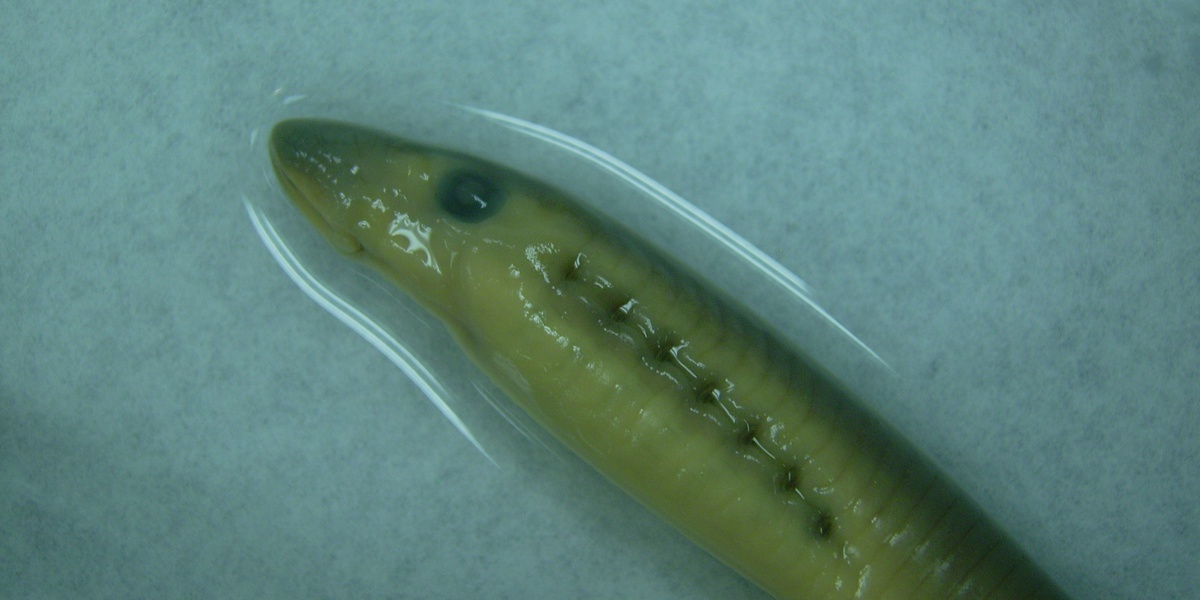
Yes — lampreys and hagfish are living jawless groups, but most species in the list are extinct fossil taxa. Living forms are specialized and often parasitic or scavenging, while fossil taxa show a wider range of body shapes and sizes documented in the table below.
Examples of Jawless Fish
| Common name | Scientific name | Status | Typical size (cm) |
|---|---|---|---|
| Pacific hagfish | Eptatretus stoutii | Extant | 60 |
| Atlantic hagfish | Myxine glutinosa | Extant | 50 |
| Sea lamprey | Petromyzon marinus | Extant | 100 |
| European river lamprey | Lampetra fluviatilis | Extant | 40 |
| Pouched lamprey | Geotria australis | Extant | 60 |
| Arandaspis | Arandaspis prionotolepis | Extinct: Ordovician | 15 |
| Sacabambaspis | Sacabambaspis janvieri | Extinct: Ordovician | 25 |
| Astraspis | Astraspis desiderata | Extinct: Ordovician | 20 |
| Pteraspis | Pteraspis rostrata | Extinct: Devonian | 25 |
| Drepanaspis | Drepanaspis gemuendenensis | Extinct: Devonian | 30 |
| Anglaspis | Anglaspis heintzi | Extinct: Devonian | 15 |
| Cephalaspis | Cephalaspis lyelli | Extinct: Devonian | 20 |
| Hemicyclaspis | Hemicyclaspis murchisoni | Extinct: Devonian | 15 |
| Boreaspis | Boreaspis puella | Extinct: Devonian | 10 |
| Tremataspis | Tremataspis schmidti | Extinct: Silurian | 12 |
| Thelodus | Thelodus parvidens | Extinct: Silurian | 20 |
| Loganellia | Loganellia scotica | Extinct: Silurian | 15 |
| Phlebolepis | Phlebolepis elegans | Extinct: Silurian | 10 |
| Birkenia | Birkenia elegans | Extinct: Silurian | 10 |
| Pharyngolepis | Pharyngolepis oblongus | Extinct: Silurian | 15 |
| Jamoytius | Jamoytius kerwoodi | Extinct: Silurian | 20 |
| Galeaspis | Galeaspis | Extinct: Silurian-Devonian | 15 |
| Dunyu | Dunyu longiforus | Extinct: Silurian | 12 |
| Pituriaspis | Pituriaspis doylei | Extinct: Devonian | 20 |
| Neeyambaspis | Neeyambaspis enigmatica | Extinct: Devonian | 18 |
| Conodont | Promissum pulchrum | Extinct: Ordovician-Triassic | 40 |
| Myllokunmingia | Myllokunmingia fengjiaoa | Extinct: Cambrian | 3 |
| Haikouichthys | Haikouichthys ercaicunensis | Extinct: Cambrian | 2.5 |
| Metaspriggina | Metaspriggina walcotti | Extinct: Cambrian | 6 |
Images and Descriptions
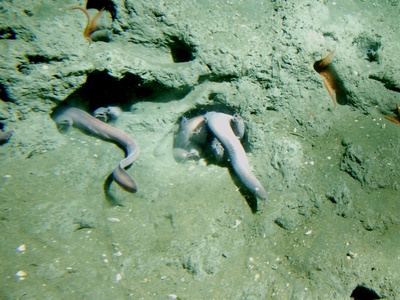
Pacific hagfish
Lives on the Pacific seafloor, scavenging on dead animals. It is famous for producing copious amounts of slime as a defense mechanism, which can clog the gills of would-be predators in seconds.
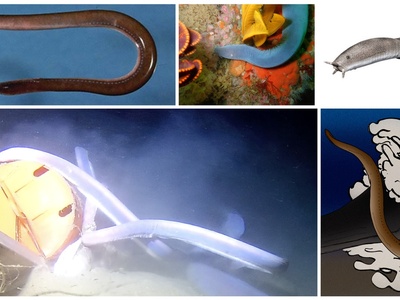
Atlantic hagfish
A scavenger of the deep Atlantic seabed. Like all hagfishes, it has a cartilaginous skull but lacks a true spine or jaws, instead using keratinous teeth on its tongue to rasp away at food.
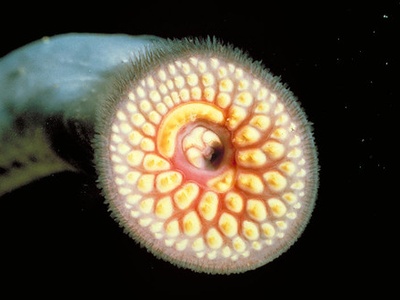
Sea lamprey
Found in the Atlantic Ocean, this parasitic fish uses its toothed, suction-cup mouth to latch onto other fish and feed on their blood. It became a notorious invasive species in the North American Great Lakes.
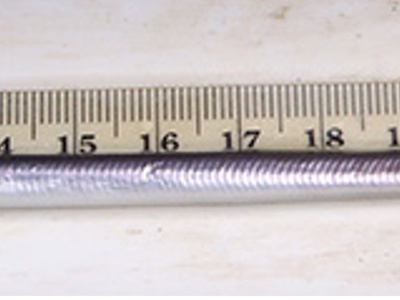
European river lamprey
This anadromous lamprey migrates from the sea into rivers to spawn. Adults are parasitic, feeding on fish like herring and cod, but they stop feeding entirely once their freshwater migration begins.
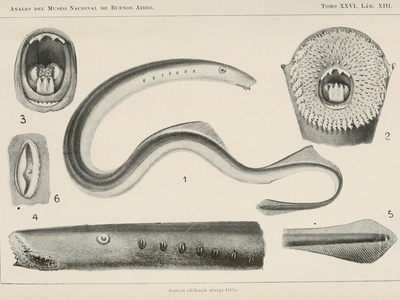
Pouched lamprey
Found in the Southern Hemisphere, this lamprey is named for the large pouch that develops under the eyes of breeding males. After a parasitic marine phase, it migrates to freshwater to reproduce.
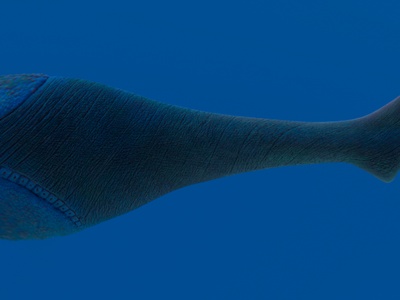
Arandaspis
One of the earliest known vertebrates, this armored fish from ancient Australia lacked fins. It was likely a poor swimmer, filtering food from the sediment of shallow seas during the Ordovician period.

Sacabambaspis
An early jawless fish from Ordovician Bolivia, known for its large, forward-facing eyes set in a wide head shield. Its tadpole-like body suggests it was a filter-feeder that swam near the seabed.
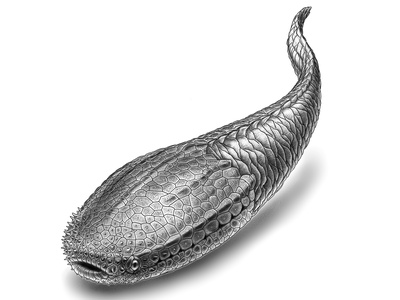
Astraspis
One of the oldest known vertebrates with bony armor, found in North America. Its name means “star shield,” referring to the star-shaped tubercles covering the bony plates on its head.
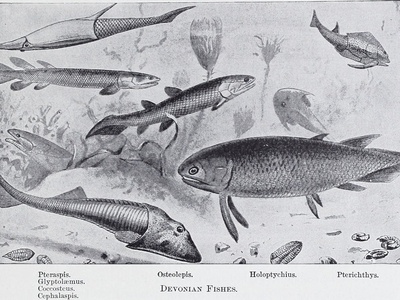
Pteraspis
A classic armored jawless fish from the Devonian. Its name means “wing shield,” referring to the wing-like spines on its heavy head armor, which likely provided stability while swimming in rivers and estuaries.
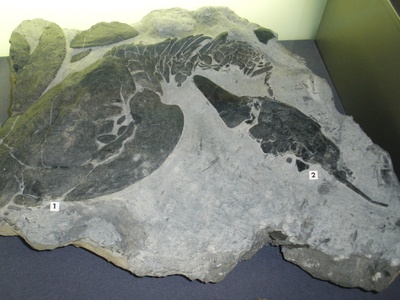
Drepanaspis
A flattened, bottom-dwelling jawless fish from the Devonian. Its wide, ray-like body shape and upward-facing mouth suggest it lived like a modern skate, likely ambushing small prey from the seafloor.
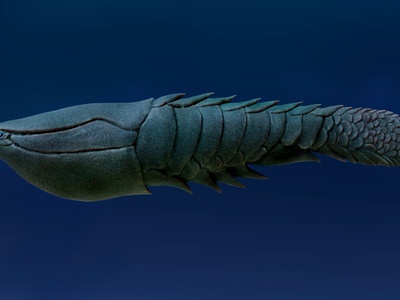
Anglaspis
A small, streamlined heterostracan from the early Devonian. Unlike its heavily armored relatives, it had a more fusiform body, suggesting it was a more active swimmer in open waters.
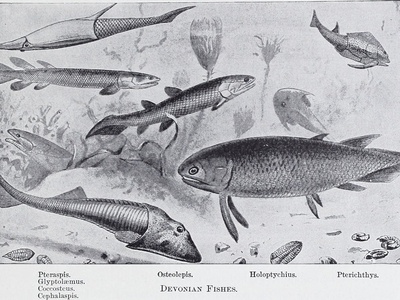
Cephalaspis
Lived in freshwater streams during the Devonian. It is known for its distinctive horseshoe-shaped head shield, which contained sensory fields used to detect vibrations from prey or predators buried in the mud.
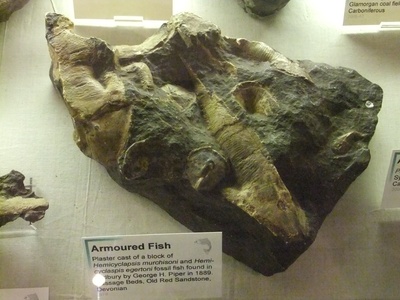
Hemicyclaspis
This bottom-dweller from the Devonian had a semicircular head shield and body armor. Its eyes were positioned on top of its head, perfect for spotting danger while foraging on the riverbed.
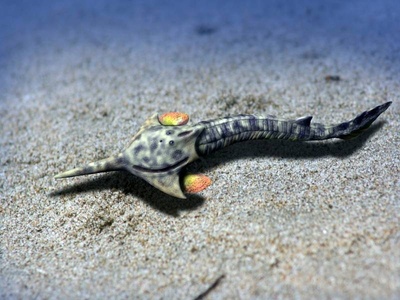
Boreaspis
A small but bizarre fish from Devonian Spitsbergen, recognized by its extremely long, spear-like snout. The function of this rostrum is debated but may have been for stirring up sediment or for sensory purposes.
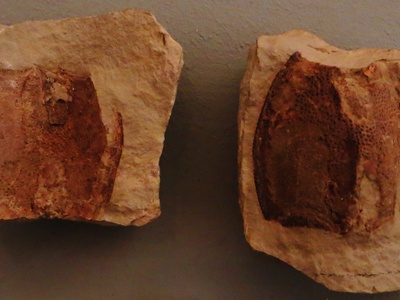
Tremataspis
An osteostracan from the Silurian period known for its solid, turtle-like head and trunk shield that encased much of its body. This heavy armor provided excellent protection from predators like eurypterids (sea scorpions).
Thelodus
A common thelodont from the Silurian period. Instead of heavy plates, its body was covered in tiny, tooth-like scales called denticles, a feature shared with modern sharks. It was likely a filter feeder.
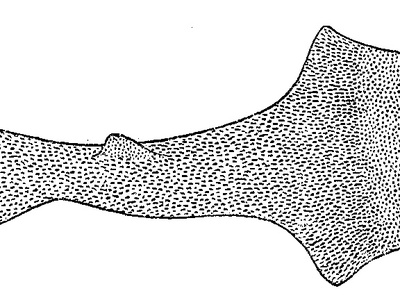
Loganellia
A well-known thelodont from Silurian Scotland. Fossils show it was an active swimmer with primitive fins. Its body was covered in characteristic pointed scales, making it feel like sandpaper.
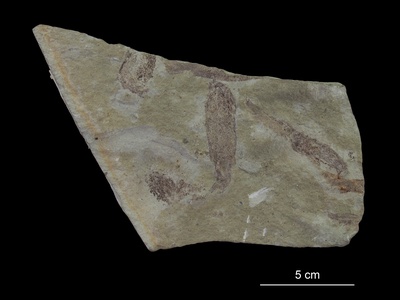
Phlebolepis
A small thelodont that swam in Silurian seas. It had more developed fins than many other jawless fishes, including a distinct tail fin, which would have made it a relatively agile swimmer.
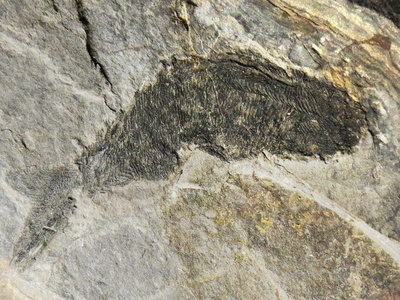
Birkenia
A small, agile anaspid from the Silurian. It lacked heavy head armor, making it more streamlined for active swimming. It is easily identified by the unique row of hook-like scutes running along its back.
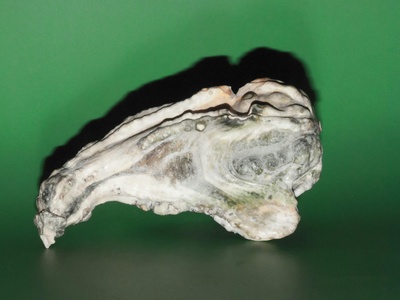
Pharyngolepis
An anaspid from Silurian Norway. It was a slender, fish-like creature with a row of gill openings, but it lacked paired fins, relying on its tail for propulsion through the water.
Jamoytius
An eel-like creature from Silurian Scotland, once thought to be a lamprey ancestor. It lacked armor and had long, continuous fin folds, suggesting it was an active swimmer in its coastal marine environment.
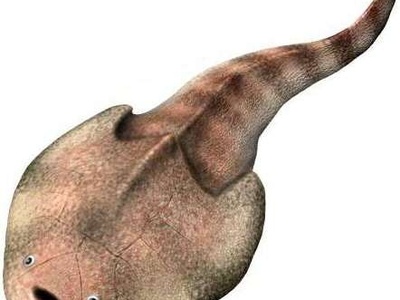
Galeaspis
Named for the helmet-like shape of its head shield. This group from ancient China is distinguished by a large, single opening on top of the head shield, which was used to draw in water for its gills.
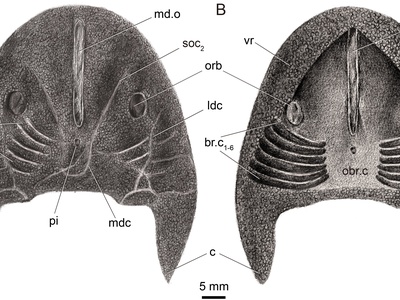
Dunyu
A galeaspid from China’s Silurian period, notable for exceptionally preserved fossils that include the braincase. This provides paleontologists with a rare glimpse into the brain evolution of early vertebrates.
Pituriaspis
A bizarre fish from Devonian Australia, famous for its extremely long, hollow snout or rostrum. Its function remains a mystery, but it gives the fish a unique, swordfish-like appearance.
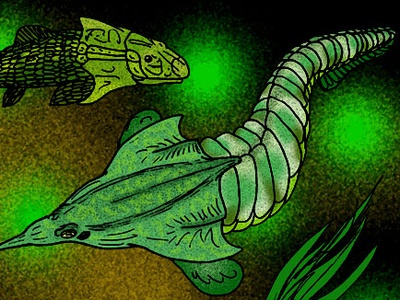
Neeyambaspis
The second of only two known pituriaspid genera from Australia. It was less extreme than Pituriaspis but still had a distinctive head shield and lived in the same ancient marine environments.
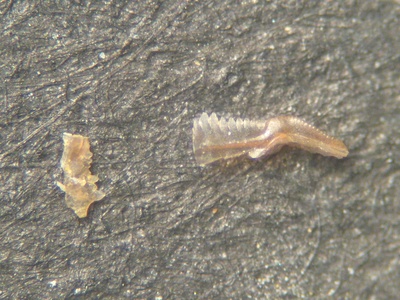
Conodont
For centuries known only from tiny tooth-like microfossils. The complete animal was an eel-like creature with huge eyes and a complex feeding apparatus. They were abundant in the oceans for 300 million years.
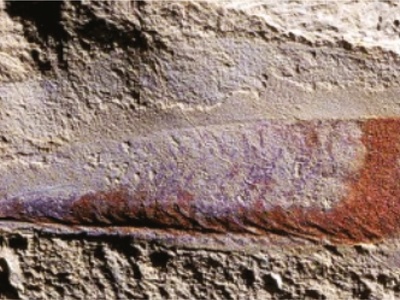
Myllokunmingia
One of the earliest known vertebrates, found in China’s famous Chengjiang fossil beds. This tiny fish from the Cambrian Explosion had a skull and skeletal structures made of cartilage but lacked bones or armor.
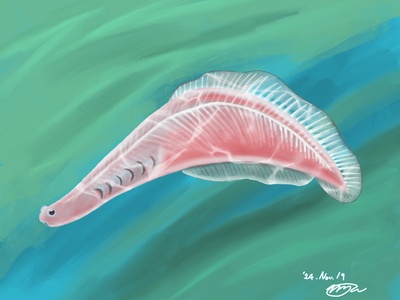
Haikouichthys
A primitive fish-like creature from the Cambrian period of China. It is one of the earliest animals with a distinct head and a backbone, making it a critical fossil for understanding vertebrate origins.
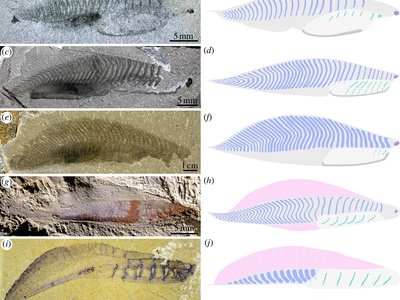
Metaspriggina
From Canada’s Burgess Shale, this Cambrian creature is crucial for understanding vertebrate evolution. It had a pair of large eyes and, most importantly, a series of well-developed gill bars, the predecessors to jaws.