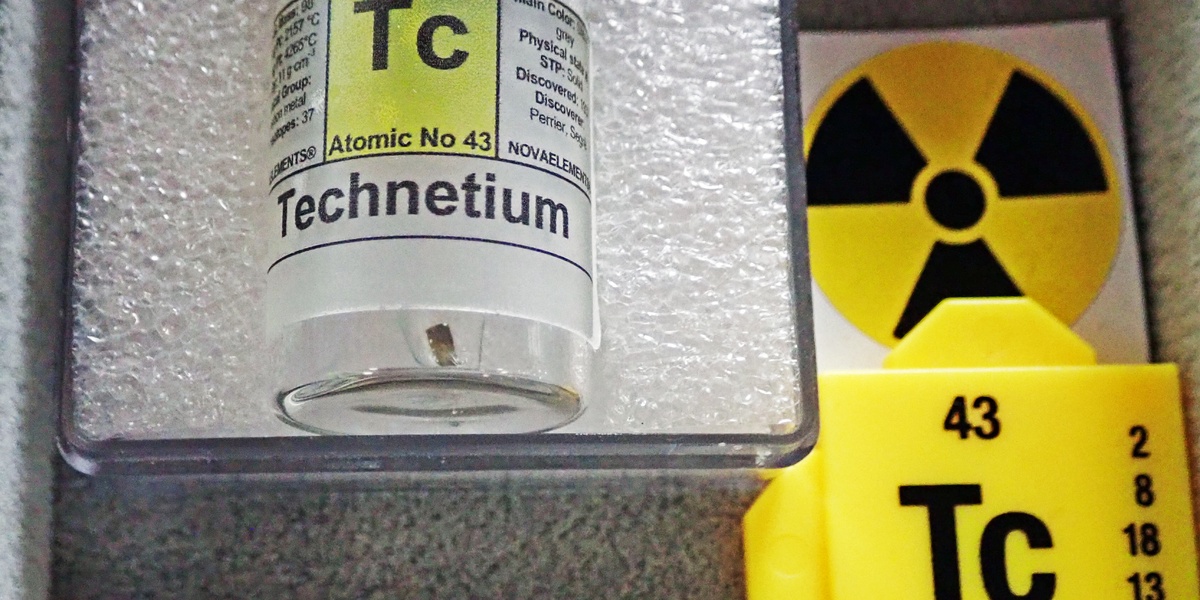
In 1937 Italian chemists Carlo Perrier and Emilio Segrè announced the discovery of element 43—technetium—the first element produced and identified artificially.
Technetium punches above its weight: despite many isotopes being radioactive, it forms a rich and practical chemistry. Atomic number 43 sits between manganese and rhenium, and its behavior matters for medicine (Tc-99m, with a half-life of about 6.01 hours, powers roughly 80% of diagnostic nuclear medicine procedures), for environmental science (long-lived Tc-99, half-life ~211,000 years, often appears as the mobile pertechnetate ion), and for materials and coordination research.
Below is a compact list of the 8 elements technetium reacts with, grouped by chemical theme—chalcogens, halogens/pseudohalogens, and light-element/carbonyl chemistry—followed by concrete examples and why each interaction matters.
Reactivity with Oxygen and the Chalcogens
Technetium forms oxides and chalcogenides across a wide range of oxidation states, and these interactions dominate both environmental mobility and solid-state behavior.
1. Oxygen — Oxides and Pertechnetate Chemistry
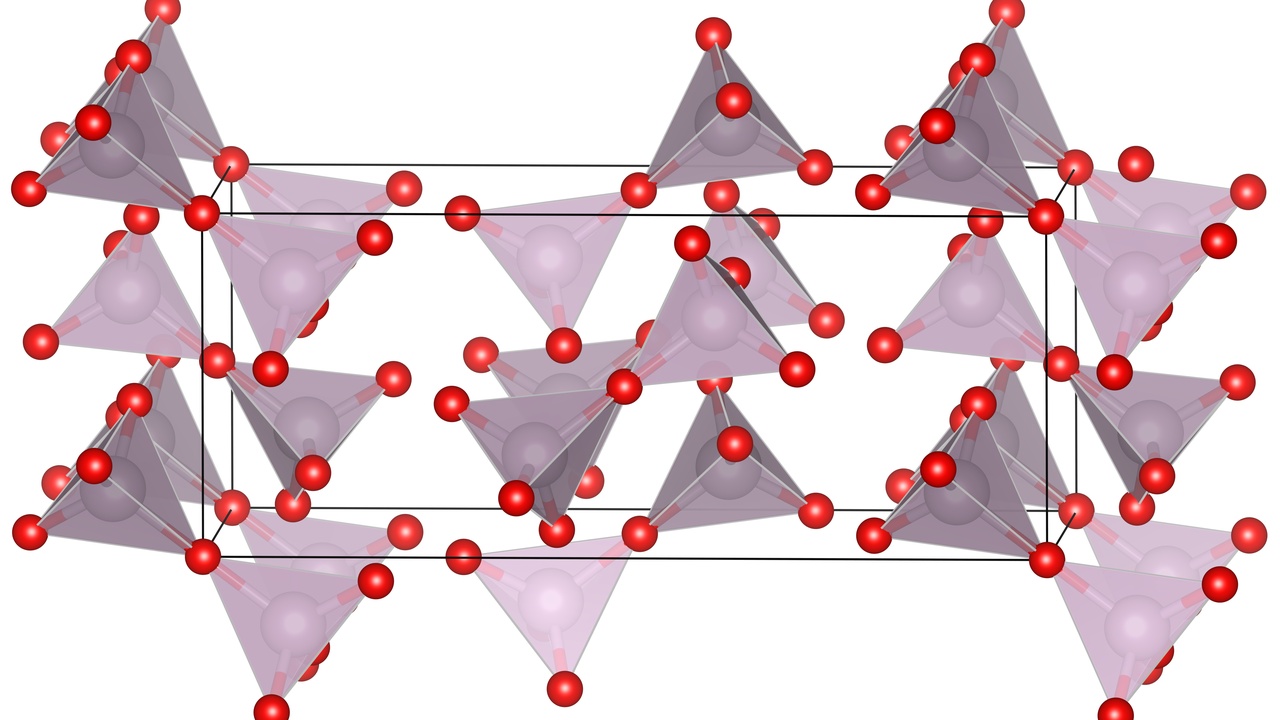
Oxygen gives rise to the pertechnetate ion, TcO4−, which is technetium in the +7 oxidation state and adopts a tetrahedral geometry analogous to permanganate and perrhenate. Because TcO4− is highly soluble and chemically stable, it moves readily in groundwater—an issue flagged by agencies such as the IAEA.
More reduced oxides include solid TcO2 and the molecular oxide Tc2O7; lower-valent phases tend to be insoluble and less mobile. The long half-life of Tc-99 (~211,000 years) makes the redox partitioning between soluble pertechnetate and insoluble oxides a central concern for nuclear waste management and site remediation.
2. Sulfur — Sulfides, Thiolates and Ligand Exchange
Technetium forms sulfide solids (TcSx) and a wide variety of molecular thiolate complexes that bind through sulfur donors. Sulfur ligands can stabilize lower oxidation states and promote precipitation—an approach used experimentally to immobilize technetium in waste forms.
Examples include layered TcS2 phases and discrete thiolate complexes characterized in synthetic studies; reported Tc–S bond distances in molecular complexes are typically around 2.3–2.5 Å. Sulfur-containing chelators are also used to tune the stability of radiopharmaceuticals by controlling ligand exchange and reduction chemistry.
3. Selenium — Chalcogen Behavior Similar to Sulfur
Selenium, chemically similar to sulfur, forms Tc–Se bonds in both solid-state selenides and molecular complexes. Compound examples such as TcSe2 have been synthesized and characterized by X-ray diffraction, offering structural analogues to TcSx phases.
Comparative studies of TcSx versus TcSex help researchers predict electronic and layered-material behavior, and selenium coordination can suggest alternative immobilization chemistries for technetium in specialized materials research.
Reactions with Halogens and Pseudohalogens
4. Chlorine — Tc Chlorides in Solid-State and Solution Chemistry
Technetium forms chlorides across multiple oxidation states; a prominent example is TcCl4, where technetium is in the +4 oxidation state. Chloride salts range from molecular to polymeric structures depending on oxidation state and coordination environment.
Practically, chlorides are common precursors in inorganic synthesis—researchers often start from TcCl4 to prepare lower-valent coordination complexes. As with all technetium work, radiochemical safety precautions apply when handling chlorides in the lab.
5. Fluorine — High-Valent Fluorides and Volatile Species
Fluorine stabilizes high oxidation states of technetium; TcF6 is a documented high-valent fluoride (Tc in the +6 state) and illustrative of strong Tc–F bonding. Some fluoride species are volatile and of interest in gas-phase separations and analytical chemistry.
Because fluorination can change both speciation and volatility, fluoride chemistry appears in specialized separations research and isotope handling protocols. Work with technetium fluorides requires strict radiochemical controls and trained personnel.
6. Iodine — Heavy Halogen Bonding and Complexes
Iodine yields lower-volatility technetium iodides and coordination complexes that often reflect lower Tc oxidation states than fluorides. Iodide complexes display distinct solubility and redox behavior compared with chlorides and fluorides.
Molecular Tc–I complexes have been characterized by crystallography and NMR in coordination studies; their different redox and solubility profiles make them useful for comparative separations and synthetic investigations.
Complexation with Light Elements and Carbonyl Chemistry
Technetium forms well-defined molecular complexes with light elements and organic ligands—carbonyls, nitrosyls, and nitrogen donors are central to both fundamental organometallic chemistry and applied radiopharmacy.
7. Nitrogen — Nitrosyls, N-Donor Ligands and Radiopharmaceuticals
Nitrogen donors (amines, pyridines) and nitrosyl ligands create coordination environments widely used to carry Tc-99m into the body. Nitrosyl technetium complexes and N-donor chelators form the backbone of many radiopharmaceutical kits that control biodistribution and in vivo stability.
Tc-99m, with a half-life of about 6.01 hours, is used in roughly 80% of diagnostic nuclear medicine procedures worldwide (see IAEA/WHO summaries). Ligand choice—dentate, donor type, sterics—directly affects targeting, clearance, and resistance to ligand exchange.
8. Carbon — Carbonyl Complexes and Metal–Carbon Bonding
Carbonyl chemistry provided some of the first well-defined low-valent technetium compounds; a canonical example is the dinuclear carbonyl Tc2(CO)10, which contains ten CO ligands around a Tc–Tc bonded pair.
First characterizations of technetium carbonyls appeared in mid-20th-century organometallic literature; such complexes remain benchmarks for studying metal–metal bonding and electronic structure. Carbonyls and related organometallics helped define how low-valent Tc behaves and inform catalyst and materials design.
Summary
- Oxygen (as TcO4− and oxides like TcO2/Tc2O7) controls environmental mobility—pertechnetate (+7) is soluble and a long-term concern for Tc-99 (~211,000-year half-life).
- Sulfur and selenium form sulfides/selenides and thiolate/selenolate complexes that can immobilize reduced technetium species and tune complex stability.
- Halogens: chlorine and iodine give a spectrum of chlorides and iodides used as synthetic precursors, while fluorine stabilizes high-valent, sometimes volatile fluorides (e.g., TcF6) relevant to separations.
- Nitrogen and nitrosyl ligands underpin many Tc-99m radiopharmaceuticals (Tc-99m half-life ~6.01 hours; Tc-99m is used in ~80% of diagnostic scans), so ligand selection directly affects biological performance.
- Carbonyl chemistry (for example, Tc2(CO)10) and related organometallic studies reveal low-valent technetium behavior useful for fundamental research and materials applications; continued support for research into immobilization and safer radiopharmaceutical design is warranted.