Egypt’s varied landscapes—from the Nile delta and coastal lagoons to desert oases and mountain wadis—support a rich mix of resident and visiting birds. If you enjoy spotting waterfowl along the coast or raptors over open desert, this list brings together species you might encounter across Egypt’s habitats.
There are 101 Birds of Egypt, ranging from Amur Falcon to Whooper Swan. For each, you’ll find below Scientific name,Size (cm),Status & season —organized so you can quickly see identification, typical size, and when each species is present, and you’ll find below.
Which species are residents versus seasonal visitors in this list?
The list mixes year-round residents, regular migrants, and occasional visitors; check the “Status & season” column for each species to see whether it’s a breeding resident, winter visitor, passage migrant, or rare vagrant so you can plan when to look for particular birds.
How can I use the columns to improve my birdwatching in Egypt?
Use the Scientific name to confirm identification across guides, Size (cm) to distinguish similar species at a glance, and Status & season to time visits—combine that with local habitat (coasts, wetlands, desert) to target the birds you most want to see.
Birds of Egypt
| Name | Scientific name | Size (cm) | Status & season |
|---|---|---|---|
| Common Ostrich | Struthio camelus | 230 | Extirpated resident; historically in deserts |
| Mute Swan | Cygnus olor | 150 | Rare vagrant |
| Whooper Swan | Cygnus cygnus | 155 | Rare vagrant |
| Tundra Swan | Cygnus columbianus | 132 | Rare vagrant |
| Greylag Goose | Anser anser | 82 | Scarce winter visitor (Nov-Feb) to northern wetlands |
| Greater White-fronted Goose | Anser albifrons | 72 | Scarce winter visitor (Nov-Feb) to northern wetlands |
| Lesser White-fronted Goose | Anser erythropus | 59 | Very rare winter visitor (Nov-Feb) to northern wetlands |
| Egyptian Goose | Alopochen aegyptiaca | 68 | Common resident along the Nile Valley and oases |
| Ruddy Shelduck | Tadorna ferruginea | 64 | Passage migrant & winter visitor (Oct-Mar) at wetlands |
| Common Shelduck | Tadorna tadorna | 61 | Common winter visitor (Oct-Mar) on coastal lagoons |
| Gadwall | Mareca strepera | 51 | Common winter visitor (Sep-Mar) to wetlands nationwide |
| Eurasian Wigeon | Mareca penelope | 46 | Common winter visitor (Sep-Mar) to wetlands nationwide |
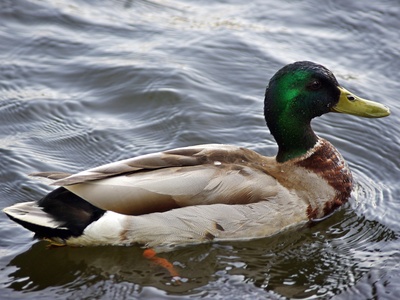
| Mallard | Anas platyrhynchos | 58 | Resident and common winter visitor on most wetlands |
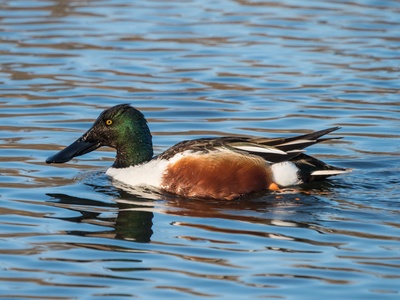
| Northern Shoveler | Spatula clypeata | 49 | Abundant winter visitor (Sep-Apr) on all wetlands |
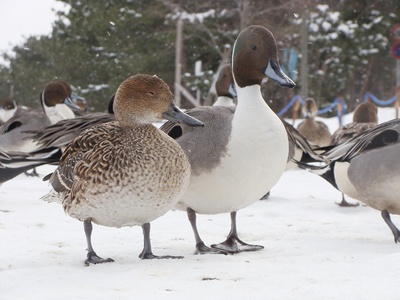
| Northern Pintail | Anas acuta | 60 | Abundant winter visitor (Sep-Apr) on all wetlands |
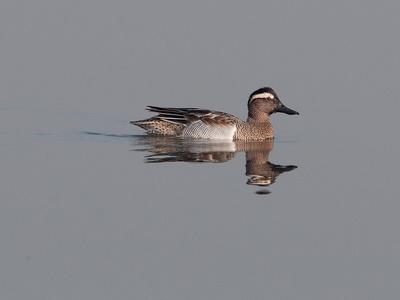
| Garganey | Spatula querquedula | 38 | Abundant passage migrant (Mar-May & Aug-Oct) on wetlands |
| Eurasian Teal | Anas crecca | 36 | Abundant winter visitor (Sep-Apr) on all wetlands |
| Marbled Duck | Marmaronetta angustirostris | 40 | Rare resident and winter visitor in Fayoum and northern lakes |
| Red-crested Pochard | Netta rufina | 56 | Scarce winter visitor (Oct-Mar) to northern wetlands |
| Common Pochard | Aythya ferina | 46 | Common winter visitor (Oct-Mar) on deeper wetlands |
| Ferruginous Duck | Aythya nyroca | 41 | Scarce winter & passage migrant; rare breeder in the Delta |
| Tufted Duck | Aythya fuligula | 43 | Common winter visitor (Oct-Mar) on deeper wetlands |
| Velvet Scoter | Melanitta fusca | 54 | Rare vagrant to Mediterranean coast |
| Common Scoter | Melanitta nigra | 48 | Rare vagrant to Mediterranean coast |
| Common Goldeneye | Bucephala clangula | 46 | Rare vagrant to northern wetlands |
| Smew | Mergellus albellus | 41 | Rare winter visitor (Dec-Feb) to northern wetlands |
| Red-breasted Merganser | Mergus serrator | 55 | Rare winter visitor (Nov-Mar) on coastal waters |
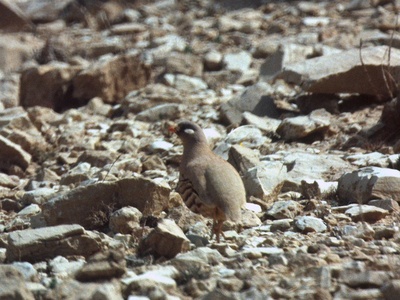
| Chukar Partridge | Alectoris chukar | 33 | Resident in Sinai mountains |
| Sand Partridge | Ammoperdix heyi | 24 | Common resident in deserts of Sinai and Eastern Desert |
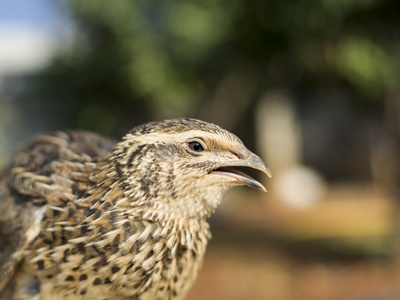
| Common Quail | Coturnix coturnix | 17 | Passage migrant & scarce breeder in cultivated lands |
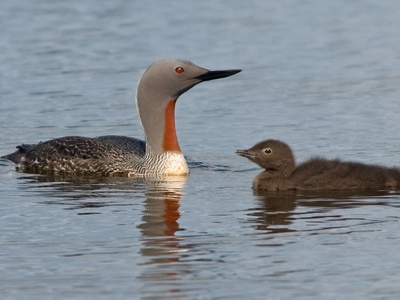
| Red-throated Loon | Gavia stellata | 61 | Rare vagrant to Mediterranean and Red Sea coasts |
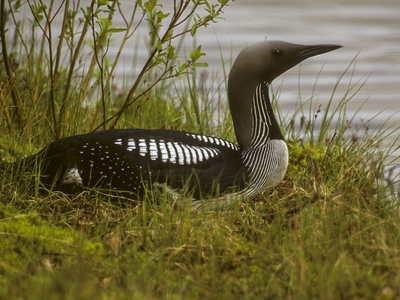
| Black-throated Loon | Gavia arctica | 68 | Rare vagrant to Mediterranean and Red Sea coasts |
| Little Grebe | Tachybaptus ruficollis | 27 | Common resident on most wetlands |
| Great Crested Grebe | Podiceps cristatus | 49 | Winter visitor & scarce resident on northern lakes |
| Red-necked Grebe | Podiceps grisegena | 43 | Rare vagrant to northern wetlands |
| Horned Grebe | Podiceps auritus | 34 | Rare winter visitor (Dec-Feb) to northern lakes |
| Black-necked Grebe | Podiceps nigricollis | 31 | Winter visitor & passage migrant on various wetlands |
| Greater Flamingo | Phoenicopterus roseus | 130 | Resident and winter visitor on coastal and inland lakes |
| Lesser Flamingo | Phoeniconaias minor | 90 | Rare vagrant |
| Black-crowned Night Heron | Nycticorax nycticorax | 61 | Resident and winter visitor in the Nile Valley & Delta |
| Striated Heron | Butorides striata | 44 | Resident in the south (Lake Nasser & upper Nile) |
| Squacco Heron | Ardeola ralloides | 45 | Passage migrant & summer breeder in the Delta |
| Indian Pond Heron | Ardeola grayii | 45 | Rare vagrant |
| Cattle Egret | Bubulcus ibis | 51 | Abundant resident throughout the Nile Valley and Delta |
| Grey Heron | Ardea cinerea | 94 | Common resident and winter visitor throughout Egypt |
| Purple Heron | Ardea purpurea | 84 | Passage migrant & summer breeder in the Delta |
| Great Egret | Ardea alba | 95 | Common resident and winter visitor on major wetlands |
| Little Egret | Egretta garzetta | 61 | Common resident and winter visitor on all wetlands |
| Western Reef Heron | Egretta gularis | 62 | Resident on the Red Sea and Gulf of Suez coasts |
| Goliath Heron | Ardea goliath | 140 | Rare vagrant to the extreme south |
| Eurasian Bittern | Botaurus stellaris | 75 | Scarce winter visitor (Nov-Mar) in dense reedbeds |
| Little Bittern | Ixobrychus minutus | 36 | Summer breeder & passage migrant in reedbeds |
| Glossy Ibis | Plegadis falcinellus | 60 | Passage migrant, scarce winter visitor & breeder |
| Eurasian Spoonbill | Platalea leucorodia | 86 | Winter visitor & passage migrant on coastal wetlands |
| Osprey | Pandion haliaetus | 58 | Migrant & winter visitor; breeds on Red Sea islands |
| Egyptian Vulture | Neophron percnopterus | 65 | Passage migrant & scarce resident; critically endangered |
| European Honey Buzzard | Pernis apivorus | 56 | Abundant passage migrant (Aug-Oct) over Suez & Sinai |
| Crested Honey Buzzard | Pernis ptilorhynchus | 60 | Rare vagrant |
| Bearded Vulture | Gypaetus barbatus | 110 | Very rare resident in Sinai high mountains |
| Cinereous Vulture | Aegypius monachus | 110 | Rare vagrant |
| Lappet-faced Vulture | Torgos tracheliotos | 105 | Very rare resident in the Eastern Desert |
| Griffon Vulture | Gyps fulvus | 105 | Passage migrant & scarce resident in deserts |
| Rüppell’s Vulture | Gyps rueppelli | 96 | Rare vagrant from the south |
| Short-toed Snake Eagle | Circaetus gallicus | 65 | Passage migrant & scarce summer breeder in deserts |
| Lesser Spotted Eagle | Clanga pomarina | 63 | Common passage migrant (Mar-Apr & Sep-Oct) |
| Greater Spotted Eagle | Clanga clanga | 67 | Scarce winter visitor (Nov-Mar) to wetlands |
| Tawny Eagle | Aquila rapax | 72 | Rare vagrant |
| Steppe Eagle | Aquila nipalensis | 74 | Abundant passage migrant & scarce winter visitor |
| Imperial Eagle | Aquila heliaca | 80 | Scarce winter visitor & passage migrant |
| Verreaux’s Eagle | Aquila verreauxii | 85 | Very rare resident in Eastern Desert & Sinai mountains |
| Golden Eagle | Aquila chrysaetos | 82 | Very rare resident in Eastern Desert & Sinai mountains |
| Booted Eagle | Hieraaetus pennatus | 47 | Common passage migrant (Mar-Apr & Sep-Oct) |
| Bonelli’s Eagle | Aquila fasciata | 66 | Scarce resident in desert mountains |
| Pallid Harrier | Circus macrourus | 44 | Passage migrant & scarce winter visitor in open country |
| Montagu’s Harrier | Circus pygargus | 45 | Passage migrant (Apr-May & Aug-Sep) over open country |
| Hen Harrier | Circus cyaneus | 48 | Scarce winter visitor (Nov-Mar) in open lands & wetlands |
| Western Marsh Harrier | Circus aeruginosus | 50 | Common passage migrant & winter visitor at wetlands |
| Levant Sparrowhawk | Accipiter brevipes | 34 | Common passage migrant (Apr-May & Sep-Oct) |
| Eurasian Sparrowhawk | Accipiter nisus | 33 | Passage migrant & winter visitor in wooded areas |
| Northern Goshawk | Accipiter gentilis | 54 | Rare vagrant |
| Red Kite | Milvus milvus | 63 | Rare vagrant |
| Black Kite | Milvus migrans | 58 | Abundant migrant; resident in south (subspecies aegyptius) |
| White-tailed Eagle | Haliaeetus albicilla | 82 | Rare vagrant |
| Common Buzzard | Buteo buteo | 54 | Abundant passage migrant & winter visitor |
| Long-legged Buzzard | Buteo rufinus | 60 | Resident and winter visitor in open, arid country |
| Lesser Kestrel | Falco naumanni | 30 | Common passage migrant (Mar-Apr & Aug-Sep) |
| Common Kestrel | Falco tinnunculus | 34 | Common resident throughout Egypt |
| Red-footed Falcon | Falco vespertinus | 30 | Scarce passage migrant (Apr-May & Sep-Oct) |
| Amur Falcon | Falco amurensis | 30 | Rare vagrant |
| Eleonora’s Falcon | Falco eleonorae | 38 | Passage migrant (Apr-May & Sep-Oct) |
| Sooty Falcon | Falco concolor | 34 | Summer breeder on desert islands; passage migrant |
| Merlin | Falco columbarius | 28 | Scarce winter visitor (Oct-Mar) in open country |
| Eurasian Hobby | Falco subbuteo | 32 | Passage migrant (Apr-May & Aug-Oct) |
| Lanner Falcon | Falco biarmicus | 45 | Scarce resident in deserts and cliffs |
| Saker Falcon | Falco cherrug | 50 | Scarce winter visitor (Oct-Mar) from the north |
| Peregrine Falcon | Falco peregrinus | 44 | Resident and winter visitor |
| Corn Crake | Crex crex | 28 | Scarce passage migrant (Apr-May & Aug-Oct) |
| Water Rail | Rallus aquaticus | 25 | Winter visitor & passage migrant in dense wetlands |
| Spotted Crake | Porzana porzana | 23 | Passage migrant & scarce winter visitor in marshes |
| Baillon’s Crake | Zapornia pusilla | 18 | Scarce passage migrant & rare breeder in wetlands |
| Little Crake | Zapornia parva | 19 | Passage migrant & scarce winter visitor in reedbeds |
Images and Descriptions
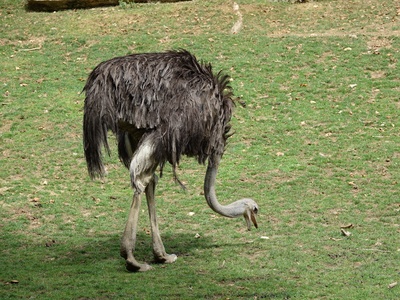
Common Ostrich
The world’s largest bird, once roamed Egypt’s deserts but now extinct in the wild here. Unmistakable with its long neck and legs, and black-and-white plumage in males. Its historical presence is an important part of Egypt’s natural heritage.
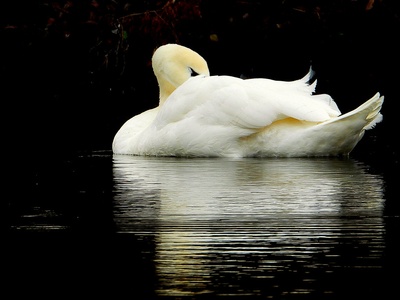
Mute Swan
A huge, elegant white swan with a distinctive orange bill featuring a black knob at the base. An exceptionally rare visitor to Egypt’s northern wetlands, any sighting is a major event for local birdwatchers, usually occurring in winter.
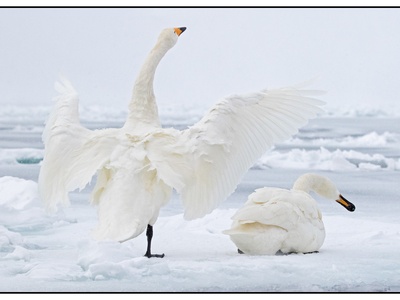
Whooper Swan
A large white swan similar to the Mute Swan but identified by its large, wedge-shaped yellow and black bill. It holds its neck straight, unlike the Mute Swan’s curved neck. An extremely rare winter vagrant to northern lakes.
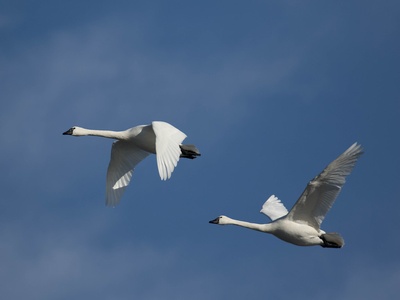
Tundra Swan
The smallest of the white swans, also known as Bewick’s Swan. It has a rounded head and a bill with a smaller, rounded yellow patch. An exceptional winter vagrant to Egypt, with very few records from the northern wetlands.
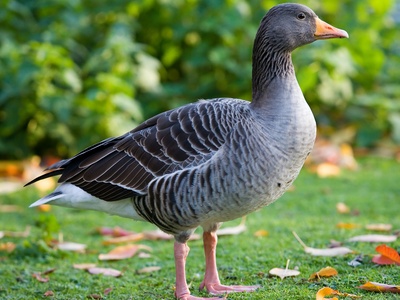
Greylag Goose
A large, bulky grey goose with a pinkish-orange bill and pink legs. The ancestor of most domestic geese. Small flocks can sometimes be found in winter mixed with other waterfowl at Lake Manzala or other Nile Delta wetlands.
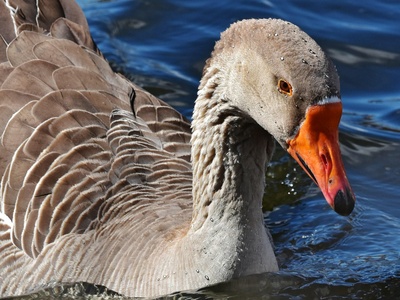
Greater White-fronted Goose
A medium-sized grey-brown goose with a distinctive white patch at the base of its pinkish bill and bold black bars on its belly. Small numbers occasionally visit the northern wetlands during the winter months, often in mixed flocks.
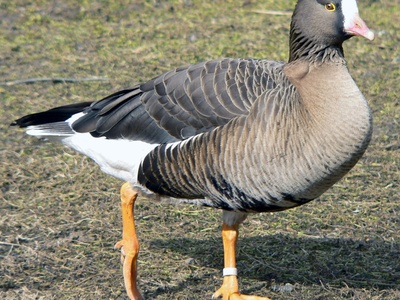
Lesser White-fronted Goose
A small, delicate goose resembling its larger cousin but with a smaller pink bill and a prominent yellow eye-ring. A globally threatened species, it is a very rare and prized find for birders visiting Egypt’s wetlands in winter.
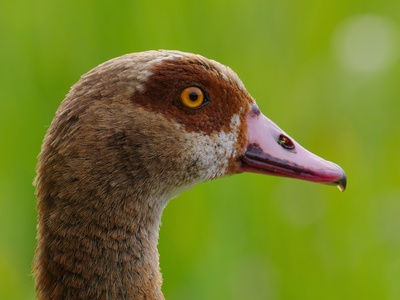
Egyptian Goose
An iconic and noisy waterfowl, not a true goose but a shelduck. Easily identified by its pale head, dark eye patch, and chestnut breast spot. Often seen in pairs or family groups along the Nile, in city parks, and at oases.
Ruddy Shelduck
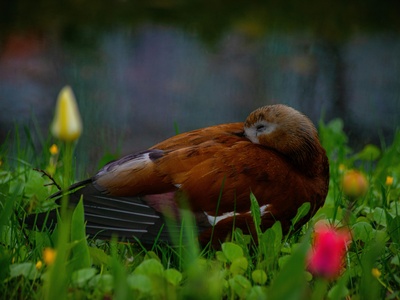
A striking, rusty-orange duck-like bird with a pale head and a narrow black neck-ring on the male. Seen during migration and winter, often at inland lakes and reservoirs like Lake Nasser or the Fayoum oases.
Common Shelduck
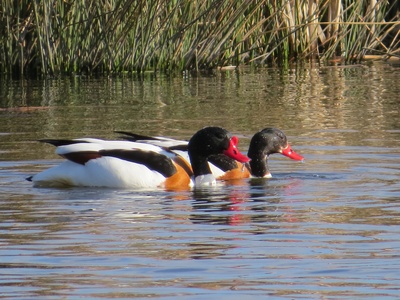
A large, boldly-patterned goose-like duck. It has a dark green head, a broad chestnut band across its white body, and a bright red bill. Found in large numbers during winter on the shallow, saline lakes of the Mediterranean coast.
Gadwall
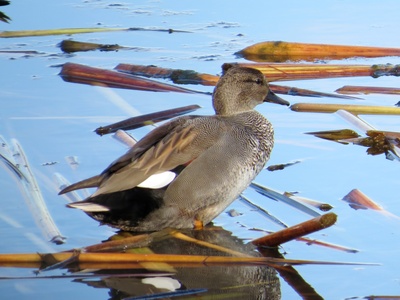
A subtly handsome dabbling duck, the male is intricately patterned in grey and black with a distinct black rear end. Females are mottled brown. Widespread and common in winter on most freshwater wetlands, from the Delta to Aswan.
Eurasian Wigeon
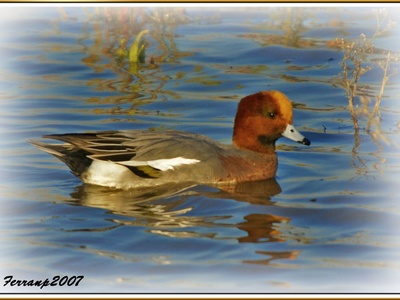
A medium-sized dabbling duck, the male is striking with a chestnut head, a creamy-yellow forehead, and a grey body. Often found in large, noisy flocks on open wetlands, where its whistling call is a common winter sound.
Mallard
The most familiar duck. Males have a glossy green head, yellow bill, and curly black tail feathers. Females are mottled brown. Present year-round, with numbers swelling significantly in winter with the arrival of migrants from the north.
Northern Shoveler
Instantly recognizable by its huge, spatulate bill used for sifting food from the water. Males are colorful with a green head, white breast, and chestnut flanks. Very common on shallow, nutrient-rich wetlands throughout Egypt during winter.
Northern Pintail
An elegant, slender duck with a long, pointed tail, from which it gets its name. The male has a chocolate-brown head and a distinctive white stripe up its neck. Forms large flocks on open lakes and flooded fields in winter.
Garganey
A small dabbling duck, the male is notable for its broad white stripe curving over the eye. A key migrant, huge numbers pass through Egypt in spring and autumn, stopping to refuel at wetlands across the country.
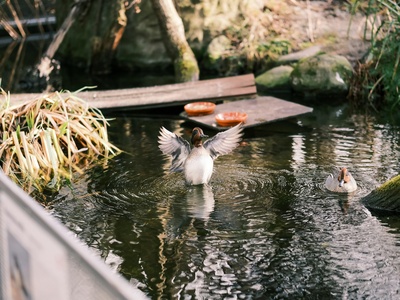
Eurasian Teal
The smallest dabbling duck in Egypt. The male is a tiny jewel, with a chestnut head and a broad green eye-patch. Extremely common and found in large, fast-flying flocks on virtually all wetlands during the winter months.
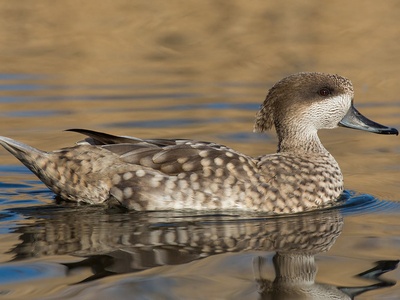
Marbled Duck
A small, pale, sandy-brown duck with a mottled pattern, a dark eye-patch, and a shaggy-looking head. A globally threatened species, its main stronghold in Egypt is Lake Qarun in the Fayoum, where it is a prized sighting.
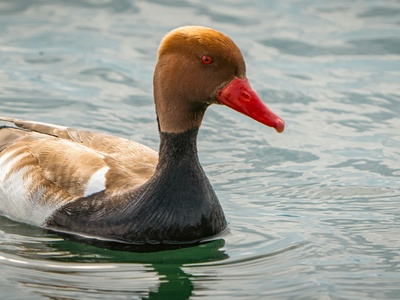
Red-crested Pochard
A large, bulky diving duck. The male is spectacular with a puffy, bright orange-red head, red bill, and black body. A rare but beautiful sight in winter, usually on deeper lakes in the Nile Delta or Fayoum.
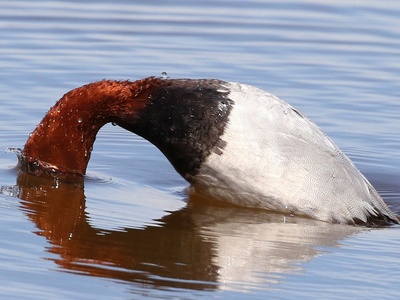
Common Pochard
A medium-sized diving duck. The male has a reddish-brown head, black breast, and a pale grey body. Females are a plainer brownish-grey. Common in winter on deeper freshwater lakes and reservoirs, often in large rafts.
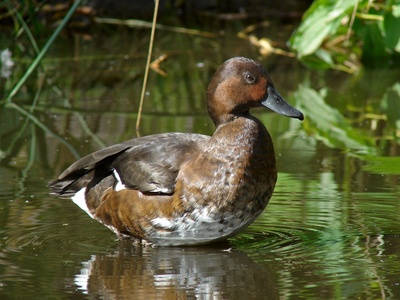
Ferruginous Duck
A compact diving duck with rich chestnut plumage and a contrasting white vent. Males have a striking white eye. A globally near-threatened species, found in small numbers on well-vegetated wetlands, particularly in the Nile Delta.
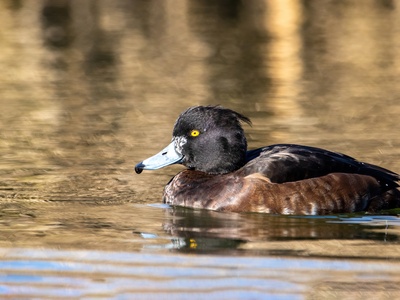
Tufted Duck
A striking black-and-white diving duck. The male is black with bright white flanks and a distinctive tuft of feathers on the back of his head. Common and widespread on lakes and reservoirs throughout Egypt in winter.
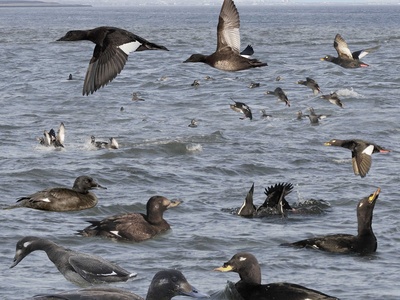
Velvet Scoter
A large, bulky sea duck, almost entirely black except for a small white patch under the eye and a white wing panel visible in flight. An extremely rare visitor from northern Europe, with only a handful of records from the Mediterranean coast.
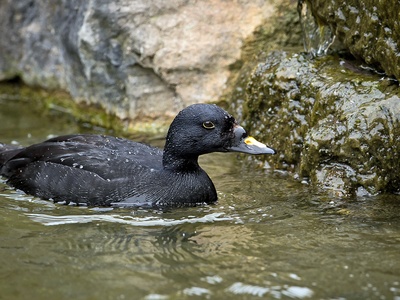
Common Scoter
A medium-sized, all-black sea duck. The male has a distinctive yellow-orange knob on his otherwise black bill. A very rare vagrant to Egypt’s northern coastline, typically found far out at sea during winter storms.
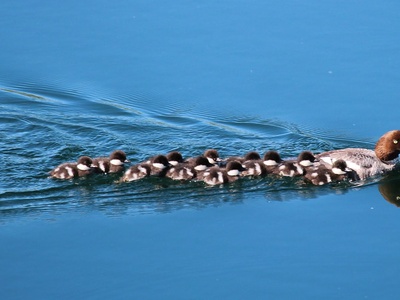
Common Goldeneye
A chunky diving duck with a large, triangular head. The male is black and white with a glossy green-black head and a round white spot at the base of the bill. A very rare winter vagrant to Egypt’s northern lakes.
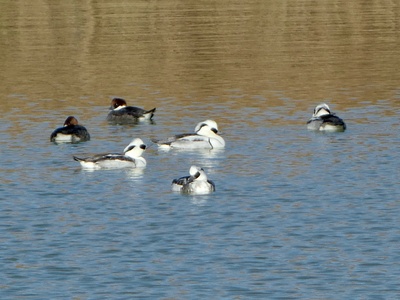
Smew
A small, stunning diving duck. The male is mostly white with fine black lines, earning it the nickname “White Nun.” A beautiful and highly sought-after rarity, occasionally seen on Delta wetlands in mid-winter.
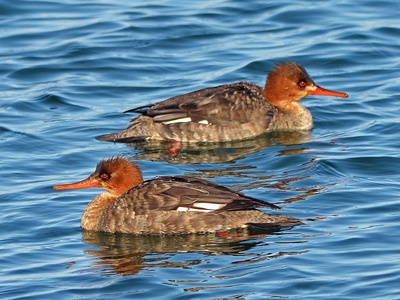
Red-breasted Merganser
A fish-eating duck with a long, thin, serrated bill. The male has a shaggy green head, white neck-collar, and streaked breast. A rare visitor, primarily found on the Mediterranean coast but also occasionally on the Red Sea.
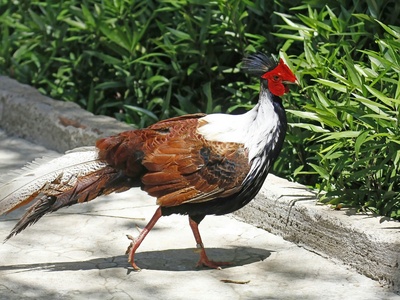
Chukar Partridge
A plump, ground-dwelling bird with a distinctive black line running through the eye and down to form a “gorget” on its throat. It has boldly barred flanks and a reddish bill. Found on rocky slopes in the high mountains of Sinai.
Sand Partridge
A small, sandy-coloured partridge perfectly camouflaged for its rocky desert habitat. The male has a grey head with a white cheek patch and fine barring on the flanks. Its whistling call is a characteristic sound of the desert wadis.
Common Quail
A small, secretive, and cryptically coloured gamebird. Heard more often than seen, with males giving a distinctive “wet-my-lips” call. Migrates in huge numbers, often at night, and can be found in agricultural fields and scrub.
Red-throated Loon
The smallest loon, a sleek diving bird with a slender, slightly upturned bill. In winter, it is grey-and-white. An extremely rare visitor to Egypt’s coastal waters, usually seen after severe weather events.
Black-throated Loon
A medium-sized loon with a straight, dagger-like bill. In winter plumage, it shows a sharp contrast between the dark grey back and clean white underparts. A very rare vagrant, with few documented sightings in Egyptian waters.
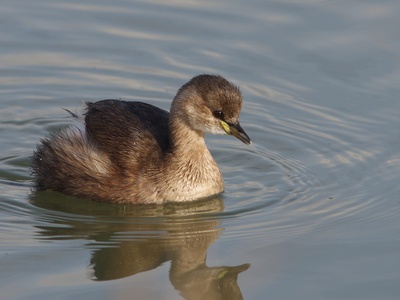
Little Grebe
A small, buoyant diving bird with a fluffy rear end. In breeding plumage, it has a dark body and a chestnut throat. Known for its whinnying, trilling call. Very common on any body of water with vegetation, including canals and ponds.
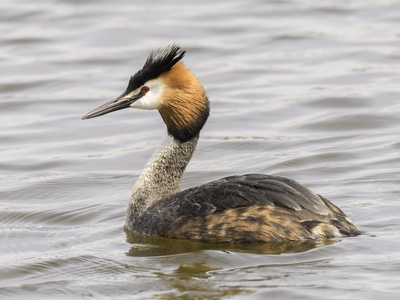
Great Crested Grebe
An elegant waterbird famous for its elaborate courtship dance. In breeding plumage, it has spectacular head plumes. Mainly a winter visitor to the large northern lakes, with a small population breeding in the Delta.
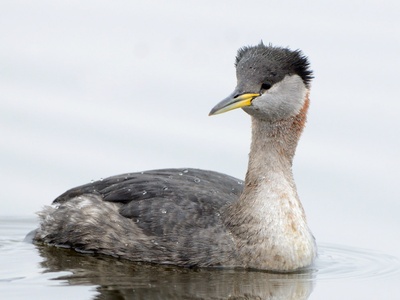
Red-necked Grebe
A medium-sized grebe with a thick neck and a heavy, yellowish bill. In winter, it is grey and white but retains a dusky look on the neck. An exceptional vagrant to Egypt, with only a few confirmed records from the Nile Delta.
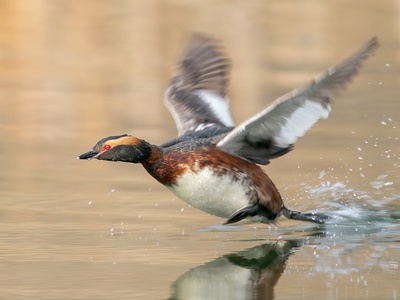
Horned Grebe
A small, neat grebe with a flat-topped head and a thin bill. In winter, it has a clean black-and-white appearance with a sharp line between the black cap and white cheek. A rare visitor to the lakes of the Nile Delta.
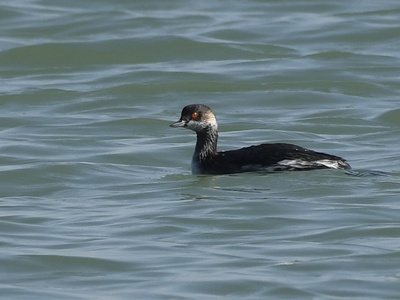
Black-necked Grebe
A small grebe with a distinctly peaked crown and an upturned bill. In winter it is grey and white, but in breeding plumage it has a black neck and golden ear-tufts. Found on both saline and freshwater lakes.
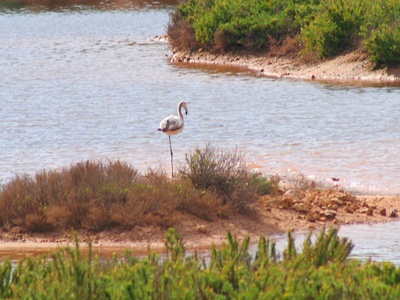
Greater Flamingo
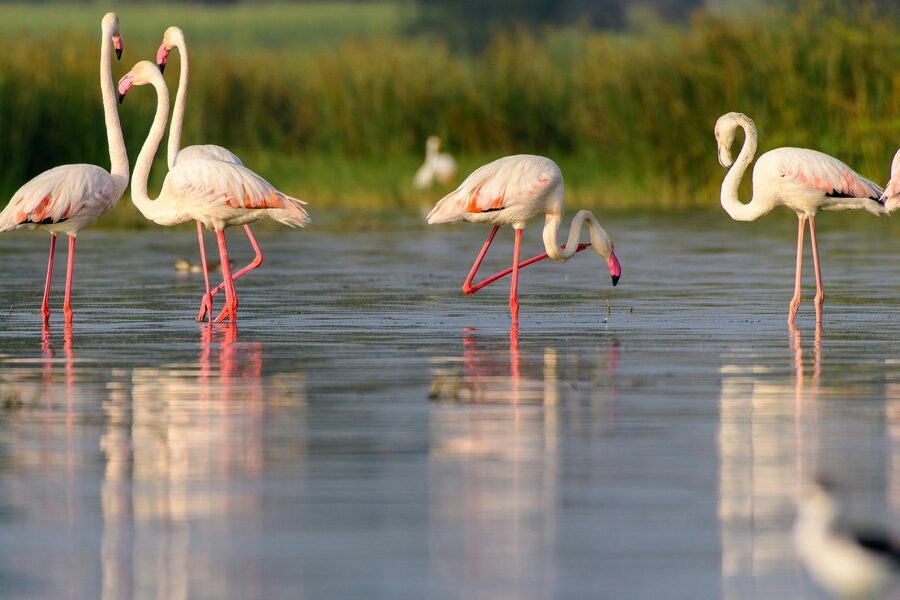
An unmistakable tall, pink-white wading bird with a unique down-curved bill. Large flocks are a spectacular sight at key sites like Lake Qarun and the coastal lagoons, where they filter-feed in the shallow, saline waters.
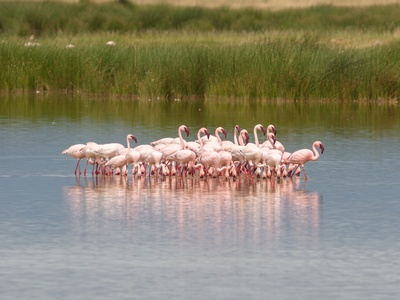
Lesser Flamingo
Smaller and much pinker than the Greater Flamingo, with a dark red bill tipped with black. A very rare vagrant to Egypt, with sightings usually of single birds mixed in with large flocks of their commoner relatives.
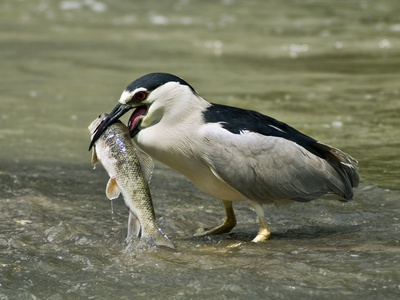
Black-crowned Night Heron
A stocky, medium-sized heron with a black back and crown, grey wings, and white underparts. As its name suggests, it is largely nocturnal, often seen at dusk flying from its daytime roost to feeding areas, giving a harsh “kwok” call.
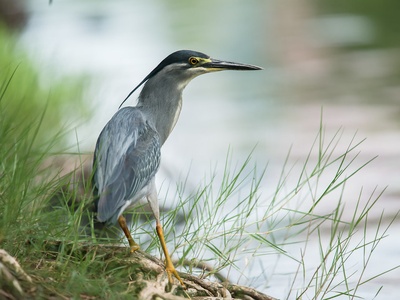
Striated Heron
A small, dark, compact heron with a long, sharp bill. Often seen hunched and motionless on branches overhanging water, waiting to ambush fish. In Egypt, it is restricted to the southern part of the Nile, including Lake Nasser.
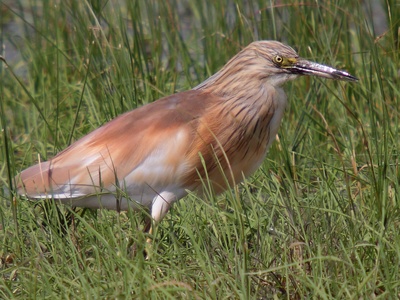
Squacco Heron
A small, buff-coloured heron that appears startlingly white in flight due to its pure white wings and tail. A common sight during migration and in summer, stalking prey in reedbeds and marshy areas, especially in the Nile Delta.
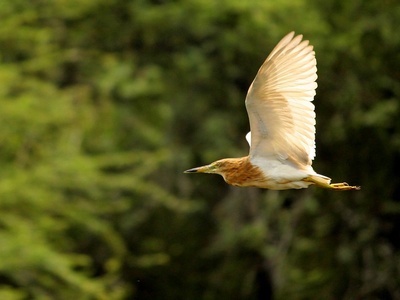
Indian Pond Heron
Very similar to the Squacco Heron, appearing streaky brown at rest but mostly white in flight. Differentiated by its darker back in breeding plumage. An extremely rare visitor from Asia, with only a few accepted records in Egypt.
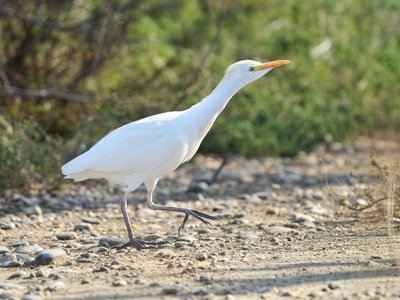
Cattle Egret
A small, stocky white heron, often seen foraging alongside livestock or on freshly ploughed fields, snapping up insects. In breeding season, it develops beautiful buff-orange plumes on its head, breast, and back. A ubiquitous sight in rural Egypt.
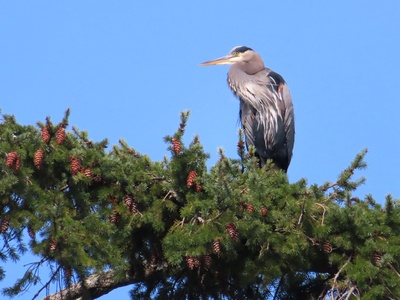
Grey Heron
A large, stately heron with long legs, a snake-like neck, and pale grey plumage. A familiar sight standing motionless in the shallows of rivers, canals, and lakes, waiting patiently to spear a fish with its dagger-like bill.
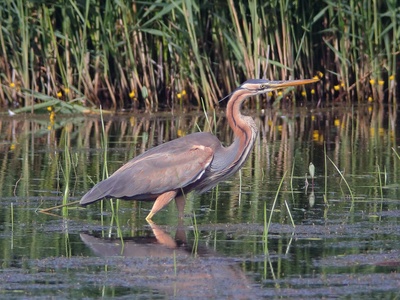
Purple Heron
A slightly smaller and much darker heron than the Grey Heron, with a snake-like neck and rich purplish-chestnut plumage. A secretive bird of dense reedbeds, most often seen in flight during migration or at breeding colonies in the Delta.
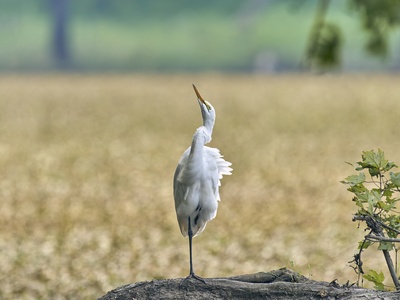
Great Egret
A large, elegant, all-white heron with a powerful yellow bill and blackish legs. It is almost as large as a Grey Heron. Widespread and common, often seen hunting alone in the shallows of lakes and rivers.
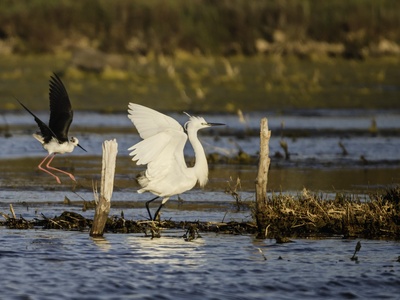
Little Egret
A graceful, medium-sized all-white heron with a slender black bill, black legs, and distinctive bright yellow feet. Very active when feeding, often dashing through the shallows. A common and widespread bird of Egyptian wetlands.
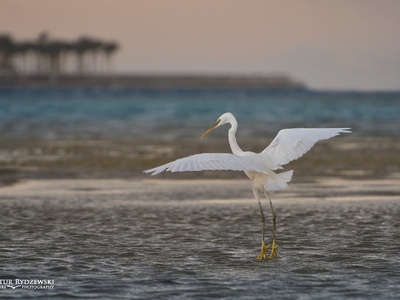
Western Reef Heron
A coastal heron very similar to the Little Egret but occurring in two colour morphs: a dark slaty-grey one and a white one. The white morph has a thicker, paler bill and often yellowish-green legs. Strictly coastal.
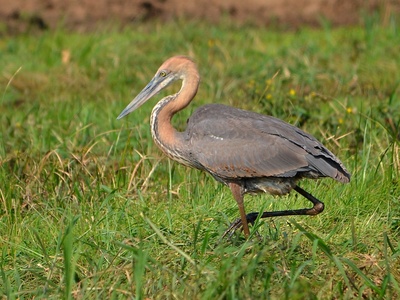
Goliath Heron
The world’s largest heron, a truly massive bird with a deep, booming call. It is slaty-grey above and rich chestnut below. An extremely rare visitor from sub-Saharan Africa, with records from the Sudanese border area and Lake Nasser.
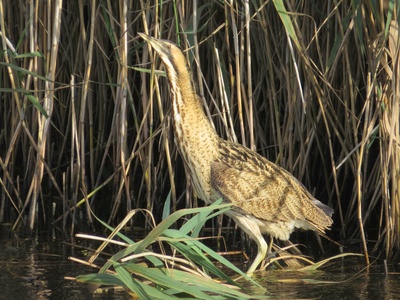
Eurasian Bittern
A stocky, secretive heron, superbly camouflaged with streaky brown plumage. Almost impossible to see unless flushed from a dense reedbed, when it flies on broad, rounded wings. Its booming call is unlikely to be heard in Egypt.
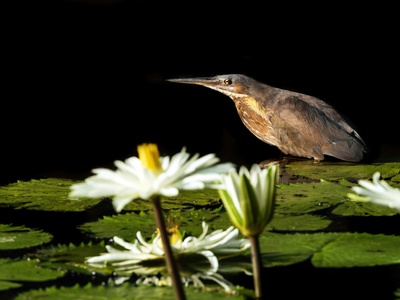
Little Bittern
A tiny, very secretive heron. The male is black above and buff below with large buff wing patches, highly visible in flight. Lives deep within reedbeds and is best looked for at dawn or dusk near the water’s edge.
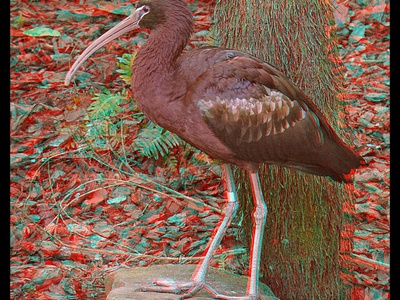
Glossy Ibis
A medium-sized, dark waterbird with a long, decurved bill. Appears black from a distance, but in good light, its plumage shows beautiful bronze, green, and purple sheens. Seen in flocks probing for food in wet fields and marshes.
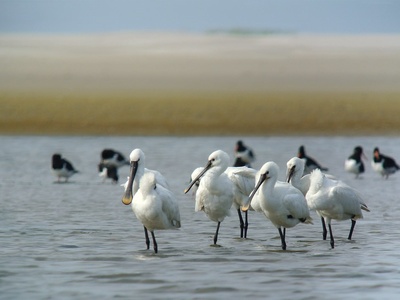
Eurasian Spoonbill
A large, unmistakable white waterbird with a long, flattened, spoon-shaped bill that it sweeps from side to side in the water to catch food. Often found in flocks on the shallow coastal lagoons and at Lake Qarun.
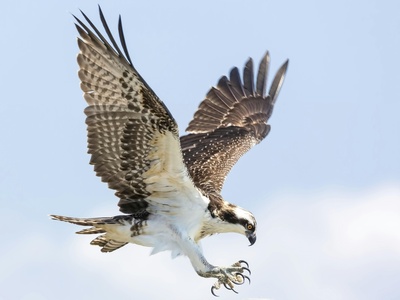
Osprey
A large, distinctive raptor with long, narrow wings, a white head, and a dark mask through the eye. A master angler, it plunges feet-first into water to catch fish. Breeds on Red Sea islands and seen on migration along major waterways.
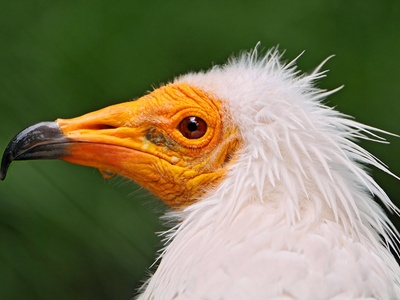
Egyptian Vulture
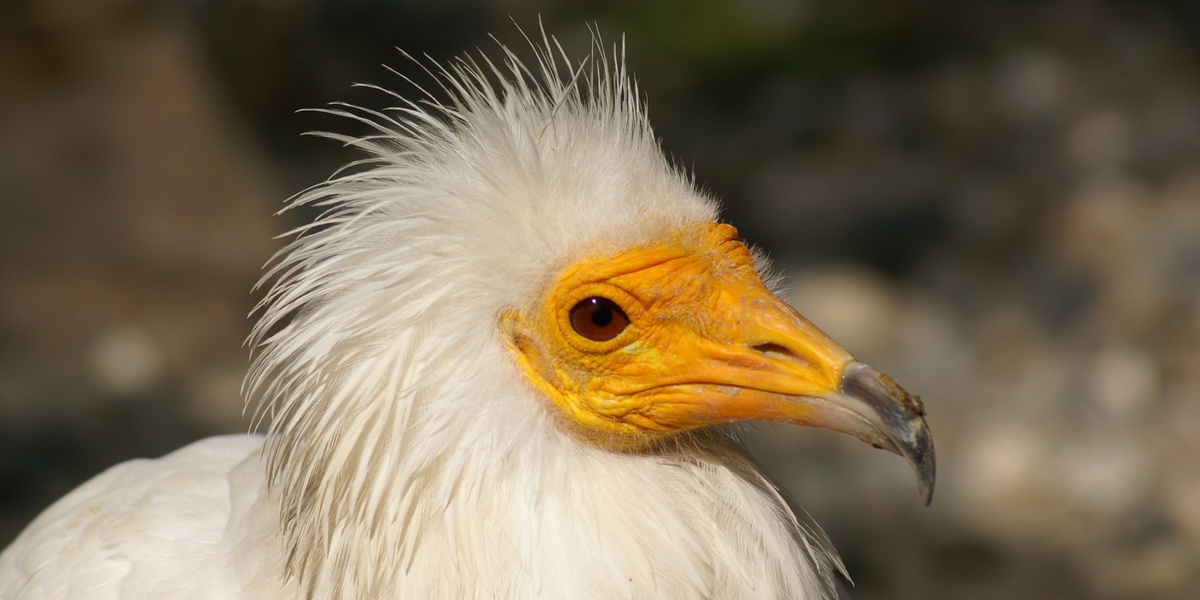
A small, mostly white vulture with black flight feathers and a bare yellow face. A famous bird from ancient times, it is now critically endangered. Seen on migration, with a tiny breeding population remaining in remote deserts.
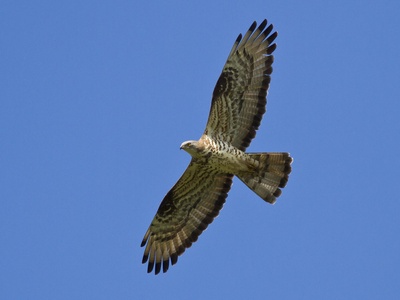
European Honey Buzzard
A medium-sized raptor that feeds on wasp and bee larvae. Highly variable in plumage, it is best identified by its small, pigeon-like head and long tail. Migrates in spectacular numbers, with thousands passing over Suez in autumn.
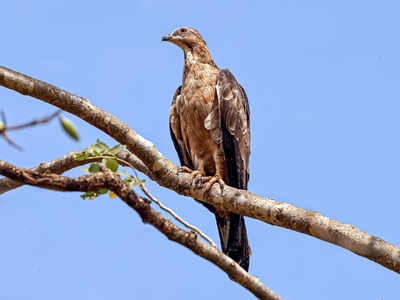
Crested Honey Buzzard
Very similar to the European Honey Buzzard but often shows a small crest, and has a longer-tailed, more eagle-like look. An extremely rare visitor from Asia, with only a handful of well-documented records.
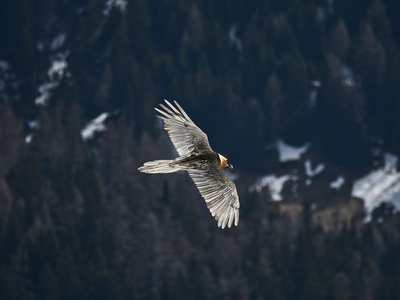
Bearded Vulture
A huge, magnificent vulture with long, narrow wings and a wedge-shaped tail. Unique among vultures, it drops bones from a height to shatter them and eat the marrow. A very rare and endangered resident of the Sinai’s highest peaks.
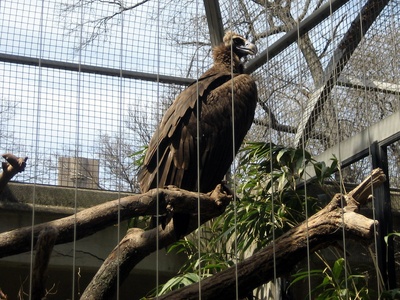
Cinereous Vulture
An enormous, dark brown vulture with a massive bill and a bare, bluish-grey head. One of the largest flying birds in the world. An exceptional vagrant to Egypt, with sightings usually involving lone, wandering individuals.
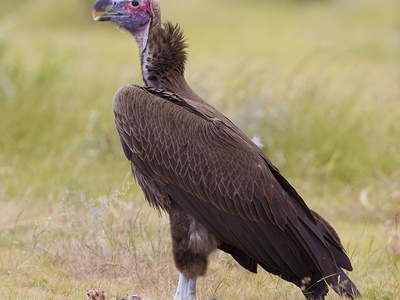
Lappet-faced Vulture
A powerful, massive vulture with a huge bill and a bare pink or reddish head with fleshy folds (lappets). A top scavenger, capable of tearing open tough carcasses. Now critically endangered and extremely rare in Egypt’s southern deserts.
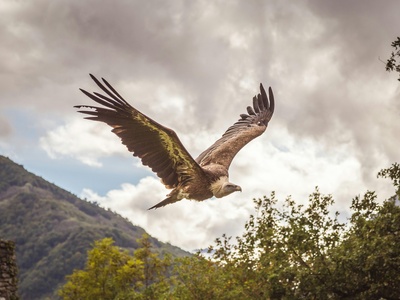
Griffon Vulture
A very large, classic vulture with a pale sandy-brown body, dark flight feathers, and a long neck with a white ruff. Often seen soaring in groups on thermal updrafts. A scarce breeder in desert mountains and seen on migration.
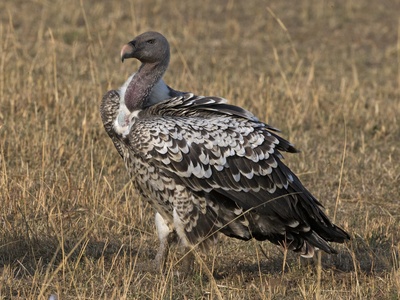
Rüppell’s Vulture
A large vulture, slightly smaller than the Griffon, with a distinctively mottled and scaled pattern on its body feathers. A rare visitor from sub-Saharan Africa, sometimes seen at Gebel Elba or mixed with other vultures in the south.
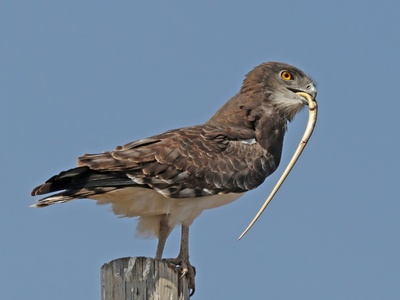
Short-toed Snake Eagle
A large, pale raptor with a broad, owl-like head and bright yellow eyes. It specializes in hunting snakes and other reptiles. Commonly seen soaring on broad wings during migration periods across the country.
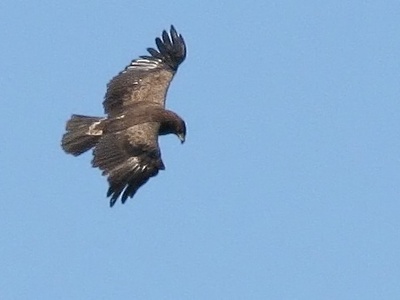
Lesser Spotted Eagle
A medium-sized, dark brown eagle with long wings. Adults are quite uniform, but juveniles have distinct white spots on their upperwings. Migrates in large numbers through eastern Egypt, especially in spring.
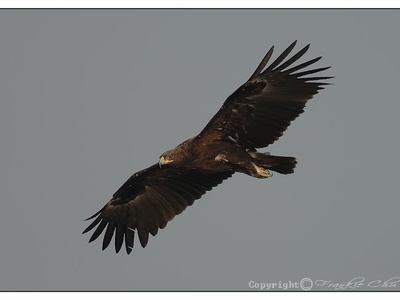
Greater Spotted Eagle
A medium-large, very dark eagle that is strongly associated with wetlands. Broader-winged and heavier-looking than the Lesser Spotted Eagle. A rare winter visitor, primarily found in the Nile Delta and Fayoum.
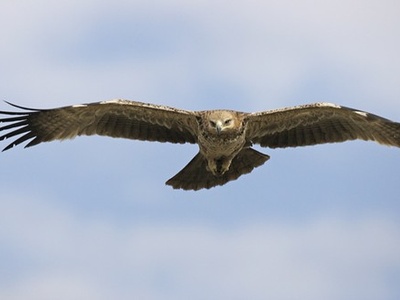
Tawny Eagle
A large, powerful eagle with variable brownish plumage, from pale tawny to dark brown. It has a heavy bill and a formidable appearance. Now only a very rare vagrant, having been more common in the past.
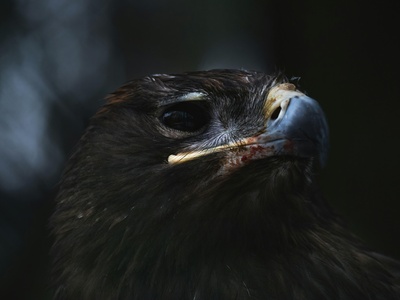
Steppe Eagle
A large, dark, and powerful eagle, one of the most numerous migrating raptors in Egypt. In autumn, tens of thousands pass through Suez, creating an unforgettable spectacle. A small number also spend the winter here.
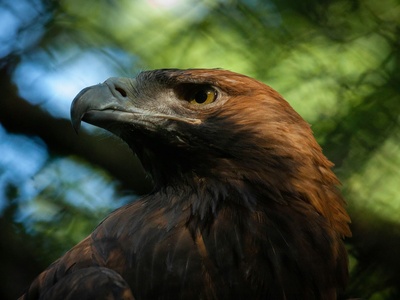
Imperial Eagle
A very large, dark eagle with a contrasting pale golden-cream nape. Juveniles are sandy-brown. A majestic and globally vulnerable species, seen in small numbers during migration and winter, often at wetland sites.
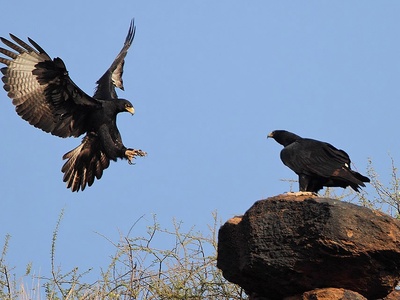
Verreaux’s Eagle
A huge, magnificent black eagle with a striking white ‘V’ on its back. A specialist hunter of hyraxes, it is restricted to rugged, mountainous desert terrain. An extremely rare and sought-after bird in Egypt.
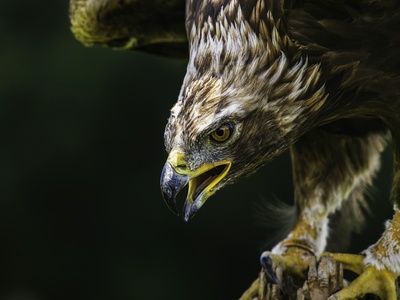
Golden Eagle
A powerful, very large dark brown eagle with a golden-brown wash over its nape. It inhabits remote, rugged mountains. Like the Verreaux’s Eagle, it is a top predator but is exceptionally rare and difficult to find in Egypt.
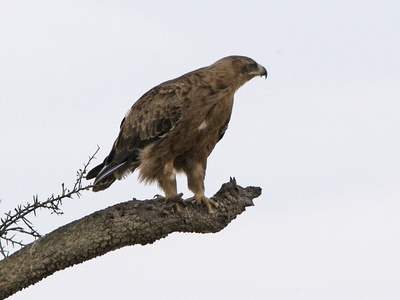
Booted Eagle
A small, neat eagle that occurs in both pale and dark morphs. The pale morph is whitish below with a dark head, while the dark morph is all brown. A common sight during migration, often soaring with buzzards and other eagles.
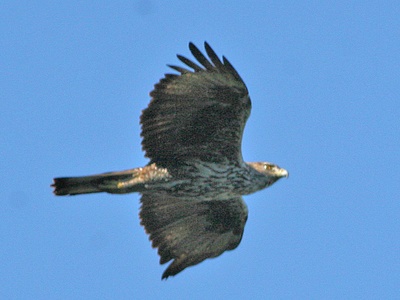
Bonelli’s Eagle
A medium-large, powerful eagle, adults are clean white below with dark wing-tips and a dark leading edge to the wing. A fast and agile hunter of birds and mammals, residing in remote, rocky desert areas.
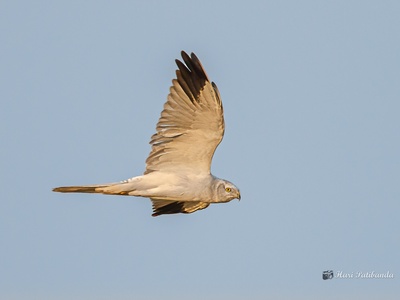
Pallid Harrier
A slender, graceful harrier. The adult male is a ghostly pale grey with black wingtips. Females and juveniles are brown and streaked. A globally near-threatened species, seen hunting low over fields and semi-desert during migration and winter.
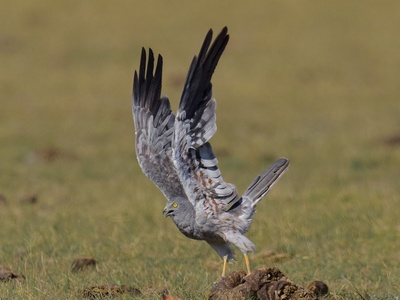
Montagu’s Harrier
A very slender and elegant harrier. The male is pale grey with a black wing-bar in addition to black wing-tips. Seen gliding gracefully over open habitats during its spring and autumn passage through Egypt.
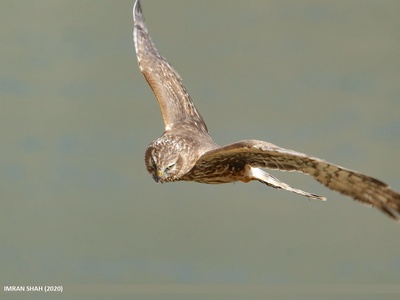
Hen Harrier
Slightly larger and bulkier than other harriers. All plumages are identified by a prominent white patch on the rump. A rare winter visitor, seen hunting with a characteristic buoyant flight over marshes and agricultural land.
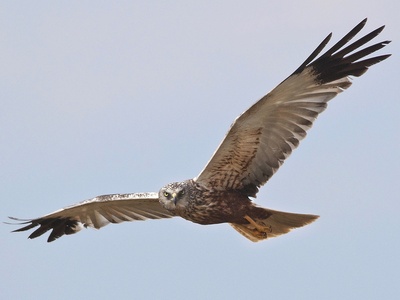
Western Marsh Harrier
The largest and broadest-winged harrier in Egypt. Males are a mix of brown, grey, and black, while females are chocolate-brown with a creamy head. The most common harrier, found quartering low over reedbeds at any major wetland.
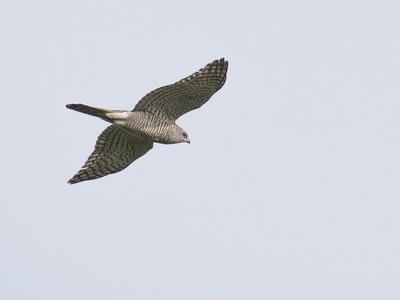
Levant Sparrowhawk
A small, slender hawk. Males are blue-grey above and pale below, with dark wingtips. Migrates in large, spectacular flocks, especially in autumn at sites like Suez, where thousands can be seen in a single day.
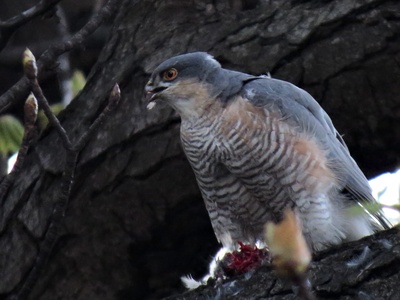
Eurasian Sparrowhawk
A small woodland hawk with short, broad wings and a long tail, adapted for agile hunting. Males are blue-grey above and finely barred reddish-brown below. A widespread but solitary migrant and winter visitor.
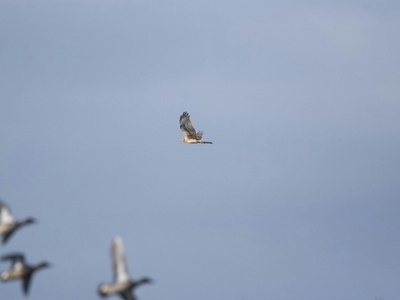
Northern Goshawk
A large, powerful version of a sparrowhawk. A formidable hunter with a fierce expression. An extremely rare vagrant to Egypt, with only a few documented records, likely of wandering birds from the north.
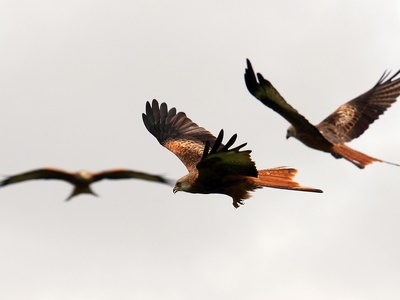
Red Kite
A large, graceful raptor with a long, deeply forked, rusty-red tail, which it constantly twists in flight. A very rare vagrant from Europe, where its populations have been recovering.
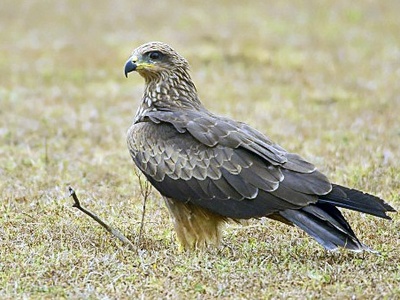
Black Kite
A medium-sized, dark raptor with a shallowly forked tail. Enormous numbers migrate through Egypt. The resident subspecies, the Yellow-billed Kite, is common along the Nile in the south, often scavenging in towns and cities.
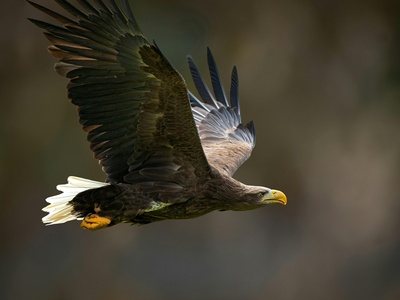
White-tailed Eagle
A huge, bulky sea-eagle with a massive yellow bill and a short, white, wedge-shaped tail in adults. An exceptional vagrant to Egypt’s northern wetlands, any sighting of this “flying barn door” causes great excitement.
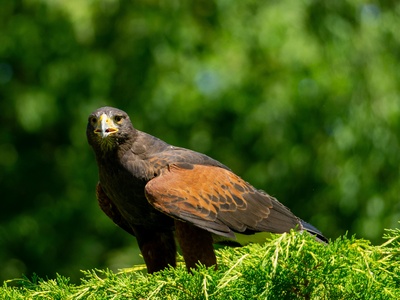
Common Buzzard
A medium-sized, stocky raptor with broad wings and a rounded tail. The “Steppe Buzzard” subspecies (*vulpinus*) is the one seen in Egypt, migrating in huge numbers alongside eagles and kites, often in “kettles” of hundreds of birds.
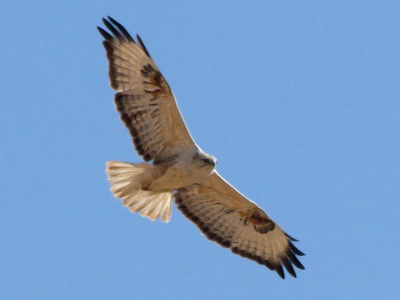
Long-legged Buzzard
A large, pale buzzard adapted to desert environments. Plumage is variable but often sandy-coloured with a pale head and a plain rufous tail. The most common breeding buzzard in Egypt’s deserts and semi-arid lands.
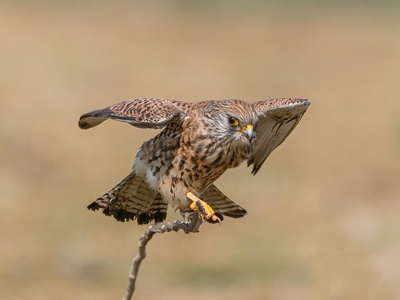
Lesser Kestrel
A small, elegant falcon. Males have a plain grey head, unspotted chestnut back, and clean underparts. Migrates in flocks, often seen hunting insects over open country during its passage through Egypt.
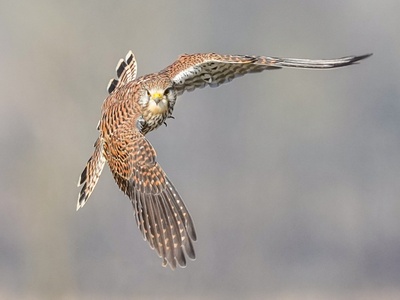
Common Kestrel
A familiar small falcon, famous for its ability to hover while hunting for small mammals and insects. The male has a grey head and tail, while the female is brown overall. Found everywhere from desert cliffs to city buildings.
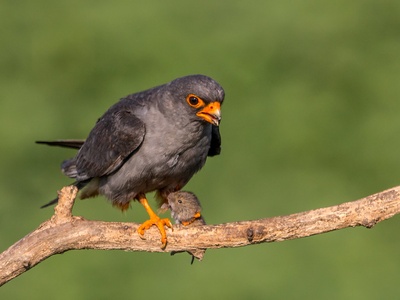
Red-footed Falcon
A small, social falcon. The male is a beautiful slaty-grey with contrasting red “trousers” and feet. Often migrates in flocks, hunting large insects in flight. A scarce but regular migrant through Egypt.
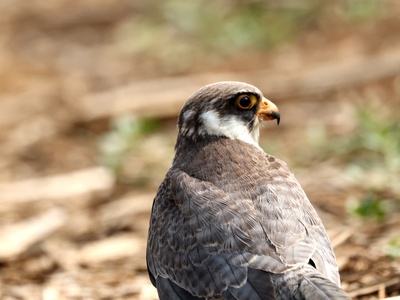
Amur Falcon
A small falcon very similar to the Red-footed Falcon. The male is also slaty-grey but has white underwing coverts (not grey). An extreme rarity in Egypt, as its migration route is typically much further east.
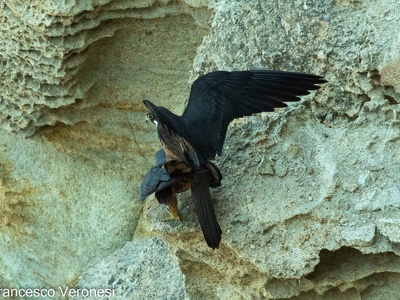
Eleonora’s Falcon
A slender, graceful, medium-sized falcon with long wings and tail. It occurs in both dark and pale morphs. A tran-equatorial migrant, it passes through Egypt on its way between European breeding islands and Madagascar.
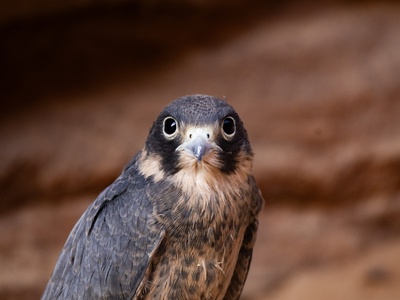
Sooty Falcon
A sleek, medium-sized, slate-grey falcon. A charismatic bird of the Egyptian desert, it breeds on remote cliffs and Red Sea islands, timed to prey on migrating birds in autumn. A must-see for visiting birders.

Merlin
A small, dashing falcon with pointed wings, built for speed. The male is blue-grey above, the female is brown. A rare winter visitor, usually seen in open agricultural areas or coastal marshes, hunting small birds.
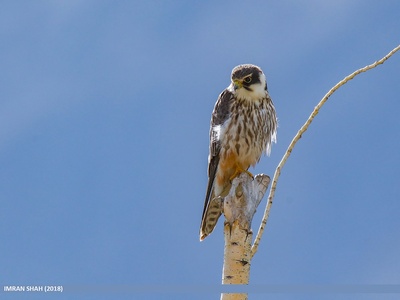
Eurasian Hobby
A swift, dashing falcon resembling a giant swift in flight. It has a streaked breast, reddish “trousers,” and a bold head pattern. Seen during migration, often at dusk, hunting dragonflies or catching migrating hirundines.

Lanner Falcon
A large, powerful falcon with a pale, reddish-brown crown and nape. A resident of Egypt’s deserts, it is a fast and versatile hunter, often seen near rocky escarpments. Its population here is of conservation concern.
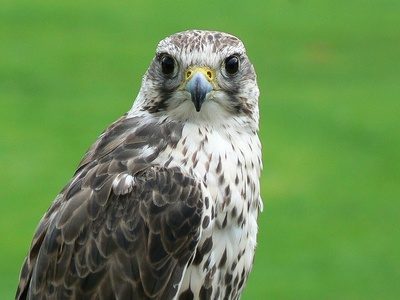
Saker Falcon
A large, powerful, bulky falcon, variable in colour from pale sandy to dark brown, but typically showing a pale head with a faint moustache stripe. An endangered species, a few winter in Egypt’s open desert and cultivated areas.
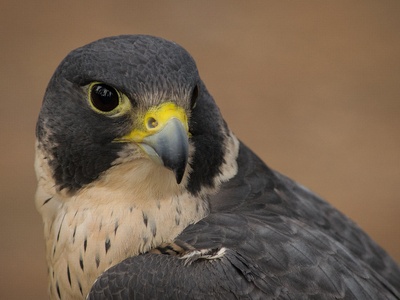
Peregrine Falcon
The world’s fastest animal. A powerful, stocky falcon with a dark “helmet” and moustache. Resident birds (*minor* subspecies) are found on cliffs and city buildings, while paler northern migrants (*calidus*) winter at wetlands.
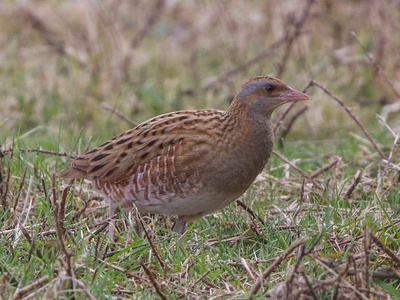
Corn Crake
A secretive, quail-sized rail. Almost never seen, but its presence may be detected by its repetitive, rasping “crex crex” call from dense vegetation. A globally threatened species that passes through Egypt unseen by most.
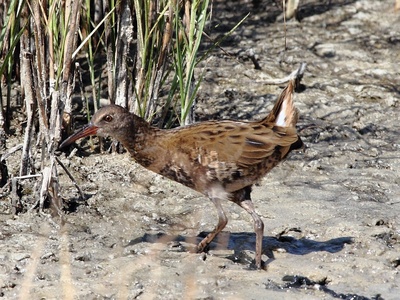
Water Rail
A secretive bird of reedbeds, more often heard than seen. It has a long, reddish bill, grey face, and barred flanks. Its call is a strange series of squeals and grunts, like a piglet in distress. Found in dense marsh vegetation.

Spotted Crake
A small, secretive crake with a brown, spotted back, grey face, and a short, yellowish bill with a red base. A skulker in wet meadows and marsh edges, it is very difficult to see well as it darts between cover.
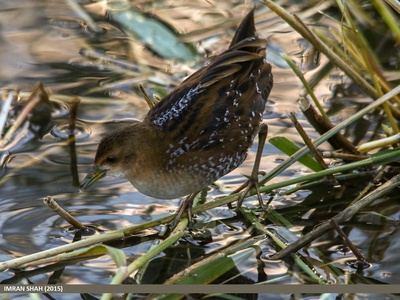
Baillon’s Crake
A tiny rail, smaller than a starling. It has a plain brown back and strongly barred black-and-white flanks. Very secretive and hard to observe. A rare breeder in the Nile Delta, it prefers flooded vegetation and reed margins.
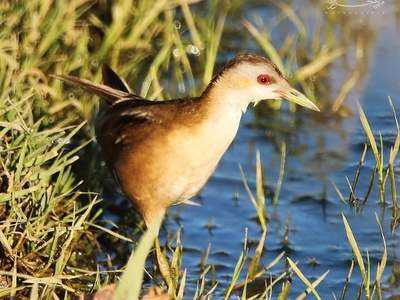
Little Crake
A very small crake. The male is distinguished by his plain grey face and underparts, while the female is buffy. Like all crakes, it is extremely secretive, living deep within dense reedbeds and marshy vegetation.